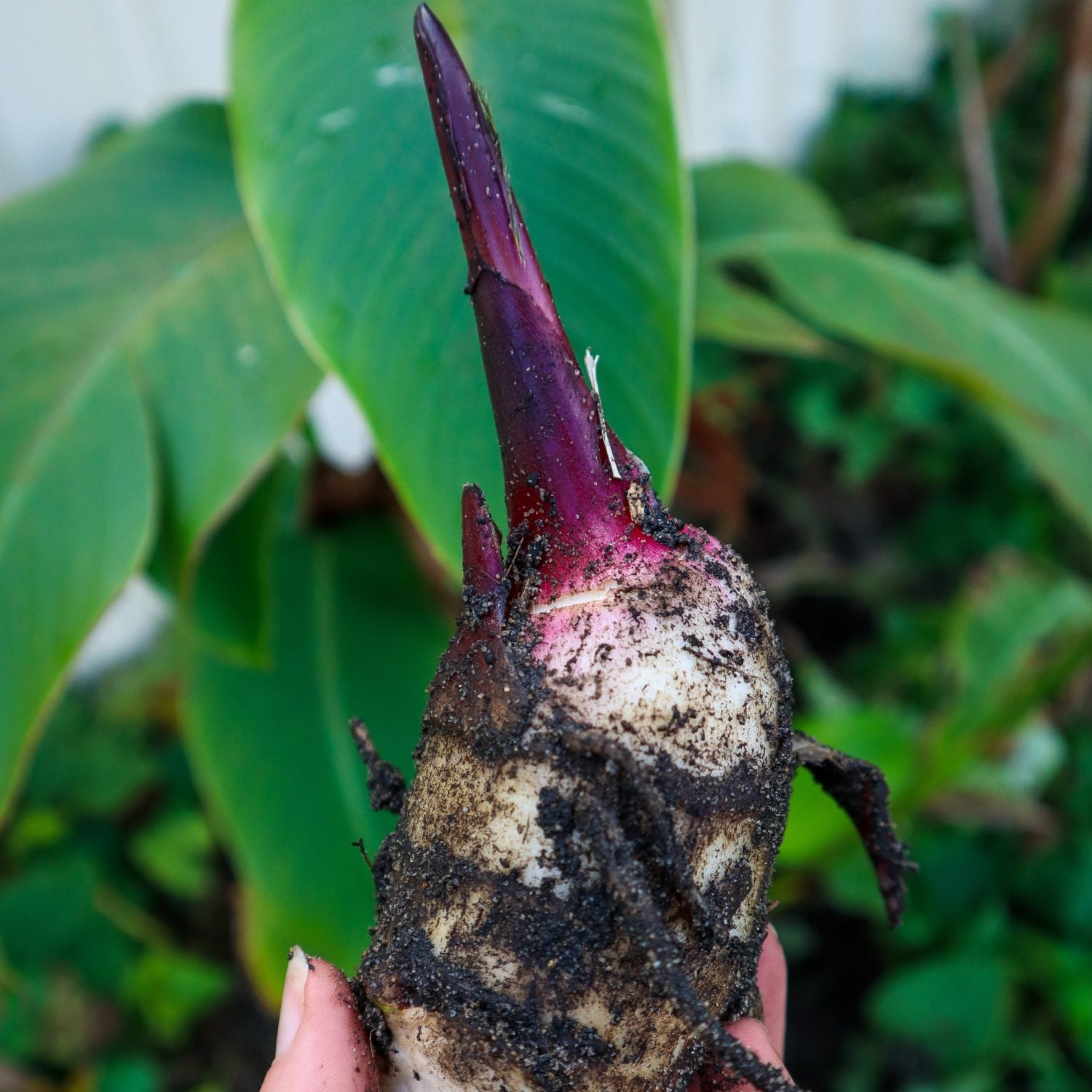
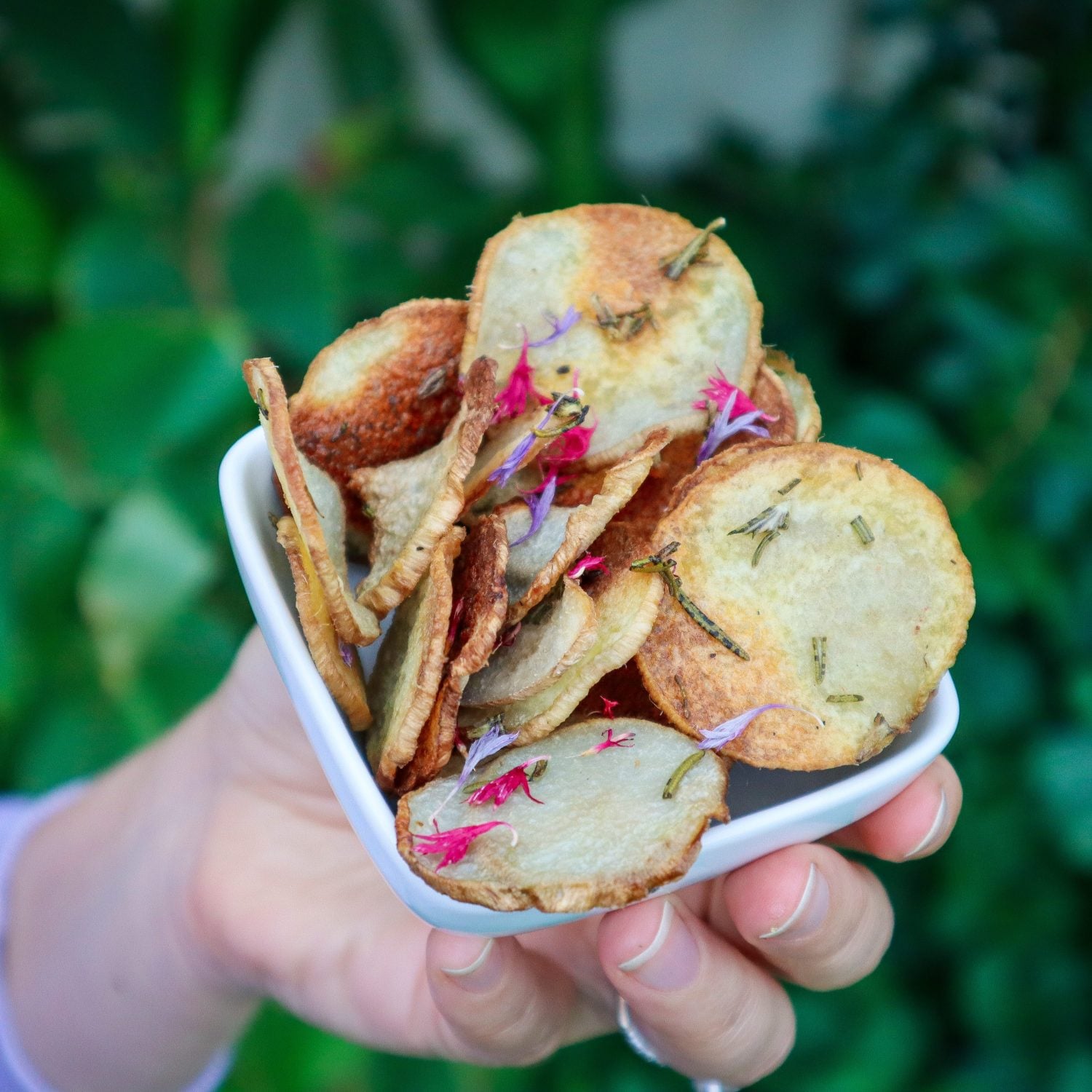
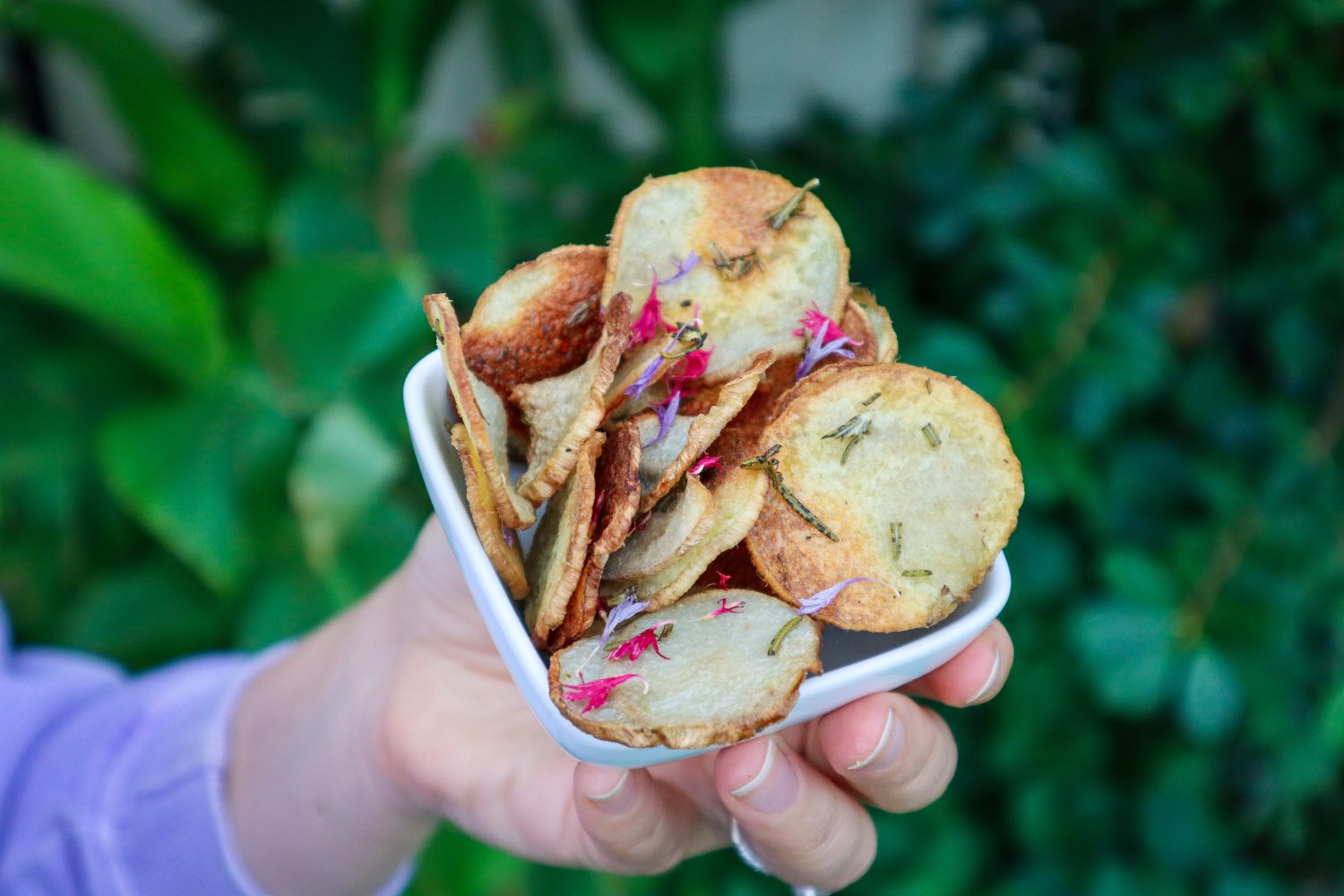
Extra crunchy chips using the Queensland Arrowroot or Canna Edulis. This is a beautiful tropical plant that can be used as a perennial substitute for potatoes. It creates a fantastic middle layer in a food forest-style garden and has lush green leaves and grows rhizomes under the ground. Both the young shoots and the rhizomes are edible.
This is my main mulch plant for the garden, and it repopulates like crazy!! So I want to create some delicious recipes to utilise this slightly wild crop! These crispy Queensland Arrowroot chips were 100% a hit and will be a regular in my home.
What is Queensland Arrowroot?
Queensland arrowroot (often referred to as Canna edulis or Canna indica) is a fast-growing perennial plant grown primarily for its edible rhizomes (like underground tubers). Despite the name, it isn’t a true arrowroot..but it serves a similar purpose in the kitchen. The rhizomes are starchy, mild in flavour, and incredibly versatile.
Traditionally, arrowroot has been used for:
- Starch extraction to make flour
- Baking and thickening
- Roasting or boiling like a root vegetable
- And, of course, turning into crispy chips
One of the best things about Queensland arrowroot is how quickly it grows in poor soil and hot climates. Once planted, it forms dense clumps, creates an abundance of chop-and-drop mulch, and produces a generous harvest year after year.
In a food forest, it works beautifully as a lower canopy or ground-level productive crop.
Preparing Arrowroot for Cooking
Before turning arrowroot into chips, proper preparation makes a big difference.
Step 1: Wash thoroughly
Remove all soil and debris. A brush helps for stubborn dirt.
Step 2: Peel (optional)
You can peel the outer skin if it’s tough, but younger rhizomes may not need it.
Step 3: Slice thinly
Thin, even slices are key for crispiness. A mandoline slicer works best, but a sharp knife also works.
Step 4: Soak in water
Soak slices in cold water for 20–30 minutes to remove excess starch. This helps achieve a lighter, crispier chip.
Step 5: Dry completely
Pat dry with a towel. Moisture is the enemy of crispiness.
Crispy Queensland Arrowroot Chips
Ingredients
Method
- Wash and peel the Queensland arrowroot and quickly submerge it in water. Using a mandoline (or hand cut) evenly slice into thin slices then quickly submerge in cold water.
- Allow to sit in cold water for 5 minutes then change the water and sit again for a further 5 minutes repeat if necessary until the water remains clear (it will be murky brownish the first time).
- Preheat oven to 200 degrees fan bake.
- Remove the chips from the water and pat dry. Drizzle over olive oil and season with salt and chopped rosemary.
- Oil a baking tray and add chips.
- Bake for 5 minutes then turn over and bake until slightly golden and crispy. Remove and place on a tray to cool (they will get a little crispier as they cool).
- Enjoy!
Notes
Serving Ideas
These chips are such a yummy snack but can also be use to:
- Serve with dips like aioli or hummus
- Add crunch to salads
- Serve alongside BBQ meals
- Use as a topping for soups
- Pair with tropical or Asian-inspired dishes
They’re especially good as a “garden-to-table” addition when you want to just use what is growing in the garden. You will never be short of “potatoes” again!
Keep It In Check
Queensland arrowroot is such a generous plant, but it does need to be kept in check. Regular harvesting of the rhizomes will keep it under control. So I will be busy making lots more recipes using this crop!
If you’re building a self-sufficient garden or food forest, this is a plant worth experimenting with — especially in warm climates like Perth, where it thrives with very little effort.
Happy Gardening,
Holly 🌱