Don’t want to wait for homegrown fruits? Plant these 20 fast-growing fruits for quick harvests!
When you’re starting a food forest or edible garden from scratch, it can feel like the SLOWEST waiting game for your fruit trees to grow and start producing fruit…or just survive their first few summers!! That’s why I love planting fast-growing, early-yielding fruits and perennials that bring quick shade, soil life, and harvests while the slower long-term trees mature.
After 10+ years of gardening in a hot climate like Perth, I’ve learned that success comes down to three simple things:
🌿 Plant densely
🌿 Focus on perennials
🌿 Grow living shade
Because when plants are left exposed and spaced too far apart, they struggle. But when you fill your garden with layers? Everything grows faster, healthier… and with far less effort. And what do I mean by fast? Fruiting within 12 – 24 months!
This guide is based on what I grow in my urban food forest here in Perth, Australia, which is a zone 10b.
Why Fast-Growing Fruit Trees Matter in a Food Forest
In a natural system, bare soil doesn’t last long. Something will always move in to cover it, whether that’s grass, weeds… or plants you actually want. Fast-growing fruiting plants act as your “in-between” layer while your main trees establish.
They help to:
- Shade the soil and reduce water loss
- Protect young trees from harsh sun and wind
- Feed the soil through leaf drop and chop-and-drop
- Attract pollinators and beneficial insects
Think of them as your support system…not just quick fruiting plants (but yay bonus!). Many of these are temporary or short-term plants in your garden.
You can:
👉 Chop them back
👉 Take cutting or seeds, then move them
👉 Or remove them completely
…once your long-term trees take over.
20 Fast-Growing Fruit Trees and Plants for Quick Harvests
These fast-growing fruit trees and plants are perfect for filling space in a young food forest while your long-term trees establish. Many will start producing within the first year or two, while also helping to create shade, build soil, and support the overall system. Some will become permanent features in your garden, while others can be pruned, moved, reproduced, or replaced as your space evolves.
1. Banana or Plantain (Musa spp.)
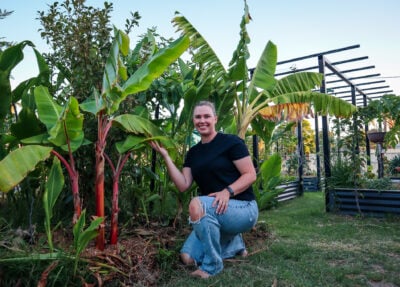
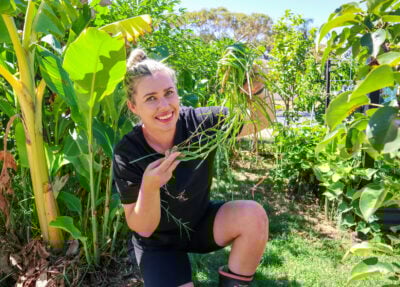
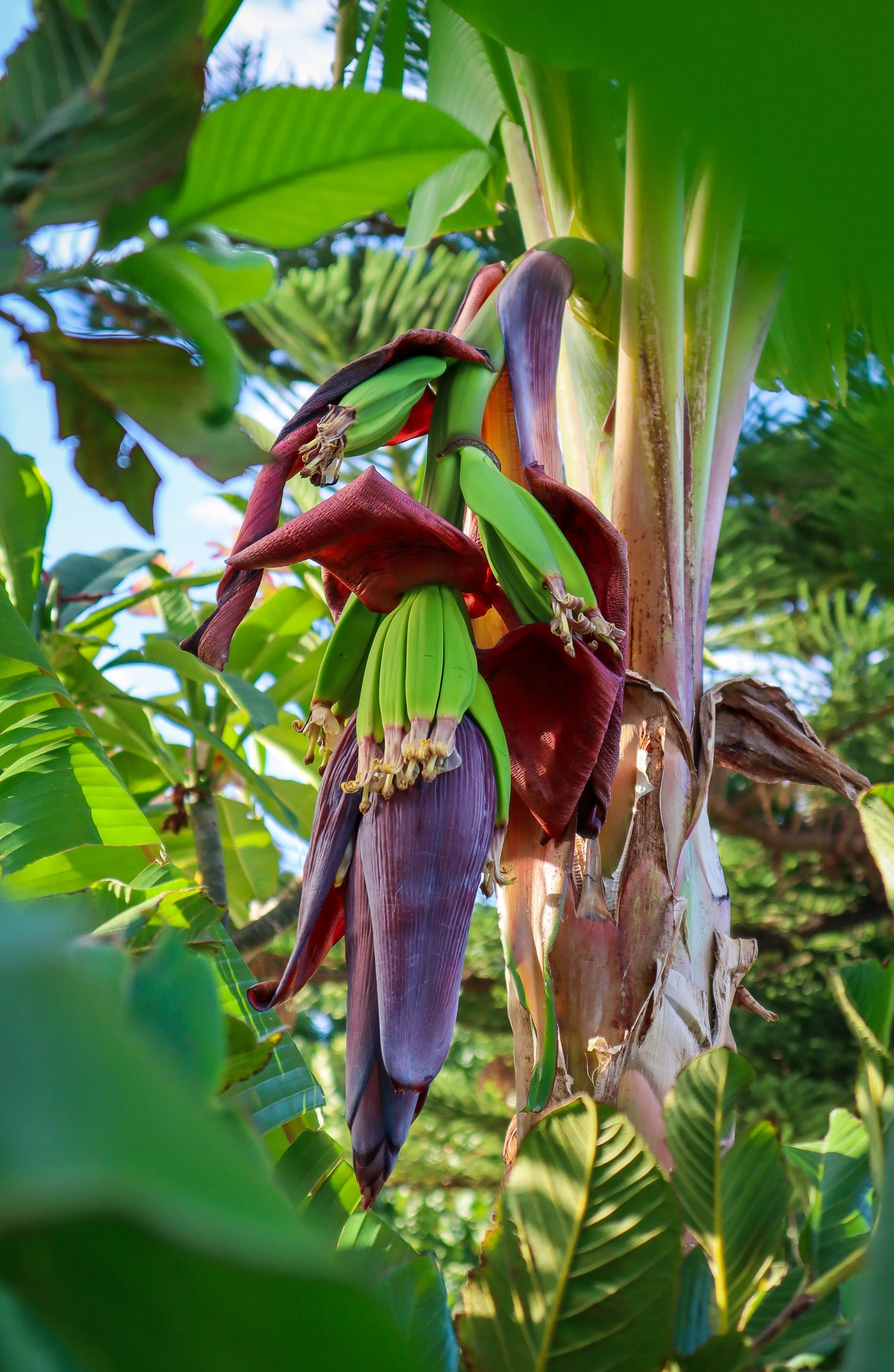
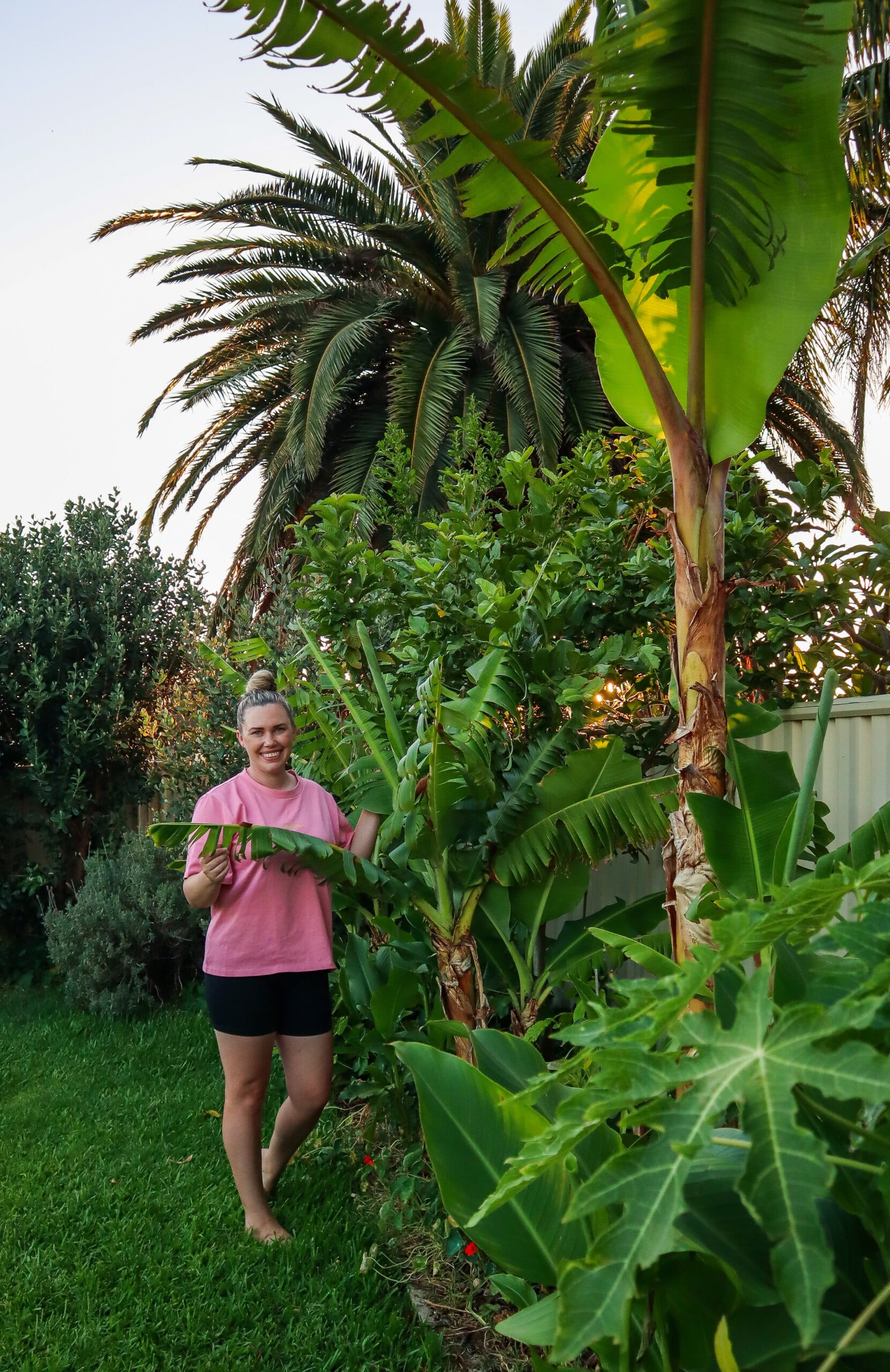
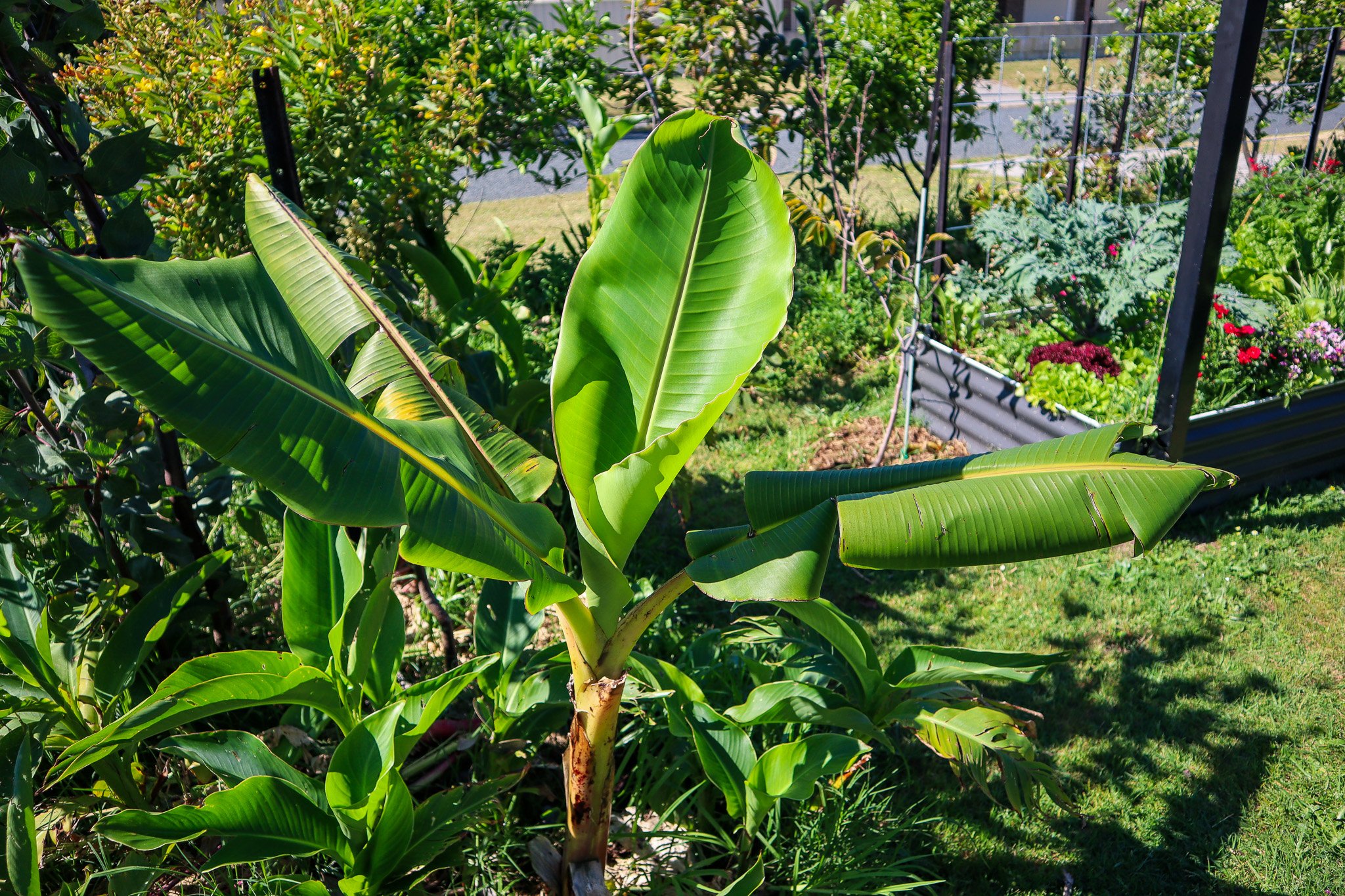
I LOVE growing Bananas in my edible garden. Bananas create an instant canopy and lush tropical vibes within months. They love warm conditions, and their large leaves provide shade, living mulch, and plenty of biomass for chop-and-drop. With the right moisture and feeding, you can harvest fruit within 12–18 months of planting.
I prefer to grow smaller dwarf varieties (dwarf ducasse, dwarf red dacca, and dwarf cavendish) that produce quicker and don’t grow as tall to get damaged by the wind. My plantain Bananas (Pacific Plantain) took exactly 2 years for their first bunch, but that clump will produce much faster now that there is an established rhizome.
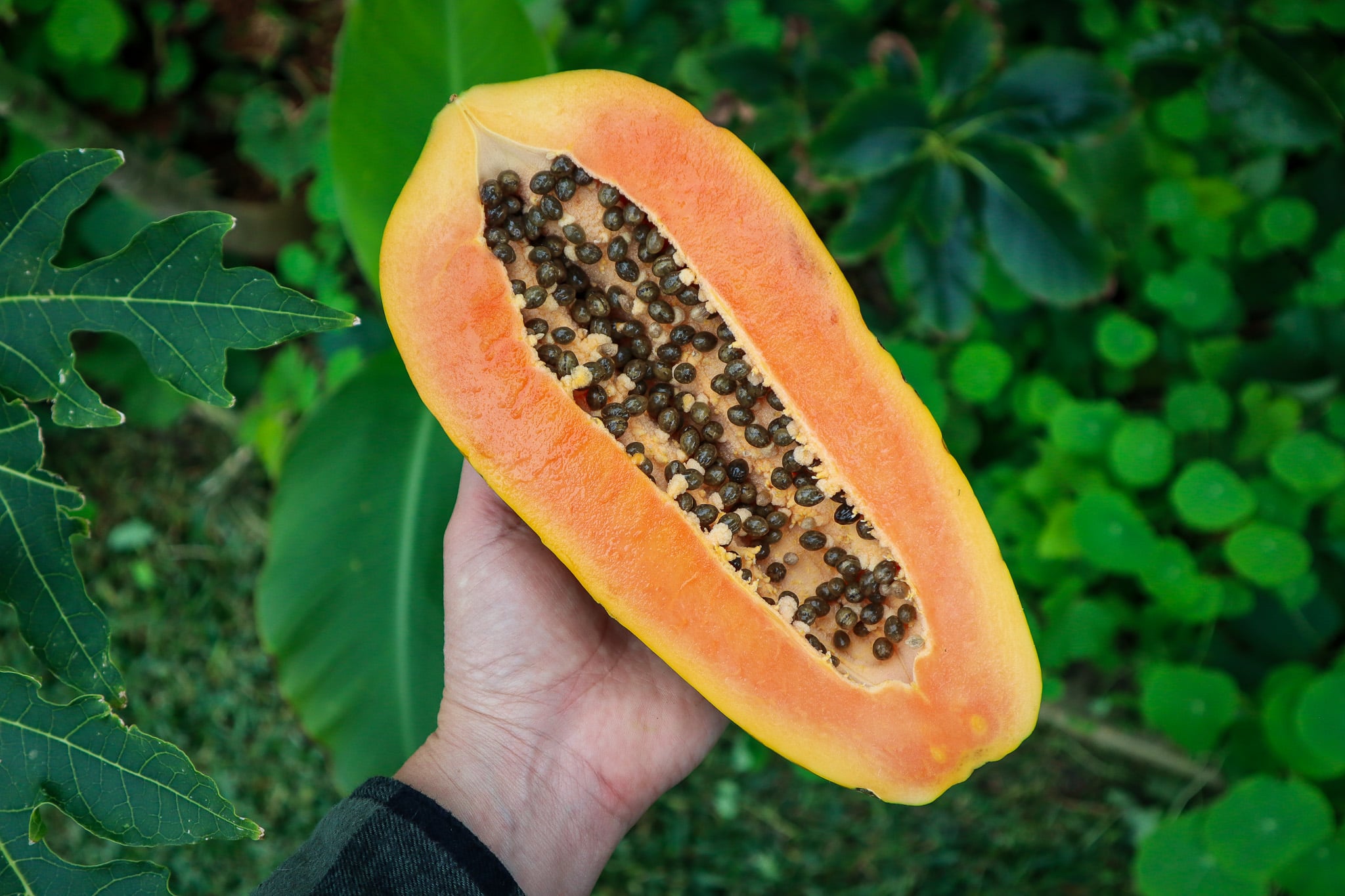
2. Papaya (Carica papaya)
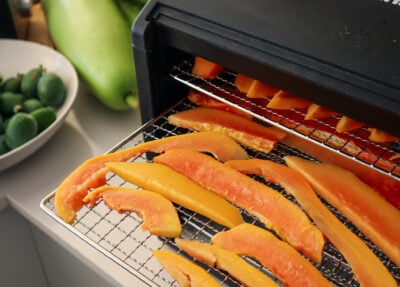
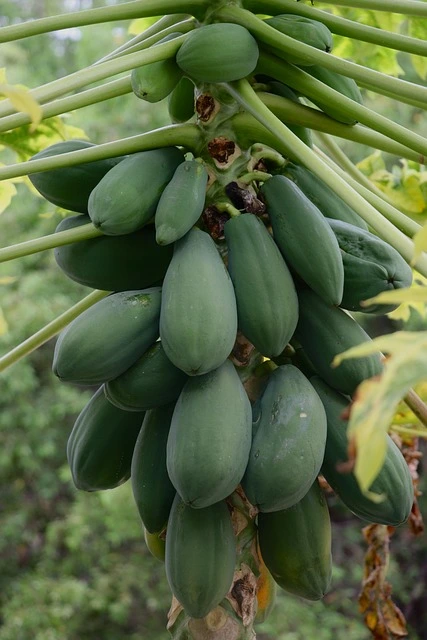
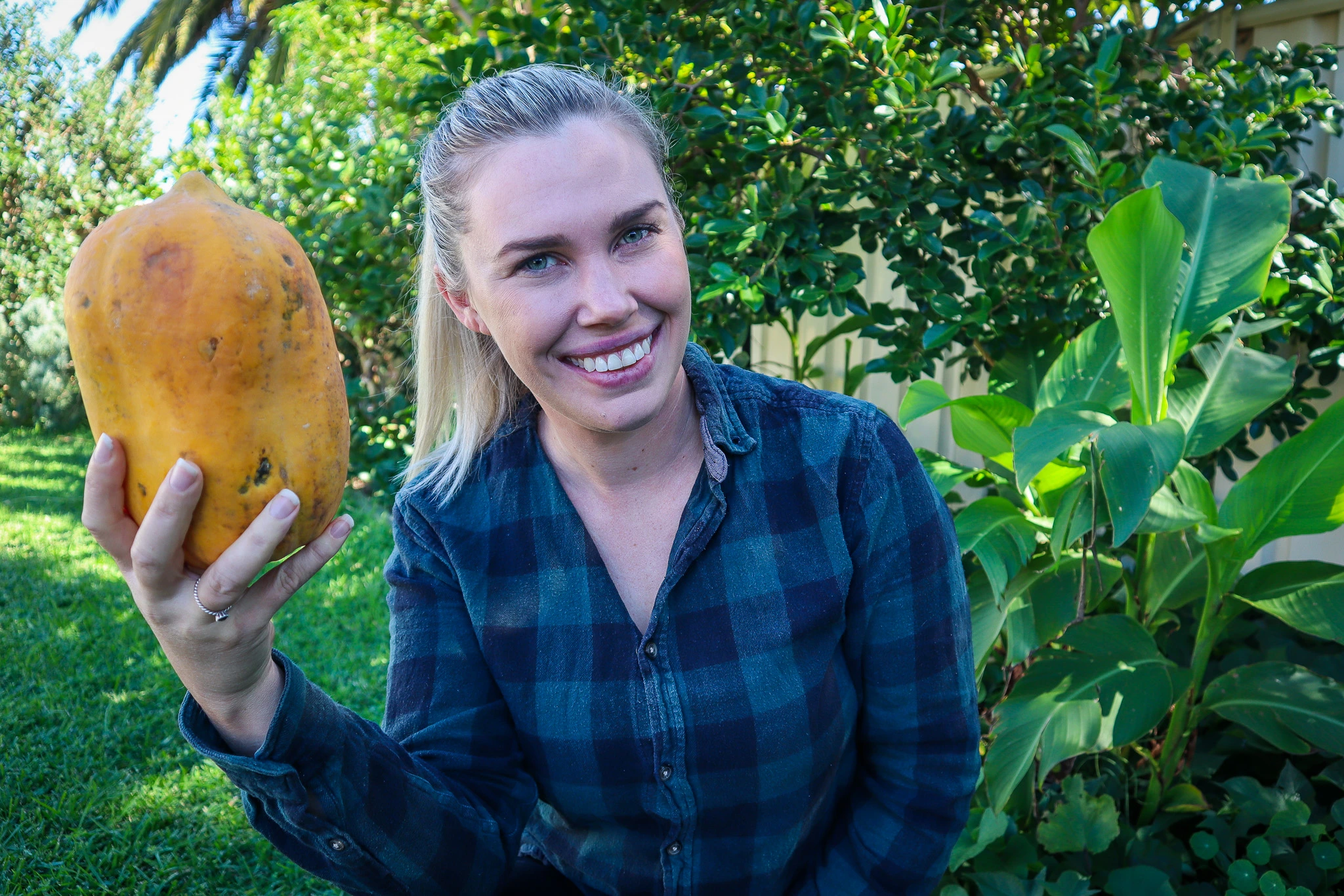
Papayas are your value-for-money fast-growing fruit! They start producing quickly, often producing ripe fruit in just 9–12 months from seed. They produce A LOT OF FRUIT on a single plant, and you can regrow 100s more from the seeds. I have grown all mine from seed!
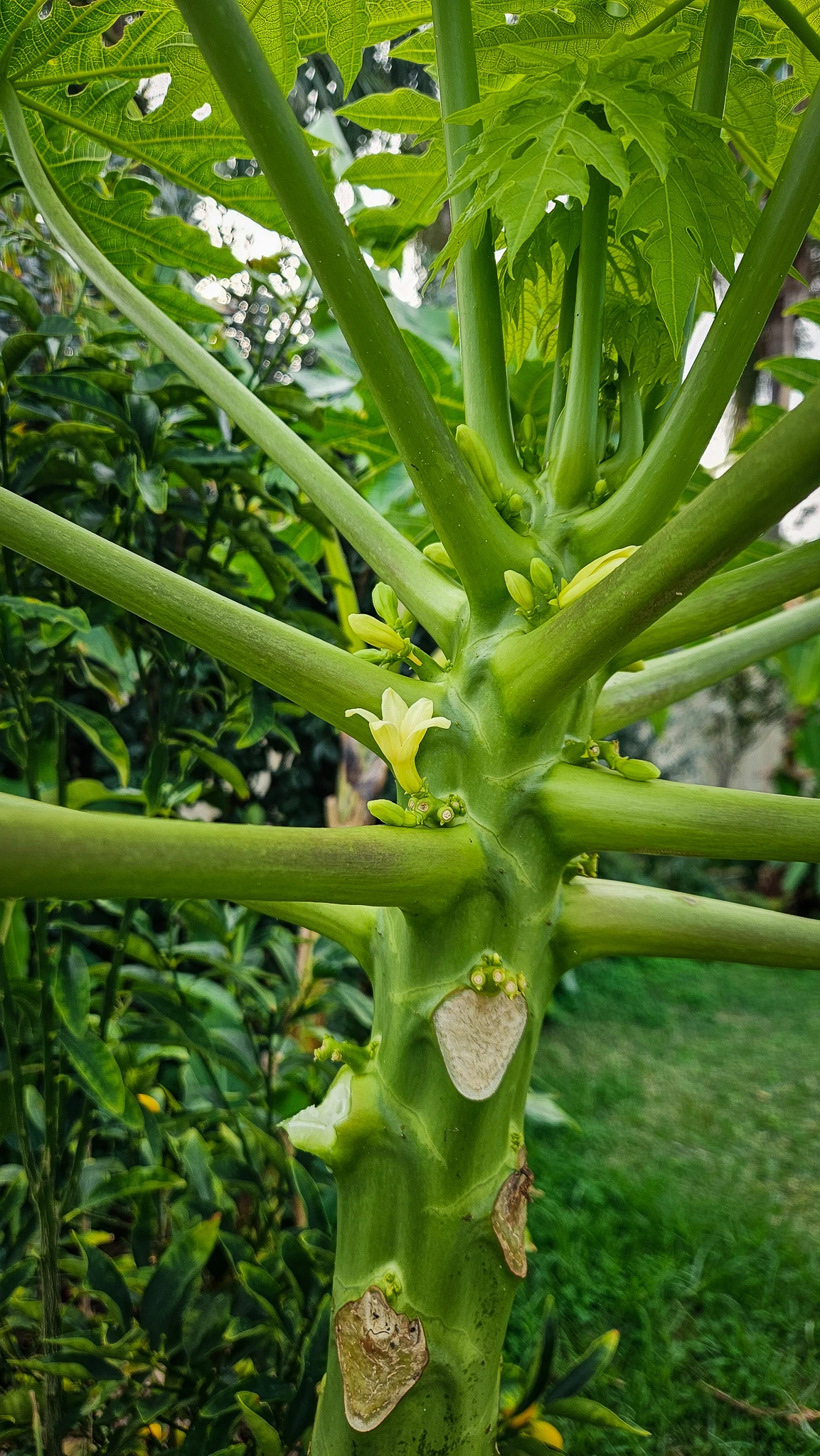
The fast, upright growth provides light shade for young understorey plants. Perfect for filling sunny gaps while your long-term trees mature. I call these my umbrella plants! And having umbrella plants for a HOT SUMMER here in Perth is crucial! Plus, you can eat the fruits green like a vegetable or ripe as a fruit. I have found the key to success with Papaya is strength in numbers.
Planting from seed means you may get bisexual, female, or male plants. They can also be fickle and die off over winter, so having more options means you have backup.
3. Tamarillo (Solanum betaceum)
These fast-growing fruit trees will produce in as little as 12- 18 months and adds a splash of colour with their vibrant red or golden fruit.
Tamarillo isn’t a fan of super hot sun and is best as a middle layer – so it’s great to grow under the dappled light or larger trees such as Mulberry or Banana. Or if you have a shady part of the garden and you are not sure what to grow! I also grow these from seed so that I can have backups.
They are very easy to grow from seed, just like their family members – the tomatoes. Cold snaps or extreme heat can kill off plants quickly. Tamarillo is also known as the tree tomato. Their tart fruits can be eaten fresh and are delicious with ice cream, yoghurt or in an apple crumble! They can also be used savoury in fresh chutneys and sauces. I love growing fruits that can be used in both sweet and savoury dishes. This helps a food forest be twice as productive!
4. Mulberry (Morus spp.)
Mulberries are absolute powerhouses of rapid growth and heavy yields, and are perfect for planting over chicken coops. They grow easily from cuttings and often fruit in their first season.
Mulberries fruit in Spring, which can be a lean time for fruits. Their broad leaves create valuable summer shade. Mulberries are deciduous, so they drop their leaves in winter for lots of garden mulch. As a result, they are often grown next to animal paddocks and chicken coops to offer summer shade and a bonus food source.
🚨 Mulberries do grow rapidly and have large, vast root systems, which can be hard to maintain in a small urban garden. I have used these as quick shade to help my gardens establish and then removed within 2 years (not easily with large roots!).
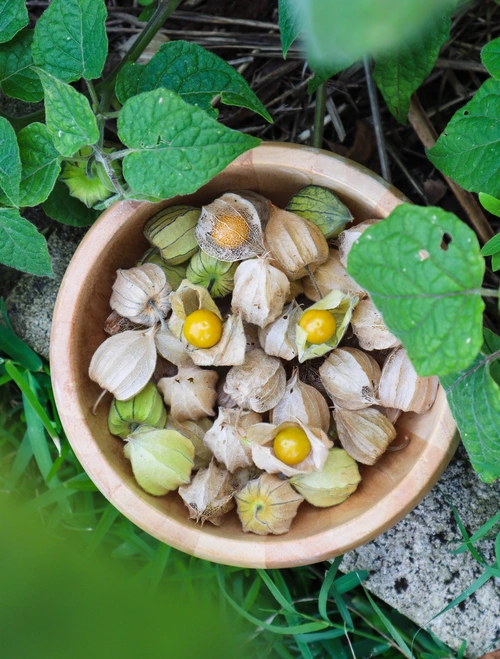
5. Cape Gooseberry (Physalis peruviana)
A quick win for any garden, these fruit in as little as 4–6 months from seed. Cape Gooseberry self-seeds, is easy to grow, and thrives in hot, dry climates. They produce golden, tangy berries that are perfect for snacking or jam-making. But…mostly, they don’t make it out of the garden! The plants are compact and usually stay under 1m tall.

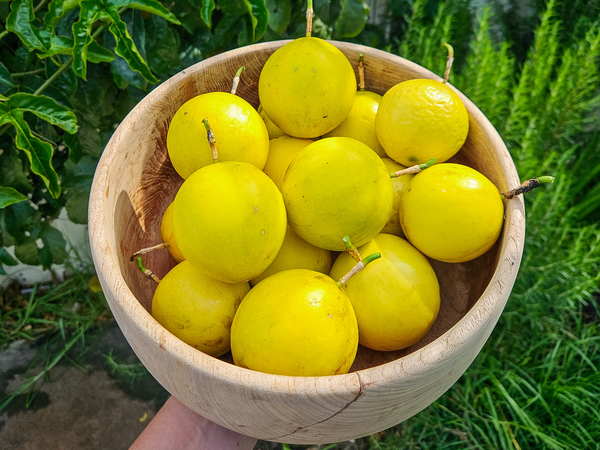
6. Passionfruit (Passiflora edulis)
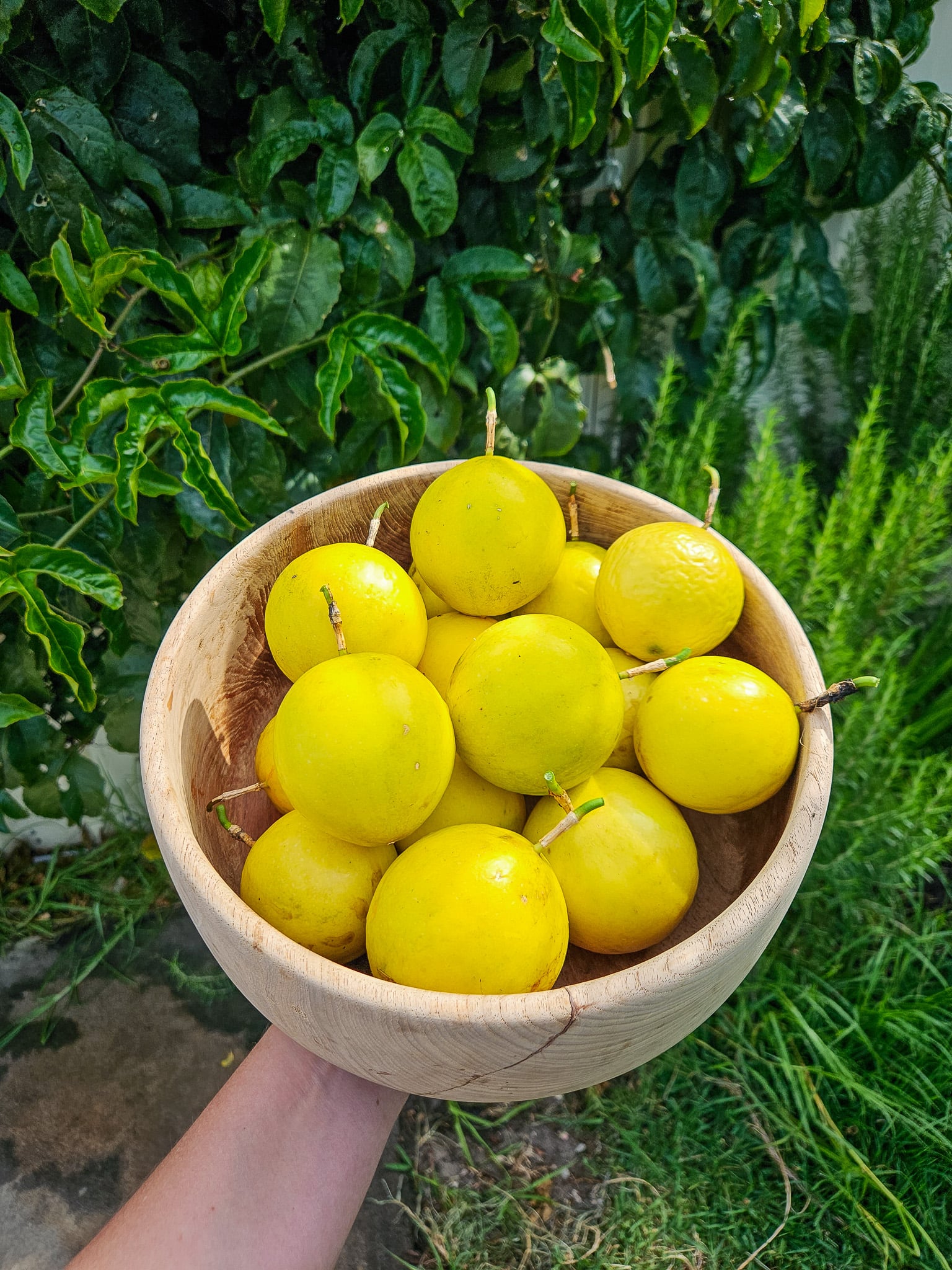
Passionfruit are rapid growers! Racing up fences and trellises to provide privacy and summer shade. If you purchase a plant from cuttings (most store-bought are from cuttings) they can fruit in their first summer, if not the second!
Seed grown will usually be 2-3 years to fruit. Passionfruit are ideal for utilising vertical space to grow more fruits. There are many different varieties, and having different types can extend your season.
I always suggest AVOIDING GRAFTED VARIETIES. Especially here in Perth. They are not needed, and the rootstock can easily get away from you and send up suckers 100s of metres away.

7. Barbados Cherry / Acerola (Malpighia emarginata)
A fast, compact shrub that usually fruits in the first year from cutting grown. Producing bright red berries packed with vitamin C and can produce multiple sets of fruit throughout the year. Drought-tolerant once established and great for small gardens or food forest edges.
A great option for a tropical cherry-like fruit in warm climates. They have beautiful pink flowers that are amazing for attracting pollinators, too. They are easy to grow from cuttings to add in hot spots of your garden to get quick shade and fruit!
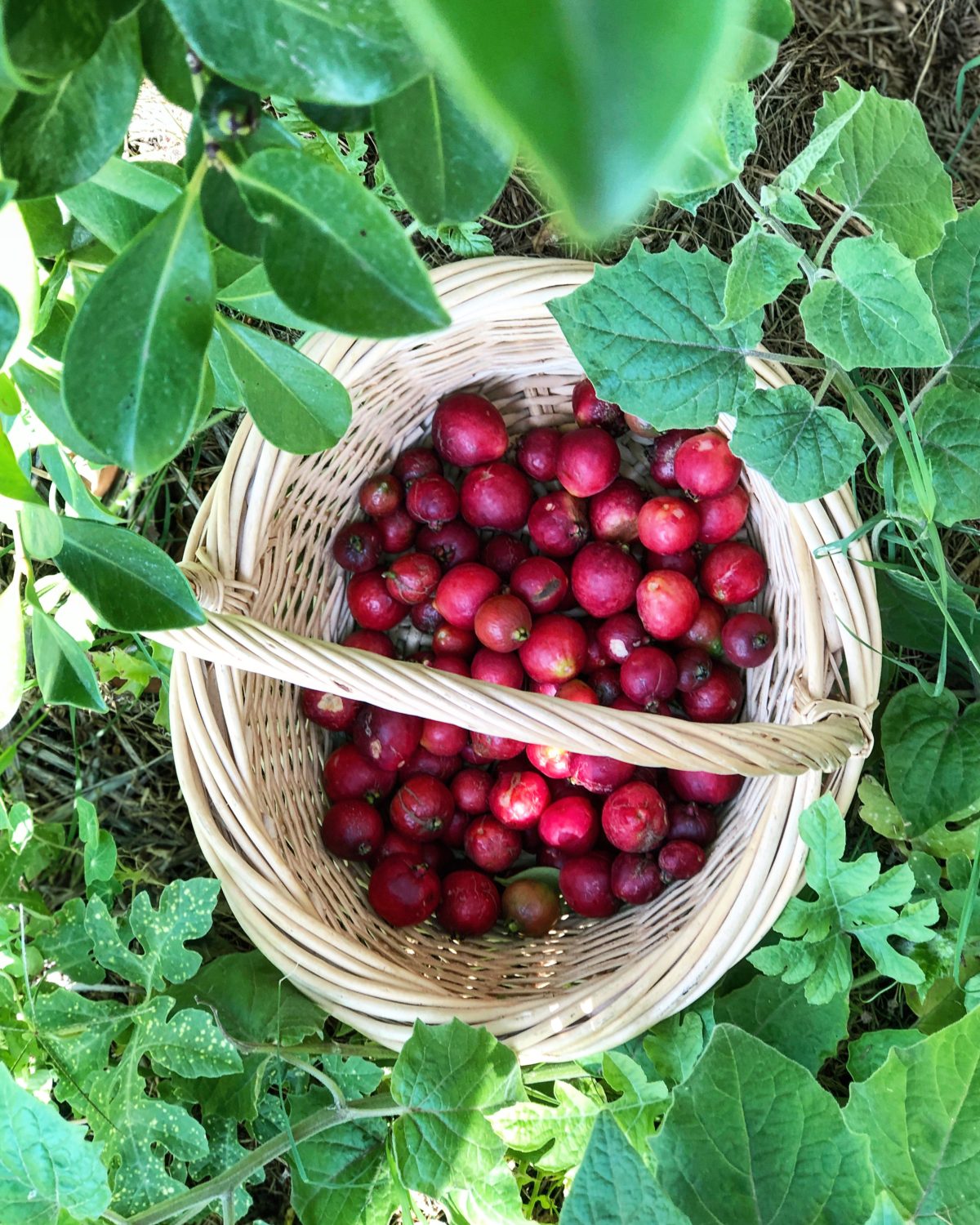
8. Brazilian Cherry (Eugenia uniflora)
This tough, evergreen shrub grows quickly, and with glossy, dense leaves, it would make a beautiful edible hedge. Fruits within 1–2 years, often multiple times a year in warm climates. The deep red fruits are tart-sweet and a magnet for birds and bees. It can also be grown as a middle-layer shrub. They grow easily from seed or cutting to multiply throughout the garden.
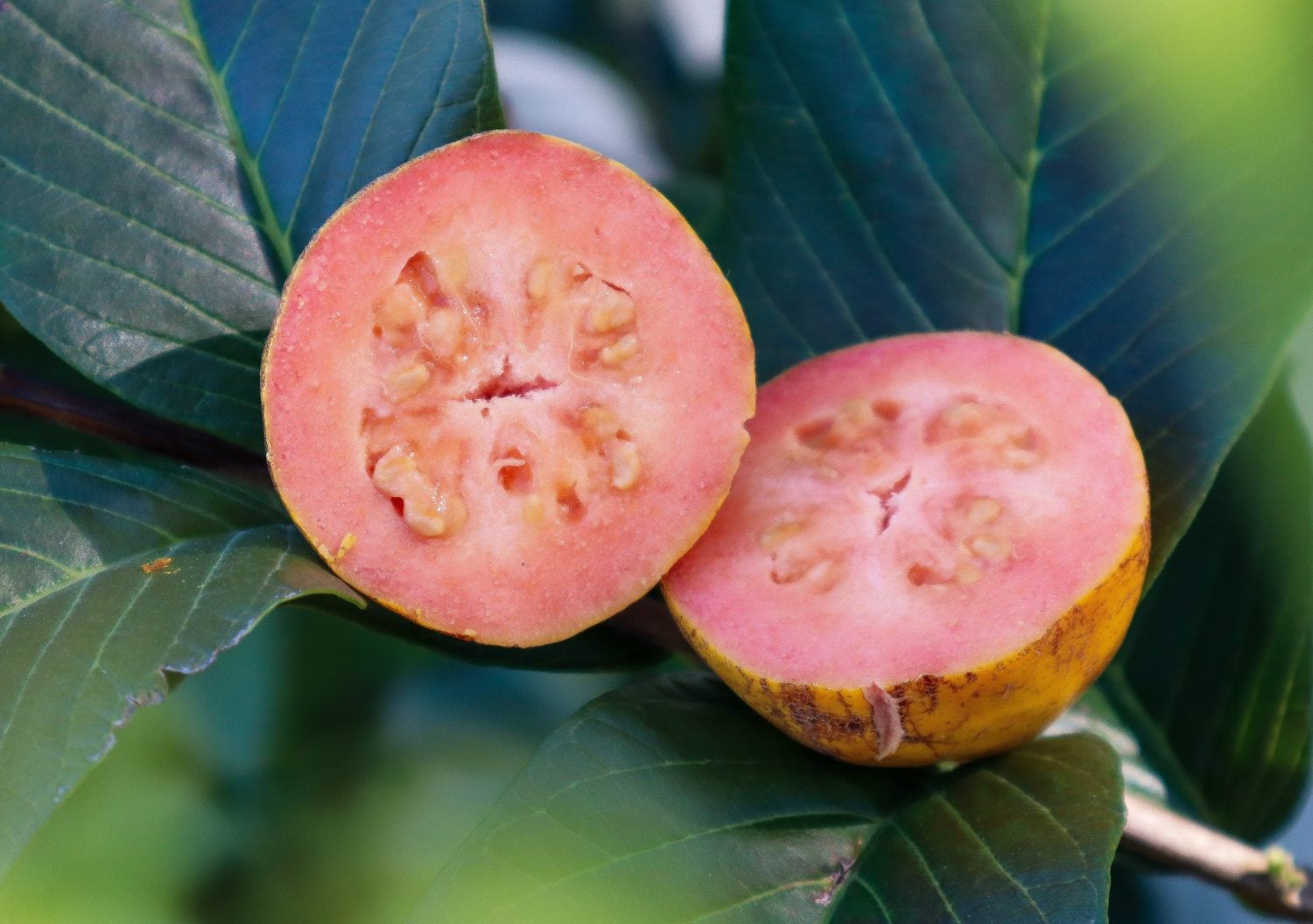
9. Guava (Psidium guajava & Psidium cattleyanum)
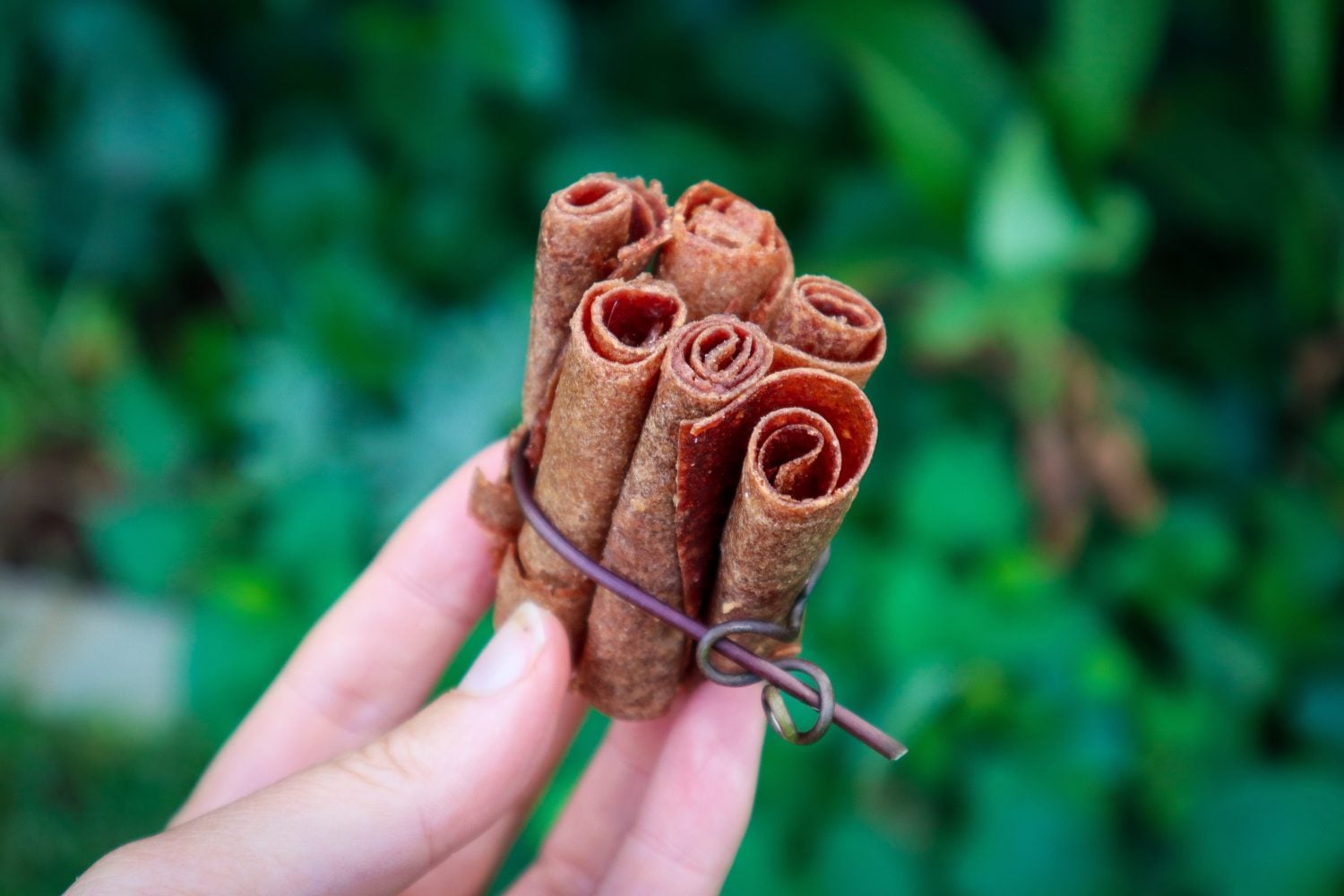
A resilient, quick-establishing fruit tree that’s highly productive within 1–3 years. Guavas handle pruning well, making them easy to shape for compact gardens. They are hardy, and their dense canopy provides valuable shade and leaf litter for mulch. Great for making smoothie bowls or fruit leather!
🚨 In some states and countries, Psidium cattleyanum (cherry guava) self-seeds easily and is spread by birds and are considered a pest. That is not the case here in Perth, but check with your local biosecurity.
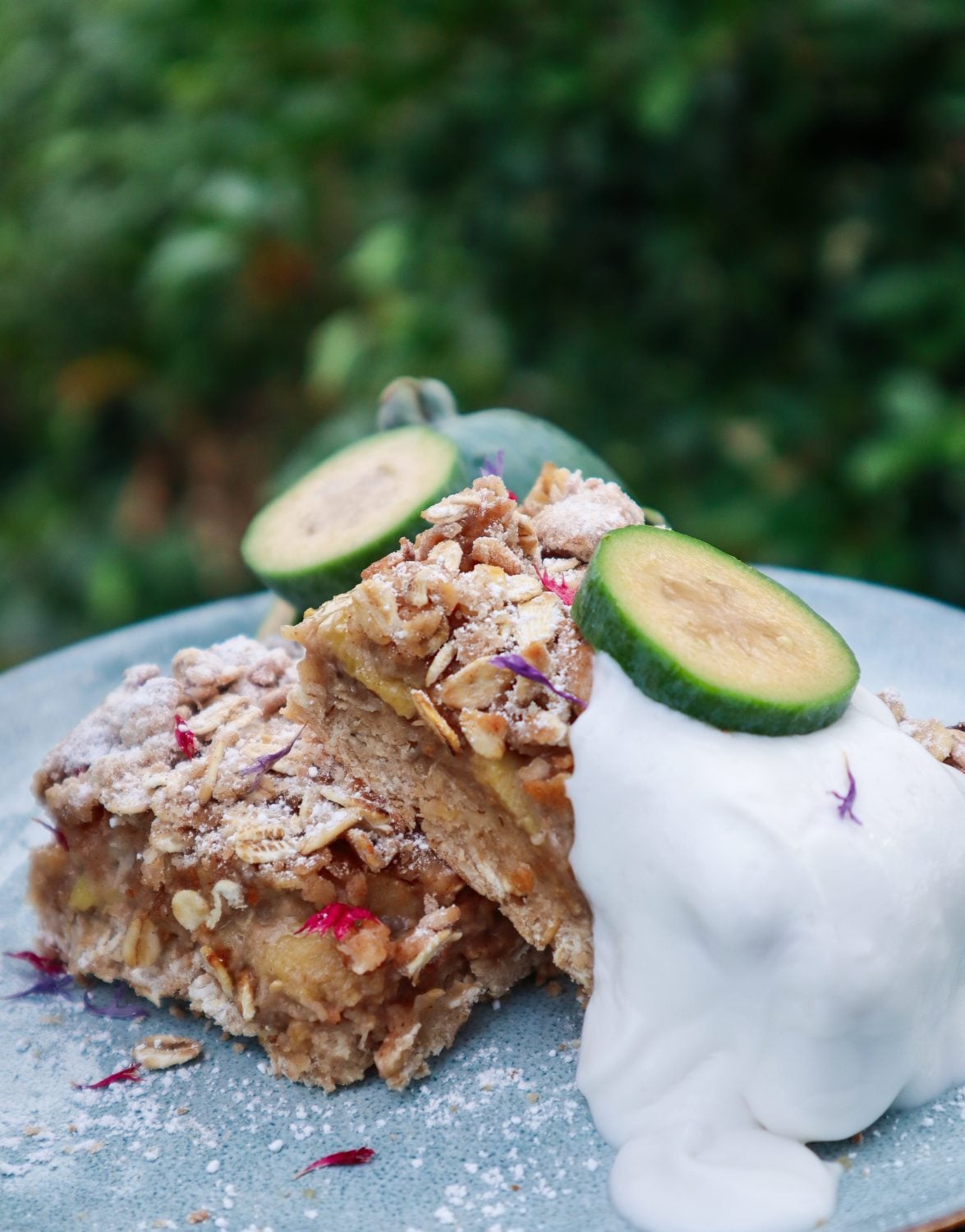
10. Feijoa / Pineapple Guava (Acca sellowiana)
This Kiwi’s favourite fruit! Feijoas are both ornamental and edible with silver-green foliage, stunning flowers, and delicious autumn fruit. The KEY is choosing a named variety/ grafted variety for quality fruit that starts producing in the first year.
Feijoas are fast to establish and low-maintenance, and they make excellent edible hedges.
They are also said to have fire-retardant qualities. Usually, they fruit abundantly within 2–3 years. I prune these back by 1/3 each year to create mulch for my garden. The seedling “generic” ones can take more like 5-6 years to fruit.

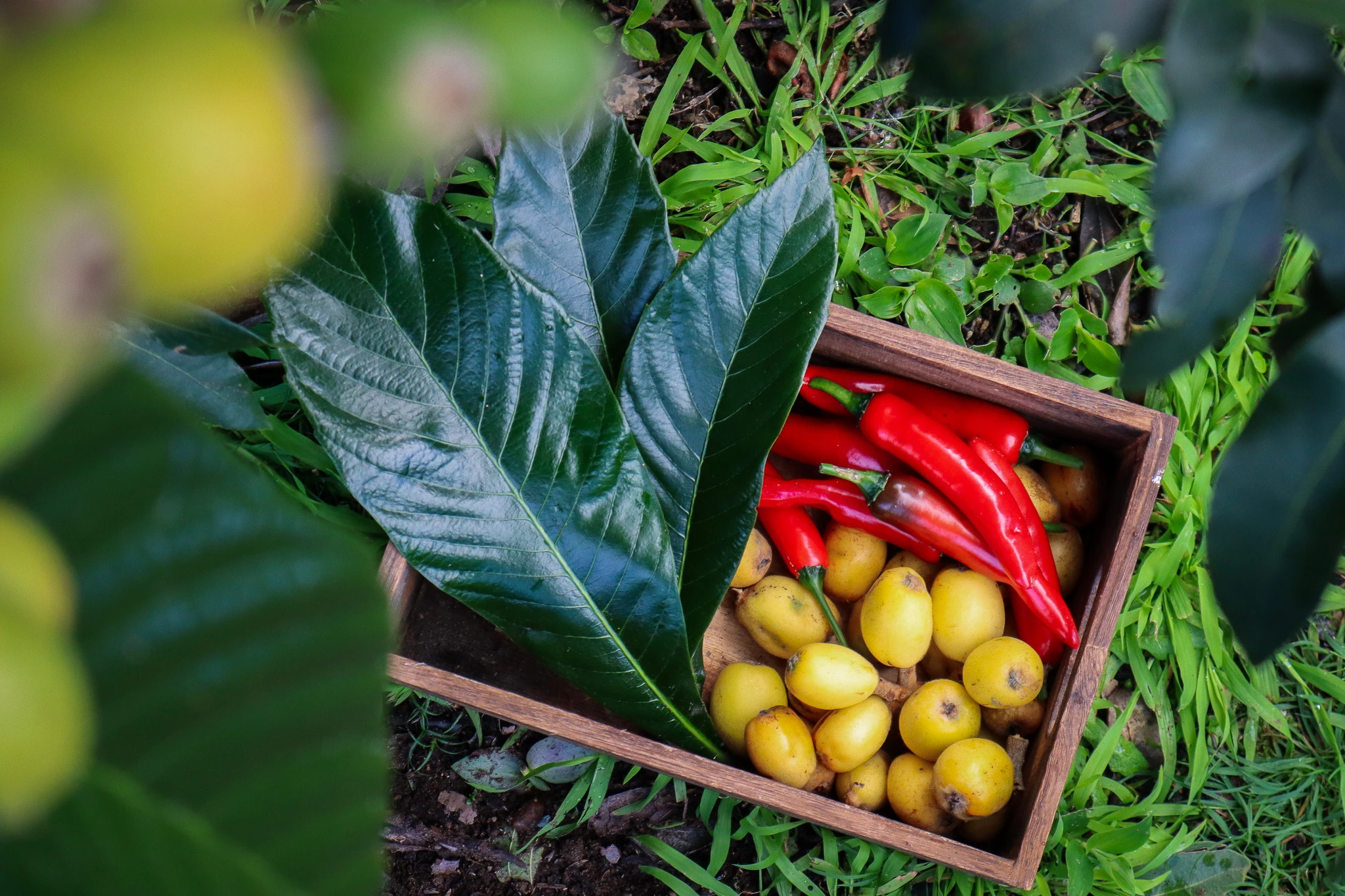
11. Loquat (Eriobotrya japonica)
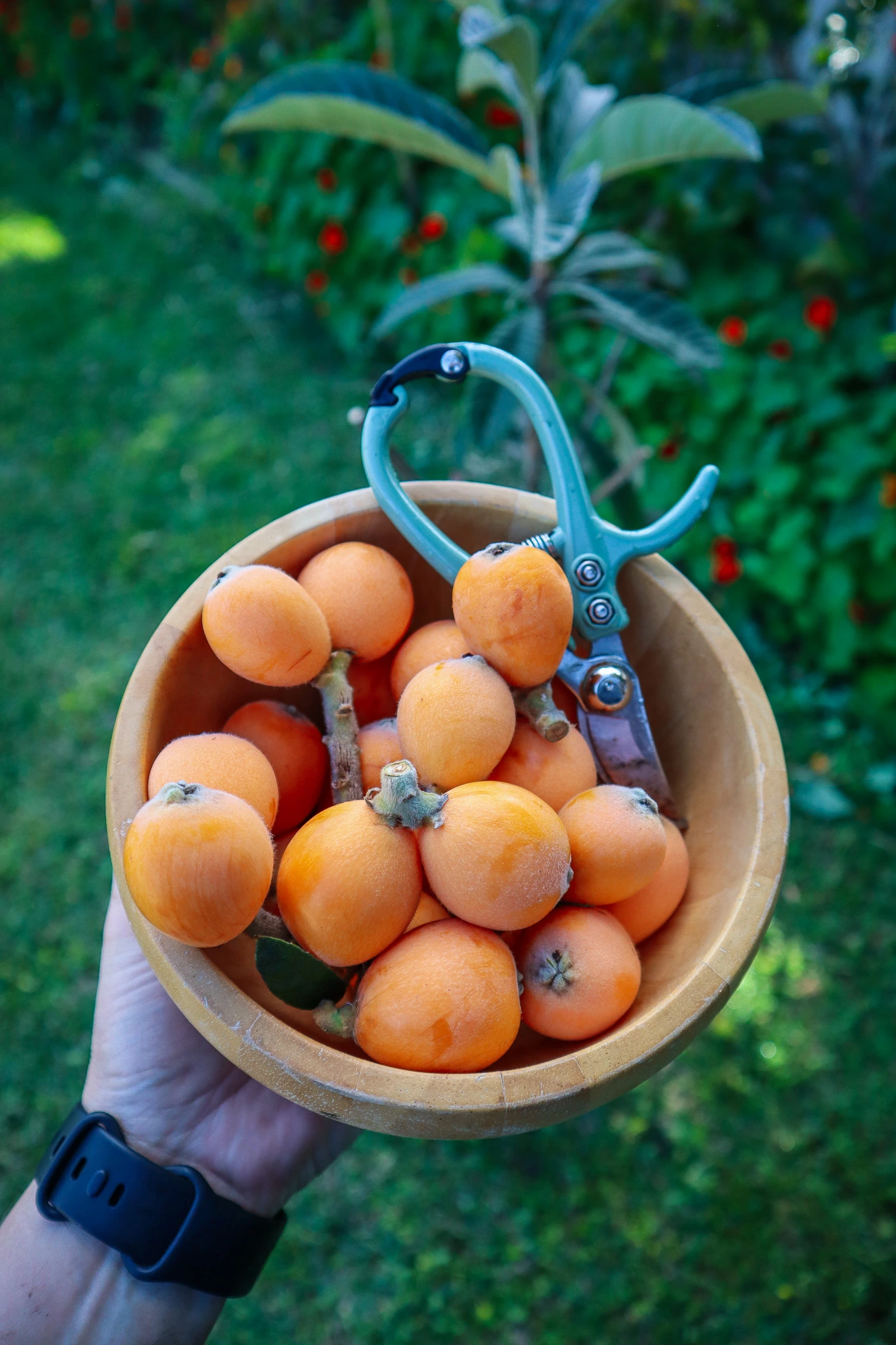
A hardy evergreen and fast-growing fruit tree (especially grafted trees). Loquats flower in late winter and fruit in early spring, bringing colour and food in an “in-between” time. Their lush canopy and year-round foliage make them excellent habitat trees.
They do grow very quickly and very large, so they can be hard to maintain in an urban garden. I’m growing mine in a pot, but it would be best to keep them small and well-pruned so you can bag or net the fruits. The fruits are sweet and taste kind of like a mix of pear, mango and apricot!
🚨 In some states and countries, they self-seed easily and are spread by birds and are considered a pest. That is not the case here in Perth, but check with your local biosecurity.
12. Fig (Ficus carica)
Few fruit trees grow faster and produce more than figs. They can bear fruit in their second year and love hot, dry conditions. Their dense canopy provides shade in summer, and being deciduous, their leaves provide organic matter.
One thing that surprised me about figs is the huge range of flavours with different varieties. From the sweet, honey-like yellow figs to the strawberry jam flavours. SO MUCH BETTER than any store-bought fig. Figs also grow well in pots and containers for urban gardens. They can have very strong root systems, so it is important to consider that when planting. Avoid planting them close to structures or pavings.
13. Ice Cream Bean (Inga edulis)
A nitrogen-fixing, fast-growing fruit tree that grows incredibly fast, adding instant shade and biomass. They produce long, sweet pods filled with cottony, vanilla-flavoured pulp. Ideal as a pioneer species to improve soil fertility, create quick shade and microclimates. Ice-cream beans are fast growers and can grow to 8m, so they can be better suited to those with plenty of space or who are happy to regularly prune for garden mulch.
14. Strawberry (Fragaria × ananassa)
A classic quick win for any edible garden! Strawberries fruit within months and spread easily to fill bare soil. Perfect as an edible groundcover or on the edges of your garden beds. They help to shade the soil and retain moisture. Their flowers attract pollinators and their fruit… make the best garden snacks! 🍓
15. Dragon Fruit (Hylocereus spp.)
A fast-growing climbing cactus that can start fruiting within 1–2 years in warm climates. It’s perfect for growing vertically on a trellis, fence, or post, helping you maximise space in a young food forest. Dragon fruit comes in many colours and flavours, making it a collector’s dream! It is important to have a sturdy trellis ready for these fast growers.
16. Rosella (Hibiscus sabdariffa)
A fast-growing tropical plant that produces edible calyxes within just a few months. Rosella thrives in warm climates and is perfect for teas, syrups, and jams, adding both colour and diversity to your garden. It also grows into a productive, shrubby plant that helps fill space and build biomass. Part of the hibiscus family it is both ornamental and edible!
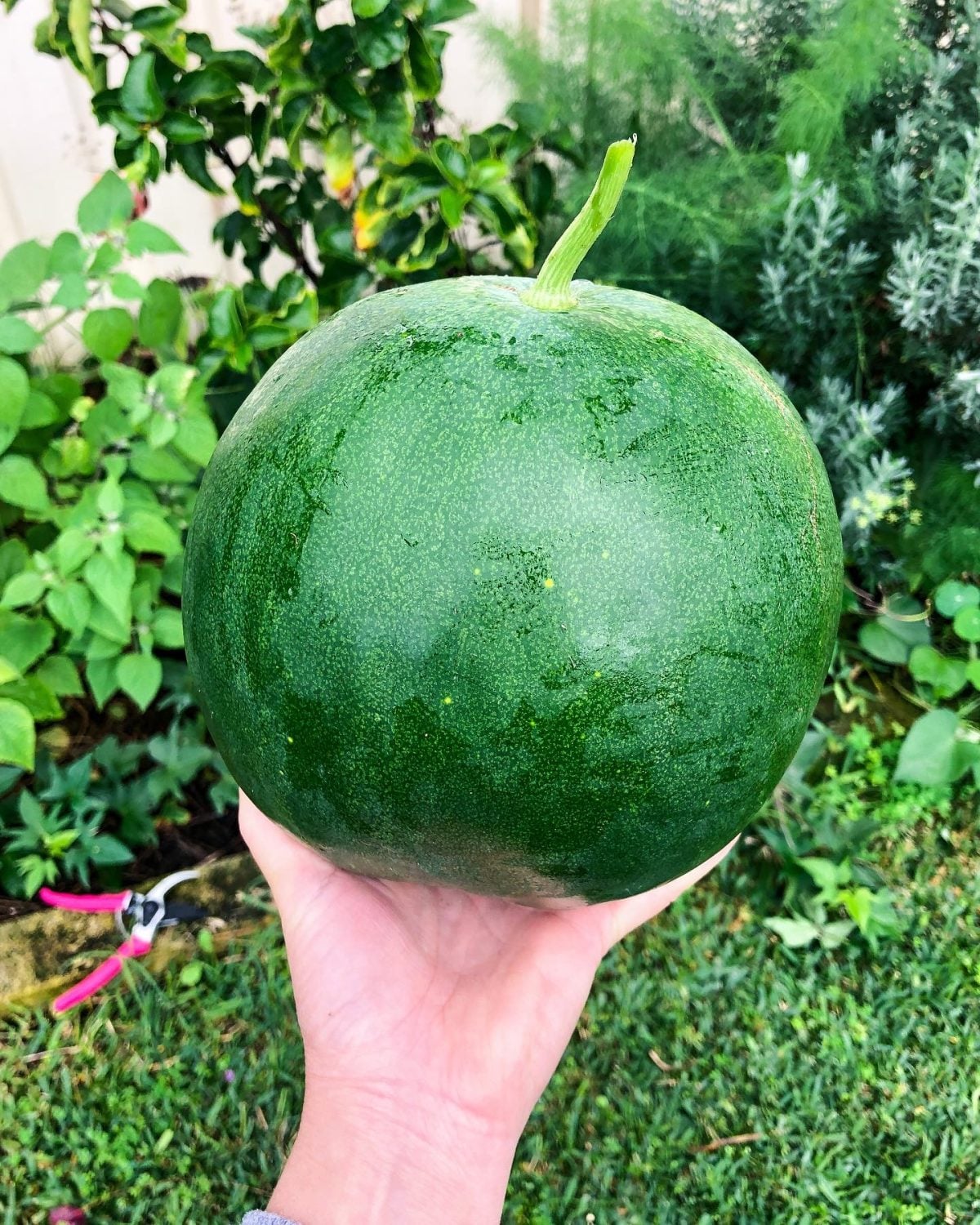
17. Melons (Watermelon, Rockmelon, Honeydew)
Melons are fast-growing, sprawling plants that can produce fruit within a single season. They quickly cover bare soil, helping to suppress weeds and retain moisture while your garden is still establishing.
In hot climates, they thrive with plenty of sun and make a rewarding, high-yield addition to summer gardens. You can also grow melons vertically to save space and add more shade to your summer gardens.


18. Blackberries / Brambles (Rubus spp.)
Blackberries are vigorous, fast-growing brambles that can produce fruit within their first or second season. They spread easily and can quickly fill vertical space along fences or trellises, creating a productive edible barrier – it is important to grow them in contained beds. While they can be a bit wild if left unmanaged, regular pruning keeps them productive and makes harvesting much easier. If you choose a thornless variety like “Chester” or similar, they do not sucker or send runners as vigorously as the traditional blackberries.
19. Lemonade Tree (Sweet Lemon Variety)
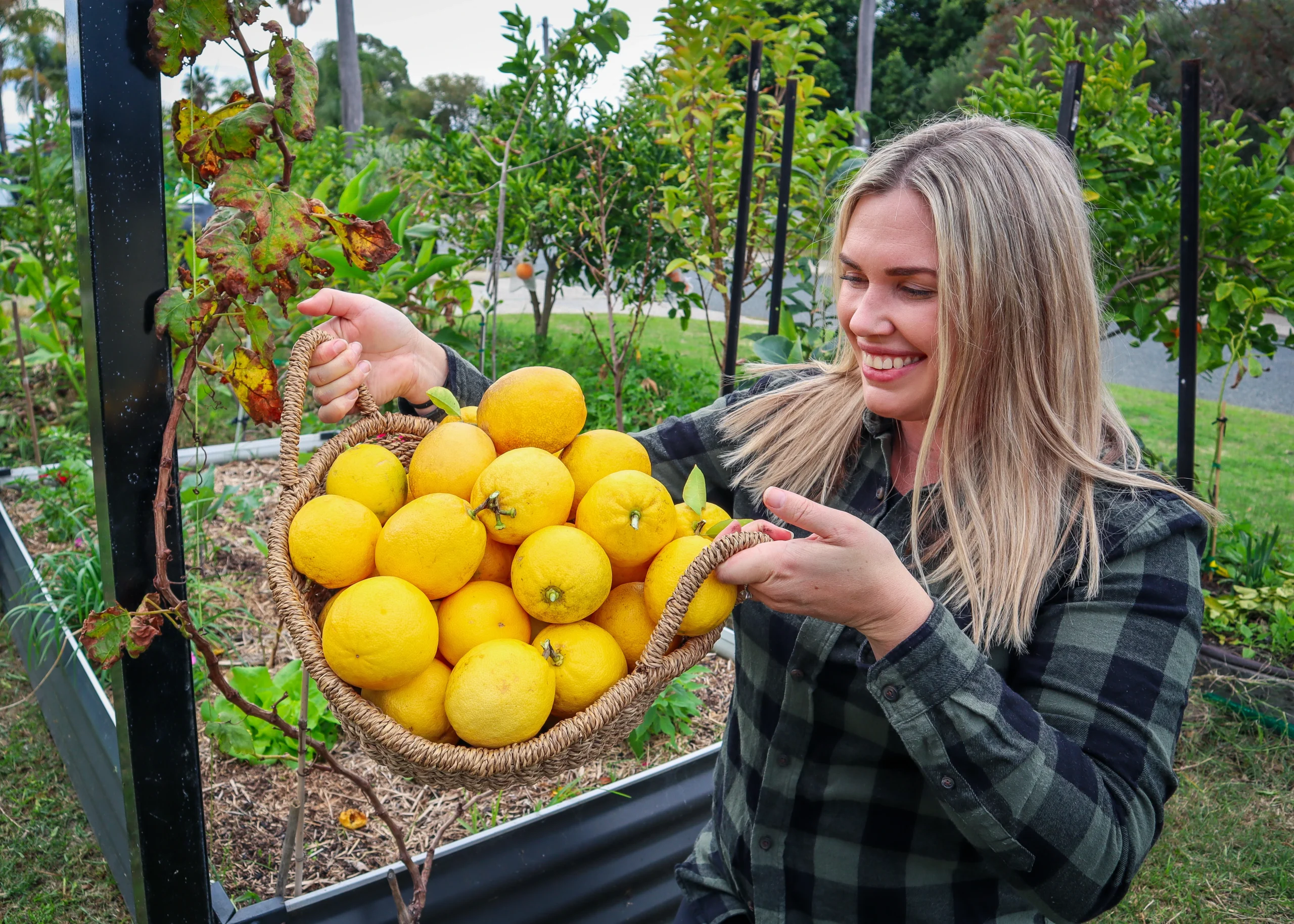
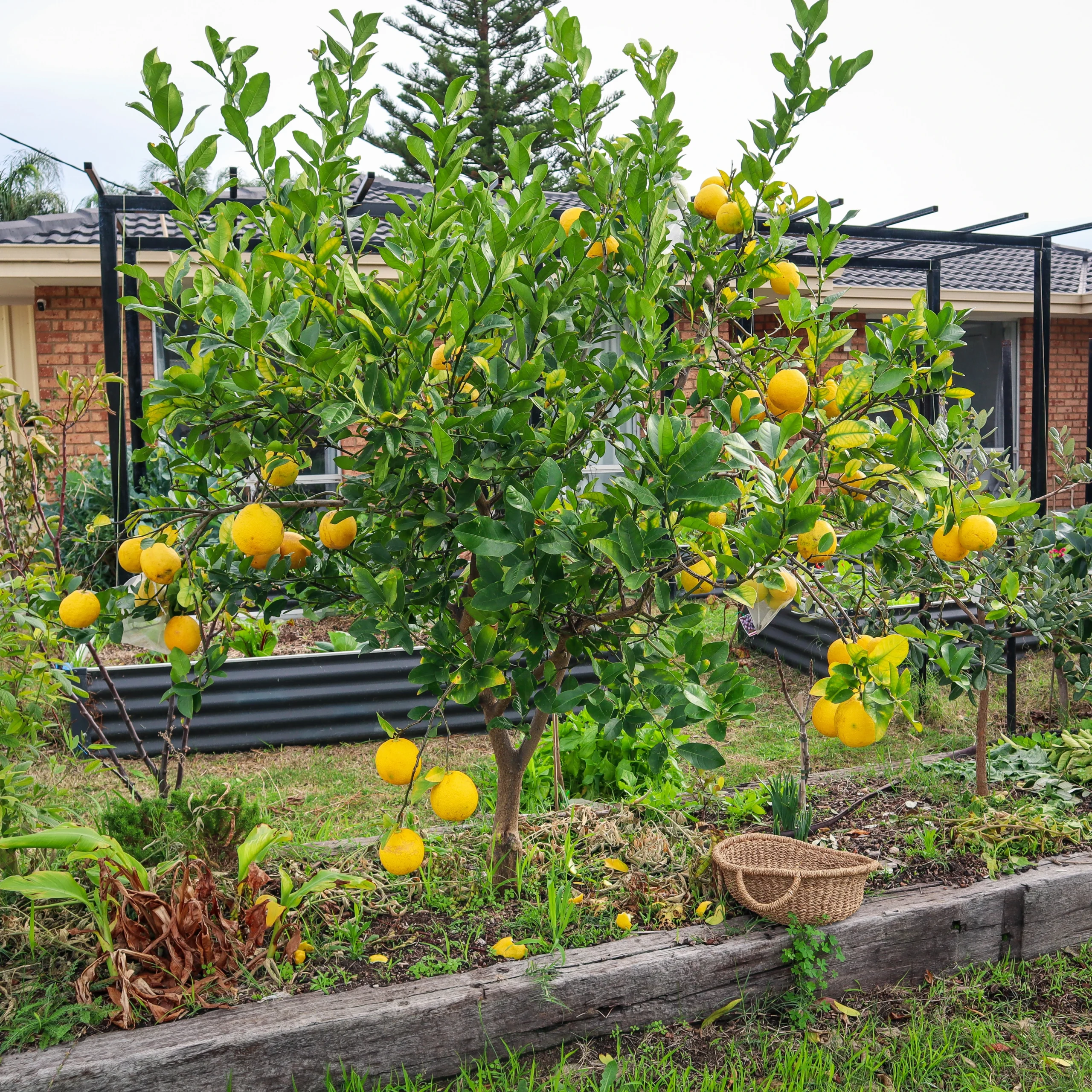
A lemonade tree is a great option if you want a citrus that produces in abundance at a young age! and more reliably in warm climates. These sweet, low-acid lemons can often fruit from a young age, especially when grafted, and are incredibly productive once established. They also add structure to your garden while still giving you relatively quick harvests compared to other fruit trees.
20. Pepino Melon (Solanum muricatum)
This low-growing perennial fruits within months, producing juicy, melon-flavoured fruit. It’s perfect as an understorey groundcover or filler plant in young gardens. Quick to root from cuttings and thrives in partial shade beneath taller trees.
🚨Here in Perth, they are a host plant to spider mites (that thrive in hot, dry climates), so always be wary when purchasing them and keep an eye out in your garden. Unfortunately, they are no longer something I grow due to this, but I do love them!
Fast-Growing Fruit Trees Are the Key to a Thriving Food Forest
If you’re starting a food forest, it’s easy to feel like everything is taking too long, but the secret isn’t to wait…. It’s to plant your way through that waiting period.
Fast-growing fruit trees and plants aren’t just about quick harvests; they’re about building a system that supports itself over time. They create shade, protect your soil, and help your long-term trees establish faster, and before you know it, what once felt slow starts to become abundant, layered, and productive.
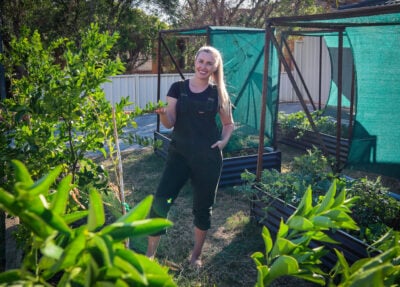
The key to success in my high-density gardens is to give my long-term crops, such as Mango and Avocado, the most amount of space. Then I go in with these fast-growing fruit trees and plants so that I can offer shade and protection, as well as eventually mulch when I prune them or chop them out completely.
I hope this list offers you some ideas and inspiration to add to your garden for some quick wins! Are you growing any of these in your garden? I would love to know.
Happy Gardening 🌱