Grass is one of the biggest challenges when turning a backyard into a productive food forest. Instead of constantly fighting it, I’ve developed a simple strategy to stop grass growing and gradually transform the lawn into thriving garden spaces.
If you’ve ever felt like you’re failing because grass keeps popping up in your garden beds… you’re not alone. When I first started gardening, I thought success meant having perfectly clean, grass-free beds. But over time, I realised something important:
👉 Grass isn’t the problem …it’s actually playing an important role.
And once you understand why it’s growing, you can actually make your garden a place where grass struggles… and your plants thrive. In this post, I’ll show you exactly how I’ve gone from grass-filled garden beds to low-maintenance, mostly grass-free systems…without chemicals or constant weeding or chemicals.
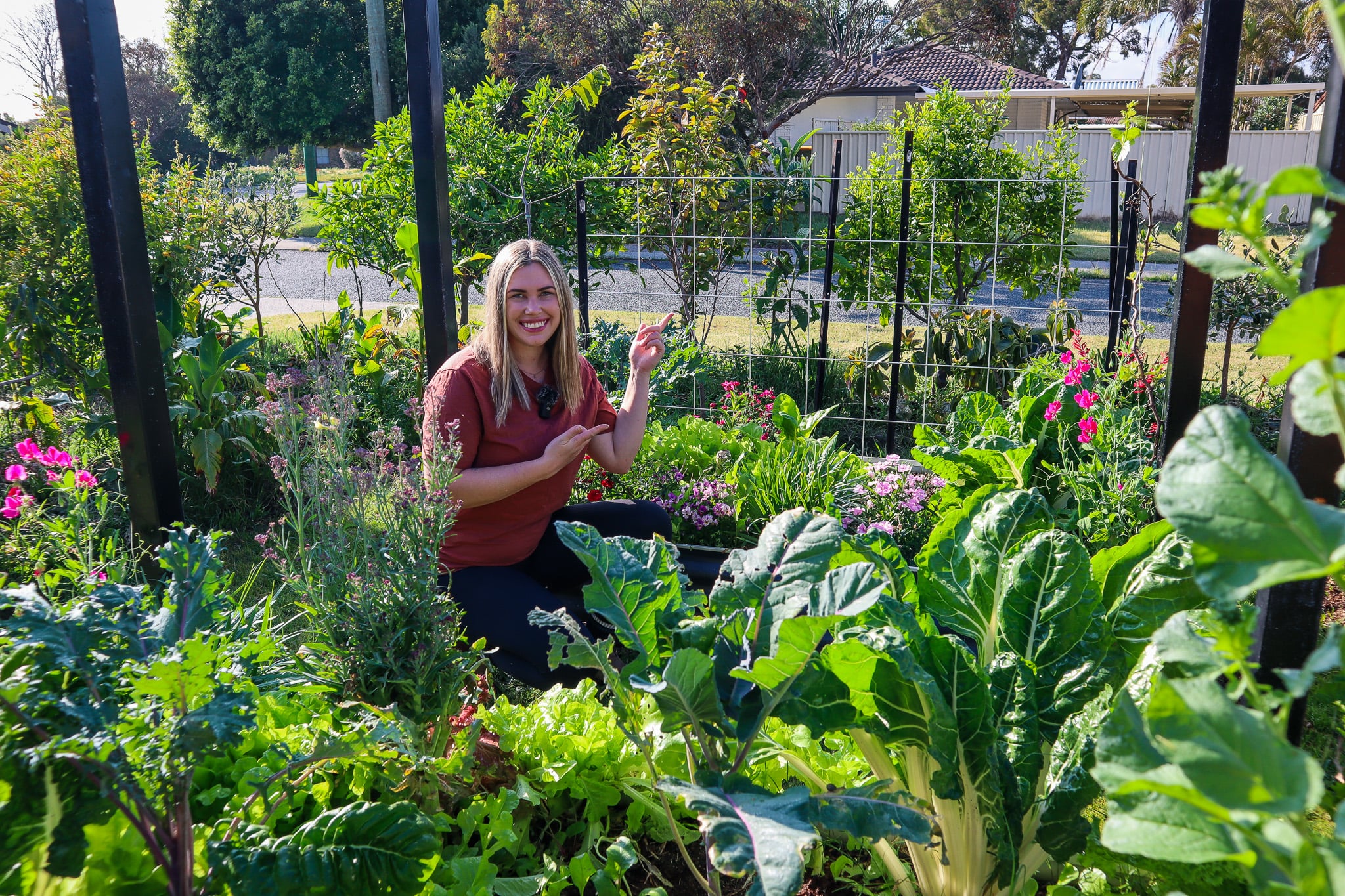
I’ve managed to get two of my garden beds to be pretty much grass-free from this strategy. So, I want to share it with you so that you can start working on it in your garden as well, and not feel like you are failing. If you prefer to watch, check out the full video below.
Why Grass Keeps Growing in Your Garden Beds
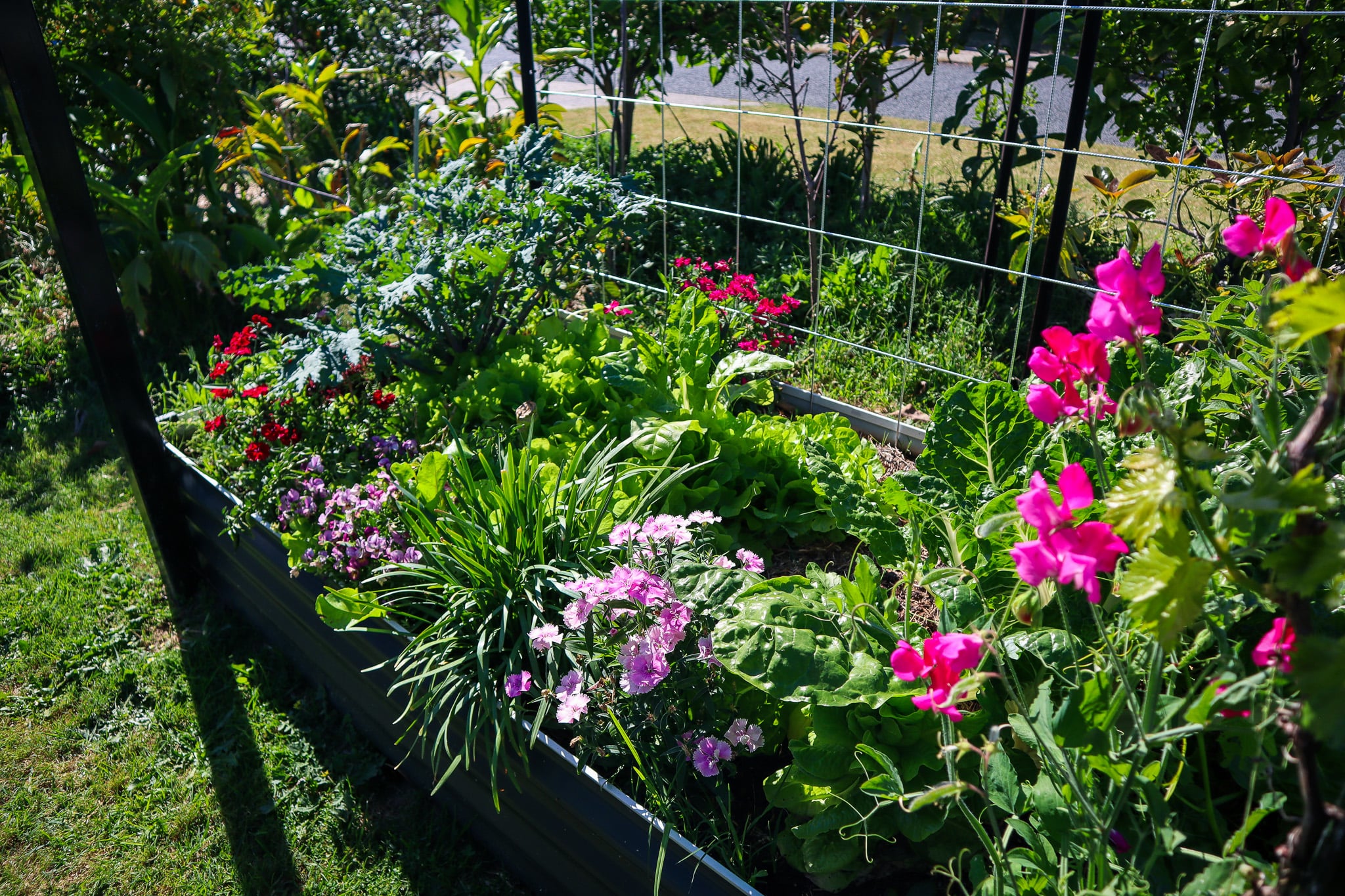
You may be able to see in some of my videos or photos that I do have grass growing in some of my garden beds. And it’s not something I’m worried or stressed about because I know I’ve got plans in place that are going to help me manage that long term. I have transformed two of my main food forest garden beds from half-full of grass to almost zero grass!
It’s really important to figure out some of the key factors on what grass needs to grow and thrive so that we can flip that and make it a less desirable environment for grass to grow, so that we can slow it down while we wait for our long-term strategy to kick in.
Grass is a pioneer plant. It shows up first. It covers the soil to try and protect it, try and get things to grow. So it does have an important role in the garden. Grass likes two key things: SUNLIGHT & FREE DRAINING SOIL. My hot, open front yard is prime growing conditions for grass to thrive! So if we know what grass likes, we can FLIP IT and make a less desirable environment for grass.
Roots in the ground are always better than dry, bare soil. Grass is quick to turn sunlight and water into available sugars as well as provide shade and habitat for beneficial soil microbes and insects. But some of us do prefer grass-free garden beds…so how do we start to slow down the grass growth and eliminate it FOREVER? 👉 Let’s talk about my 2-phase grass suppression strategy.
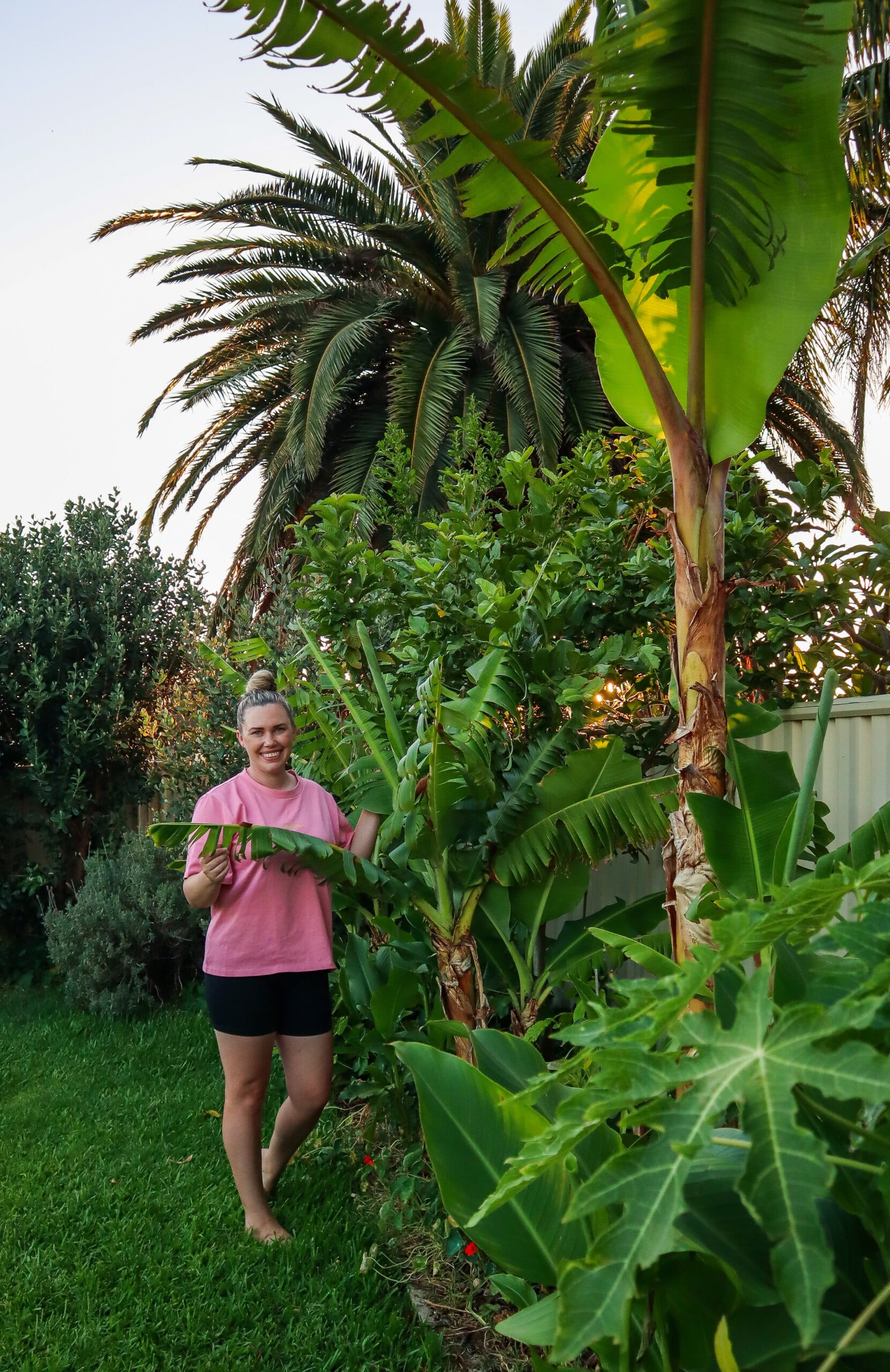
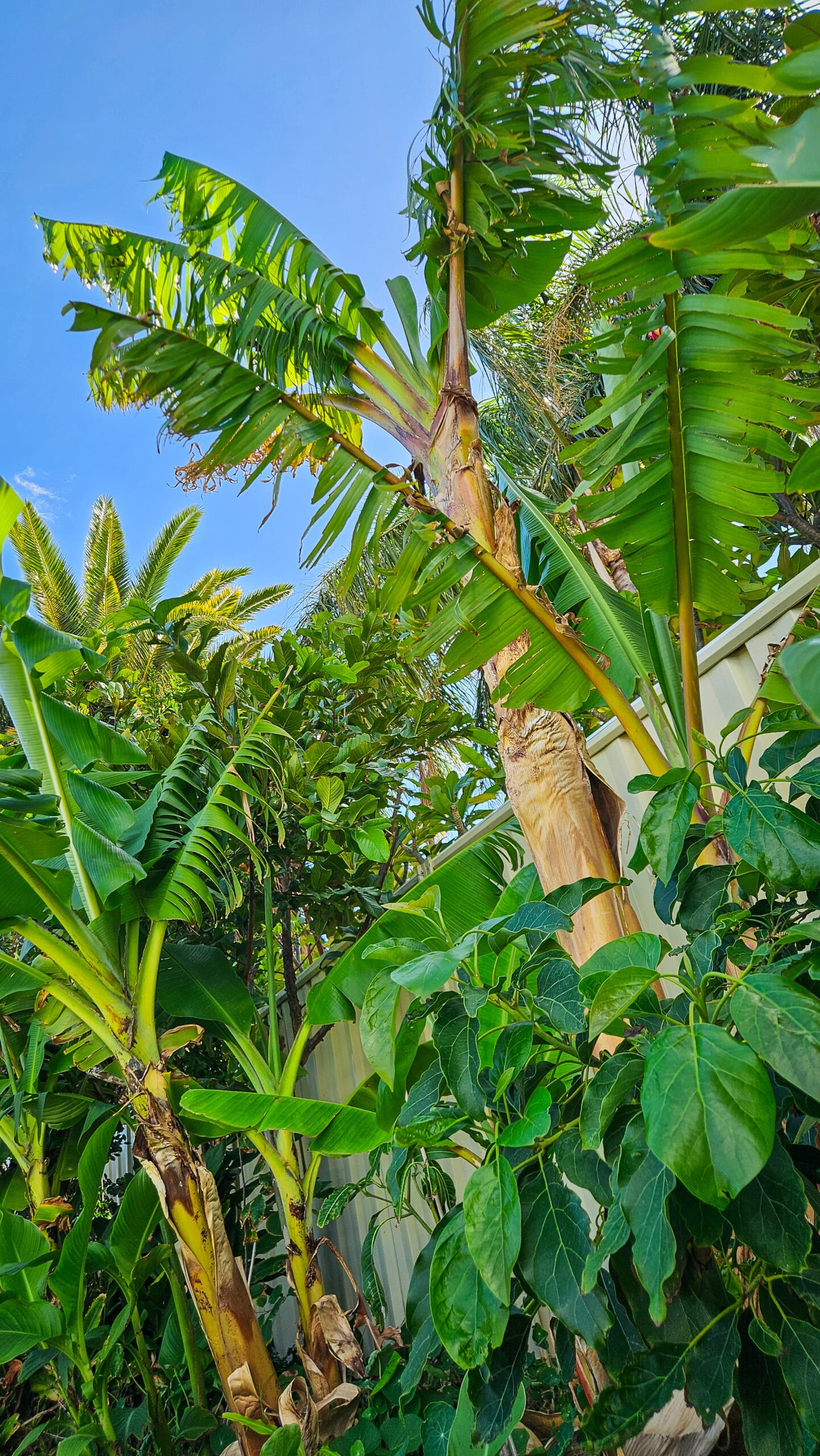
My Easy Two-Phase Grass Suppression Strategy
Stopping grass growing in your garden beds isn’t going to happen overnight, but with a plan and some patience, you can have grass-free gardens bursting with edible plants. There are TWO key parts to the plan! A long-term strategy and some short-term solutions to get started with while you wait for the long-term strategy to kick in. They both work together to create one solution: no grass in your garden beds!
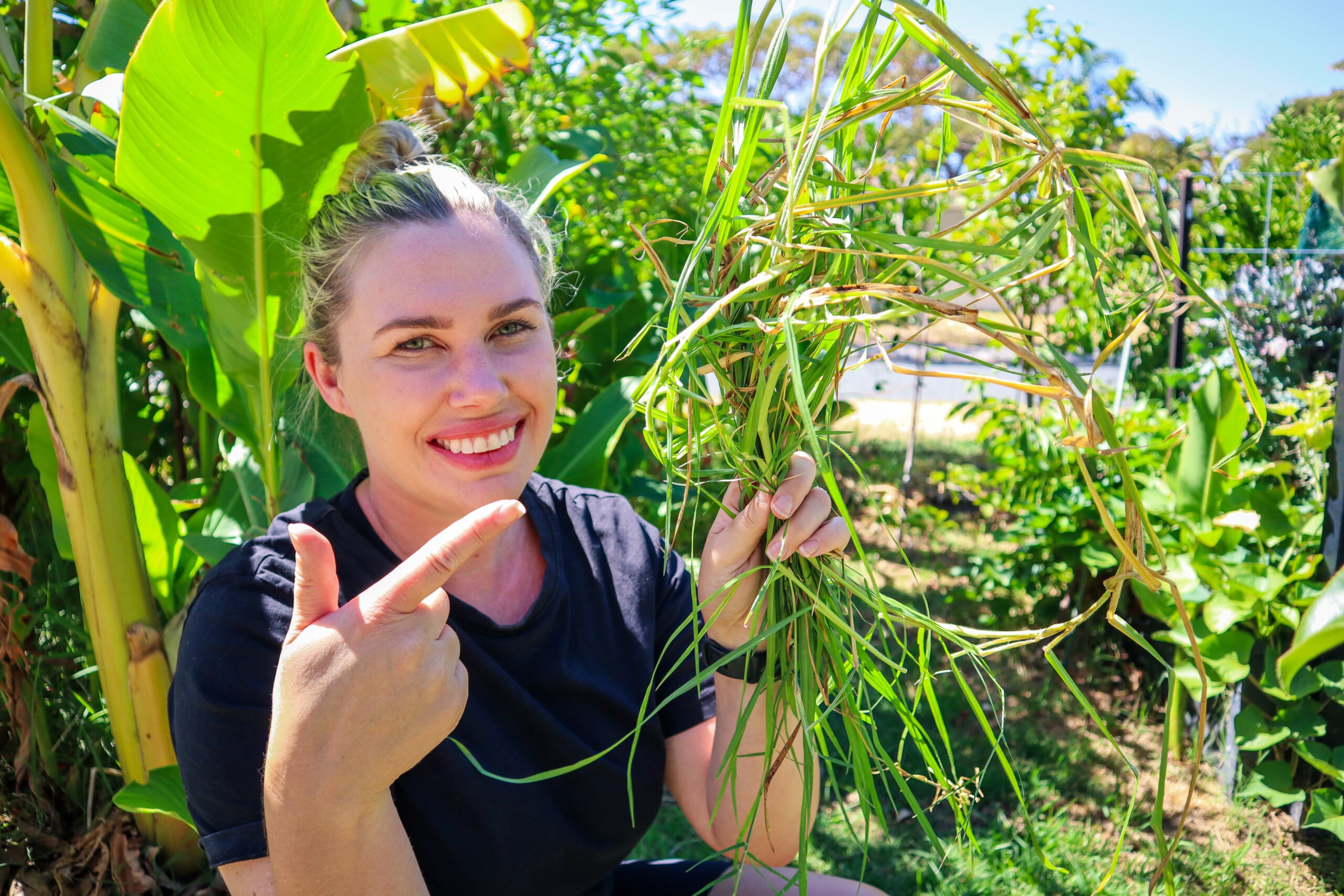
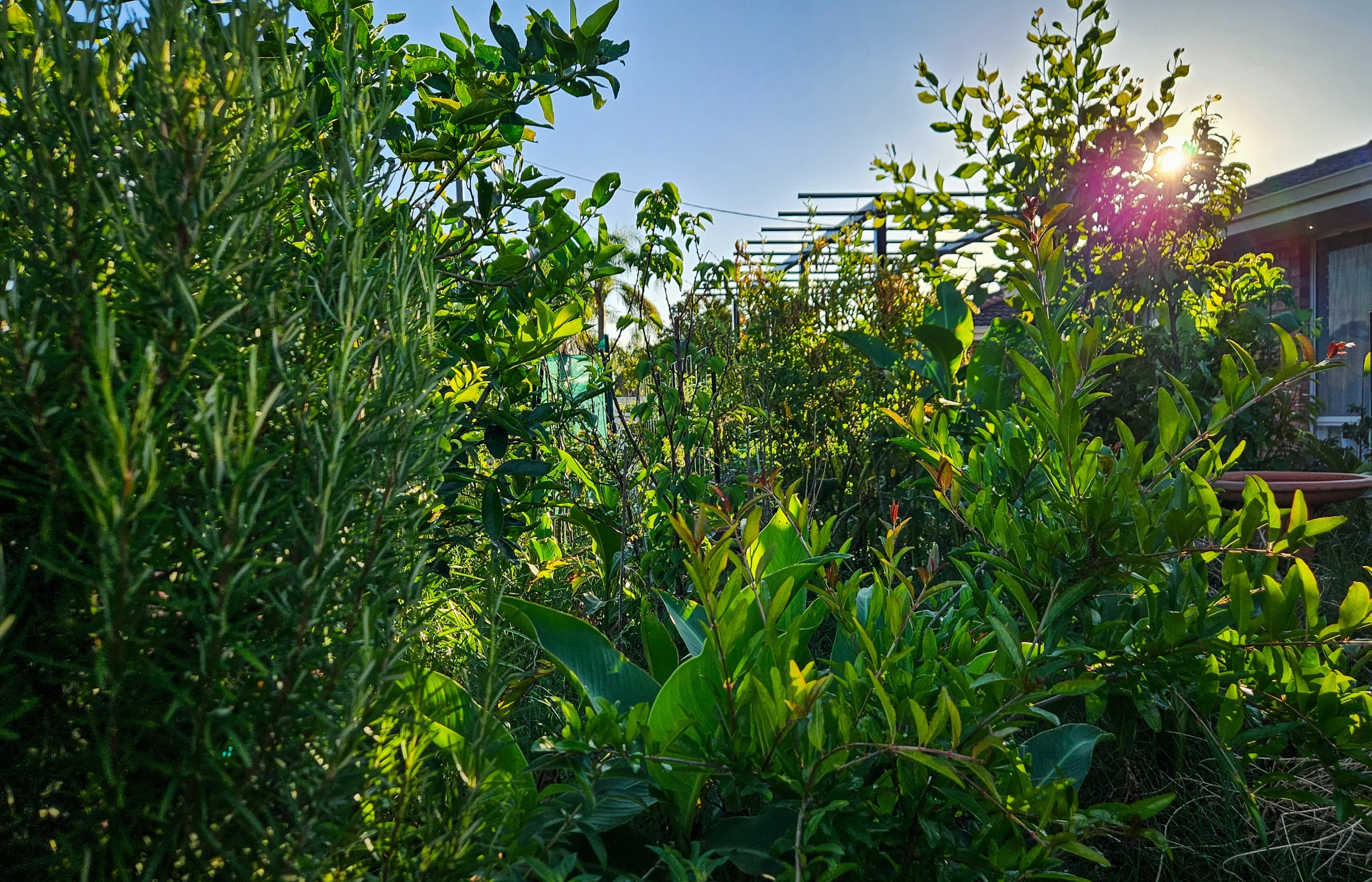
1. Long-term Strategy to Stop Grass
We know that grass likes sunlight, so the long-term plan is to block all sunlight reaching the ground level of your garden beds. We do this by:
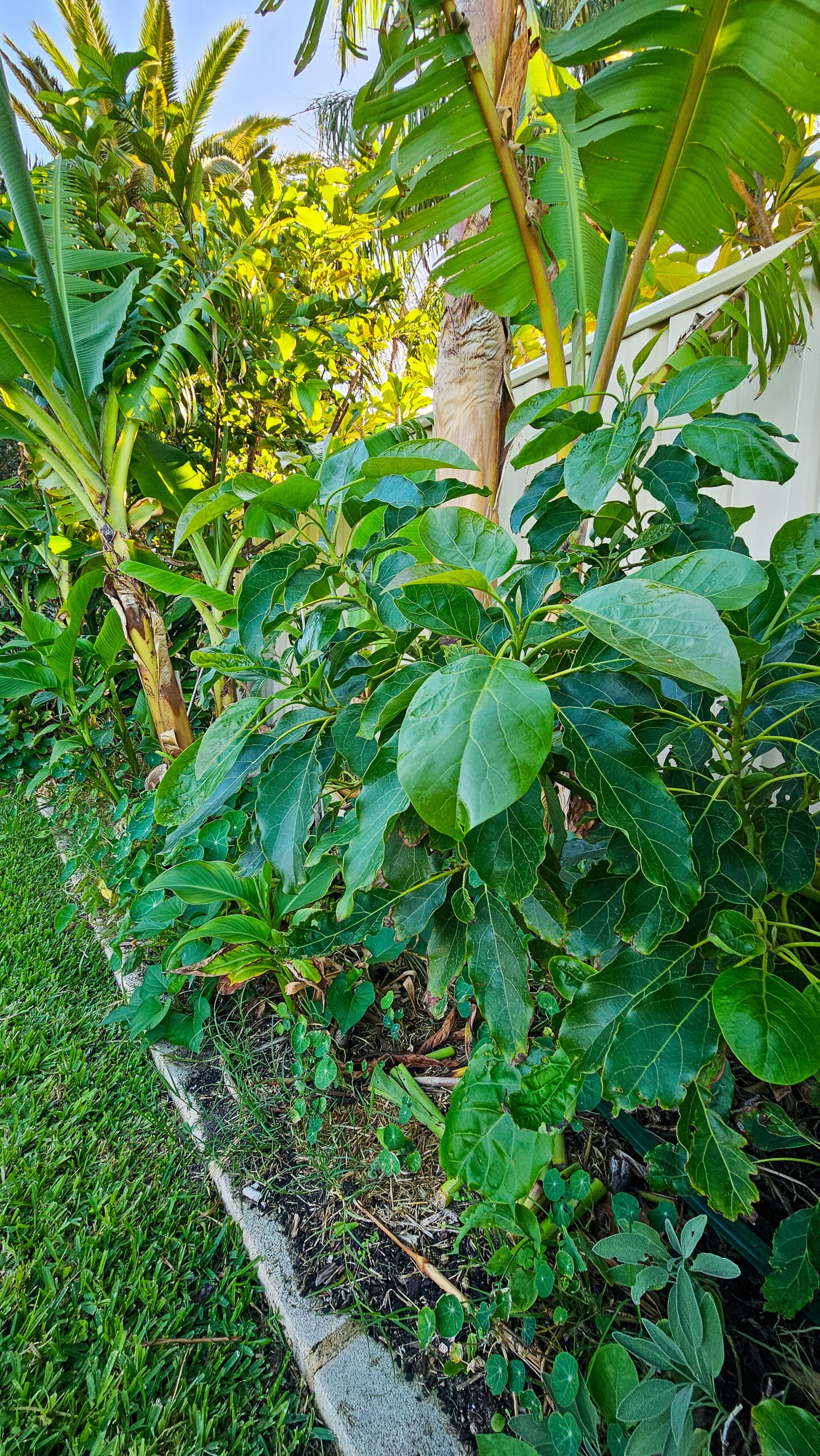
- Growing a tall dense canopy – this is your long-term tree crops, for me this is Avocado and Mango, but for you, it could be whatever tall trees your heart desires! These trees can take YEARS to reach a height and size that will block light to the ground, which is why we also have our short-term solutions (which we will touch on soon).
- Growing multiple layers of plants – To help block the light from getting to the ground, you can create layers like a forest does. Grass rarely grows in a forest, and if it does, it is usually where tall canopy trees have fallen or been removed to let sunlight in! This means planting shorter shrubs and ground covers to add more density and let less light to the ground level.
- Build rich organic soil – have you ever noticed grass or weeds come out much easier in good soil than hard or dry compact soil? Grass is not only easier to remove in rich soil, but it can also slow down the growth.
2. Short-term Solutions to Stop Grass – fast
Once we have our long-term strategy in place and our tall canopy trees planted, what can we do quickly to slow down and suppress grass growing while we wait for those trees to grow? The key is to ALWAYS COVER AND SHADE THE SOIL.
Effective and quick ways to cover and shade the soil to suppress grass?
- Use cardboard (with no sticky tape), newspaper or other natural products to cover the soil. This is something I would only do when starting a brand-new garden from scratch. It gives your plants time to grow before the grass gets through.
- Layers of mulch – different types of mulch will break down at different rates. I often use two different types of mulch to add nutrition and suppress grass. Options like pea straw and lupin will break down fast, so these usually get added first, then a harder woodchip type mulch on top of that.
- Chop & Drop – putting mulch on once and then leaving it will almost always result in the grass growing through. That is why I love using plants in my garden to regularly “chop & drop” to add new layers. In summer, I use quick-growing plants like Queensland Arrowroot, Autumn is when I prune many of my fruit trees and turn this into mulch, then in winter i use brassica leaves or bug-eaten leaves from my annual veggie patch. Using different plants will help give a range of nutrients to your soil. Adding layers of mulch and chop and drop will not only suppress the light but also start building rich organic soil to help your main plants and trees thrive and outgrow the grass!
- Add barriers or edging – this can slow down the grass, especially if your garden borders on to the lawn. There is a huge range of things from hardscape elements such as bricks, pavers and metal edging to natural elements such as clumping grasses or plants, logs and even banana trunks!
- Grow groundcovers – planting dense and hardy ground covers will act as another layer to block the light. Hardy ground covers are best so that you can add extra mulch or chop and drop straight on top of them and not worry about killing them off.
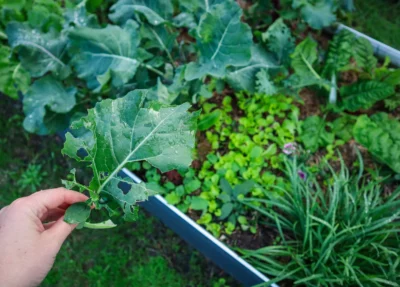
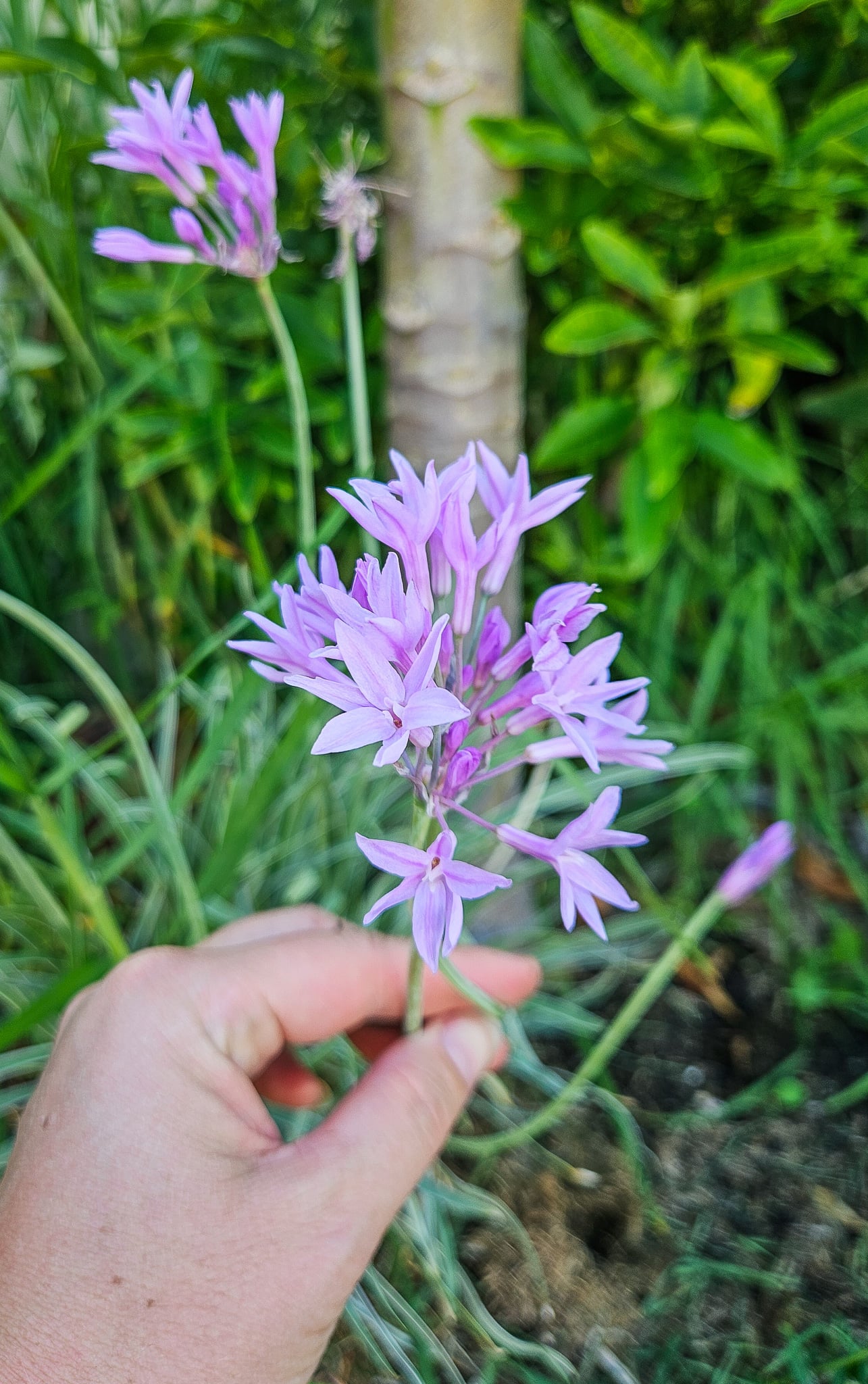
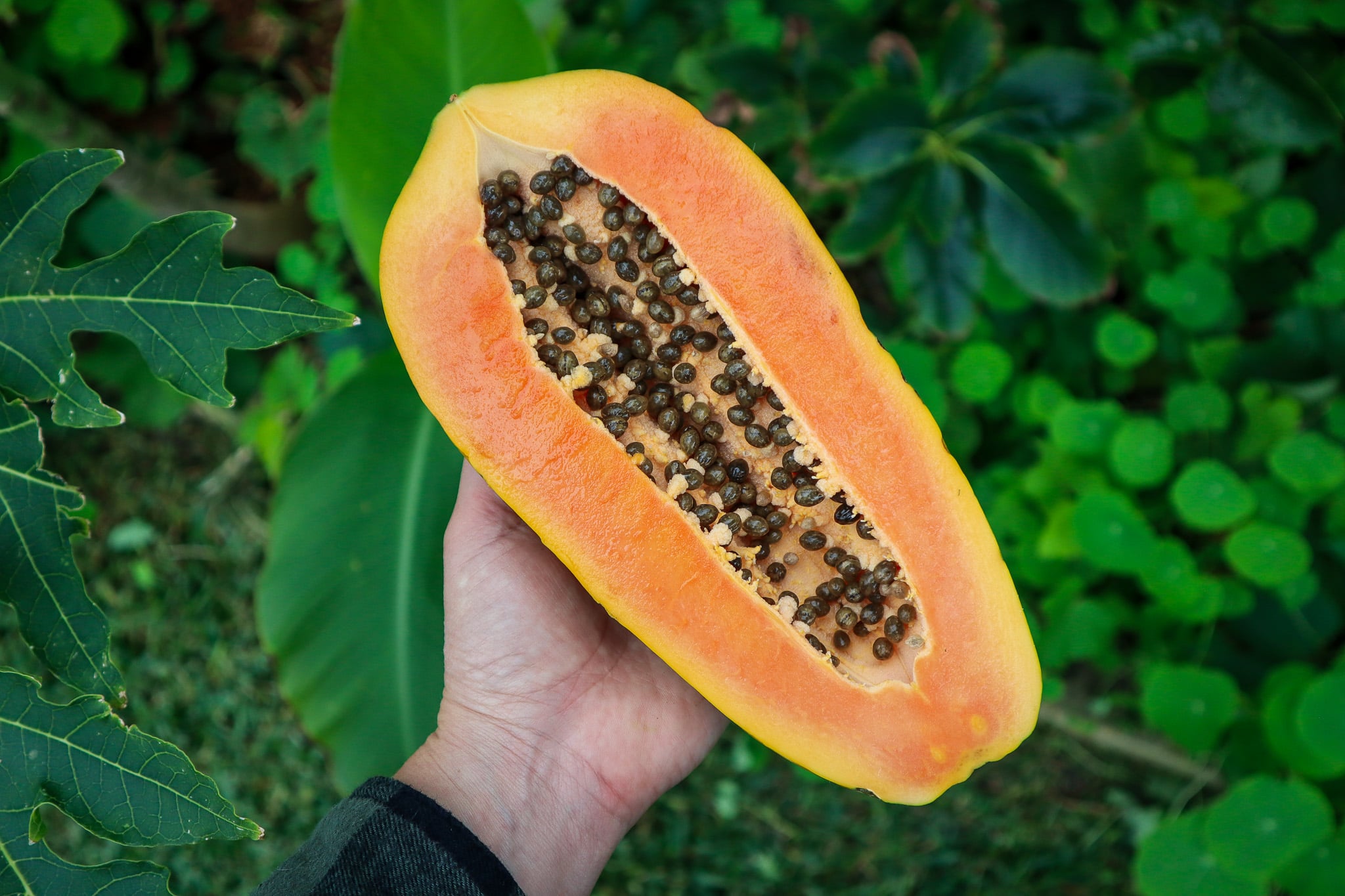
- Outplant it with high-density planting – this is my favourite way to suppress grass! In my annual raised veggie patch, I will plant out my main crops first with enough space, e.g., broccoli, cabbage, cauliflower etc then I will go in and sprinkle seeds in ALL OF THE GAPS! Things like lettuce, radish, carrots, herbs and edible flowers don’t need as much light and can be grown in tight spaces. This blocks the light from reaching the soil and slows down grass and weeds. I take this same approach in my food forest and edible gardens by planting short-term crops in all the gaps. These will be things like: herbs, flowers, Queensland arrowroot, papaya, banana or pigeon pea.
- Stop grass from going to seed – regularly trimming the edges and maintaining the grass BEFORE it goes to seed will help stop grasses or weeds from spreading further and making your job harder than it needs to be.
- Removing runners and grass periodically – Removing grass or trimming before adding fresh mulch can be a good idea, especially in a young garden. Grass that has not gone to seed can be cut using a whipper snipper or weed eater to create mulch too!
In a natural system, grass is just the beginning…not the end
If there’s one thing to remember, it’s this: Stopping grass in your garden beds isn’t a one-time job… It’s a long-term strategy.
You’re not trying to remove it all at once with nasty chemicals. You’re slowly changing the conditions, so it no longer wants to grow there. Every layer of mulch, every plant you add, every bit of shade you create… It’s all part of that bigger plan.
And yes… it takes time. But while your trees establish and your system fills in, your short-term actions are already making a difference. You’re slowing the grass down, building better soil, and making it easier to manage along the way.
So don’t worry if your garden isn’t grass-free yet 👉 It doesn’t have to be perfect… it just has to be moving in the right direction.
Happy gardening 🌱