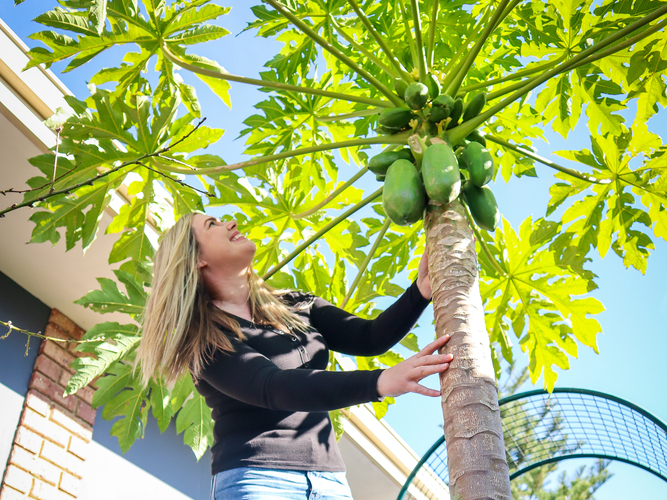
When most people think about growing a fruit tree they think about watering and fertilisers but…one of the biggest reasons young fruit trees struggle in a hot climate (like where i am in Perth, Western Australia) is simply too much sun! So how do you shade fruit trees in summer without relying on shade cloth? That’s where living shade comes in…
I know the label may say full sun, but sadly most labels are generic and literally not made in Perth, so many gardeners get caught out. Even if a plant does need full sun, this is more in terms of a mature fruit tree. Your small young fruit tree will absolutely cook in it’s first summer.
Every summer I see gardeners racing to get their shade cloth up because their plants are burning in the hot sun or getting battered by summer winds. Over the last 10 years of gardening in a hot climate like Perth, I have swapped out most of my shade cloth for living shade. These plants protect my fruit trees while feeding the soil, attracting pollinators and in many cases, producing food too! Shade cloth can’t do any of that…
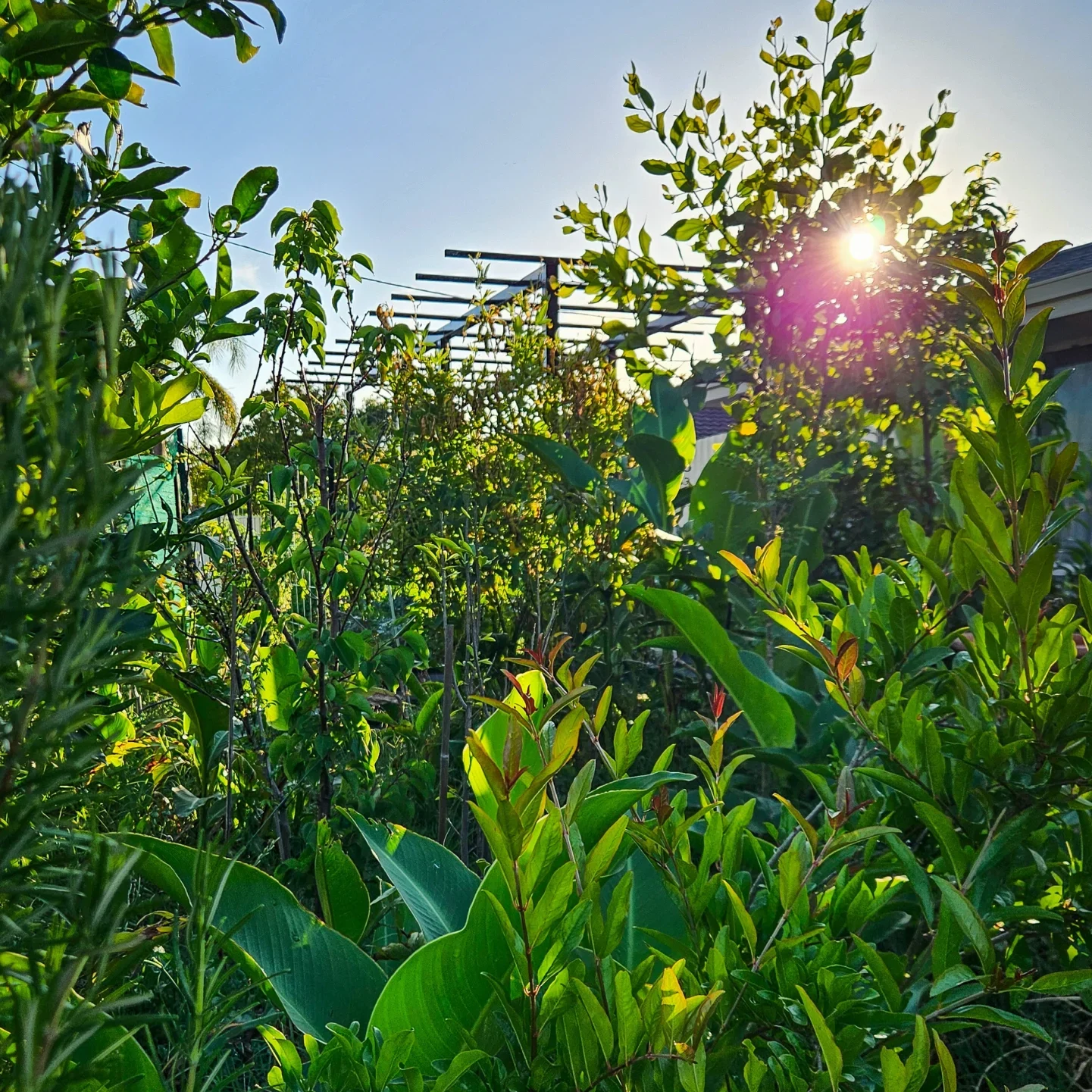
In this post, I’m sharing the five plants that do most of the heavy lifting in my Perth Food Forest, and why they all play an important role.
The 5 Living Shade Plants: Quick Overview
- Papaya: the living umbrella
- Moringa: dappled shade
- Pigeon Pea: the nitrogen builder
- Pomegranate: summer shade
- Hakea: the native pollinator
What Is So Great About Living Shade?
Living Shade is a great alternative to quick, temporary solutions like shade cloth because it not only cools the garden more significantly but also provides many bonus benefits that shade cloth does not! Have you ever walked down a street on a hot day and passed under a large tree? The temperature drops a lot more with trees and that is how we are going to keep our gardens cool and hydrated over long, hot summers.
Living shade can:
- Lower temperatures in the garden
- Protect fruit trees from sun/ heat stress
- Stop stems and trunks being burnt
- Improve humidity
- Reduce how much water is needed for your fruit trees
- Support biodiversity
- Produce food
- Build healthy soil

Living Shade vs Shade Cloth
I am not saying don’t use shade cloth…it is instant and most definitely has its place in a young or new garden. Here is how they compare:
| Shade Cloth | Living Shade | |
|---|---|---|
| Instant protection | Yes | No |
| Attracts Pollinators | No | Yes |
| Produces Food | No | Often |
| Support biodiversity | Minimal | Yes |
| Needs Replacing | Yes | No (unless it is annual or dies) |
How to Shade Fruit Trees in Summer Without Blocking All The Sun
Living shade isn’t about completely covering the garden and blocking all the sun. It is about offering shade to areas that need it…exactly when they need it! I like to call these my support plants. They are here to support my garden during a season or a phase of growing but one day, when my small fruit tree is mature enough, it may not need any more living shade. Some areas may only require shade in summer and need the sun in winter to grow – this is where we select the right shade plants, such as deciduous (lose their leaves in winter) for the job.
5 Living Shade Plants For Fruit Trees
1. Papaya: the living umbrella
Job: quick umbrella-shaped shade
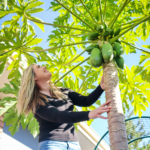
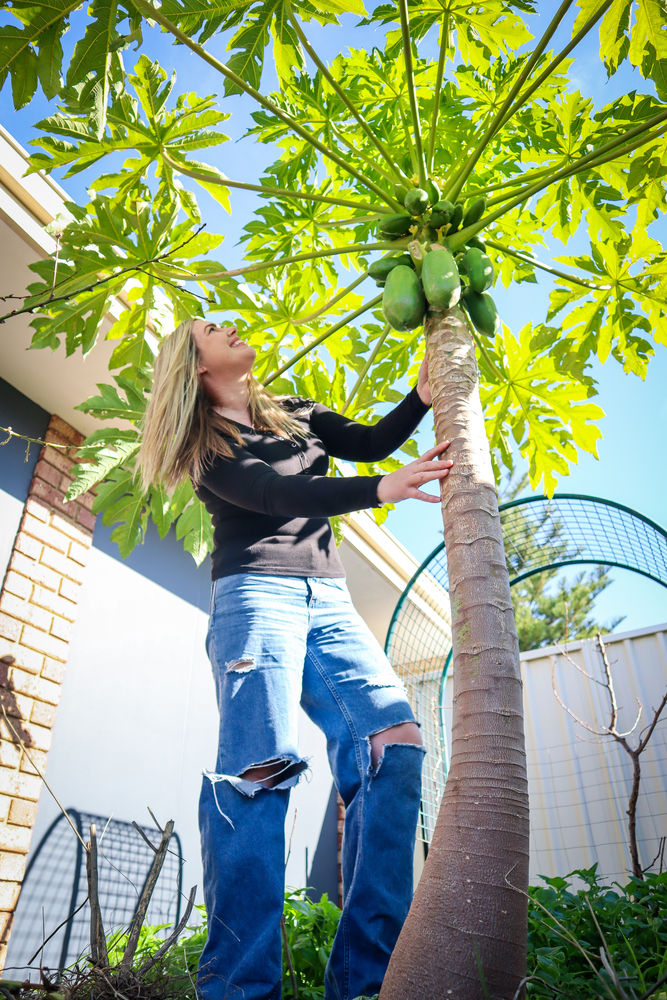
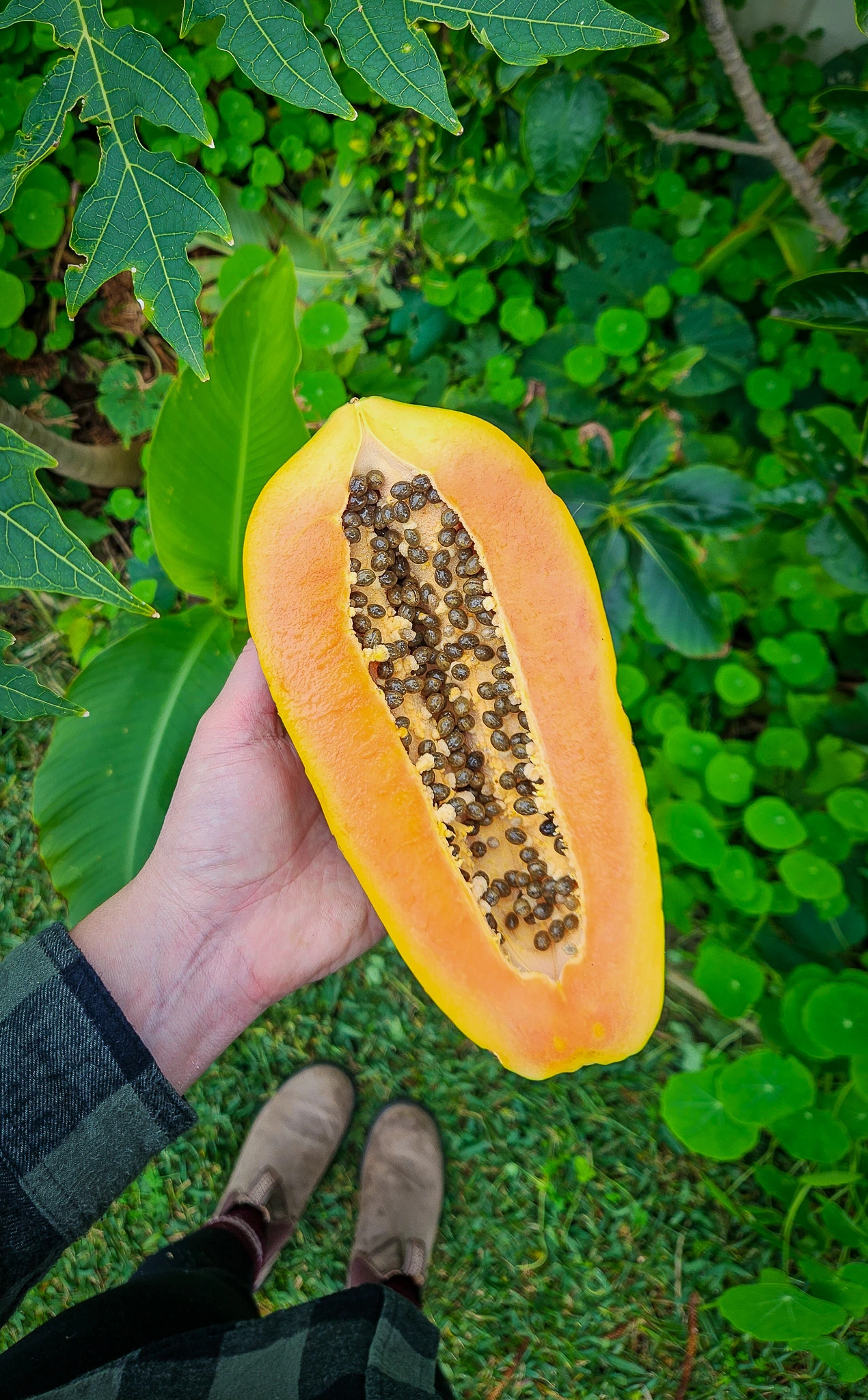
Papaya grows relatively fast in a warm climate, much quicker than most fruit trees. It has a large canopy that filters out the hot midday sun. Plus it produces an abundance of food! You can eat papaya green as a vegetable or ripe as a fruit, giving you a multi-use crop. I grew my papayas from seed, as this gave me 100s of seedlings to use around my garden with plenty of backups.
Papayas hate the cold, and sharp dips in temperatures or frosts can cause them to die back. Plant them in a warm and sheltered location. Once your Papaya starts fruiting, you will have an endless supply of seeds to regrow for future living shade.
2. Moringa: dappled shade
Job: soft dappled summer shade
Moringa (Moringa oleifera) is mostly deciduous and is fast-growing. The small leaf pattern creates a beautiful dappled shade that my tropical fruit trees absolutely love! It is also great as a chop-and-drop mulching, so you can cut it back when you want more light.
I use it as a companion or support plant for my tropical trees that still want the warmth of summer but benefit from increased humidity and less harsh afternoon sun. Moringa also has edible leaves, flowers, and seed pods.
3. Pigeon Pea: the nitrogen builder
Job: create shade and improve soil fertility
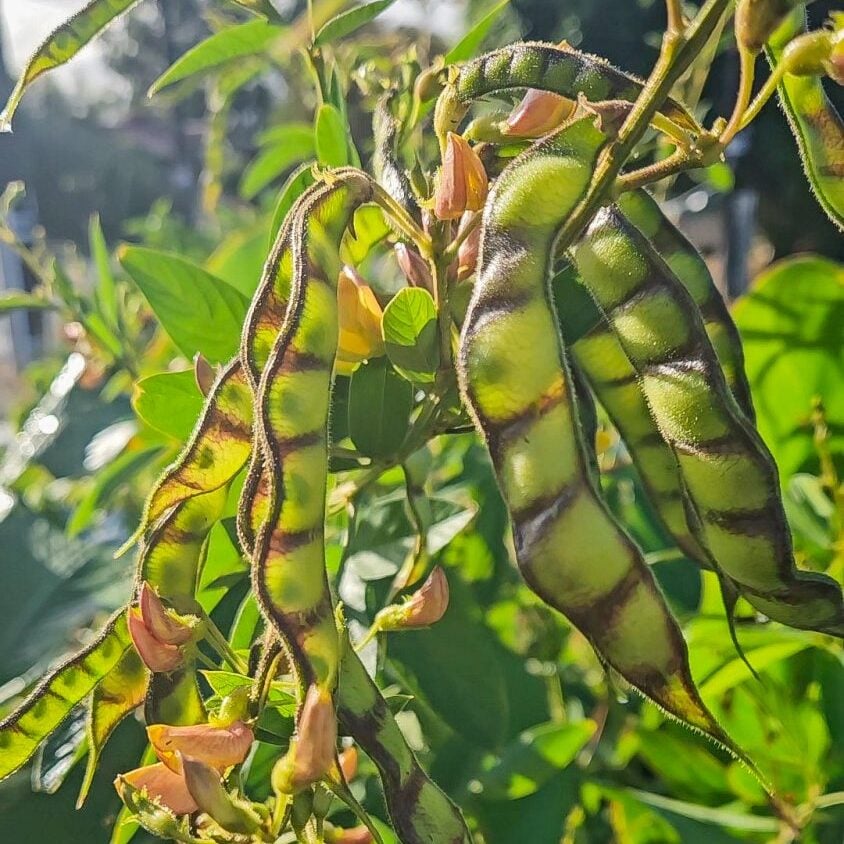
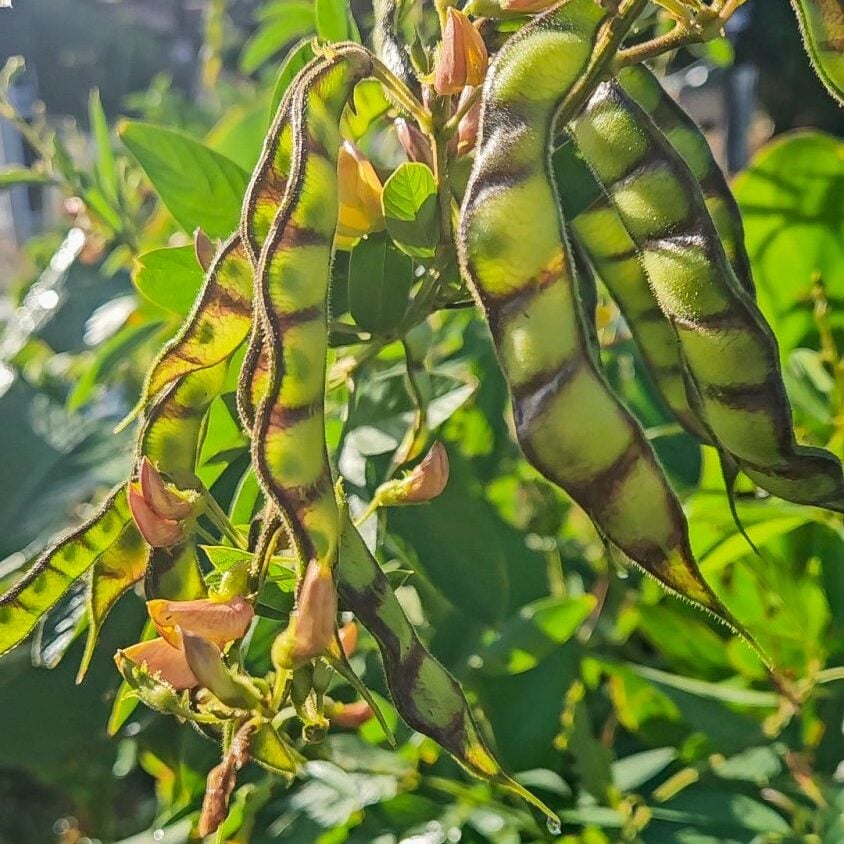
Pigeon Pea (Cajanus cajan) helps to fix nitrogen in the soil, grows plenty of biomass for mulch, and its flowers bring in masses of pollinators. It also gives off a dappled shade that can help get young fruit trees established.
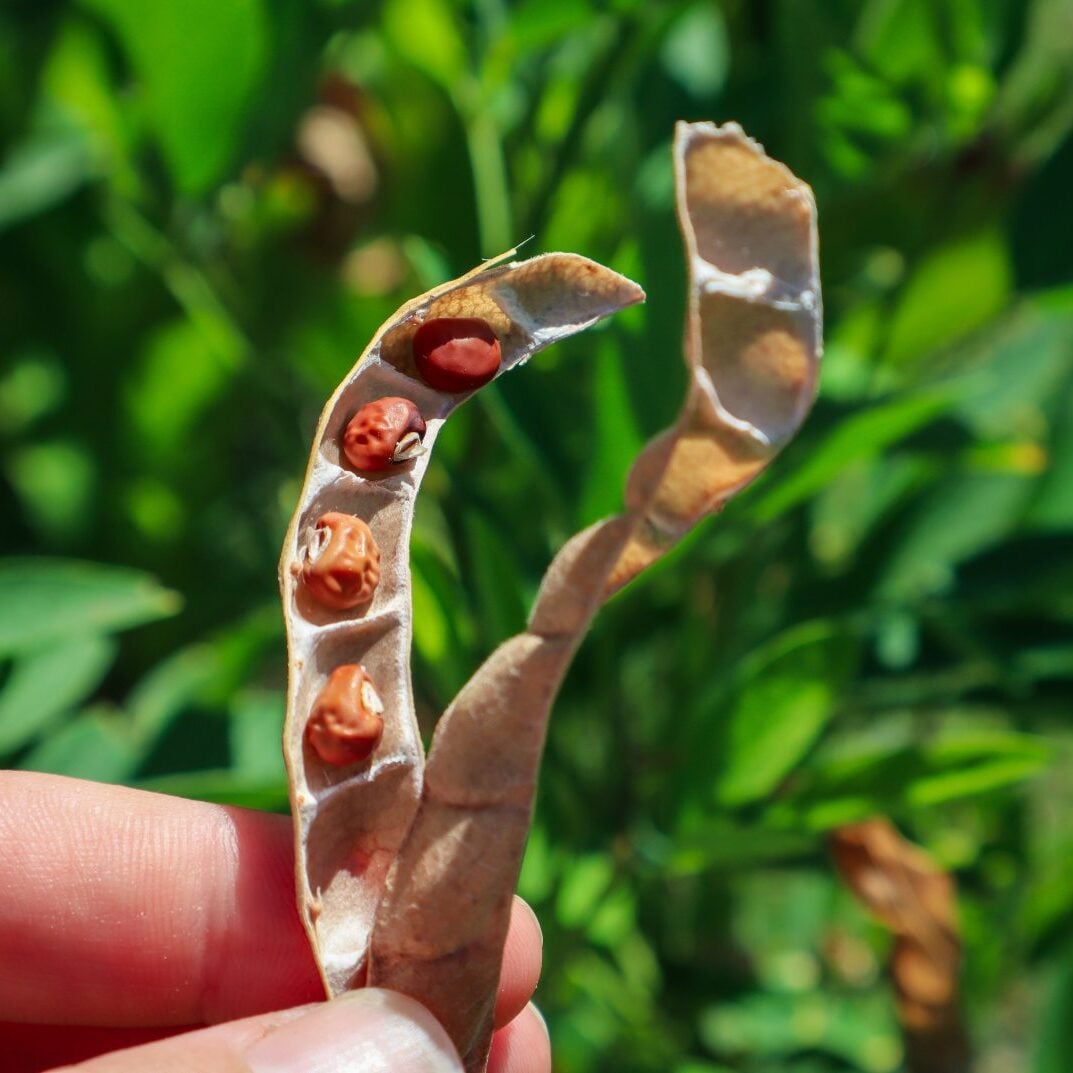
I treat it as a temporary support plant that is there to provide shade, mulch and nitrogen as my fruit trees get established. It produces edible seed pods that can be used when young like an edamame bean, or dried more like a lentil replacement. The seeds can also be regrown to create shade in other areas of the garden.
I find that Pigeon Pea grows best when sown directly into the garden. They have deep taproots that don’t like being transplanted.
4. Pomegranate: seasonal shade
Job: shade in summer, sun in winter
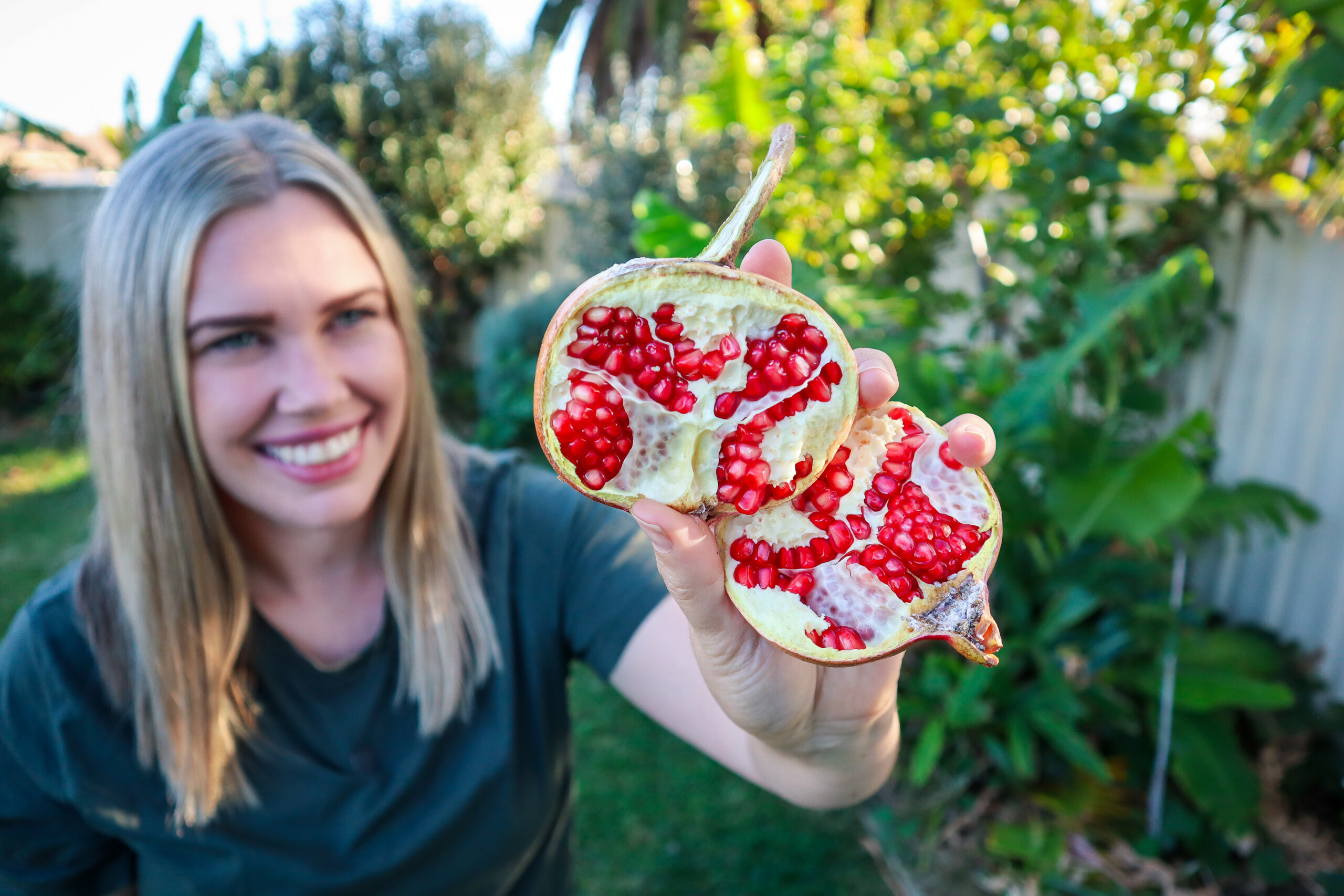
Pomegranates are one of my top choices because they are extremly fast growing and can handle hot, dry conditions. Perfect to help establish a hot garden.
Pomegranates are mainly deciduous, but this can vary…certain locations and varieties may not completely lose their leaves in winter. If you live near the coast or have a very mild winter, their leaves may stick around. In this case, you could either strip the leaves manually or choose a different deciduous fruit tree to go in its place.
Pomegranates are very easy to regrow from cuttings so you could add it to other hot spots in your garden for extra protection. They also produce delicious fruit!
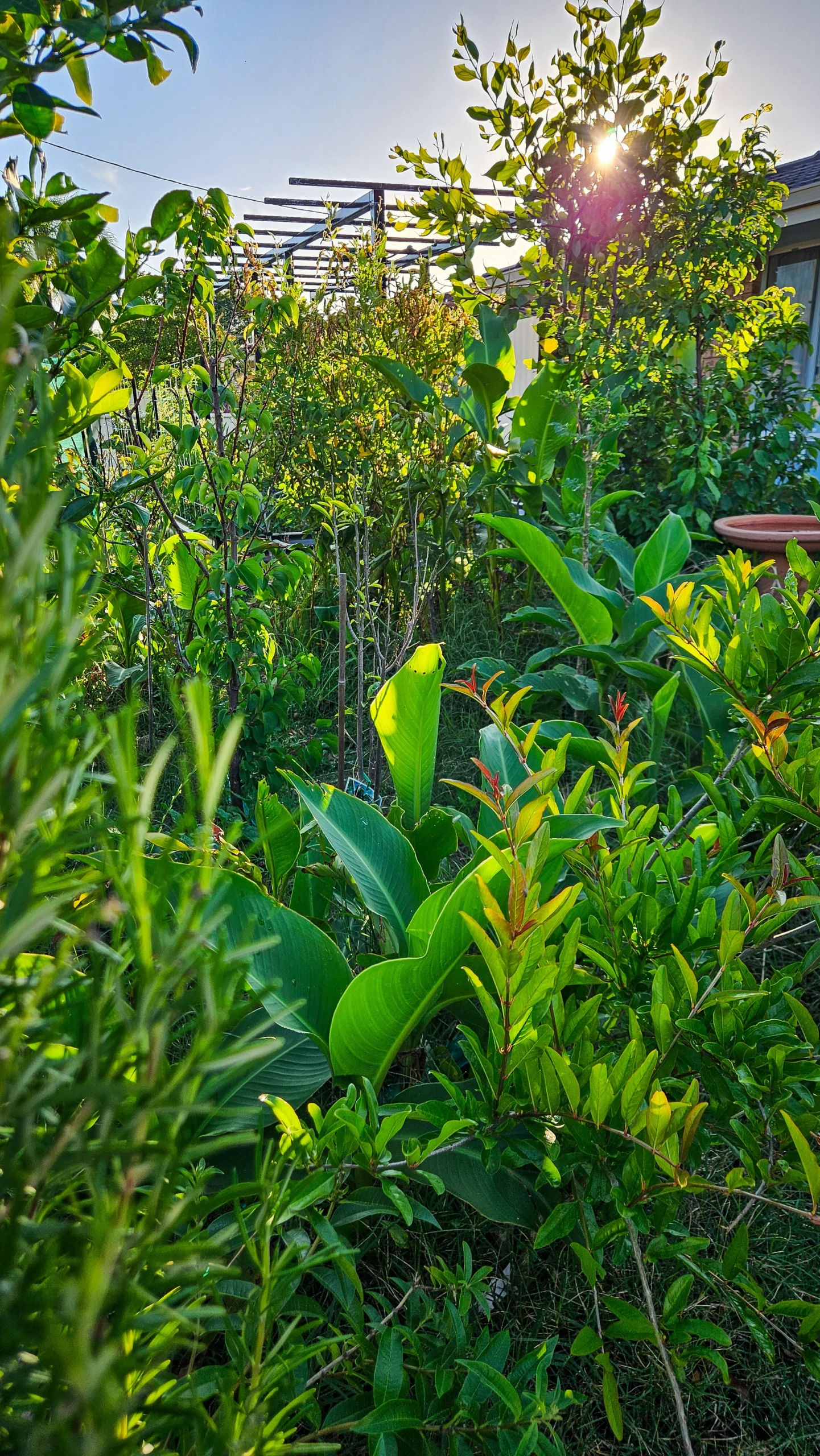
5. Hakea: native pollinator
Job: biodiversity and shade
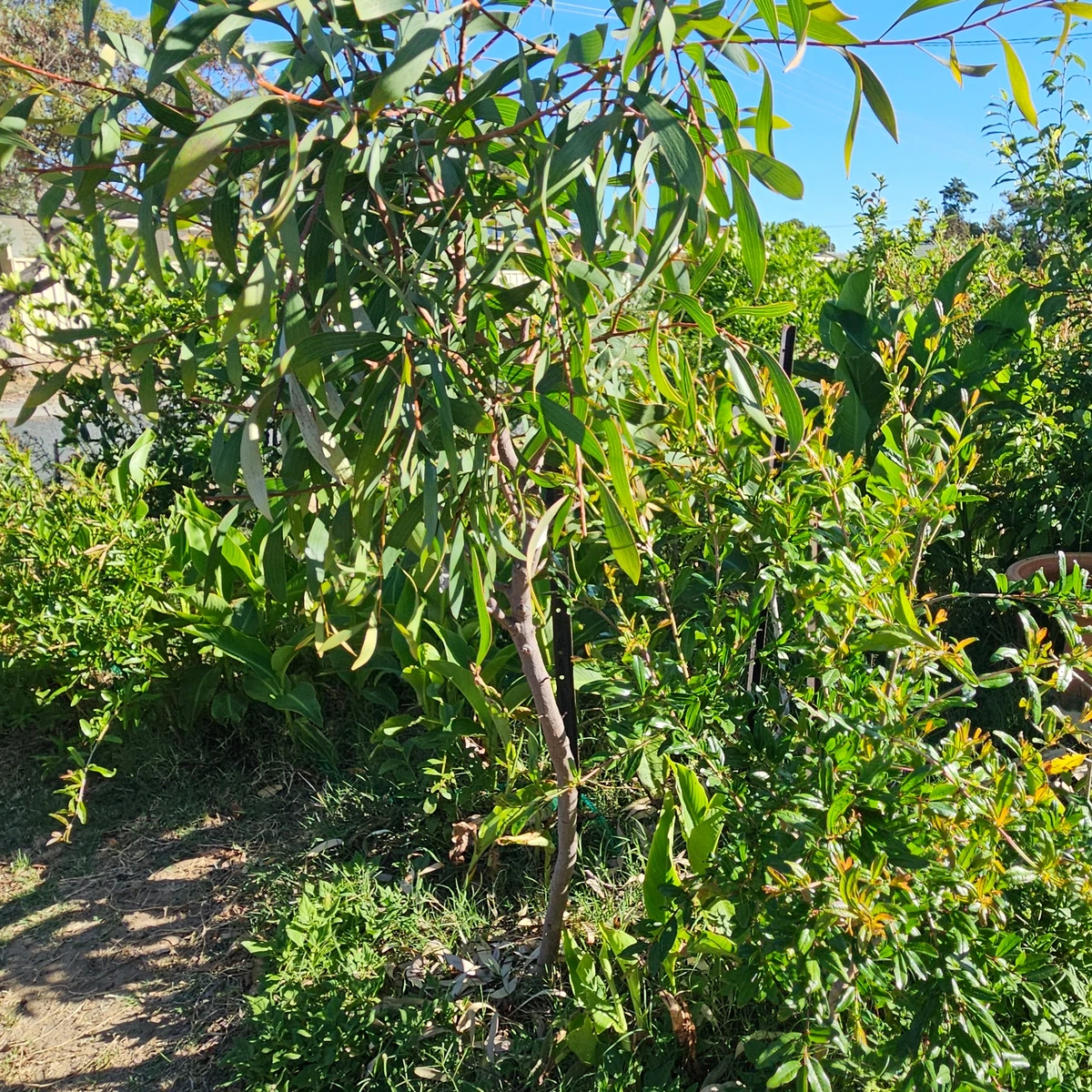
Hakea laurina is a native Australian plant that grows incredibly well in my hot (very sandy) front yard. I planted it from a small tubestock and it has quickly become the perfect shade tree to get the rest of my garden established.
The leaves are spaced out quite far apart, which means it still lets plenty of sunlight in.
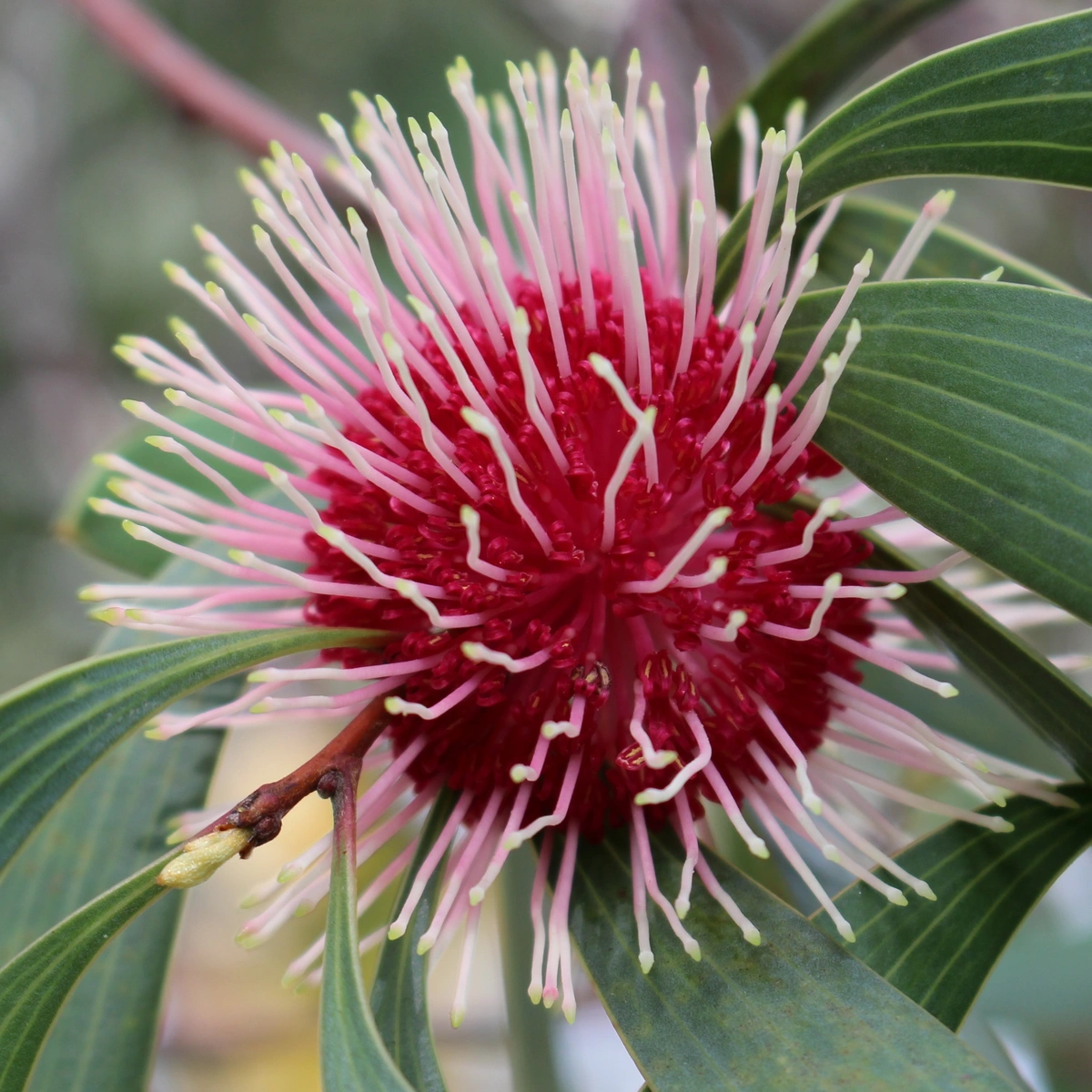
It also produces flowers that the birds and the bees love! The young branches go through my mini mulcher easily or i just chop and drop the excess coverage. Although this is one of the few plants that are not edible in my garden, it still offers so many benefits!
Things to Consider
- Don’t over-shade. You want to protect your fruit trees from the harshest sun (afternoon) not block all the light. Keep them pruned to overshade where it is needed.
- Some of these are temporary. Not all shade trees need to stay forever. I often use these support plants for a few years until my main fruit trees are established. This means i don’t go out and spend a large sum of money on these living shade trees. I grow from seed, cuttings and tube stock so that I feel comfortable pruning heavily or removing them when they are no longer needed.
Shading Fruit Trees in Summer FAQ
In a hot climate, young trees especially can struggle with too much sun. Many fruit tree labels say full sun but they were not designed for an intense summer like here in Perth, shade can make a huge difference.
In most cases YES! But it depends on the timing. If you plant both your fruit trees and your shade trees at the same time in Spring, it is very unlikely the shade trees will be big enough to protect the fruit trees in that first summer. Shade cloth may be necessary for the first few summers.
There isn’t one overall, as this depends on your location and shade needs. Papaya gives great shade but hates the cold or high winds – it also offers shade in winter when you may want to maximise sun. Therefore, a deciduous shade tree would be better. Test out a few and see which works best for you garden.
Not always. Some, like Pigeon Pea, only live to 7 years. Which should give you plenty of time to establish your main fruit trees. They also produce 100s of seeds for you to regrow more where you need them.
Part of the bigger ecosystem
I don’t know about you… but I want my garden to support itself and have the plants do all the hard work. Utilising plants to grow living shade or create wind breaks not only helps the rest of your garden thrive but also reduces the load on you. Less installing and removing shade cloth, less fruit trees dying and needing replacement. Shade is just one area that i utilise plants to support.
Happy Gardening,
Holly 🌱