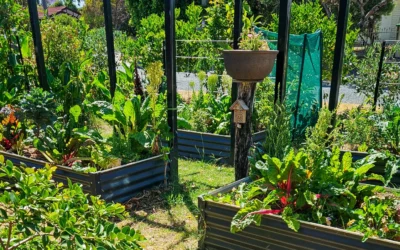
If your garden struggles every summer, you’re not alone! Trying to protect your garden from Heat in a hot climate, especially in places like Perth… is tough! The sun is so harsh, and summer seems to drag on forever! The soil dries out faster, and plants need backup systems to survive. But it doesn’t have to be a struggle… I want to share everything I’ve learned from growing in a hot climate like Perth, and what I wish I had done sooner….to help keep your garden thriving through a hot summer!
Start Your Garden with Hardy, Heat-Tolerant Plants
A resilient summer garden starts with strong foundations. Hardy plants give structure, create shade, and protect more sensitive species as your garden matures. Think of them as your garden’s framework. This is a garden design strategy I have used since starting my edible gardens, and now that I have more established trees, I have started adding in the more sensitive tropicals. Begin by creating the growth structure from heat-tolerant plants that support everything else. Plant these in hot spots near driveways or to protect your garden from the hot afternoon sun.
Use hardy trees and shrubs on the outer edges, such as:
These plants work as windbreaks, reduce evaporation, cool the garden, and help create microclimates. I focus on planting these in hot spots near driveways or bordering the areas that get hot afternoon sun. Then bring in deciduous trees (like stone fruit) closer to your annual garden beds to provide your patch with much-needed shade in summer but let the sunlight in during winter. And don’t forget perennials!
Grow Living Shade!The Best Way to Keep Your Garden Cool
Fast-growing “living shade” is honestly a game-changer to easily protect your garden from heat… even if it’s temporary. Use quick growers to create a shady “umbrella-like” canopy by planting things like:
Moringa
Papaya
Pigeon pea,
Cassava
Banana
Mulberry
These plants grow fast, create dappled shade, and cool the entire garden. They also act as temporary “nurse plants” for your fruit trees. These don’t need to be permanent. You can utilise them for a few years while your main trees grow, then take cuttings, save seeds and chop and drop them to create mulch and organic fertiliser. I have grown mulberries from a cutting, and after a few years of harvesting fruit and utilising the shade, I have removed them to give my other trees the space they need.
Mulching & Groundcoversto Protect Your Garden from Heat
Something I have learned from gardening in sandy soil is the importance of continuously adding fibre and nutrients to my soil. If you’re in a dry, hot climate like me here in Perth, growing mulch plants could save your garden! Use living mulches like sweet potato, pumpkin, New Zealand spinach, and Nasturtium to protect bare soil and suppress weeds. Mulching doesn’t just help retain moisture…It also protects the shallow feeder roots of fruit trees from getting hot and cooked! And the bonus… mulch breaks down into compost, feeding soil microbes and improving soil structure over time.
Add Vertical Gardens
Adding vertical structures like trellises, arches, and fences for climbers (passionfruit, beans, grapes, cucumbers) creates natural shade for the garden beds underneath. Creating micro-shade pockets. Plan your layout to off the best shade for your garden. Growing edible climbers that are deciduous can be a great way to create summer shade, but let the light in during winter when they lose their leaves. I have grape vines growing over my raised garden beds to add summer protection from the heat, produce delicious crops and also allow winter sun to reach my garden.
Watering Strategies for Extreme Heat
Most plants die in heatwaves because they’re watered incorrectly — not because they’re not watered enough. Water deeply and less often. Deep watering encourages deep roots, which makes plants far more heat-tolerant. Consistency is also important. Long periods without water can cause the soil life to die, and the soil will become hydrophobic. Think of your soil as alive (it is) and that you are watering to feed the microbes, not just the plants. Happy, healthy soil will reward you with happy and healthy plants!
Most plants die in heatwaves because they’re watered incorrectly…. not because they’re not watered enough.
✔️ Water deeply and less often- Deep watering encourages deep roots, which makes plants far more heat-tolerant.
✔️ Cover your soil – whether that is with mulch, ground covers/living mulch or even better, a combination of both! This will help retain moisture and keep the soil alive.
✔️ Consistency is also important. Long periods without water can cause the soil life to die, and the soil will become hydrophobic. Think of your soil as alive (it is) and that you are watering to feed the microbes, not just the plants. Happy, healthy soil will reward you with happy and healthy plants!
✔️ Best times to water: early morning (best) or late afternoon (second best). Avoid midday watering — 80% of the water evaporates, and water on the leaves can burn your plants.
✔️ Sandy soils can also drain water fast and can easily become hydrophobic. It is important to add fibre by increasing the organic matter. This can be done by adding compost, manure, chop and drop and mulching.
High-Density & Succession Planting to Create Microclimates
This is honestly one of my biggest summer survival strategies…High-density planting helps shade the soil, reduce evaporation, minimise hot wind, and create cooler microclimates. Plants actually protect each other… more foliage means more shade and less moisture loss.
Annuals – Fill gaps quickly with fast growers like basil, bush beans, or herbs.
Perennials – Use mulch plants, nitrogen fixers, low shrubs, tall canopy plants, hardy fruit trees, and ground covers to fill all the gaps.
Succession planting fruit trees is a concept I dabbled in early on, but I wish I had gone harder! Planting from seed and cuttings will allow you to plant more and utilise high-density without the fear of deleting them later down the track. High-density doesn’t mean overcrowding… it means layering, timing, and letting plants work together… instead of cooking alone. They don’t ALL need to be permanent…some can be “nurse trees” until your “main fruit trees” are established.
What to Do Before a Heatwave Hits
When a heatwave is in the forecast, a little preparation can make the difference between a thriving garden and a fried one. These quick actions help your plants stay hydrated, cool, and protected during extreme temperatures — and they take less than an hour to set up.
Water deeply the night before – Give your plants a long, slow soak so the water reaches deep into the root zone. Moist soil holds temperature better than dry soil and keeps plants stable through the hottest part of the day.
Add temporary shade cloth – A simple 30–50% shade cloth over garden beds, young fruit trees, or tender plants such as avocados and young tropicals can prevent sunburn and drastically reduce heat stress and wind damage. Even a beach umbrella or an old sheet works (allow airflow).
Move pots into shade or under cover – Potted plants heat up far quicker than plants in the ground. Move them against a cool wall, under a patio, or beneath a tree canopy to protect their roots from overheating.
Mulch any exposed soil – Bare soil is the fastest to dry out and heat up. Add a thick layer of mulch around fruit trees, garden beds, and seedlings to keep the soil cool and reduce evaporation.
Water deeply early in the morning – Give your plants a long, slow soak at sunrise. This allows the water to move deep into the soil before the sun becomes intense. Moist soil holds temperature better than dry soil and helps your plants stay hydrated throughout the day.
Grow and Chop-and-Drop Your Own Mulch
I think one of the best ways to protect your garden from heat is to grow your own mulch. It not only offers shade when you need it, but you also get to chop it back to create your own organic mulch or fertiliser. This will help feed your soil and, in turn, improve the water retention! a WIN-WIN. When your garden produces its own leafy biomass, you have a constant supply of materials that cool the soil, protect roots, and feed the microbes that build long-term resilience. It’s a system that works with your climate instead of against it.
Great chop-and-drop plants for hot climates include:
Pigeon pea – fast-growing, drought-tolerant, nitrogen-fixing
Queensland Arrowroot – Repopulates fast with water-filled stems
Moringa – rapid growth and abundant leafy material
Lemongrass – dense, fibrous clumps that suppress weeds
Cassava – hardy, productive, and perfect for biomass
Mexican sunflower (Tithonia) – one of the fastest biomass producers
These plants bounce back quickly after pruning and thrive even in harsh conditions. Each layer protects the roots from harsh sun, reduces water loss, and breaks down into organic matter that improves soil structure over time. It’s the most sustainable long-term strategy for gardeners in hot, dry climates.
🌱 Want a deeper guide to mulch plants, chop-and-drop strategies, and soil-building techniques?
You’ll love my ebookHow to Grow Your Own Natural Fertiliser, where I break down exactly how to select, grow, and use mulch plants to create a self-feeding, low-maintenance garden. It’s packed with practical tips specifically for hot climates and sandy soils.
Do you have areas that get very hot, full sun, and nothing seems to survive? These 22 heat-tolerant edible plants to grow in HOT full-sun locations will help you grow productive edible gardens. I’ve been growing food here in Perth, Australia, for the last 10 years, and let me tell you, it was a big change and learning curve coming from the lush green of New Zealand.
Today, I’m sharing some plant ideas to plant in those super hot locations, but keep reading to the end because it’s not just about what you plant, but also when and how! Bonus tips on that, so you can turn your hot barren wasteland into productive edible gardens.
Click to WATCH 22 heat-tolerant edible plants
22 Heat-tolerant Edible Plants for Full Sun
1. Rosemary
Attracts bees 🐝 and has healing properties, and is great for skin and hair care. Flavour-enhancing culinary herb🌿 When I first moved here, I wondered why so many houses had Rosemary hedges out the front – and it’s because it thrives on neglect and our poor sandy soils. Rosemary is a great heat-tolerant addition to your edible garden. Try making your own Rosemary Salt.
2. Guava – Strawberry & Tropical
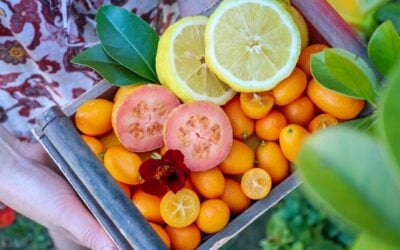
Strawberry/cherry, lemon cherry, and tropical Hawaiian/Thai guavas are really hardy, low-maintenance fruit trees that produce bucketloads of fruit!
3. Mulberry
Another powerhouse perennial that survives on neglect – they grow super fast so you can use these as a nanny plant or a pioneer plant. If you have a barren hot area you could plant a Mulberry to get quick shade established and later on remove it or heavily prune if it gets too big. Mulberry also loses leaves in winter to let light in.
4. Lavender
Lavender is drought-tolerant – a great pollinator plant with many medicinal (calming and sleep) and culinary uses. In my garden (which will be different with climates and varieties) Lavender flowers at the same time as my Feijoas so I have it planted in between them to attract pollinators and increase my Feijoa harvests.
5. Feijoa / Pineapple Guava
If you have been following me on Instagram or subscribed to my YouTube, you will have guessed this plant would make the list 😂 Low maintenance, super hardy, and produces plenty of food! Feijoas do taste better when they get 50 chill hours a year so they aren’t optimally grown here in Perth, but they do grow well and are drought-tolerant. They are evergreen and super bushy, so they can be grown as an edible hedge. They are known to have fire-retardant qualities, which is very handy for hot, dry climates. If you are looking to purchase a Feijoa, choose a named variety (such as Duffy, White Goose, Mammoth, plus more) as these will perform better and produce fruit faster than generic seedling plants.
6. Passionfruit
Passionfruit is an edible vine that can be used to cover a fence, structure, or grown over an arbor to create shade. This can help cool your garden down and provide delicious fruit. Passionfruit flowers can also be used to make calming teas to aid in sleep and anxiety. NOTE: Avoid planting a grafted variety the grafts take over and become invasive, hard to get rid of, and don’t produce good fruit.
7. Citrus
Citrus like full sun and, once established, can thrive in hot environments. Avoid planting new trees before or during the hot summer so that they have time to get their roots established before the added stress of summer.
8. Lemon Verbena
A fragrant lemony scent that is similar to lemongrass. Lemon Verbena is great in teas, baking, and all the things! Lemon verbena is one of those plants that quietly becomes a favourite. Its leaves have a sweet, lemony fragrance—similar to lemongrass but softer—and the whole plant smells incredible when you brush past it. It’s perfect for teas, baking, syrups, and infused water,and it keeps its flavour really well when dried. I always keep a jar in the pantry for quick herbal tea blends. In the garden, lemon verbena is easy to grow in full sun and well-drained soil. It drops its leaves in winter (don’t worry, it’s normal!) and comes back quickly once the weather warms.
9. Pomegranate
Pomegranates are one of the best heat-tolerant fruit trees you can grow in a hot climate. They thrive in full sun, handle dry conditions like champions, and still reward you with glossy red fruit and bright, beautiful flowers. They’re incredibly low-maintenance, needing far less water than most fruit trees once established. Their deep roots make them drought-resilient, and they’re also naturally pest-resistant — perfect for gardens with harsh summers. If you’re building a resilient, water-wise garden, pomegranates are a must-have: tough, productive, and beautiful all year round.
10. Loquat
Loquats are incredibly hardy, fast-growing fruit trees that thrive in hot, dry climates. They handle poor soils, need very little care once established, and fruit heavily in late winter–spring when not much else is producing. Their sweet, tangy fruit is amazing fresh or made into sauces, and the large, glossy leaves give your garden a lush, tropical look with almost no effort. Loquats can be a pest plant because they grow so easily, and birds spread the seeds, so check with your local area.
11. Lilly Pilly
Lilly pillies are tough, water-wise Australian natives perfect for hedges, screens, or structure in hot climates. They handle heat, humidity, pests, and pruning exceptionally well. Many varieties produce edible pink or purple berries that can be made into jams or syrups. They’re also fantastic habitat plants for beneficial insects and birds. Part of the Syzygium genus is a great dense evergreen hedging plant with bright pink fruits. The fruits are edible and can be made into jams, sauces, and even sparking wine!
12. NZ Spinach / Warrigal Greens
NZ Spinach is one of the best heat-tolerant leafy greens for summer. It thrives when regular spinach collapses, spreading as a groundcover that shades and protects the soil. Harvest the tender tips regularly for stir-fries, and sautés. It’s low-maintenance, productive, and perfect for filling gaps in hot, sunny beds. Due to oxalates it does need to be cooked first.
13. Malabar Spinach
Malabar spinach is a vigorous climbing vine that absolutely loves the heat. Its fleshy, succulent leaves stay tender and productive even in scorching weather, and it grows beautifully over trellises to create summer shade. It’s ideal for warm climates but doesn’t tolerate frost, so give it a protected spot if your winters are cold.
14. Quince
Quince is a hardy, drought-tolerant fruit tree that thrives in hot conditions and poor soils. It produces large, fragrant yellow fruit perfect for making jams, jellies, pastes, and preserves. The tree itself is stunning with pretty spring flowers.
15. Zinnia
Zinnia is an edible flower that thrives in hot dry conditions. Zinnia has vibrant flowers in a huge range of colours. The great thing about Zinnia is that it produces nectar so it attracts a diverse range of pollinators to the garden such as bees, hoverflies, butterflies, and small birds. Zinnia is susceptible to powdery mildew so great for dry summers.
16. Sunflower
I love growing Sunflowers because they attract a huge amount of pollinators to the garden, and you can pretty much eat the whole plant! I use the petals fresh in a salad or press them to use on baking as garnishes. The seeds can be used on top of salads, to make oil, or to make spreads, and the leaves are also edible. Sunflower stems can even be made into flour! Sunflowers also help remove toxins from the soil, so they are a fantastic addition to a hot, full-sun garden.
17. Figs
Figs are one of the most reliable hot-climate fruit trees. They adore full sun, tolerate drought once established, and produce incredibly sweet fruit with almost no fuss. They grow well even in poor or sandy soil, making them ideal for Perth-style gardens. Prune them in winter to keep them compact and productive.
18. Olive
Olives are true Mediterranean survivors, heat-tolerant, drought-resilient, and long-lived. They thrive on tough love and poor soil, and they’re surprisingly productive even with minimal watering. Whether you grow them for fruit or as hardy ornamental structure, olives add beautiful silvery foliage and year-round resilience to hot-climate gardens.
19. Grapes
Grapes are great for growing over structures to provide shade to your garden and help other plants grow. Grapes are deciduous so they lose their leaves in winter to let light in and have full leaf coverage in summer to protect from the harsh midday sun. Grape plants have so many uses from fresh delicious table grapes to jams, preserves, and wine! grape leaves also have many uses in the kitchen.
20. Hollyhock
Hollyhocks are edible flowers that can grow up to 10 feet tall! They attract 100 of pollinators to the garden, and their height acts as a flag inviting them in. The leaves are also edible and can be cooked to make wraps. Hollyhocks are an annual so they will need to be planted again each year but they are so worth it! They can be susceptible to powdery mildew.
21. Thyme
Thyme is a hardy herb that thrives in hot conditions. Thyme is very versatile in the kitchen and pairs well with tomato dishes, on pizza, and roast veggies. Thyme also produces masses of tiny white flowers that attract an array of beneficial insects and pollinators. Thyme creeps over the ground so it makes a great edible ground cover plant.
22. Macadamia Nut
Macadamia nut trees can take a long time to start producing (5-7 years) but are really hardy and nuts are great additions to a homestead to make flour and milk from.
8 Tips for Successfully Growing Heat-Tolerant Edible Plants
Many of these heat-tolerant plants listed are perennials, and the reason perennials are so good for hot environments is that they have established roots and have time to get used to their environment. Annuals such as lettuce and tomatoes are planted new and have shallow roots so are more vulnerable to overheating.
Below are some tips to help you get your plants established and thriving through hot periods.
Avoid planting in hot weather (always check the forecast)
Provide temporary protection,such as shade cloth or umbrellas, during hot periods.
Grow nanny plants or pioneer plants (quick-growing trees that provide dappled shade in summer eg: grapes, mulberry, and deciduous fruit trees)
Plant new trees in pots until after the summer heat has passed
Plant densely – allow other plants to protect and shade each other and the soil.
Grow Endless Fertiliser
Growing food in a hot climate doesn’t have to be a struggle. By choosing tough, heat-tolerant plants, layering your garden with support species, and working with your climate instead of against it, you can build a garden that stays productive all summer long.
If you want to take it even further, my new ebook Grow Your Own Natural Fertiliser shows you how to build healthier soil, boost resilience, and keep your garden thriving — even in extreme heat. It’s the perfect next step for creating a truly self-sustaining garden.