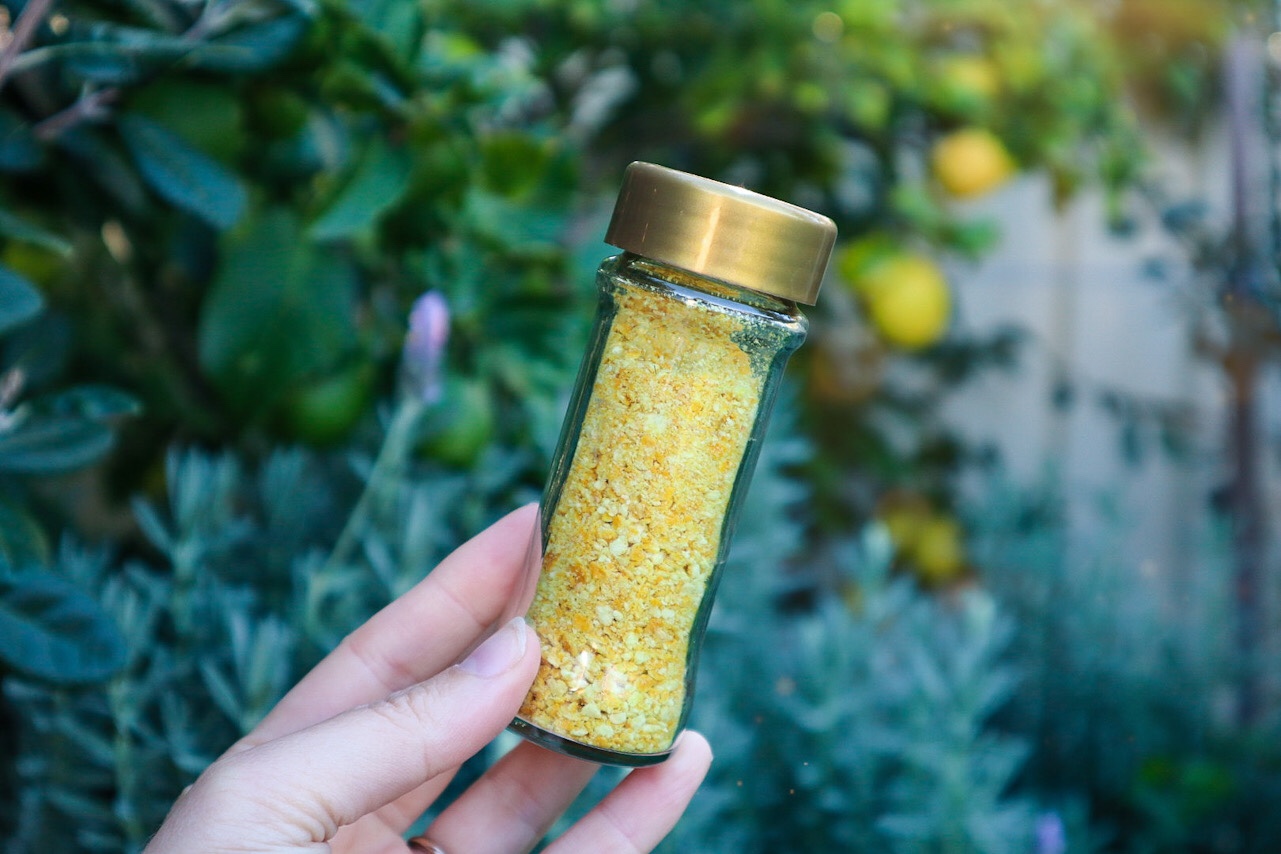
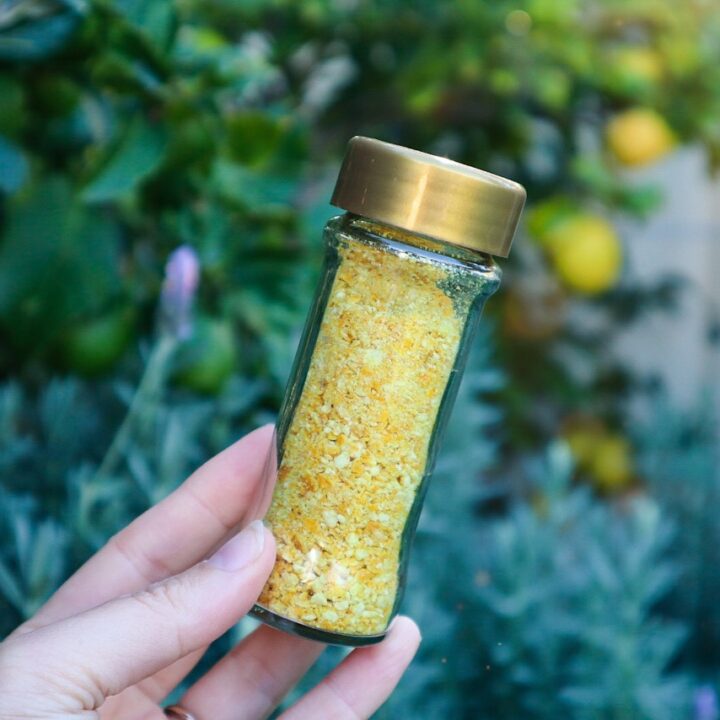
If you’ve ever juiced a bunch of lemons and felt a twinge of guilt tossing out those beautiful yellow peels, this one’s for you. These lemon zest sprinkles are a vibrant, aromatic way to get even more out of your citrus and add a burst of flavour to your meals. As a home gardener and low-waste kitchen enthusiast, I’m always looking for ways to use every part of what I grow or harvest. Lemon zest is one of my favourite zero-waste flavour boosters, and these dehydrated lemon sprinkles are a must-have in my pantry.
Not only does this recipe help reduce food waste, but it’s also a great way to preserve the bright taste of citrus for use all year round, especially when your lemon tree is loaded and you’re making juice in batches.
Sustainable, Simple, and Full of Flavour
✔️ Uses up leftover lemon skins after juicing
✔️ Easy to make with just one ingredient
✔️ Stores well and lasts for months
✔️ Adds fresh, zesty flavour to sweet and savoury dishes
✔️ A perfect DIY pantry staple for low-waste living
How to Use Lemon Zest Sprinkles
This citrusy powder is so versatile! Here are a few of my favourite ways to use it:
It also makes a beautiful homemade gift when packaged in a recycled spice jar with a handwritten label!
What You’ll Need
3–4 lemon skins (or more if you’re batch prepping)
A dehydrator or oven
A spice grinder, food processor, or Nutribullet
Clean, dry jar for storage
Tip: Use organic lemons or those from your own garden to avoid wax and pesticides.
How to Make Lemon Zest Sprinkles
Step 1: Wash and Peel After juicing your lemons, give the skins a quick rinse. Carefully peel or slice off the outer yellow part of the skin. Try to avoid too much of the bitter white pith.
Step 2: Dehydrate Lay the peels on a tray in your dehydrator or on a baking tray in the oven. Dry at around 45°C (113°F) for 2–4 hours, or until the peels are crisp and snap easily.
Step 3: Blend Once completely dry, add the peels to your spice grinder or blender. Blitz until they turn into a fine powder.
Step 4: Store Transfer to a clean jar—this is a great use for old spice jars or small glass jars with tight lids. Store in a cool, dark place.
Lemon Zest Sprinkles
Prep Time: 5 minutes
Cook Time: 3 hours2 seconds
Total Time: 3 hours5 minutes2 seconds
If you have used lemons for juicing then this is a great way to get the most out of your lemons.
Ingredients
3-4 Lemon skins
Instructions
Wash and peel or carefully slice off thin pieces of the lemon skins. Use organic lemons or fresh from the tree.
Layout the skins on a tray and dehydrate using a dehydrator or oven at 45degrees for 2-4 hours until completely dry.
Add the dry peels to a spice blender, food processor, or Nutribullet and blitz to a fine powder.
Place in a jar. I save my spice jars to recycle for future homemade spices such as this.
Notes
Add to sugar for a lemon sugar or add to your dishes for a fresh zesty flavour. Great in salad dressings, stirfry or even on top of ice-cream or yoghurt.
Low-Waste Kitchen Tip
After using the zest, the remaining lemon peel (especially the pith and leftover pulp) doesn’t have to go to waste. Here are two great options:
Compost it: Citrus adds acidity to your compost and breaks down well when chopped.
Make citrus cleaner: Soak the leftover peels in a jar of vinegar for 2–3 weeks to make a natural, homemade all-purpose cleaner. Strain and store in a spray bottle.
This lemon zest sprinkle recipe is a beautiful example of how simple, low-waste habits can add flavour and sustainability to your kitchen. It’s one of those small swaps that turns scraps into something useful, aromatic, and delicious. Next time you juice a few lemons, don’t toss those peels, dry them, blend them, and sprinkle some sunshine on your next dish.
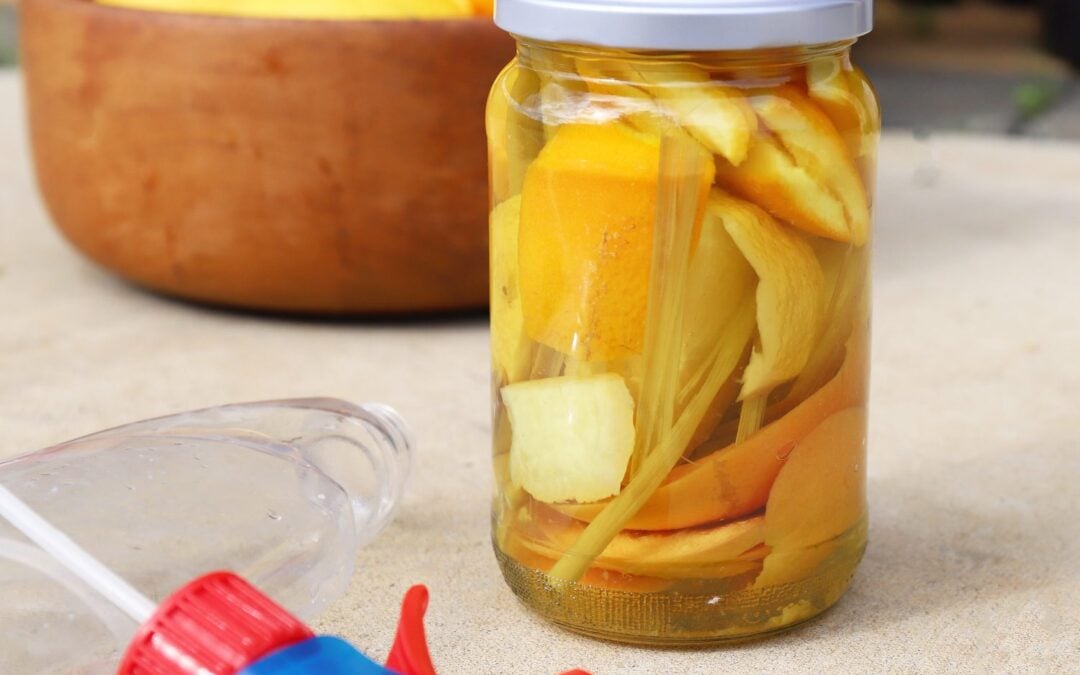
I made DIY Citrus Cleaner and it’s AMAZING, so I had to share! It’s really easy! You just collect some citrus peel or slices. You can do this over a week and just add to the jar as you get more. I used a combination of lemon, grapefruit, and orange. Citrus isn’t very good for the garden or compost so this is a great way to reuse the discarded peels. I also added lemongrass because it’s growing wild in my garden and smells amazing.
DIY Citrus Cleaner Recipe
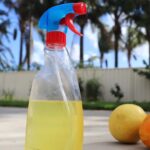
Fill the jar 3/4 up with white vinegar and the rest distilled water (I just boiled the jug/ kettle and used the cooled down water from that). Leave it for two weeks somewhere out of the sun (pantry or cupboard) and then just strain and pour into a spray bottle with some extra water to fill.
I was quite worried it would smell like vinegar because it’s so strong when you first make it and no one wants to spray raw vinegar around their house! But I was pleasantly surprised when I poured it out today it smelt so good! I wish I had made this sooner rather than spraying who knows what nasty chemicals all over my bench 👎
Give it a try! I’m off to make another slightly different batch of DIY Citrus Cleaner because I’m hooked.
Have you made your own cleaner? Let me know your favourite homemade cleaning products below in the comments.
When I first saw the Plastic-Free July movement on Instagram, straight away I decided I wanted to give it a go! I got started on my plastic-free journey a few months ago probably April/May 2018. Luckily I started early, because holy crap it is actually so overwhelming and hard to get started!
Once I started paying more attention to plastic I realised how bad the issue was. I felt like I had been blindly walking through a plastic world and now it was nearly completely infested! I had to remind myself it was ok to start small and build on it, which is exactly what I did. Below is the order in which I progressed.
Reusable bags
I started off with reusable bags. I have a whole cupboard of them that I never use and always forget to take them to the supermarket. So I made a concerted effort to remember them even if I was only getting a “couple things” because realistically that never ends up happening.
A few things I noticed were that I automatically went to grab the plastic bags at the self-checkout even though I didn’t need them. It was just a habit! Also going to clothing stores..you need to take your reusable bags and also remind the check out person that you don’t need a plastic bag. Usually, multiple times because they are in that habit too.
Rubbish bags
We have one of those rubbish bins with two separate sections one for waste and one for recycling. They have an inner plastic bucket with a handle so you can easily lift it out. I did a bit of research on how to replace rubbish bags and quite a few people suggested lining with newspaper. I never have much newspaper so that wasn’t going to work. So I decided to just go commando… it’s pretty easy as most of my fruit and vege goes to the compost, you just have to hide sloppy or wet things inside other rubbish.
So for example, leftover meat I wrap in another piece of rubbish or tuck inside something so it’s not going to touch the sides. Even if there is a bit of spill they are easy enough to hose out.
Fruit and Vege
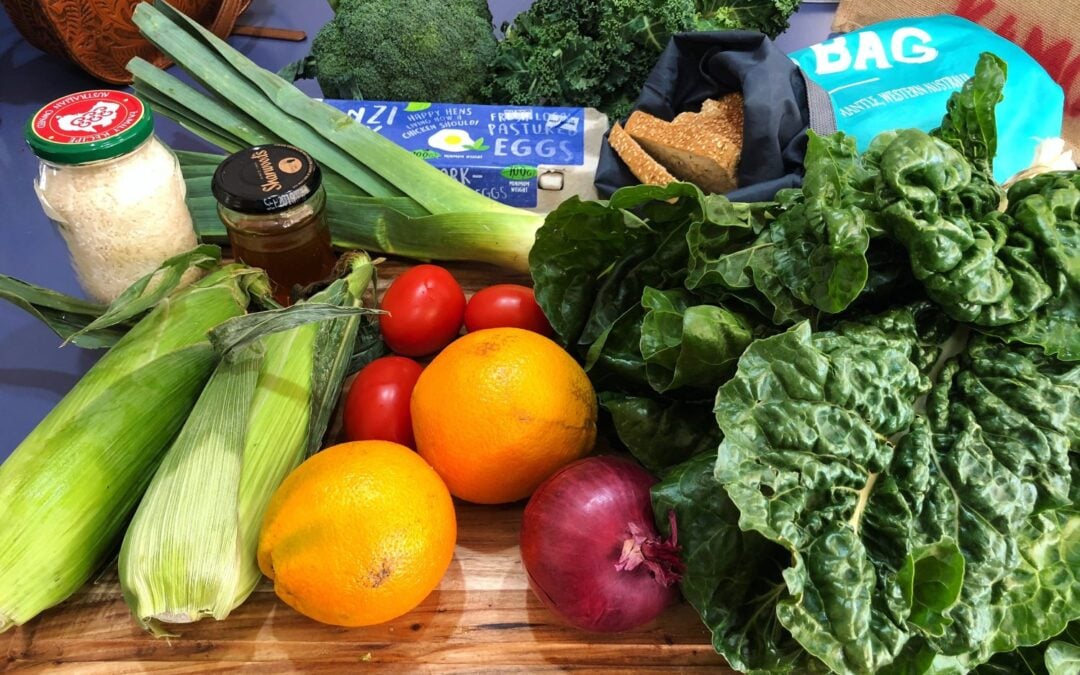
Next in Plastic-free July, I stopped buying veges with plastic. Which at the supermarket is actually so hard to do! There is only one type of lettuce not wrapped and it’s like a sea of plastic in the produce section. I quickly realised this wasn’t going to work so I started going to my local farmers market on a Sunday.
The produce is in season so it’s cheap and it lasts so much longer! It also tastes much better because it has been allowed to ripen on the plant rather than picked early, sprayed, frozen or whatever else the supermarkets do. So I HIGHLY recommend you check out the farmers market. Again, there were a lot of small produce plastic bags but they had baskets available so I used that and then put in my reusable bag.
Bread
With veges sorted I moved onto bread. My bf is obsessed with bread so it’s very much a staple in our household. Now, I can’t bake…but the whole point of this journey is about learning right! So I thought why not bake my own bread!! I researched and it all looked too hard so I bought a bread kit (plastic included) and attempted my first homemade-ish loaf. It turned out okay but not amazing. It also took up a lot of time and was just not going to be achievable/sustainable right now.
I then found a great reusable bread bag by a local Fremantle company called Onyalife. It arrived and I went down to the local Bakers Delight and bought a freshly baked loaf! You can choose to have it cut in either thick or thin slices and they put it in my reusable bread bag. SUCCESS! I also get bread at the farmers markets and bread rolls.
Beeswax Wraps
I use gladwrap a lot…way too much and I know it. I went around to a friends place as she was also keen on making beeswax wraps. She sourced some local wax and we made some wraps in different sizes. I do think we were a bit light on the wax so I will make some more and be a little more generous next time.
You basically grate beeswax on to some cotton fabric, cover with baking paper and melt it with an iron. A great tip is to put aluminium foil over your iron to stop it from getting covered in wax and ruining your clothes in the future. You can use them to cover containers, wrap half cut fruit or anything you would normally use gladwrap for.
Beeswax is naturally antibacterial so to clean them you just rinse in cold water and dry. A few things I’ve noticed were that I forgot what was in them because they are not see-through like gladwrap and also the cheese dried out and went crusty.
Extra Items
Try not to get too caught up in buying too many “Plastic-free items” try and use what you have. I got super excited and bought a few things online including Bamboo toothbrushes. Apparently, the bristles need to be cut off and thrown in the bin though.. but better than full plastic I guess. They are actually amazing toothbrushes through by far the best I’ve ever used.
Metal drink bottles are which is amazing for keeping water cool!
Ceramic coffee cup. Ok, so this is definitely my favourite purchase and mainly because it looks so good! I got it from Pottery for the planet and it’s amazing! It took a while for me to get used to asking people for coffee in my cup but most are so receptive and you even get 50cents off at heaps of places.
Bulk store
I stopped into my local Bulk store in Kalamunda after the farmers market one Sunday. I had a good look around and they had super helpful signs telling you exactly what to do. I really had no idea what I needed and ended up just purchasing some chocolate coffee beans.
The next time I went with a few things in mind and some jars! You weigh them at the scale station and write on some masking tape how heavy the jar is (lid on). Then I got some rice and local honey. I tried to stick with Australian products and they all have the origin on the description. You can get all your pantry goods there including tea, coffee, oils, dressings and cleaning products. You can also make your own nut butter in store!
Meat
Ok, so I definitely left this until last. It totally felt like it was in the too-hard basket but I knew I needed to sort it out. I took a reusable bag with a couple of containers and went down to the local butcher. He was so nice and was happy to tare off my containers and so I got some free-range chicken. SO PROUD! I was actually so stoked I had accomplished that as it was one of the last things on my list for Plastic-Free July!
HELLO PLASTIC-FREE JULY
It’s only the first week of Plastic-free July but I feel very prepared and I am so glad I started early to master all these things. I am still using all the plastic items in my house as I’m not throwing away things just because they are plastic. I’m just making a real effort not to buy any more plastic!
There are some things like dog food, beauty, and health products I still haven’t mastered but its a journey and I am constantly improving. Also not buying plants, this is a hard one. But I have plenty of seeds to get planting.
Plastic-Free July Tips and Tricks
Master the habit of using Reusable bags. Keep them in your car, handbag, everywhere incase you forget! If you do forget do your best and even load your shopping into your car (securely, maybe the back seat) and grab your reusable bags when you get home and transfer them. If you carried it easily through the supermarket chances are you will manage to the car…you don’t need a bag for your 3 items.
Visit your local farmers market. You will have so many more options for plastic-free food and fewer distractions of chips and packaged goods. It just feels so good for the soul too. And did i mention there are puppies? So many dogs…even the odd cat on a leash.
Cook from scratch! Baking and homemade foods are so much better for you as you know exactly what’s in them and they don’t have all the hidden preservatives.
Invest in a really nice BYO cup or bottle. This will mean you will be more inclined to actually use it!
Start with one thing at a time and master that. It’s so easy to get overwhelmed and feel like there’s no point. You can do it!
Share the Love. By sharing your journey or experience you never know you might just inspire one other person to get involved!
If you got this far in my post, well done! Let me know if you have any great Plastic-free July tips or bread recipes. Leave a comment below.
Holly 🙂
“Start where you are. Use what you have. Do what you can”.