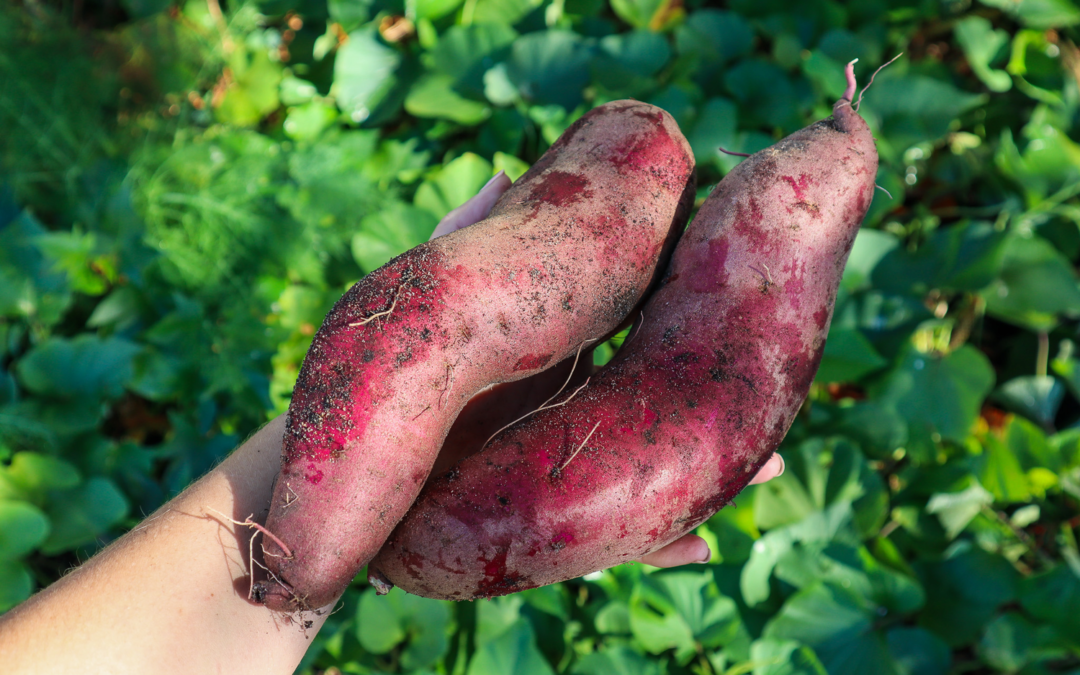
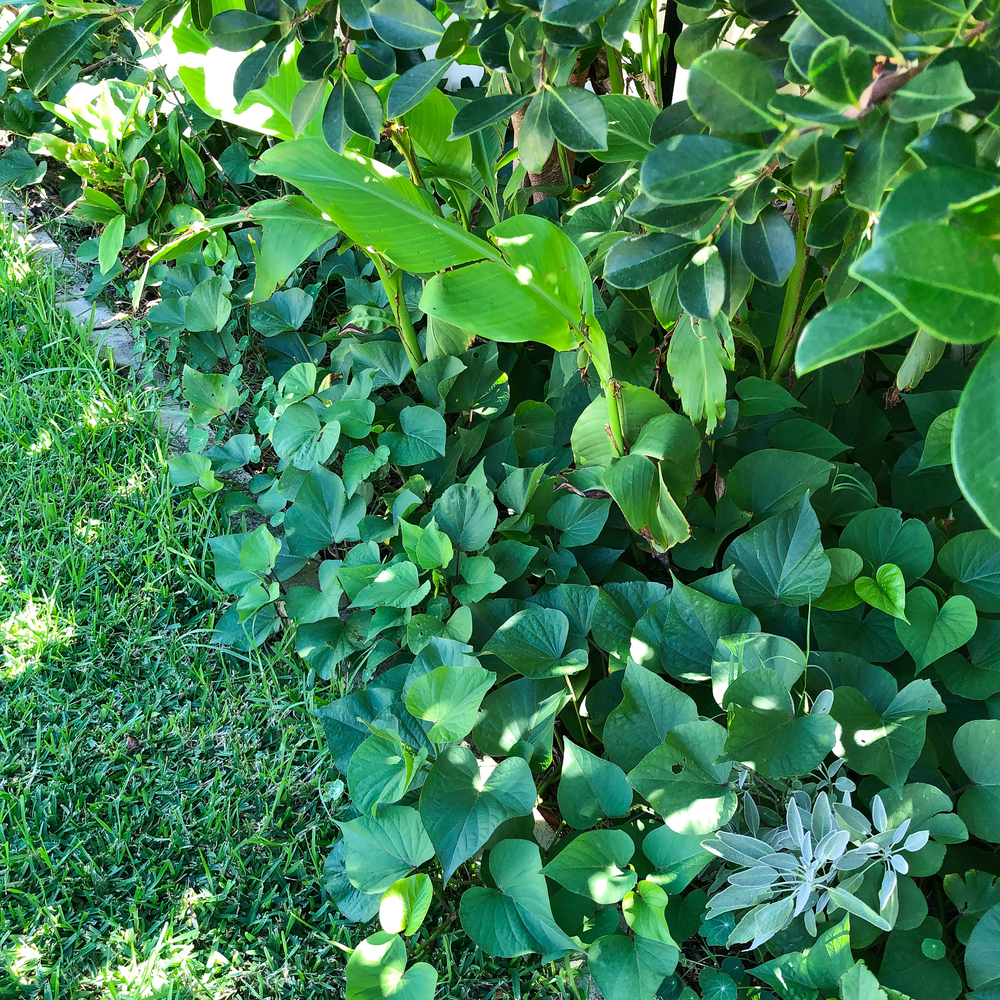
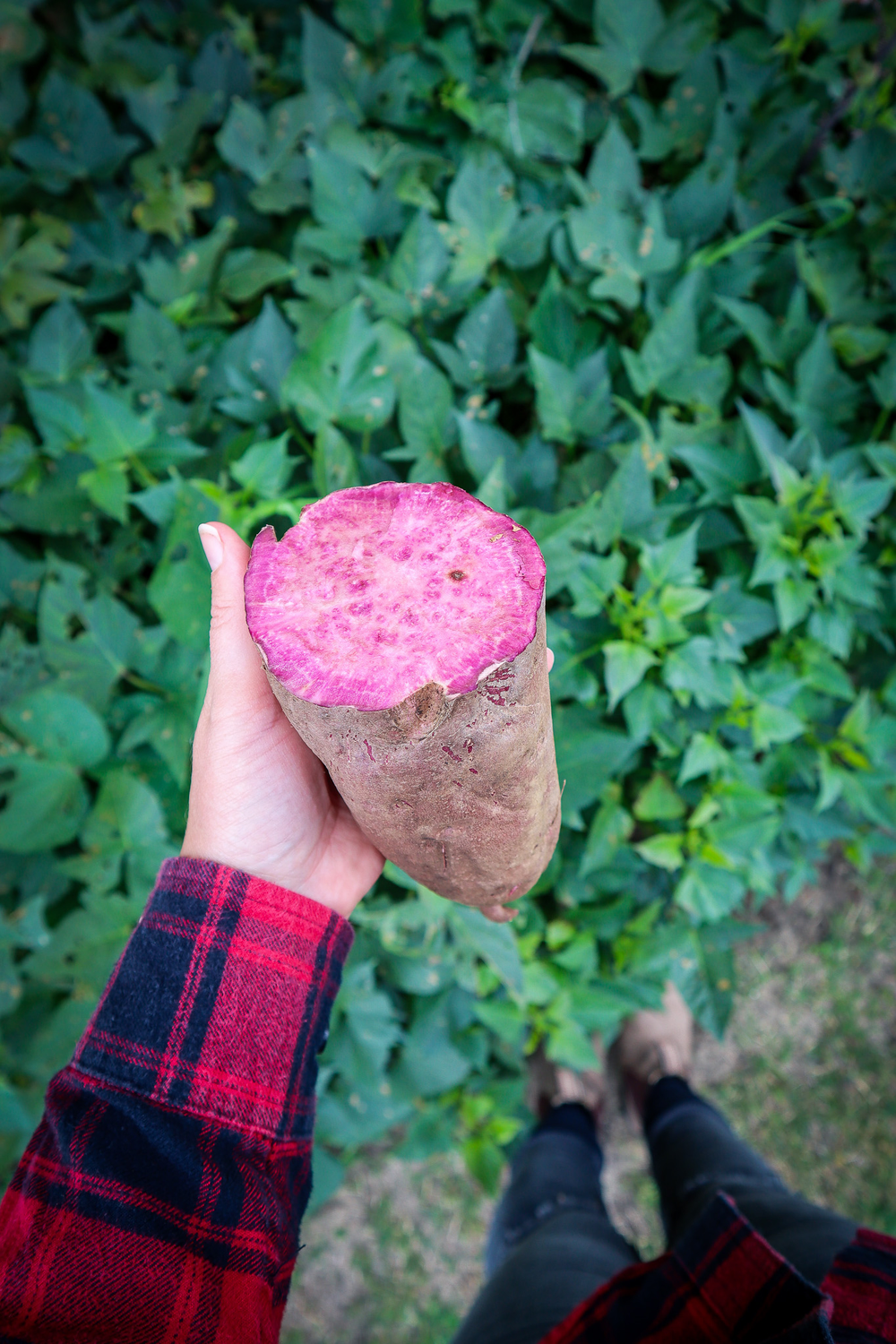
Sweet potatoes are one of those plants that can make you feel like a very successful gardener… right up until you actually try to harvest them, and then it’s just leafy sweet potatoes with no tubers…They are fantastic edible ground covers as the vines take off fast. They creep through garden beds, over mulch paths, into neighbouring plants. In a food forest setup, they look like they’re doing exactly what they should be doing…covering soil, producing biomass, filling space.
It all looks very lush and productive….And then you dig… And there’s not much there. Maybe a few small tubers. Maybe nothing worth the effort. If that sounds familiar…this post could be the answer to your problems! I posted my recent sweet potato harvest over on my Facebook and had so many people sharing that they struggle to get a decent crop of tubers…
This is one of the most common sweet potato growing problems, especially in warm climates like Perth, where vines grow aggressively but tuber formation can be inconsistent.
And the strange part is… the plant is clearly healthy. So what’s going on? If you’re getting sweet potatoes all leaves and no tubers, it is almost always the same issue.
It comes down to one common mistake. In my gardens, I grow sweet potato in two very specific ways to get two very different outcomes. One is for a root crop, and the other is for a living ground cover. Today, I am going to share 5 Practical Solutions to Fix Leafy Sweet Potato Vines.
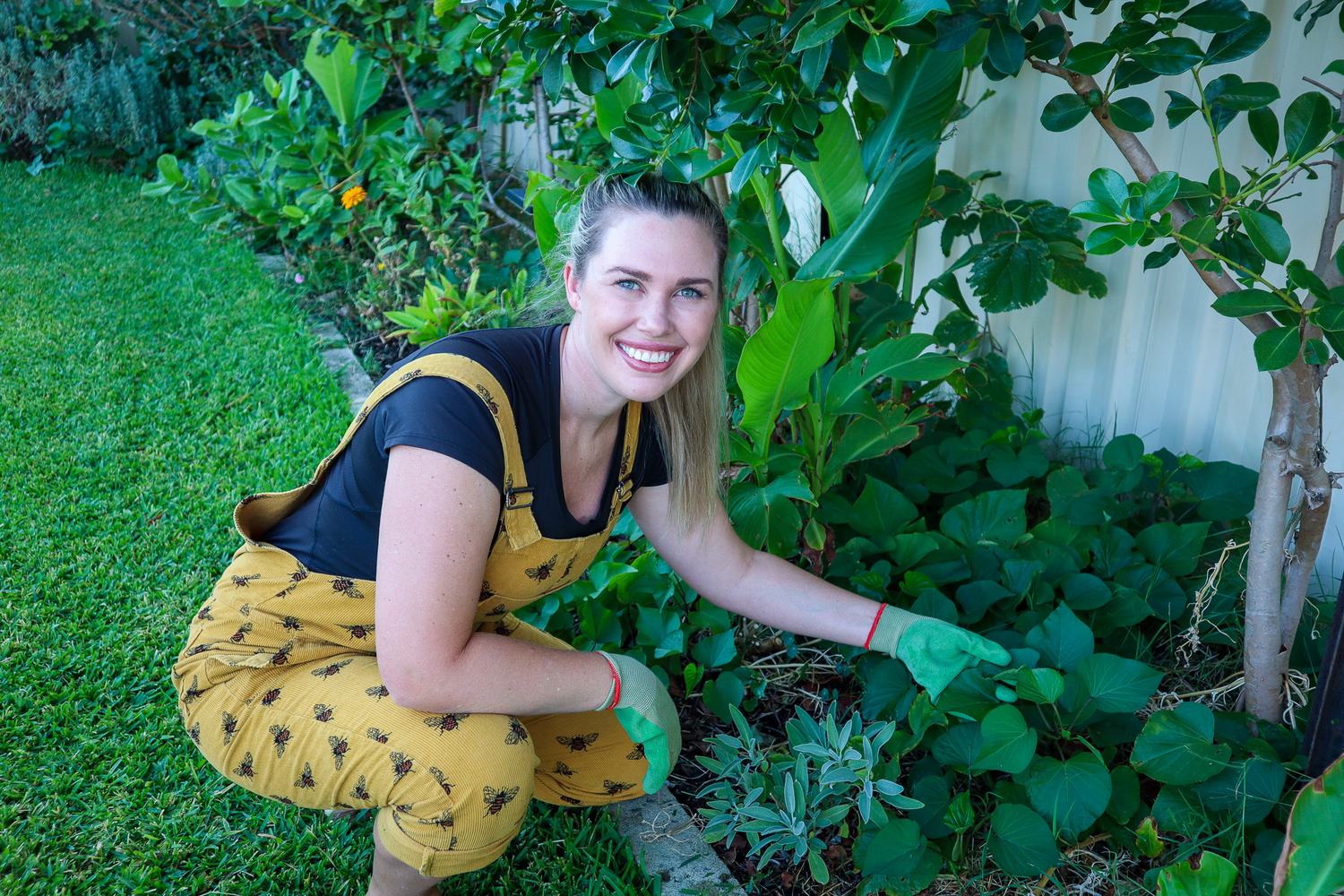
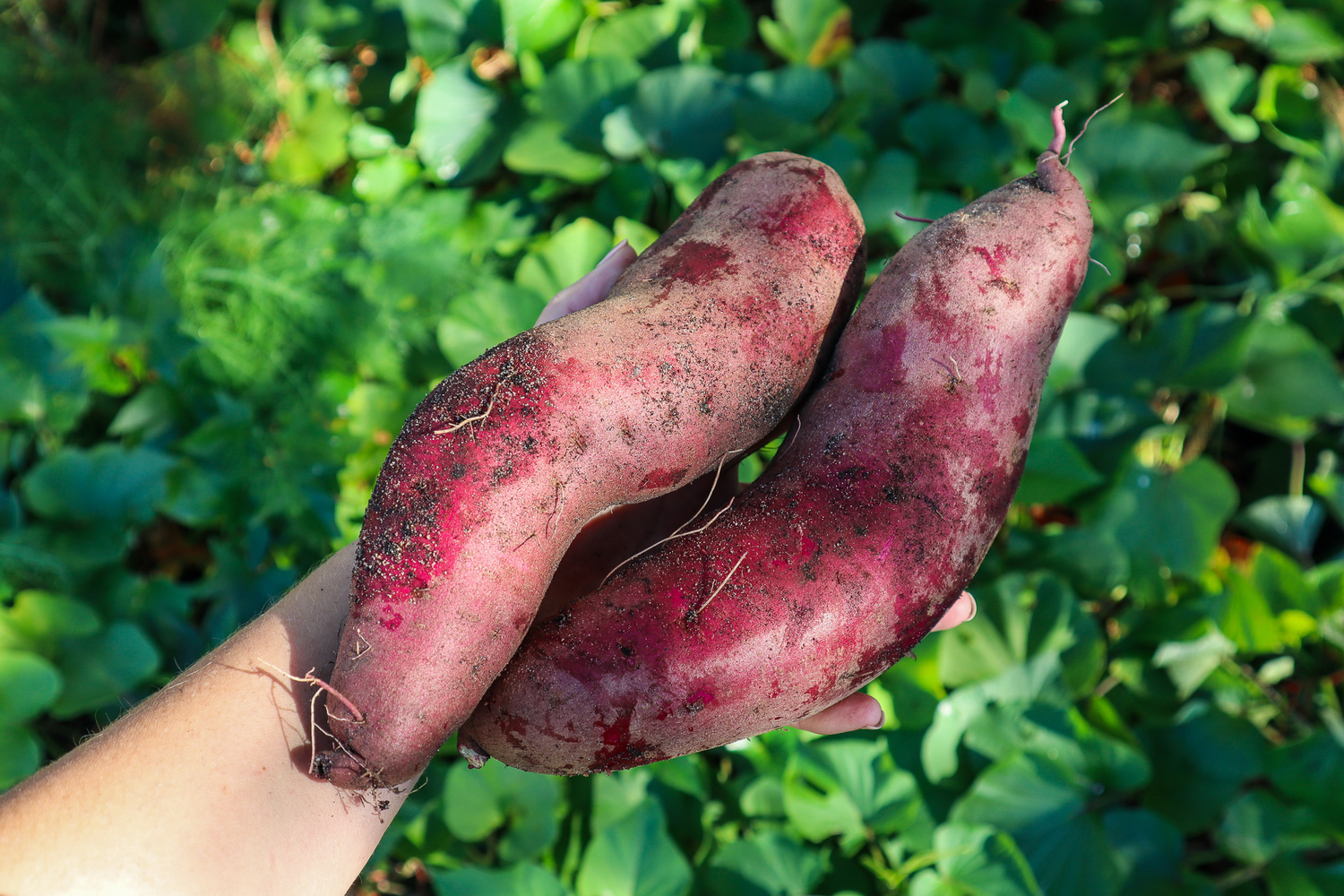
What’s Actually Happening?
Sweet potatoes are a storage crop.
- Leaves = energy production (photosynthesis)
- Vines = growth and expansion
- Tubers = stored energy (your harvest)
When conditions favour vine growth over storage, the plant puts all its energy into leaves and runners instead of developing the sweet potato tubers. This is great if you want an edible ground cover…but not so great if you want a bumper harvest of tubers..
The Most Common Reason For Sweet Potato Vines with No Tubers
This is probably the most common reason I see most sweet potato crops fail…and is often overlooked.
Many gardeners:
- Plant just one sweet potato slip (/cutting or sprouted sweet potato)
- Let it trail freely across the garden bed
- Allow vines to root along multiple points and “create new plants”
Why this reduces harvest
When vines touch soil and root:
- The plant redirects energy into new root systems
- Each rooted node becomes a “new plant section”
- Energy gets spread across many growing points instead of one storage zone
Result: A massive lush vine (great as a living ground cover), but small or underdeveloped tubers.
5 Practical Solutions to Fix Leafy Sweet Potato Vines
1. Don’t let one slip become an entire system – if you want a large harvest
This is where I have two different ways of growing sweet potatoes.
- I let them trail through parts of my food forest as a living ground cover. But the aim of this is not to dig up all the ground and get huge root crops. The aim is to cover the soil and keep the water retention during summer.
- For my main crops of large sweet potato tubers, I plant many slips (rooted cuttings) in a confined area such as a raised garden bed or section of the food forest. I also train the vines vertically to reduce space and stop them re:rooting. Don’t rely on one main plant to give you a large harvest. Plant slips 30–40 cm apart.
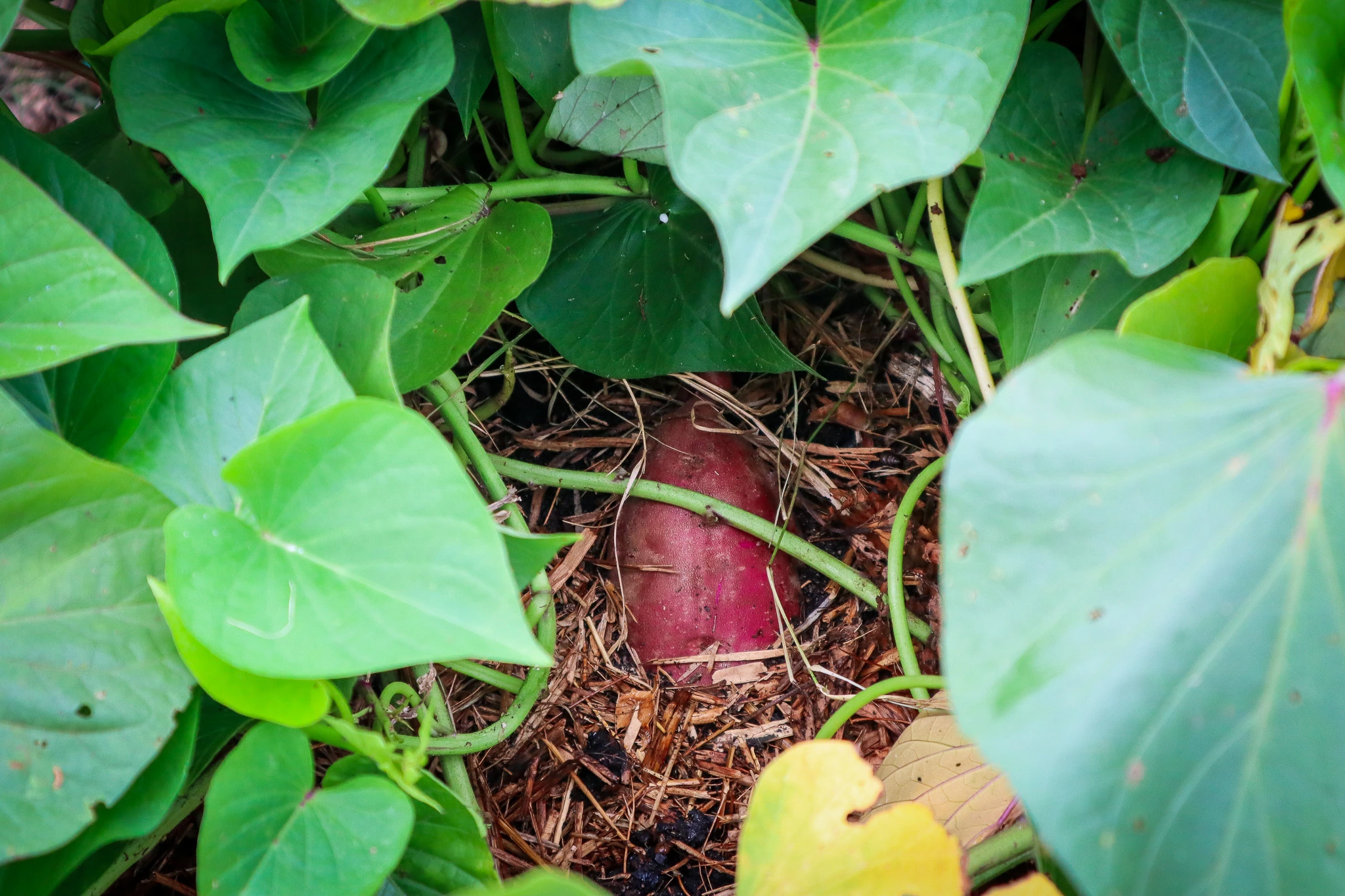
2. Stop allowing vines to root everywhere (MOST IMPORTANT)
Instead:
- Lift vines periodically
- Keep them on top of heavy mulch
- Prevent nodes from rooting into soil
OR
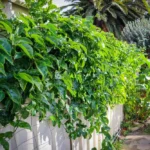
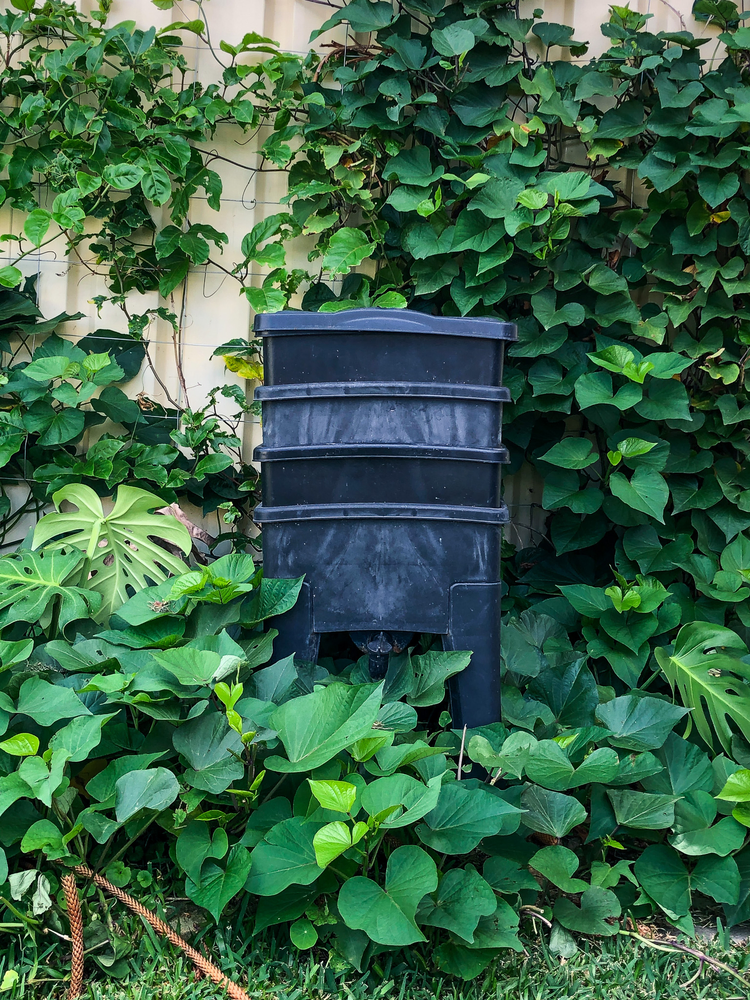
- Train vines vertically up an arbour or fence ( my go-to method). This can create bonus shade and cool down your summer garden.
3. Keep soil balanced, not overly fertilised
Before planting out your sweet potato, add compost and worm castings for structure and nutrients, and a thick layer of mulch for water retention. You want steady growth, not explosive foliage.
4. Water consistently during summer
Sweet potatoes do best with:
- deep watering
- even moisture
- no big swings between dry and saturated
Sweet potatoes are pretty drought-tolerant and can happily grow through dry periods, but they will focus their energy on leaves and vines rather than tubers. Consistent watering is what signals “it’s safe to store energy now.”
5. Give them space and time
Sometimes the best thing you can do is stop checking too early….Plant your slips in spring and wait until late autumn or early winter to start checking.
Look for:
- Signs of sweet potatoes popping up through the soil
- Slowing down of growth and the leaves starting to look damaged or yellow.
That’s when tubers finally start to bulk properly.
Are sweet potatoes still good as ground cover?
Yes, but with intention. In food forest systems, sweet potatoes can still function as:
- living mulch
- weed suppression
- soil shading
- water retention
- Habitat for wildlife
But the key difference is understanding that this may have a smaller root crop.
Unmanaged spreading = more vine and leaves
Managed spreading = food crop + ground cover balance
Utilise the whole plant – the leaves are edible too!
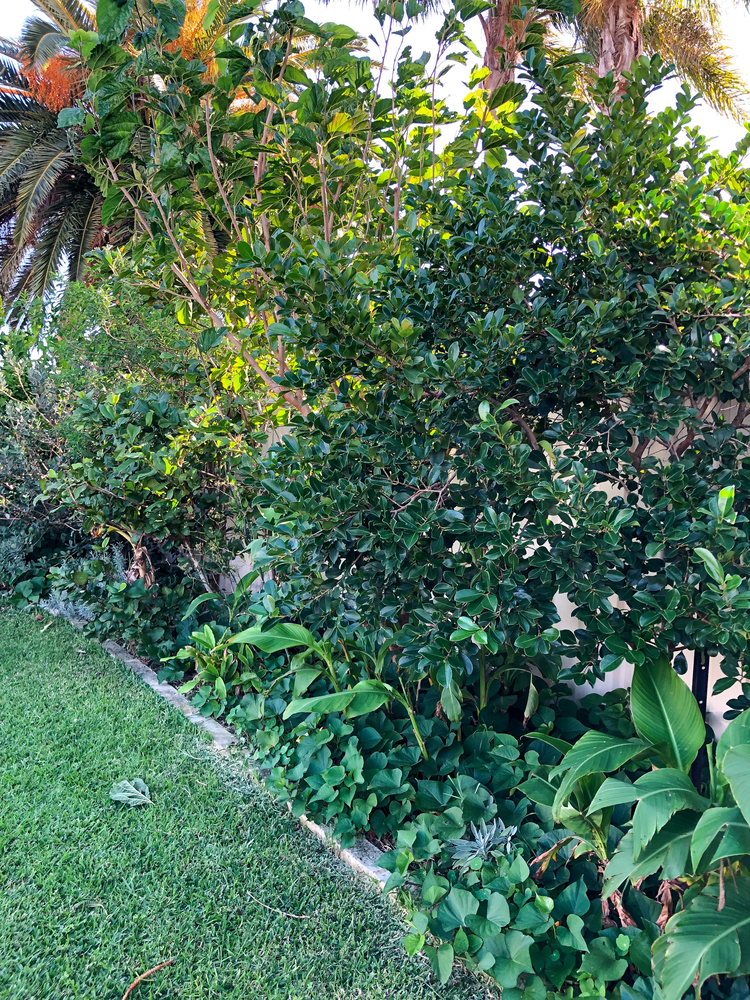
Not every sweet potato planting has to be about digging up big tubers. In my food forest gardens, I use sweet potatoes more as a living mulch layer spreading across the soil, shading roots, suppressing weeds, and filling space between larger plants. And in that system, even if tuber production is lower, the plant is still producing something useful the entire time.
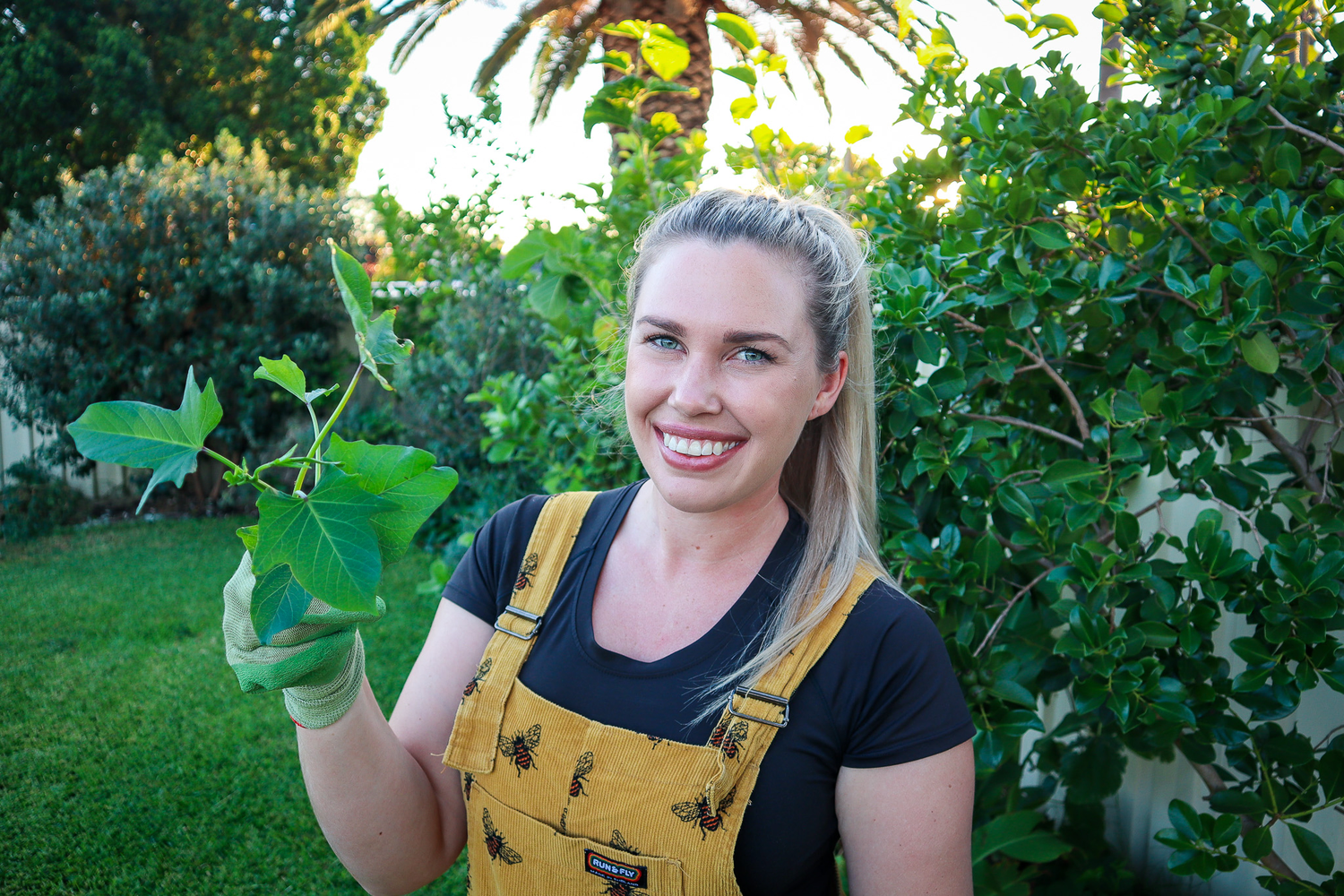
One of the most underrated parts of sweet potatoes is the edible leaves and young shoots. Stir-frys, soups and curries are a great way to utilise your abundant sweet potato leaves.


FAQ: sweet potato growing problems
The biggest causes are vines rooting along nodes, not planting enough slips or harvesting too early.
Yes. Very successfully. But Perth’s sandy soils and irregular rainfall often amplify sweet potatoes no tubers issues unless watering and vine control are managed.
Absolutely. But they perform best when vine spread is guided rather than left to root freely everywhere.
Yes! Sweet potatoes can grow very well vertically along trellises, fences, or raised structures. In fact, vertical growing can be a great way to manage space and control vine growth to get bigger harvests!
Yes – young sweet potato leaves and shoots are edible. They’re best used as a cooked green rather than raw.
It generally means the plant is healthy and not under major stress. But it’s more of a “maturity signal” than a harvest guarantee.
Intentional Garden Design Choice, Not a Failure
At the end of the day, this isn’t really about sweet potatoes failing to make tubers. It comes back to the same simple issue…the #1 mistake of letting vines sprawl and root freely, which spreads the plant’s energy too thin.
Once that happens, the plant shifts away from storage and into vine production, giving you lots of leaves but very little harvest. But now that you know this, you can actually choose the outcome for your garden!
Sweet potatoes can be grown in two main ways:
- a leaf-focused system, where they act as ground cover and edible greens
- a tuber-focused system, where vines are kept more controlled, and energy is directed underground
Neither is wrong…it’s just different functions in a food forest.
If you found this post helpful, please share it so more people can find the answer to their small sweet potato harvests 💚
Happy Gardening,
Holly 🌱

Top 10 Edible Ground Covers for Living Mulch
Edible ground covers are a crucial element in any permaculture or food…
10 Perennial Edible Climbing Vines for Productive Gardens
Edible Climbing Vines help maximize growing space and double the amount of…

Sweet and Spicy Sweet Potato Leaves Recipe
If you’re looking for a delicious, nutrient-packed way to use sweet potato…

Rosemary, Feta and Roast Veggie Hand Pies
Rosemary and roast vegetables are a classic combo for a very good…


Curried Sweet Potato Soup
This curried sweet potato soup is my FAVOURITE! Preparing batches of soup…

12 Reasons to Start Growing Sweet Potatoes for Self-sufficiency
Growing Sweet Potatoes / Kūmara (Ipomoea batatas) in your home garden is…