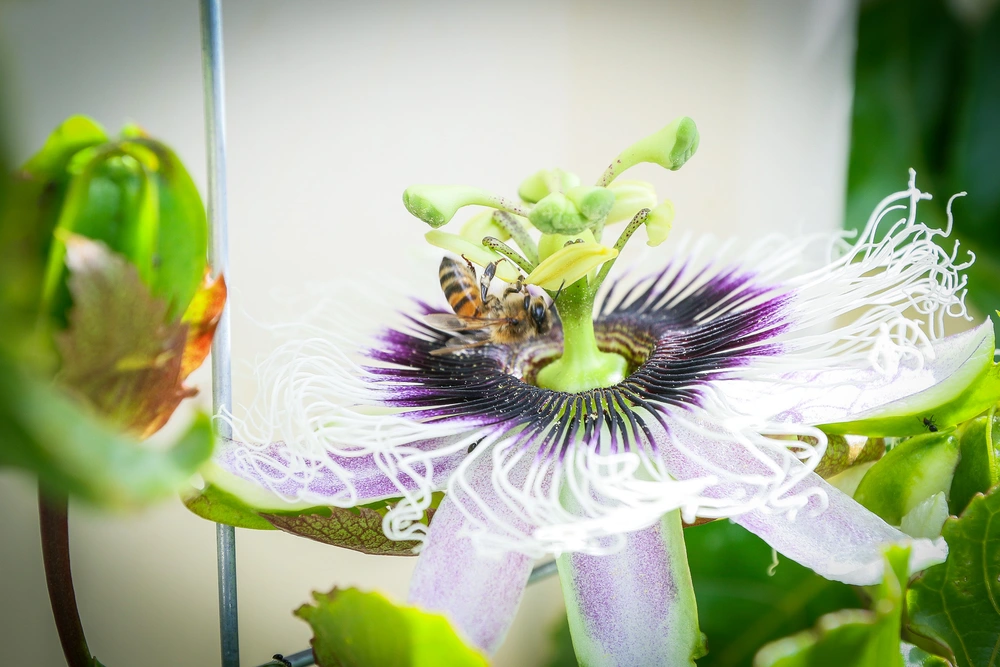
If your passionfruit vine is covered in flowers but not producing fruit, you’re not alone…This is one of the most common (and unexpected) frustrations with growing your own passionfruit at home – especially in warm climates like Perth. The vine looks perfect… vigorous, lush growth, healthy leaves, and plenty of flowers and even bees… but little to no fruit..
It can be so frustrating! I literally spent three years trying to solve this problem! Feeling like you are doing everything right, but you still get no fruit. Passionfruit not fruiting is usually caused by one issue. But the tricky thing is to figure out which exact one is causing the issue with your vine.
I’ve been through this exact situation more than once…I’ve grown many passionfruit vines over the last 10 years, and I’ve had everything from heavy-cropping plants to one vine that looked incredible but only produced three (although extra-large…just three!) fruits in three years! See number 10 on the checklist for this dud variety I ended up removing!
That experience is exactly why I created this guide so that I can help you fix your passionfruit vines or determine if you need to replace them to start getting abundant harvests!
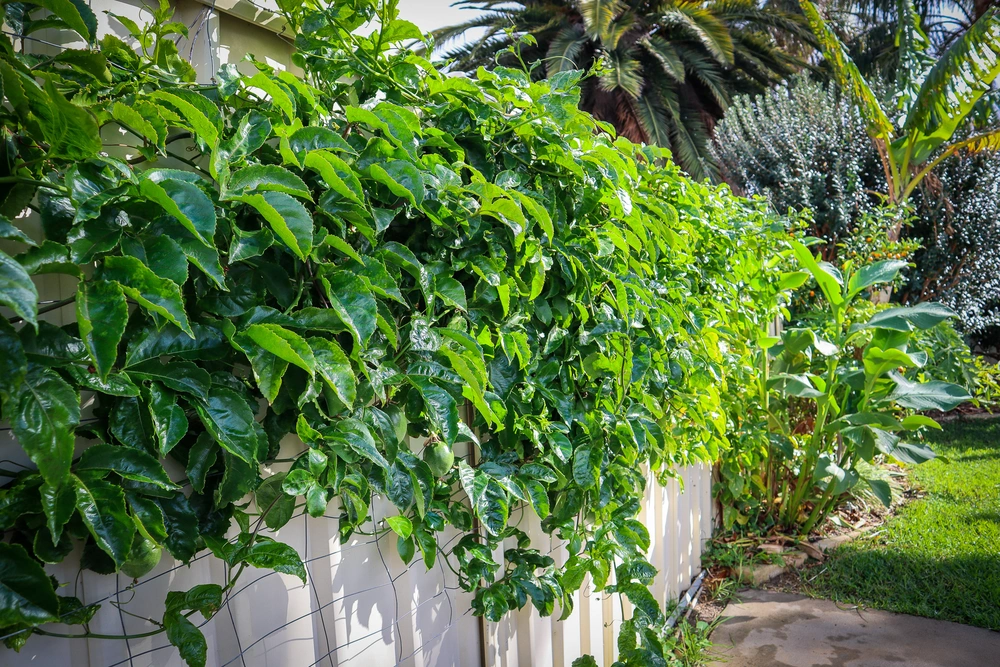
The Troubleshooting Checklist
Passionfruit problems are rarely caused by just one thing, which is why online advice can sometimes feel confusing or even contradictory….One source will say it’s 100% pollination, another will blame fertiliser, and another will point to heat stress…
The truth is: each one of these COULD be the cause, depending on YOUR garden.
That’s why this guide is structured from easiest to hardest fixes. Start at the top and work your way down, eliminating each possibility one by one. You’re not just guessing; you’re narrowing it down until you find the exact issue in your garden.
Once you know the cause, the solution becomes much clearer, and you know you have done everything before choosing whether to replace the vine.
Step 1: Check Pollination (Easiest Fix)
Start here because it’s the quickest and easiest thing to rule out. Passionfruit flowers rely on bees and insects to transfer pollen. Without this step, flowers will open and drop without forming fruit.
Signs this may be the issue:
- Flowers open and drop within 1–2 days
- No swelling behind the flower after it falls
- Very few bees are visiting the vine
What to try:
Hand-pollinate a few flowers using a small brush or by picking off one of the pollen-covered stamens and transferring pollen to the central stigma. Do this in the morning when the flowers are freshly open. Later in the day, if there are many bees, they may have harvested all the pollen. This simple test can quickly confirm whether pollination is the problem.
If fruit actually starts to form after hand-pollination, you’ve found your issue.
Fix:
- Add bee-attracting plants (lavender, herbs, calendula)
- Avoid pesticides
- Increase flowering diversity in the garden
Cross-Pollination Between Varieties
In most cases, a second variety is not necessary for common passionfruit varieties (Passiflora edulis). Most popular homegrown passionfruit types are self-pollinating, meaning a single vine should still produce fruit if pollination is happening properly.
However… there are some varieties that do need cross-pollination. These are more unique or some of the Panama varieties.
Step 2: Check Water Stress
Inconsistent watering is one of the most common causes of poor fruit set. Passionfruit needs a lot of steady moisture, not cycles of drought followed by heavy watering. This is especially crucial during summer….and no easy task here in Perth 😅 Definitely something to consider before planting is that they do need plenty of water! Sandy soils can also be hydrophobic, and the water you are adding is disappearing before the plant gets a chance.
Signs this may be the issue:
- Flowers drop after hot or dry periods
- Small fruits form but shrivel and drop off before maturing (most common sign)
- Soil dries out completely between waterings
- Wilting in the afternoon heat
What to check:
Dig a few centimetres into the soil. If it’s dry at root level during flowering, water stress is likely contributing.
Fix:
- Deep water 2–3 times per week in summer (more in Perth heatwaves)
- Apply thick mulch around the base
- Avoid long dry gaps followed by heavy watering
Step 3: Check Heat Stress – Welcome to Gardening in Perth 🙃
Even a healthy vine can stop producing fruit during extreme heat. When temperatures spike, the plant prioritises survival over reproduction. Something we get to deal with every summer here in Perth.
Signs this may be the issue:
- Flowers drop during heatwaves
- Fruit only sets in cooler months
- Vine looks healthy but becomes unproductive in summer
Fix:
- Provide more fibre and compost to the soil
- Add thick mulch
- Add afternoon shade for young plants
- Maintain consistent soil moisture during heat spikes
Step 4: Check Nutrient Balance (Too Much Nitrogen)
This is one of the most overlooked problems…Too much nitrogen encourages lush leafy growth, but reduces flowering success and fruit development. Passionfruit are HEAVY FEEDERS. It is important to add plenty of organic material and compost when planting.
Signs this may be the issue:
- Very strong green growth but little fruit
- Flowers appear but don’t develop further
- Vine looks “too healthy” but is unproductive
- Small fruits form but shrivel and drop off
Fix:
- Stop using high-nitrogen fertilisers and add more potassium
- Use compost, worm castings and organic matter instead of quick feeds
- Use foliar sprays of diluted compost teas
Step 5: Check Vine Age and Establishment
Sometimes the vine is simply not mature enough yet…and some patience is required (the hardest part). Passionfruit often flower before they are fully ready to support consistent fruiting. But in saying that, my young ‘Sunshine Special’ was planted in Spring and produced fruit in Autumn. Passionfruit also have a short lifespan of 7 years. After that age, they can become unproductive or suddenly die back.
Signs this may be the issue:
- Vine is under 1–2 years old
- Vine is 7+ years old
- Inconsistent fruiting
- Vine is only 1- 2 m in size.
Fix:
- Allow time to establish strong roots
- Avoid heavy pruning too early
- Focus on structure and long-term growth
Step 6: Check for Too Much Shade
Passionfruit are often described as hardy vines, but they still need good light to produce fruit properly. One of the most overlooked reasons for poor fruiting is simply not enough sun. A vine can look incredibly healthy in shade…lots of green growth, strong leaves, and even flowers, but still fail to produce abundant fruit. My Panama gold does produce fruit in the shade but I know that I will never get the same yields as if it were in full sun.
Signs this may be the issue:
- Large, dark leafy growth, but very few fruit
- Flowers appear but don’t develop
- Vine is growing well, but struggles during winter and dies off
- Located in heavy shade or under dense tree canopy
What to check:
Observe how much direct sunlight the vine receives. Passionfruit performs best with full sun or at least 6+ hours of direct light per day.
Fix:
- Move vines (if possible) to a sunnier position
- Prune surrounding trees to increase light
- Train vines up and into higher light zones (pergolas, fences, open structures)
- Avoid deep shade positions, even if the vine looks healthy
Step 7: Check If the Plant Is in a Pot
Potted passionfruit vines can grow well for a while, but they often struggle to produce consistent fruit long-term. This is because passionfruit are vigorous, heavy-feeding plants. When confined to a pot, they can become unproductive unless given regular feeds.
Signs this may be the issue:
- Lots of leafy growth but poor fruiting
- Flowers are dropping despite good care
- Little to no flowers forming
- Frequent drying out, even with regular watering
- Vine becoming root-bound (slowed growth over time)
What to check:
Lift the pot slightly if possible. If you see roots circling heavily or emerging from drainage holes, the plant may be root-bound.
Fix:
- Move into a much larger container (minimum very large 50L or half-barrel size)
- Or ideally plant directly into the ground
- Refresh soil and mulch regularly if staying in a pot
- Feed with liquid fertilisers such as compost tea, worm castings or pond water every 2-3 weeks
Step 8: Check for Rootstock Takeover (Hard Fix)
One important thing to check is whether your vine is grafted…and if so, whether the rootstock has taken over. In grafted plants, the top fruiting variety is joined to a rootstock. If the graft fails or the rootstock begins to dominate, the plant may become vigorous but unproductive. This is usually the “nelly kelly” variety, and I wish they were never sold here in Perth! I see too many people fail with this issue.
Signs this may be happening:
- Very strong growth but poor or no fruiting
- Growth looks different below and above the graft union
- Shoots are popping up throughout the garden
- The leaves have 5 prongs
- The fruit is small, orange and red inside
What to check:
Look closely at the base of the plant. The graft union is usually visible as a slight bulge or change in stem texture.
If shoots are growing from below this point, they may be from the rootstock.
Fix:
- Remove shoots growing below the graft union
- Ensure only the grafted variety is allowed to grow
- If the rootstock has fully taken over, replacing the plant may be necessary
I would always avoid planting a grafted passionfruit and consider removing it if you have. They can become extremely invasive and can continue to try to take over your garden 50+ years in the future. Check out the YouTube video below for more info.
Step 9: Understand Fruit Drop vs No Fruit Set
This step helps you narrow down the issue more precisely. These are two different problems:
- If flowers drop immediately, it’s usually pollination or stress-related.
- If small fruit forms but then drops, it’s usually a water or nutrient imbalance.
Understanding this difference helps you focus your attention instead of guessing.
Step 10: Consider Variety or Plant Performance (Hardest Fix)
If everything else checks out and the vine is still not producing, the issue may be the plant itself.
Some vines simply perform better depending on:
- Genetic strength
- Suitability for your climate
Signs this may be the issue:
- Everything is correct but fruiting is still poor
- Vine looks healthy but remains unproductive long-term (3+ years)
- No clear environmental cause
At this point, the most effective solution may be starting again with a stronger variety suited to your conditions. Passionfruit is usually only productive for 7 years, so you don’t want to spend half of it waiting for it to fruit. Search the variety you have online and see if anyone else is having trouble with it.
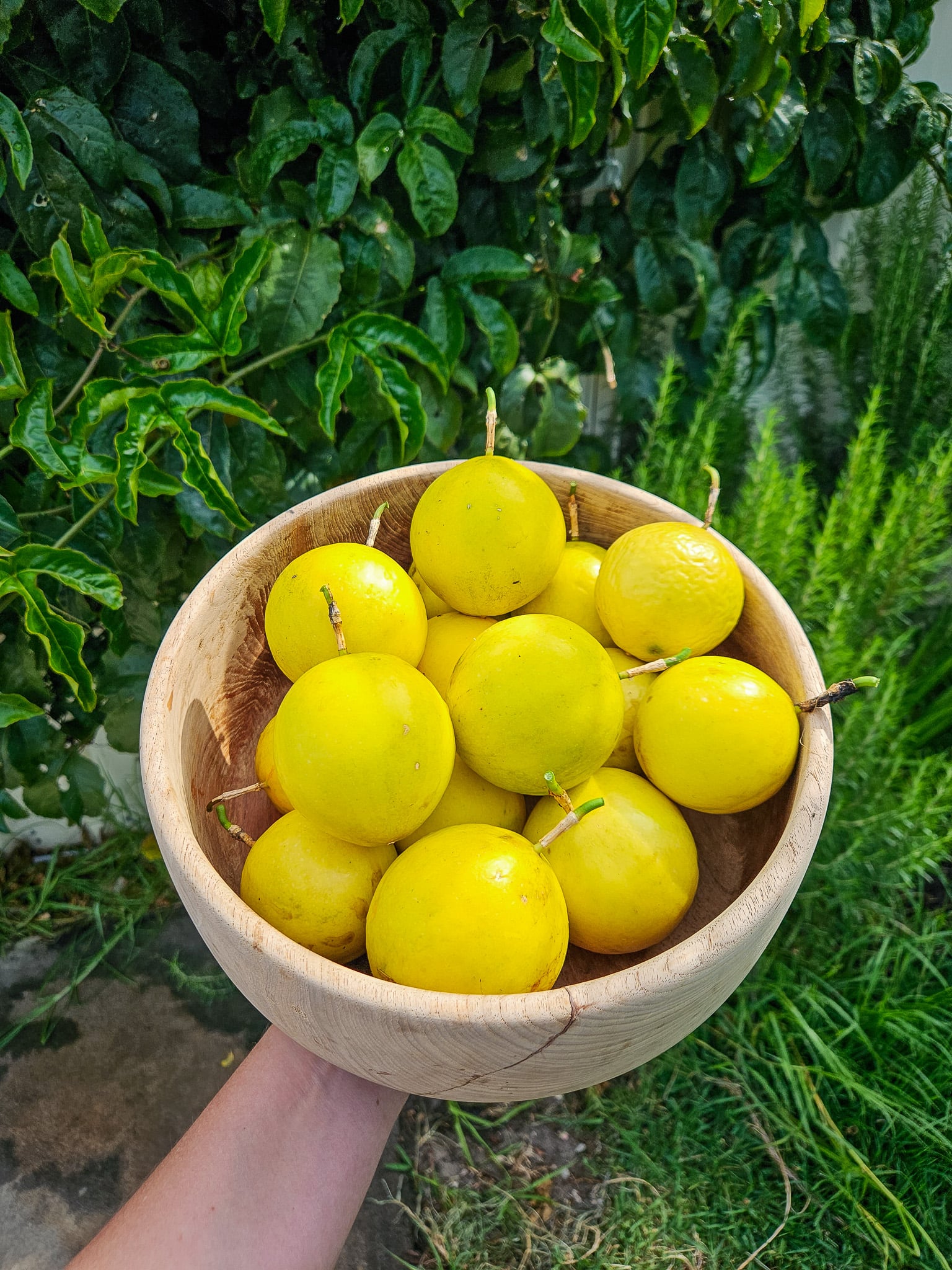
I had one vine that I went through this entire checklist and determined that there was nothing else I could do, so I replaced it. I replanted a variety that excels in Perth conditions (Sunshine Special) in the exact same location. Within 6 months, the new vine was covered in fruit! So I knew it was not a soil, water or pollination issue.
P.S. The dud I bought was called “black nugget” so I would avoid that variety. It turned out to be a large gold passionfruit despite the name and with an extremely vigorous vine, intense flowers and just 3 fruits in 3 years!
Quick Troubleshooting Summary
- Are bees pollinating the flowers?
- Does hand pollination work?
- Is watering consistent?
- Is heat causing flower drop?
- Is nitrogen too high?
- Is there too much shade
- Has rootstock taken over?
- Is the pot too small?
- Is the vine still young?
- Is the vine too old?
- Are fruits forming then dropping?
- Is the variety reliable for your climate?
FAQ
This is usually caused by poor pollination, heat stress, inconsistent watering, or too much nitrogen fertiliser. In some cases, the vine itself may be an unsuitable variety.
Flower drop is commonly caused by heat stress, lack of pollination, or water stress, especially during hot, dry weather. Or the variety may be unsuitable or unproductive.
Most vines begin fruiting within 12–24 months, depending on variety, growing conditions, and whether they are grown from cutting or seed..
This means the rootstock has taken over. It is important to remove grafted passionfruit as they can be invasive and hard to get rid of! You may notice vines popping up throughout your garden.
Sometimes you need to cut your losses
If your passionfruit vine is flowering but still not producing fruit after you’ve worked through all the possible causes, sometimes the most practical next step is the hardest one…starting again.
It can be tempting to keep waiting, hoping that “next season” will be the one where everything finally clicks. But if you’ve already checked pollination, watering, heat stress, nutrition, shade, and even vine maturity, and you’re still getting little to no fruit, then the issue may simply be the plant itself.
In my own garden, I spent 3 years trying to fix a passionfruit vine that looked perfect but barely produced anything. I changed how I watered, fertilised, pruned, and even hand-pollinated…yet it only ever gave me a handful of fruit. When I finally replaced it, the new vine in the exact same spot was covered in fruit within 6 months!! Which was reassuring, knowing it probably had nothing to do with me or my garden!
That experience taught me something important: sometimes persistence is useful in gardening, but sometimes it just turns into years of waiting for a plant that was never going to perform well in the first place.
If you’ve truly tried everything on this list, don’t be afraid to reset. A healthy, well-suited vine planted in the right conditions can outperform a struggling plant by a huge margin…and get you enjoying harvests far sooner than waiting another few seasons for a vine that still isn’t delivering 🫠
In gardening, knowing when to move on can be just as powerful as knowing how to fix the problem.
If you found this post helpful, please share it with others to help them get better harvests 💚
Happy Gardening,
Holly 🌱