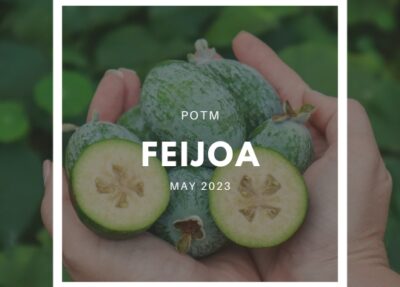
As a Kiwi living in Perth, Feijoas (also called pineapple guavas here in Australia) are a must-grow in my garden! One of the easiest fruit trees to grow in a home garden, but many gardeners get confused about when to prune feijoa trees. Prune too hard at the wrong time…and you can accidentally remove next season’s fruit (which is less than ideal!). Leave them untouched for too long, and they quickly become dense, leggy, and difficult to harvest (or shade out too much of your garden).
But…Feijoas are incredibly forgiving once you understand their growth habits. So in this guide, you’ll learn exactly when to prune feijoas, whether you even need to prune feijoas, how to prune feijoa hedges and the best pruning tips for healthier trees and bigger harvests. And not to be scared to give them a good hack back!

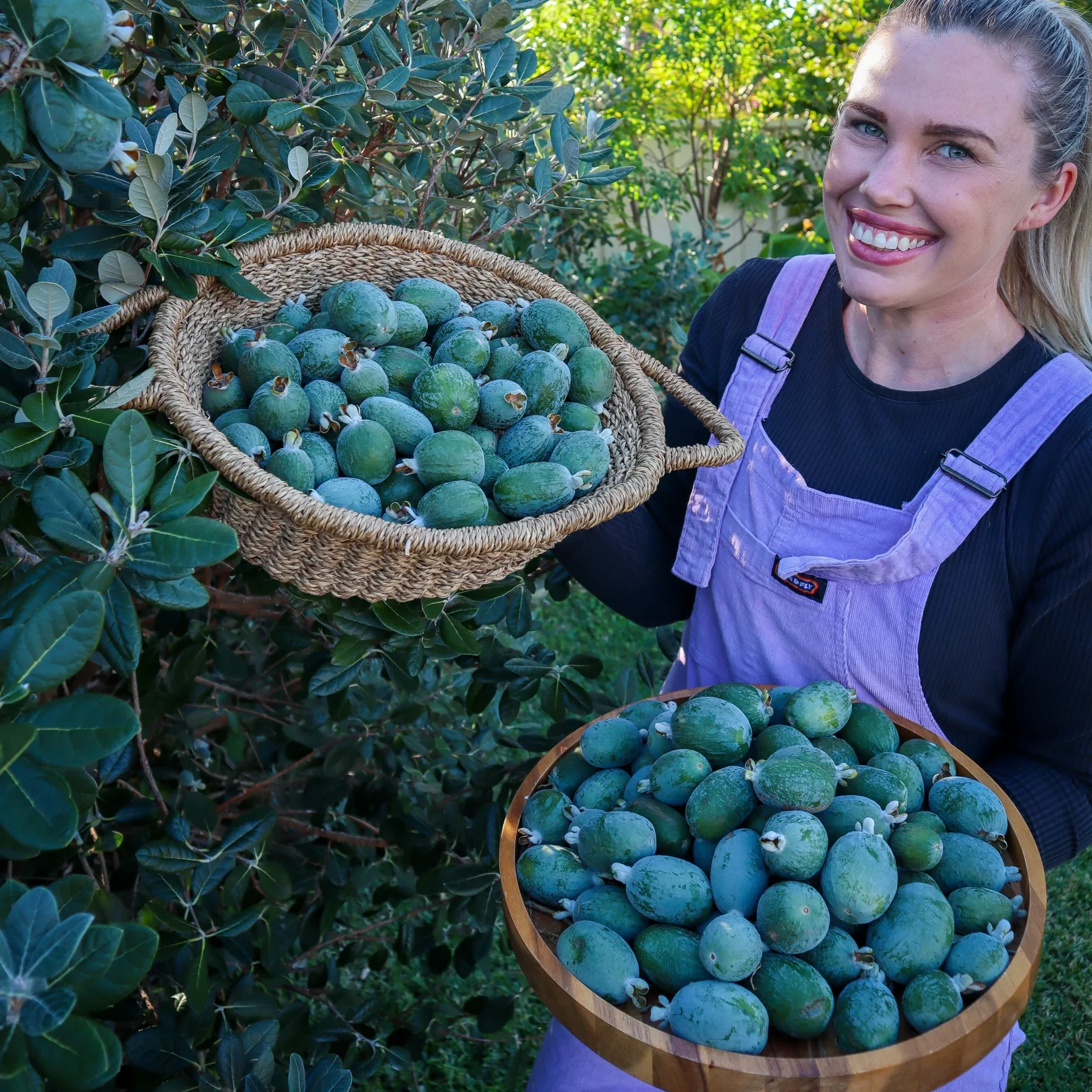
Why Pruning Feijoas Helps Production
Regular pruning helps feijoa trees:
- Improve airflow and reduce disease
- Produce stronger, healthier growth
- Allow more sunlight into the canopy
- Make fruit easier to harvest
- Prevent trees from becoming too tall or dense
- Encourage productive new branches
- Fruits often form on the new growth
- Allows size to manage netting for fruit flies or birds
Without pruning, feijoas often develop thick, unproductive branches, while the inside becomes shaded and leggy. Also regular pruning provides regular green material to turn into mulch and feed your garden! Win-win!
Do You NEED To Prune Feijoa?
Pruning Feijoas is important to maintain size and promote new healthy growth, but when they are young or still small, they may not need much pruning at all. When you first plant a feijoa tree, it can be a good idea to remove low-down side branches to allow a single main trunk. This would be for the first 40 – 50 cm. After that, you can tip prune the ends to create a bushier tree.
When to Prune Feijoas
The best time to prune feijoas is immediately after fruiting finishes, usually in late autumn to early winter.
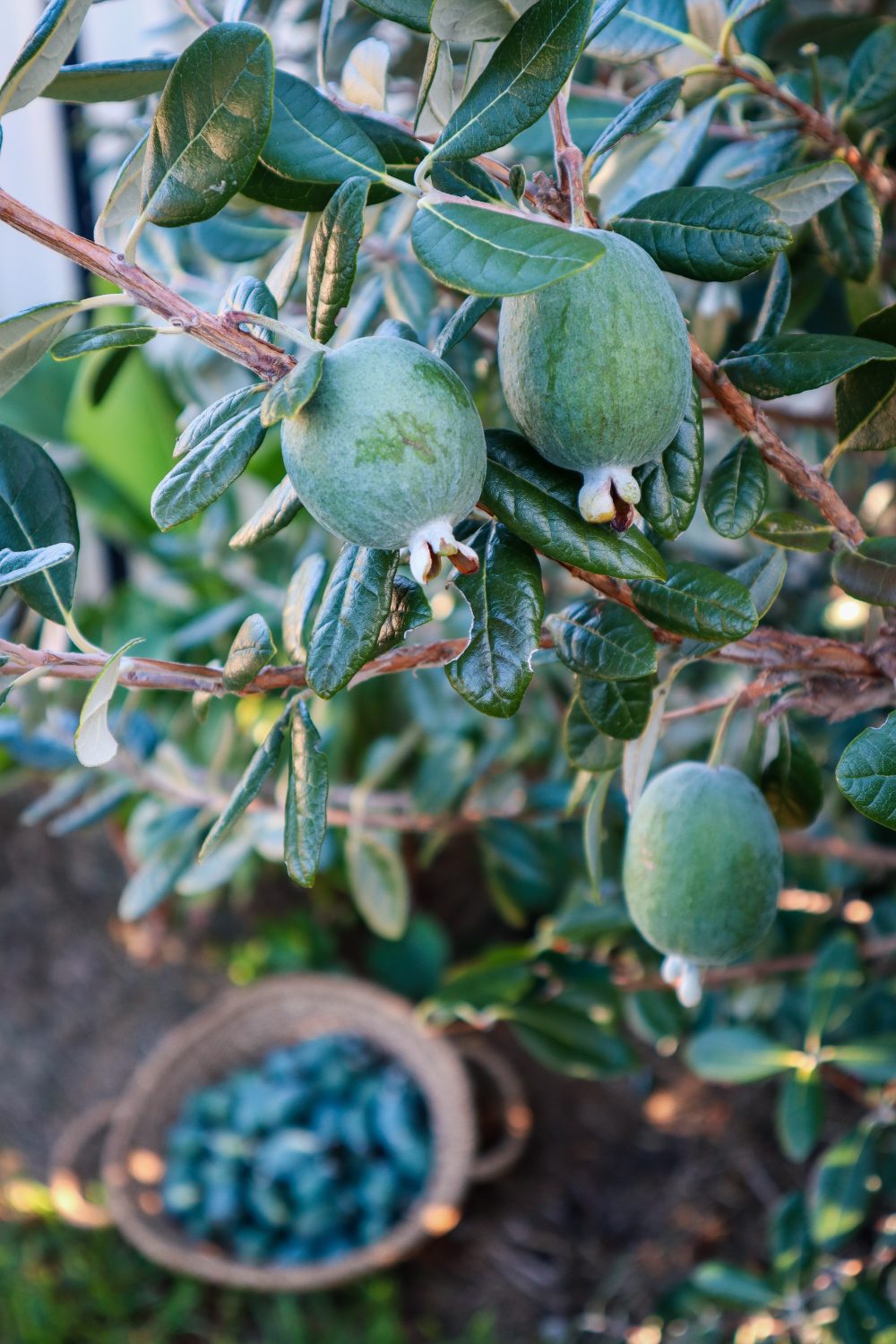
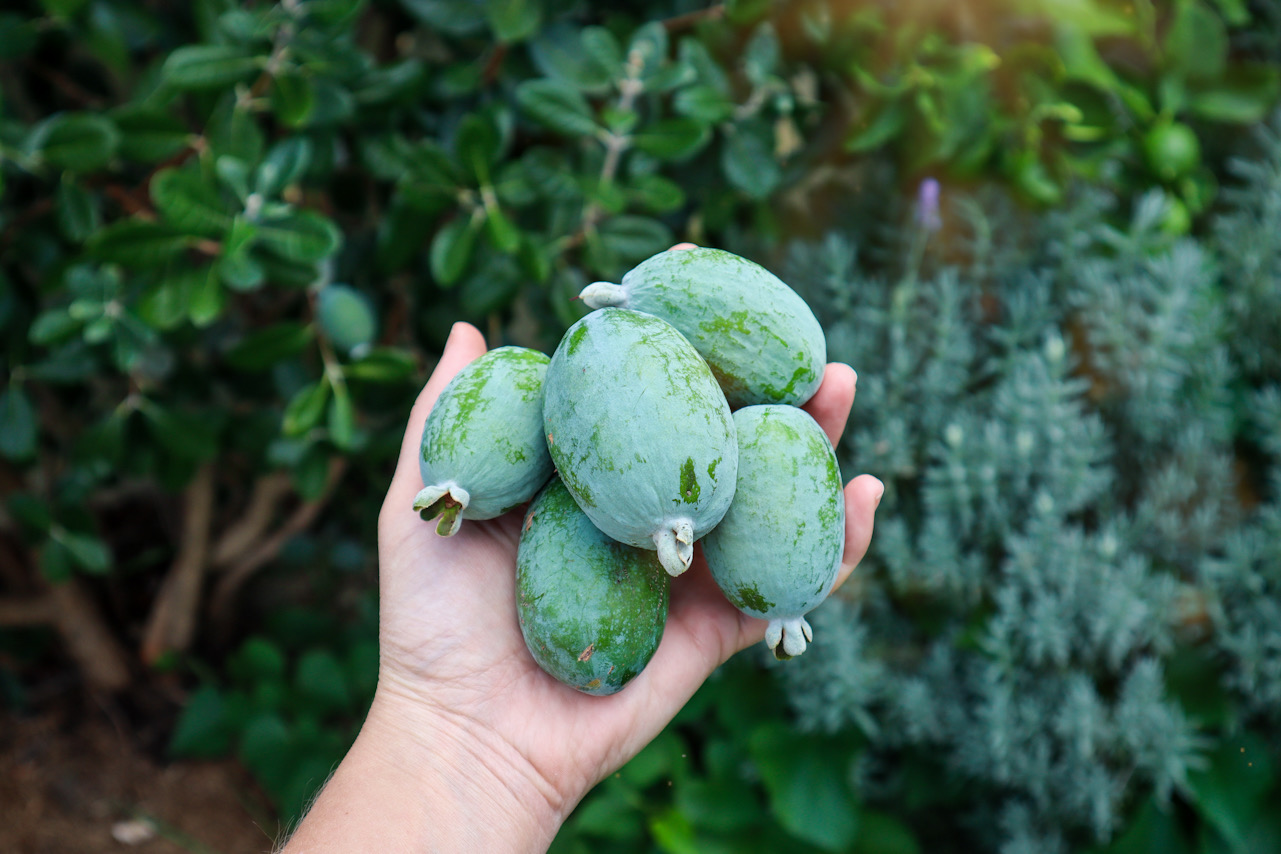
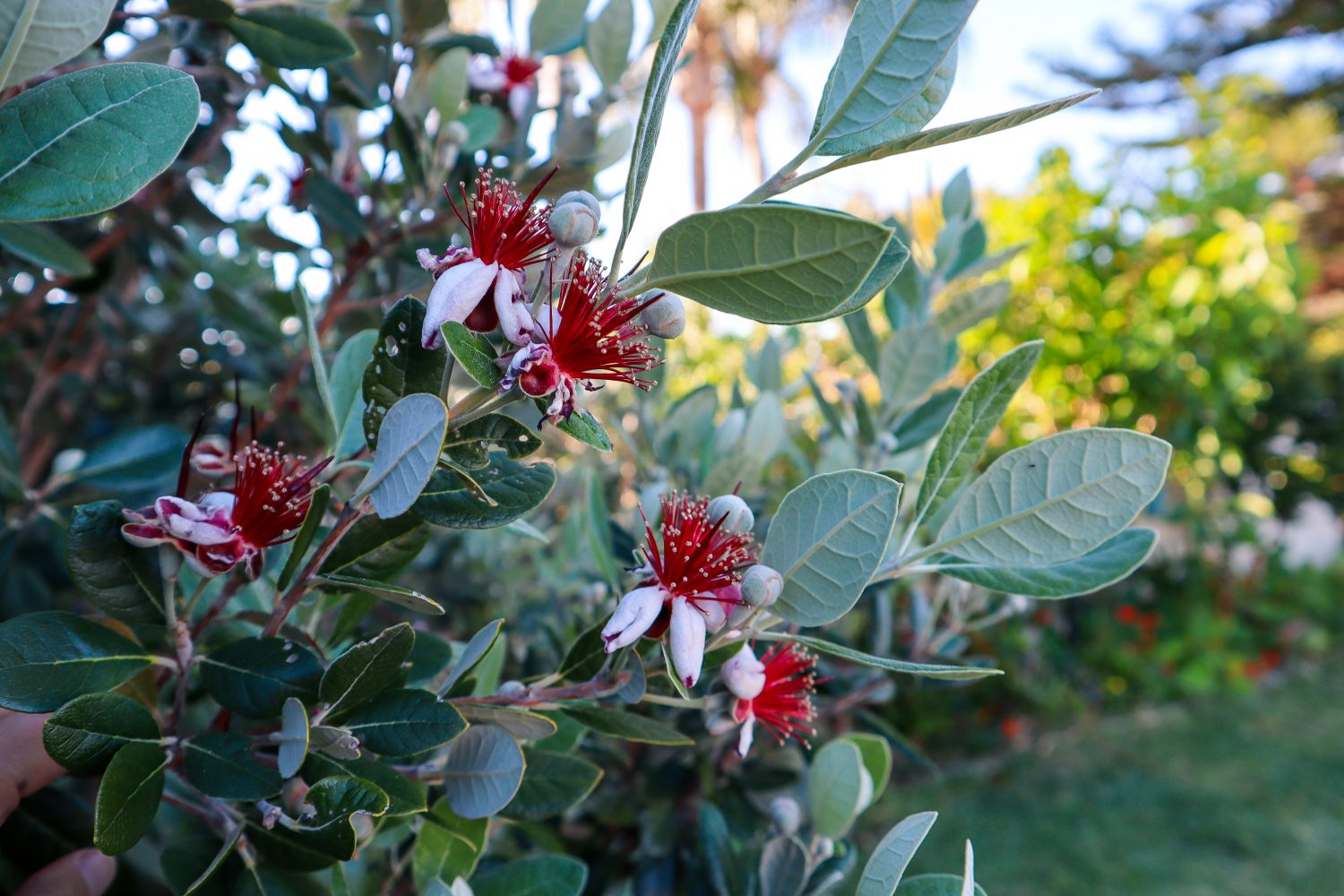
This timing is important because feijoas produce fruit on new growth that develops from older wood. Pruning after harvest gives the tree time to recover and produce fresh growth before flowering begins again in spring.
For those of us growing in Australia and New Zealand, this means pruning feijoas between May and July. Each tree and variety will have different timing, but just try to stick with as soon as you can get out there after they have finished fruiting.
What Happens if You Prune Feijoa Trees too Late?
The later you leave pruning, the closer it gets to spring. Spring pruning is one of the biggest mistakes gardeners make with feijoas. At this stage, the tree is about to start producing flowers and new fruiting wood. Heavy pruning can remove flower buds and significantly reduce your harvest. Light trimming or removing damaged branches is usually fine, but save major shaping for after harvest. It can also put the tree under stress, and it will push out a lot of new growth, but no flowers. If this does happen and you prune your feijoa trees too close to spring, don’t stress, you may get a smaller fruit yield that year, but the following year it will likely put out a large crop.
Signs Your Feijoa Tree Needs Pruning
Your feijoa will benefit from pruning if you notice:
- Dense tangled branches
- Poor airflow through the centre (black fungus on leaves)
- Fruit is only forming on the outer edges
- Tall upright growth that’s difficult to harvest
- Dead, damaged, or crossing branches
- Reduced fruit production
Even older neglected feijoas can often bounce back surprisingly well with gradual pruning over a few seasons.
How to Prune a Feijoa Tree to Maximise Fruit
Feijoas respond best to gentle shaping rather than aggressive cutting.
1. Remove Dead or Damaged Wood
Start by pruning:
- Dead branches
- Diseased wood
- Broken stems
- Low weak growth
- Branches are going off in undesired directions (into the fence, over other fruit trees)
This immediately improves airflow and tree health.
Pruning can feel overwhelming at first, but with all my fruit tree pruning, I find it easiest to start with removing branches I know I don’t want to keep. This can be due to the direction they are growing, damaged or unhealthy limbs, or reduced height or size.
2. Open Up the Centre
Feijoas naturally become very dense. Thin out crowded inner branches to allow sunlight and air into the middle of the tree. This helps reduce fungal issues and encourages productive growth throughout the canopy.
3. Reduce Height if Needed
If your tree has become too tall, selectively shorten upright branches. I find my trees put on 1/3 rd of their height in new growth during spring. So if you reduce the size by 1/3rd, they can be maintained to stay around the same height. Aim to keep the tree at a manageable harvesting height or for netting. I like to keep my trees at a height I can easily reach the fruit, but this will depend on your space and preferences.
4. Shape the Tree Naturally
Try to maintain the feijoa’s natural rounded form. Avoid over-pruning into stiff hedge-like shapes unless you are intentionally growing a hedge. Keep a clean and clear trunk at the base.
Can You Hard Prune Feijoas?
Yes, mature feijoas can tolerate fairly hard pruning if needed. Every few years i will do a harder prune to 50% and remove larger limbs that are growing in the wrong direction (over my neigbours fence 😅. If your tree is severely overgrown, you can gradually prune it over 1–3 years by removing larger branches bit by bit rather than all at once. A heavy prune can result in less fruit that season, depending on how stressed the tree is and what time of year you prune. (see when to prune section)
Heavy pruning may temporarily reduce fruit production, but the tree usually rebounds with vigorous new growth and high yields the following year. and if you have more than one tree you can still get a harvest (I may have 4 trees…so there is no chance I skip a season haha).
What Tools Do You Need? And What To Do With The Pruned Material?
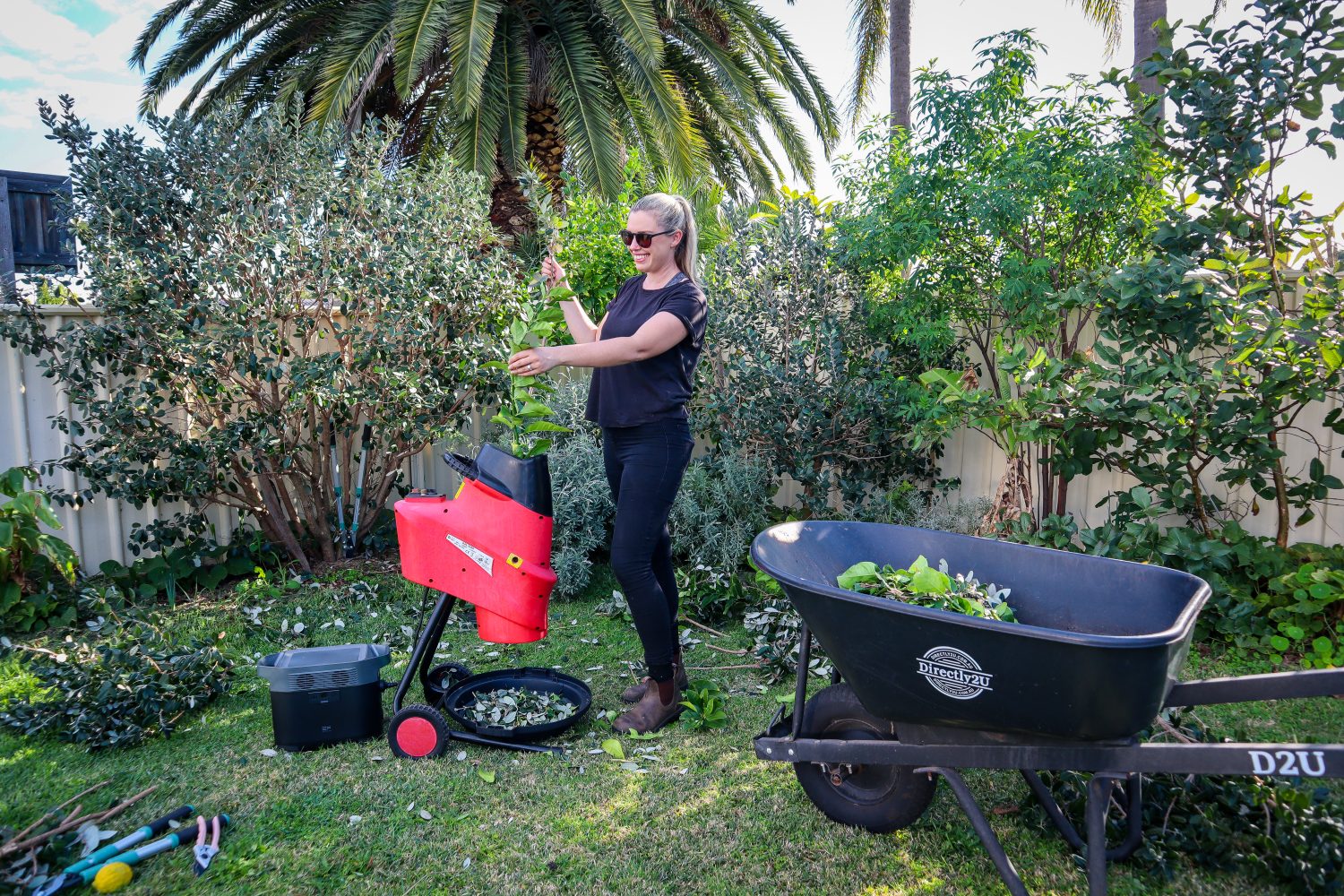
One of the main reasons I prune my feijoas every year is to keep the size manageable, not only for the tree but also for the size of the pruning material (branches and limbs). Smaller branches can be cut using extendable pruning loppers or small saws (I love a receprical saw for the larger branches), and for hedges and light tip pruning and shaping, I use extendable hedge trimmers. I then run the small branches through a small mulcher to create my own mulch!

Tips for Pruning Feijoa Hedges
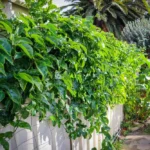
Feijoas also make excellent edible hedges. They have dense evergreen foliage that provides privacy and wind protection all year round. Hedging can produce decent amounts of fruit, especially if you have many trees planted together, but it will often be less productive than a stand-alone tree due to the heavy pruning and density of growth. Usually, you will find the trees on the ends will be more productive for this reason.
For hedge-style feijoas:
- Lightly trim 1–2 times per year but avoid late winter or spring pruning.
- Keep the base wider than the top so sunlight reaches lower branches
- Avoid constant tight clipping, which can reduce fruiting
If fruit production is your priority, allow some branches to grow more naturally instead of pruning heavily.
How to Maximise Fruit Production in a Feijoa Hedge?
Most people will use generic seedling feijoas for hedging because they are often easy to find and affordabe price to, but enough to make a hedge. Generic seedling feijoas can take 5+ years to start fruiting, and they are not always great producers. Some have small fruits, and some don’t produce many at all. My top tip to grow a feijoa hedge…or any feijoa tree for that matter, is to purchase a grafted “named variety”. These will be found at more fruit tree-specific nurseries and will have names like “duffy”‘ “triumph” or “white goose”. The names will be different whether you are located in NZ or Australia, as we have different cultivars, but choosing one of these will be MUCH MORE productive than a generic “Feijoa sellowiana”
What Happens If You Never Prune Feijoas?
Unpruned feijoas often:
- Become very tall
- Have large, thick limbs that produce no fruit
- Make it harder to prune in the future, as bigger pruning tools are needed
- Develop dense outer growth
- Produce smaller fruit
- Have reduced airflow and light penetration
- Fruiting shifts further from the centre to the edges
A little yearly maintenance makes a huge difference over time.
Extra Feijoa Growing Tips
To keep feijoas thriving after pruning:
- My NUMBER 1 TIP: Purchase a named variety (grafted); this will give you faster fruit and larger crops!
- Plant multiple varieties nearby for improved pollination and larger harvests (one is fine and self-pollinating, but multiple will increase this)
- Mulch heavily around the base – they have shallow feeder roots
- Water deeply during summer – this is when they are developing fruits, so they need the most water (which happens to be the driest period here in Perth…)
- Feed with compost, worm castings or homemade natural organic fertilisers

If You Only Remember One Thing About When To Prune Feijoa Trees…
If you remember one thing, make it this: prune feijoas right after harvest (autumn), not before flowering (spring)!
A simple yearly prune helps maintain airflow, encourages healthy productive growth, and keeps trees easy to manage for years to come.
Happy gardening,
Holly 🌱