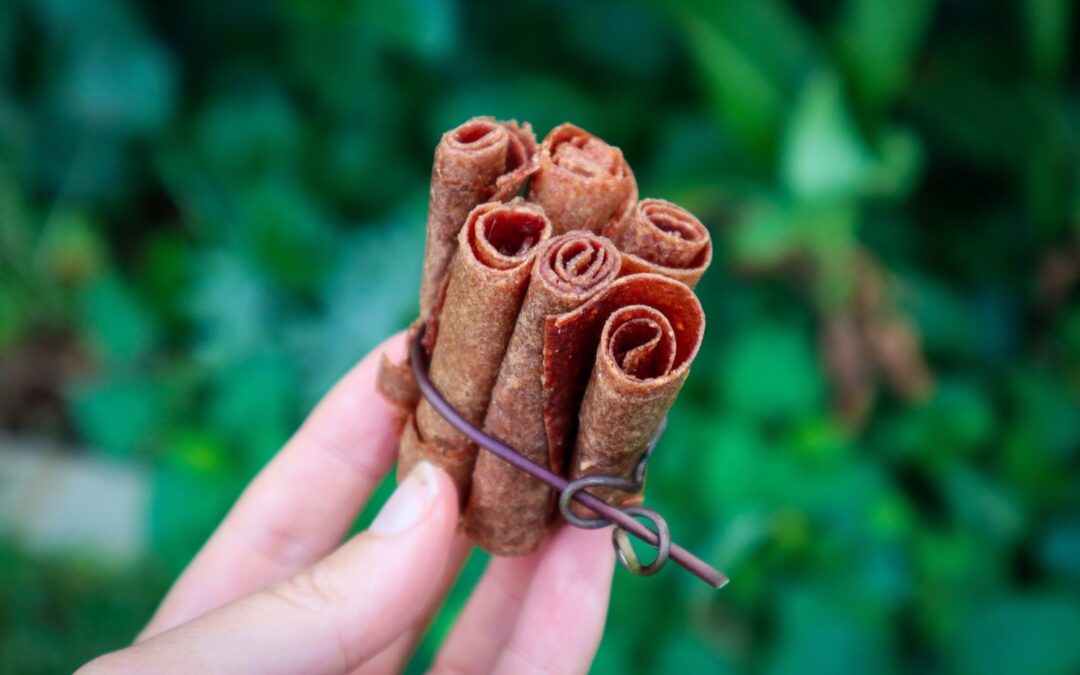
Strawberry Guava and Apple Fruit Leather
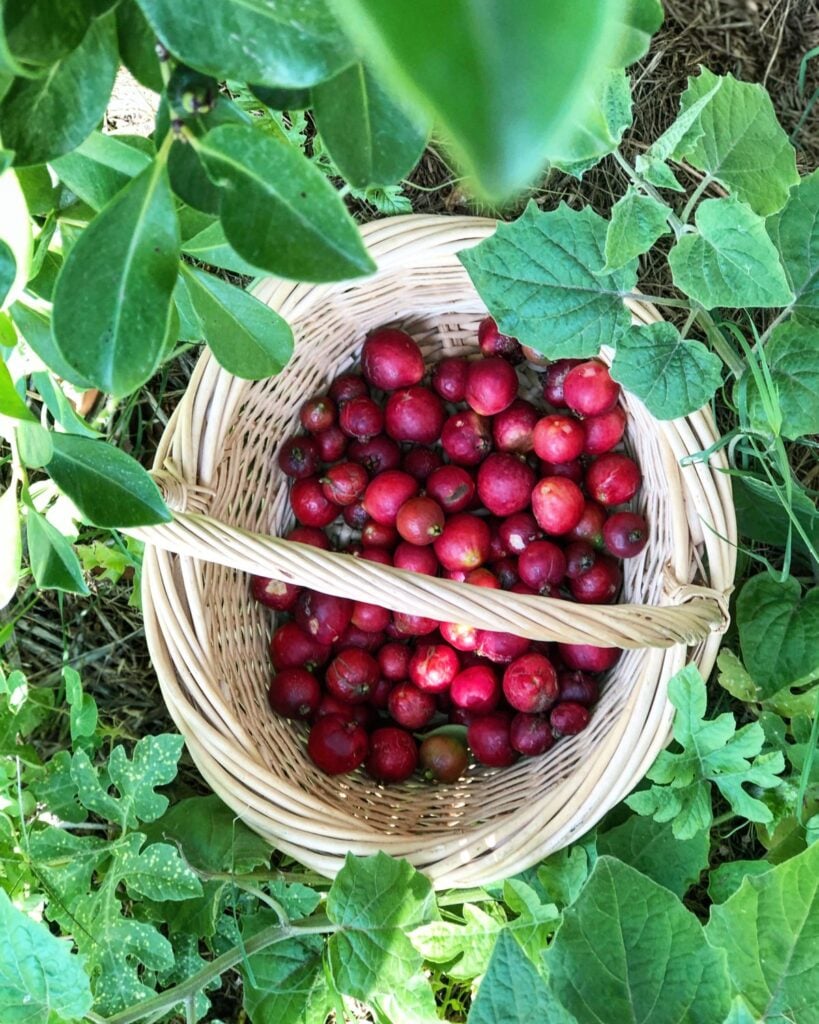
If you are growing Strawberry Guava you will almost certainly experience huge bowls of fruit after a few years. They ripen quickly and new fruits are ready each day during summer or autumn. These can be eaten fresh or extras frozen to collect a bulk amount to preserve. This fruit leather is sweet and delicious and a great way to preserve and enjoy your guava harvests without the hard seeds.
Naturally sweet and delicious garden-to-plate snacks.
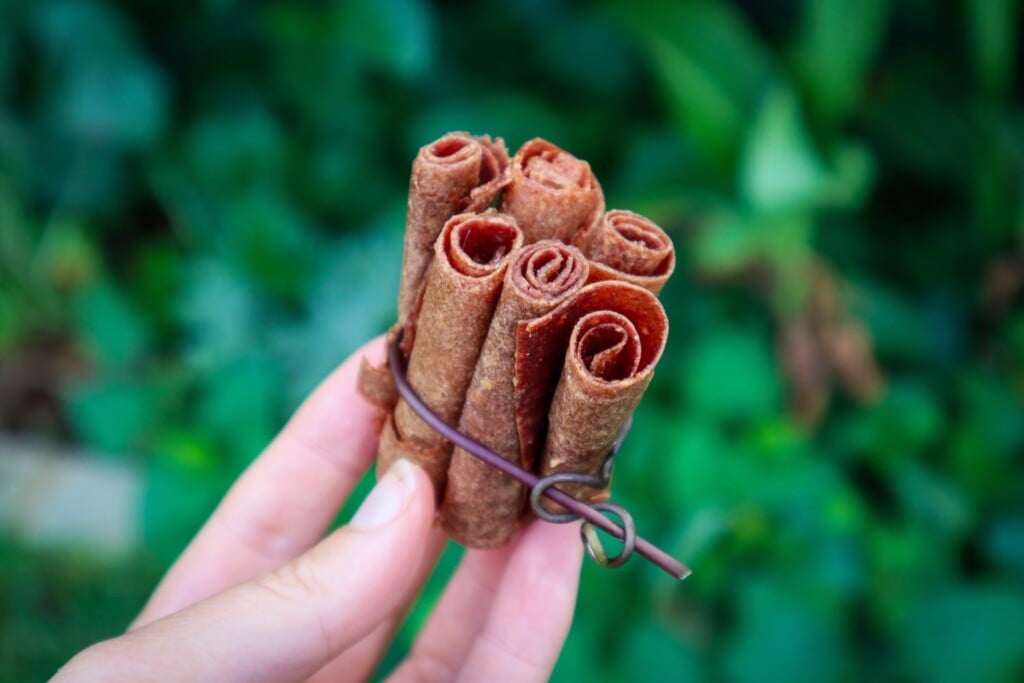

Strawberry Guava and Apple Fruit Leather
Prep Time:
20 minutes
Cook Time:
6 hours
Total Time:
6 hours 20 minutes
Sweet and tangy this fruit leather is a great way to enjoy your bumper crops without the hard seeds.
Ingredients
- 3 Cups (or large hand fulls) of Strawberry Guava (fresh or frozen)
- 2 Apples
- 1 tsp fresh lemon Juice
- 1 TBSP Honey or raw sugar (optional)
Instructions
- Wash and cut the ends of the guavas (the pronged part). Place the guava in a blender and the ends in a jar to make a scraps vinegar (see below recipe) or add to the compost.
- Wash, peel, and core apples (peels can go in the scraps jar too). Slice the apples and cook in a saucepan with a splash of water until soft.
- Blend the guava, apple, lemon juice, and honey until you get a smooth consistency with no chunks - there will still be seeds.
- Using a mesh strainer pass the mixture through a sieve to separate out the seeds. This is best done in small batches. Push down and mix around until the mixture comes out the bottom and the seeds are left behind. It seems hard at first but only takes about 10 minutes to complete. Remove the seeds (add to scraps jar or compost).
- Taste and add more sweetener or lemon juice (if too sweet).
- Using the fruit leather plastic tray of your dehydrator (or wax-free baking paper and tray) spread the mixture out to form one flat layer. Try to get it as even as possible.
- Dehydrate until dry and only slightly sticky approx 6 hours at 60 degrees Celsius. Can take up to 10 or 12 with high moisture or thicker trays.
- Remove and slice into long strips while still warm then roll up in wax-free baking paper to form roll-ups.
- Store in an air-tight jar for 1-2 weeks or store in the fridge for 1 month.
Notes
Any fruit can be used for this. If they are firm fruit like apple or stonefruit, cook down first until soft or try Mango raw, so yum!