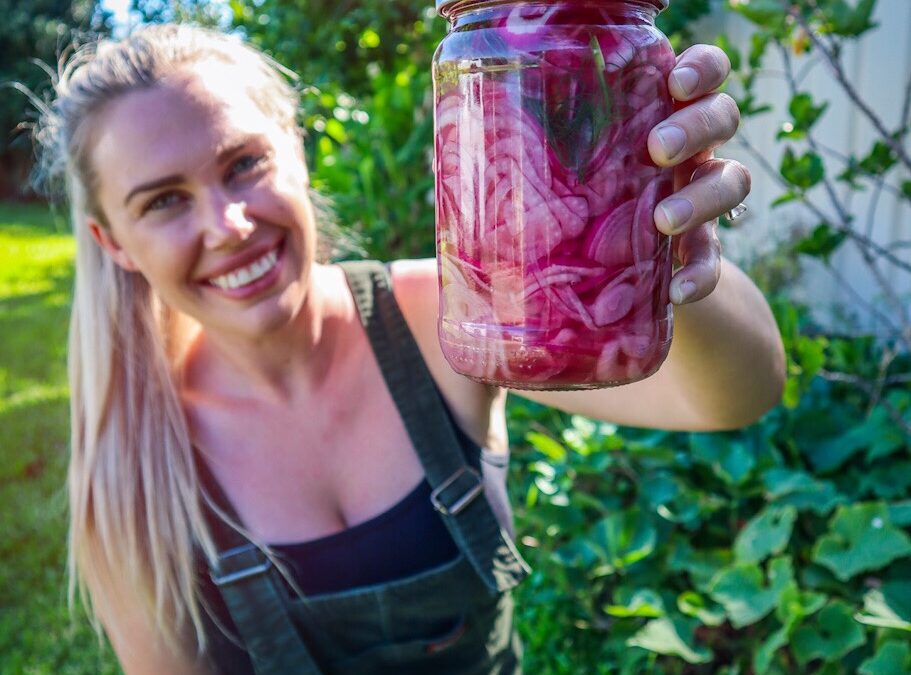
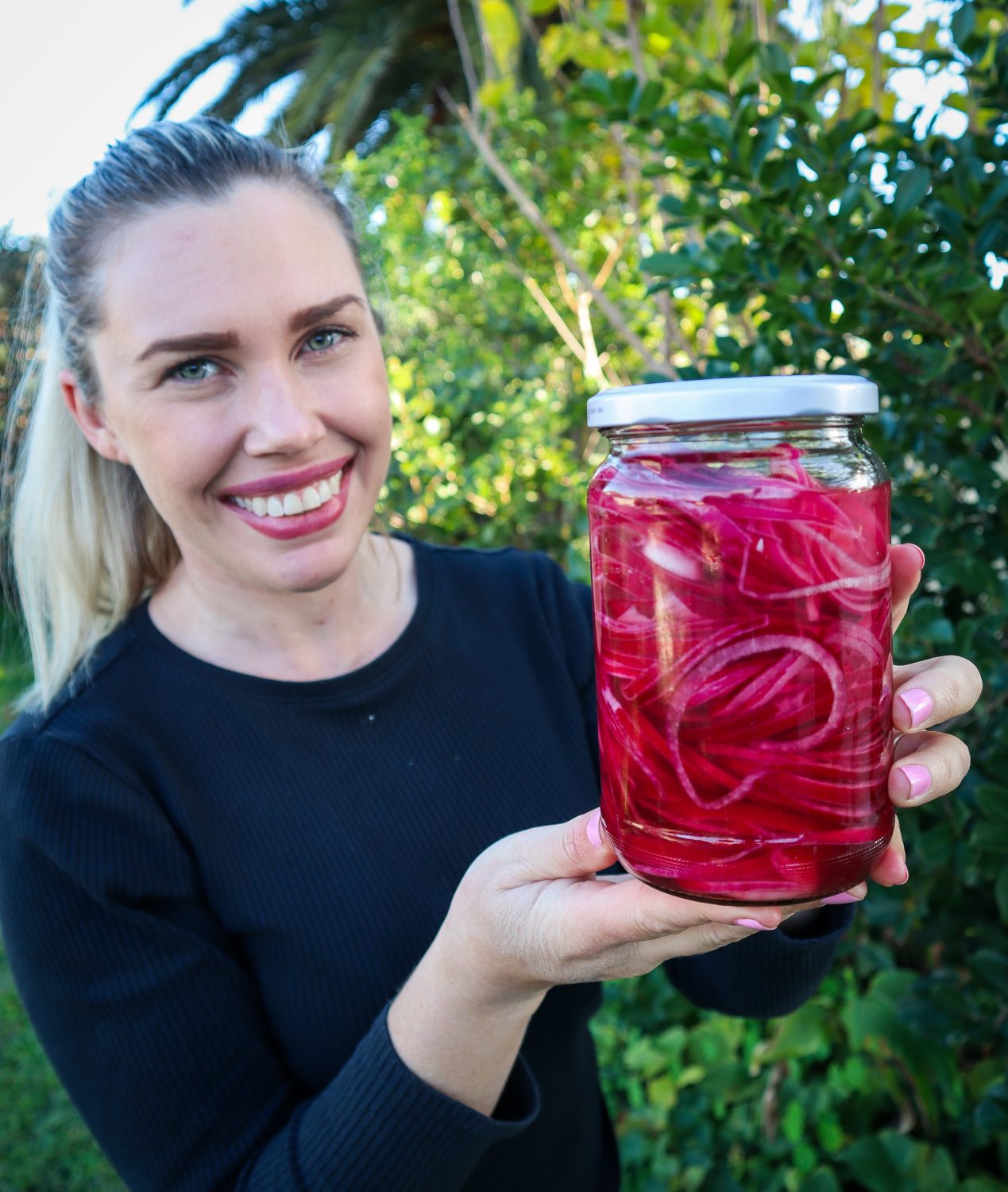
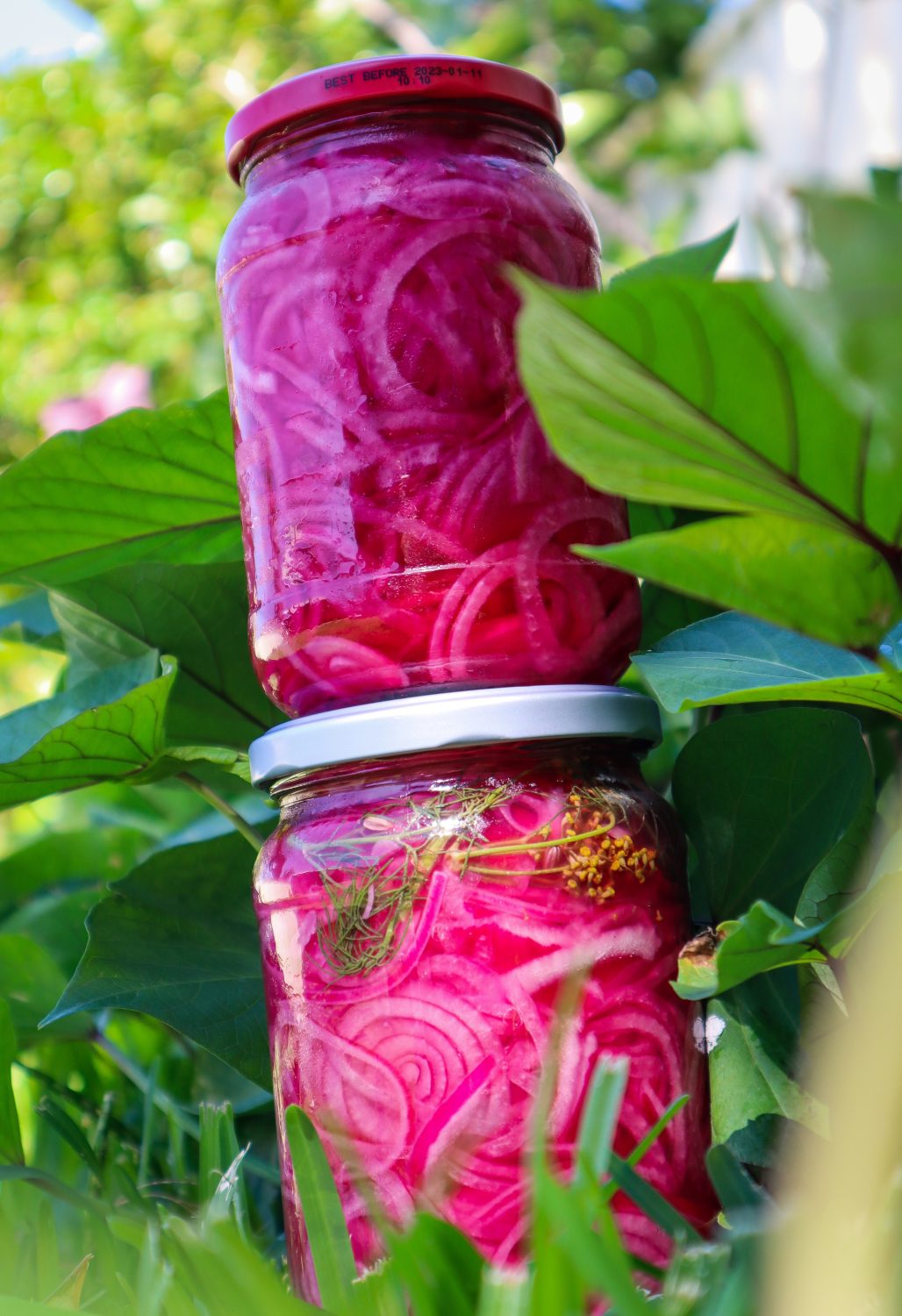
This simple homemade pickled red onion recipe is so easy and delicious! I can easily demolish a jar of pickled red onions in a week. They just get better and better as they continue to pickle and infuse. You can eat these pickled red onions on absolutely anything!! And I mean anything…avocado on toast, salads, stir-fries, tacos, noodles, cheese, and crackers, or in sandwiches. They also make beautiful, delicious garden-to-table gifts for your friends and family.
What You Will Need:
3 medium red onions, thinly sliced
¼ cup apple cider vinegar
¼ cup white vinegar
1 ½ tbsp raw sugar*
1 ½ tsp salt
1 cup water
½ tsp chilli flakes (optional, for heat)
The Benefits of Homemade Pickled Red Onions
Making homemade pickled red onions means you control everything from the ingredients to the flavour. No preservatives, no artificial colours, just simple pantry staples and fresh onions. I like mine on the sweeter side, but if you like yours spicy, then add more chilli. Plus, the flavour is far better than store-bought. I find store-bought (I’ve tried a lot of brands!) are weak and dull, and not to mention expensive! Not these! They are packed full of flavour and go a vibrant all natural hot pink colour.
Simple Pickled Red Onions
Prep Time: 10 minutes
Cook Time: 2 minutes
Total Time: 12 minutes
Quick and easy pickled red onions add flavour to any meal. Add your seasonal garden herbs such as Fennel, Dill or Chilli to boost the flavours.
Ingredients
3 Red Onions
1/4 cup Apple Cider Vinegar
1/4 cup White Vinegar
1 1/2 TBSP Raw Sugar*
1 1/2 tsp Salt
1 cup Water
1/2 tsp Chilli flakes (optional)
Instructions
Finely slice the red onions - using a mandoline is the easiest option.
Cram as many red Onions into a clean sterilised jar.
In a saucepan add the vinegar, sugar, and salt and stir until the sugar has dissolved and the mix starts to simmer.
Add any extra flavours to the jar such as chilli, fennel flowers, fennel fronds, fennel seeds, mustard seeds, or peppercorns ( 1tsp per jar).
Pour over the liquid and secure the lid.
Allow cooling for one hour and place in the fridge.
Notes
To sterlise the jars place in a hot dishwasher run or wash and heat in the oven for 10-15 minutes at 110 degrees Celsius.
You can swap and use just one type of vinegar if you prefer.
*Swap to honey (1 1/2 TBSP)
Add herbs or spices for extra flavour
Use within 3 weeks.
Homemade is best!
Homemade pickled red onions taste so much better, and they are so quick to make. I prepare a batch on Sundays, and it usually is gone within the week! Enjoy these Simple Pickled Red Onions on your morning breakfast toast with avocado (my favourite way) and egg, or in burgers, wraps, salads, and more! It’s such a versatile addition to your garden-to-plate meals!
Customise Your Homemade Pickled Red Onions
One of the best things about homemade pickled red onions is how easy they are to adapt. Add herbs like thyme, fennel flowers or dill for a fresh twist, or try slices of jalapeño or ginger for an extra kick. You can even swap in red wine vinegar for a bold colour. Once you start experimenting, you’ll find a version that suits your taste perfectly.
Want more Garden Tips?
🌱 Want a Thriving Garden? Get exclusive gardening tips, seasonal advice, and delicious homegrown recipes delivered straight to your inbox every Tuesday! Stay updated on new plants, garden projects, and more.Sign up now and grow with us! 🌿✨
Learn tips and tricks on how to grow bananas and get abundant harvests. Banana (Musa) are fantastic permaculture plants because they have so many uses both in the garden and the kitchen. Bananas are in fact a perennial herb, not a tree. The bananas grow from a stalk that emerges from the centre of the banana palm.
Bananas come in both full-size and dwarf varieties, allowing you to grow them in both large and small space gardens. Plus, you just can’t beat the flavour of homegrown bananas!
Rich fertile compost and well-drained soil. Mound soil up.
LOCATION
Full sun. Protection from harsh winds.
CARE
Water and feed regularly.
FERTILISE
Feed with compost and with liquid seaweed fertiliser.
PESTS
Rodents may attack the fruit.Root rot in wet soils.
HARVEST
9 months +
REPRODUCE
Small “pups” form at the base of the main trunk.
Why Grow Bananas?
Bananas are quick-growing and have many beneficial relationships within the garden. Once you know what conditions bananas thrive in, they are easy to grow.
Here are some of the many reasons to grow Bananas:
‘Ladyfinger‘– Popular backyard banana. Small sweeter fruit. Don’t turn brown once cut. Plant size 2-5m tall.
‘Gold Finger‘ – Cross between ladyfinger and Cavendish. High wind resistance. Quickest to fruit. Plant size 2-5m tall.
‘Cavendish – Williams’ – Medium-sized bananas. Popular variety. Thin peel and creamy texture. Plant size 2-5m tall.
‘Blue Java‘ – Cold tolerant variety. Known as the ice cream bananas due to the creamy texture. Plant size 2-5m tall.
‘Red Dacca‘ – Dwarf sized plant. Deep maroon-red peel when ripe. Plant size 2.5m tall.
‘Dwarf Cavendish’ – Smaller version of the Cavendish. Ideal for pots or urban gardens. Plant size 1m tall.
‘Dwarf Ducasse‘ – Dwarf sized plant. Known as the sugar banana due to sweetness. Plant size 1-2m tall.
‘DPM 25‘ – Variety of Cavendish developed to resist Panama disease. Plant size 2-5m tall.
How to Grow Bananas?
Bananas like warm, sunny, sheltered areas. Choose a full sun location with at least 6 hours of sunlight a day. Bananas can be damaged by extreme heat, so in some places like Perth, semi-shade may also work well. Bananas are grown from small plants or “pups” so check out which varieties you want to grow and visit your local nurseries. Due to the spread of diseases, there are restrictions in Australia around swapping and trading bananas. Bananas are heavy feeders, so make sure you add lots of compost and composted animal manure into your soil. Make a mound around the base so that the water drains off and the banana has plenty of food.
In permaculture design, bananas are often grown in a banana circle. This way you can add piles of compost, mulch and plant matter to break down and feed all the plants around the circle.
Papaya and root crops such as turmeric and ginger are often planted alongside the bananas to utilise the space. They are also heavy feeders, so make sure there is plenty of compost and plant matter around them. Bananas grow quickly and can be great for preventing soil erosion on sloped blocks.
When to Plant Bananas?
Plant Bananas during the warmer months of spring and summer.
Care/ Maintenance for Bananas
Banana plants are made up of a high percentage of water so they do need adequate moisture to grow. They just don’t like having soggy roots. Well-draining, fertile soil with plenty of mulch or cover crops will help retain moisture.
Bananas want all THE FOOD so regularly feeding of compost, natural fertilisers and mulch can help your bananas thrive.
The leaves will get damaged by winds and turn brown. You can cut these off and lay them at the base of the plants to return nutrients back into the soil.
Pollination/ Fruiting
Bananas send up a flower through the centre of the plant on a spike called the inflorescence. The flowers will have both male and female so you do not need multiple plants for pollination to occur. Once the bananas form, you may need to add support to the bunch to stop the weight from pulling the whole tree down. This will depend on the size and strength of the plan,t and also if you have strong winds or storms.
The small bananas will start to form facing downwards. Once they turn upwards over a few days, it may be beneficial to cover the bunch with a bag. This protects the bananas from birds, bats and other insects.
You can harvest each “hand” of bananas as they start to ripen, or you can remove the whole bunch and hang it somewhere warm and protected to ripen off the tree. I think it’s always best to let the fruit ripen on the tree, but if there are storms coming or birds have found your bunch, then it may be best to remove them.
Bananas only fruit once from each single plant. Once your bananas are ready, you can chop the entire plant down. Cut this up and add to your banana patch as mulch to break down and add nutrients back into the soil.
Pests / Disease
Bananas can be prone to diseases, and due to our high commercial crops here in Australia, there are regulations to help stop the spread of diseases. This includes only purchasing plants from trusted nurseries and not swapping and trading plants around the community.
Bananas are popular among many pests such as birds, bats, rats and fruit flies. Covering the bunch with a banana bag or a recycled plastic bag can help reduce the risk of losing your delicious crop.
How/ When to HarvestBananas
Bananas will be ready to harvest when they:
Are light green to yellow
Have no harsh angles but are rounded and smooth
The flower remnant at the ends of each banana comes off easily
Cut the stalk with at least 20cm at the top to hold and hang
Cut the whole tree down as it will die anyway, and use for mulch
Remove the ripe bananas and hang the main bunch up somewhere cool and dark to continue ripening.
The purple blossom end is also edible. Remove the hard outer leaves to reveal the soft pale centre.
Note:
Remove the bag for hanging and ripening purposes, or they will ripen too quickly.
Ensure they are hung somewhere that pests cannot get to them.
Bananas can be picked when they are still green to use as a savoury “potato” substitute.
Reproducing Bananas
Bananas have been cultivated to have no seeds for optimum eating. The best way to reproduce bananas is to dig up the small suckers or “pups” that start growing from the base of the main stem. Look for suckers that are at least 30cm tall and have narrow sword-like leaves. The broadleaf suckers will still grow but have smaller root systems as they rely on the main plant for water. Use a sharp blade or spade to detach and dig up the side sucker.
Cooking and Using Bananas
Bananas are super versatile and can be used for both sweet and savoury dishes. The banana leaves can also be used as a substitute for baking paper to steam and infuse flavours into meals. This technique is often used for steaming fish or rice. Banana leaves also make great natural platters, plates and serving dishes. Simply compost them after!
Bananas produce in huge abundance and can ripen quicker than you can eat them. Freezing and dehydrating bananas is a quick and easy way to get the most out of your harvest. Below are a few ways to utilise your ripe bananas:
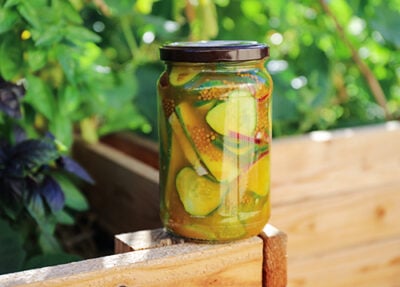
Make the most of your abundant Cucumber harvest with these delicious, quick, and easy refrigerator pickles. Turmeric has anti-inflammatory properties and the Apple Cider Vinegar has anti-microbial properties and anti-oxidants. These quick pickles are great for adding to sandwiches, salads, burgers, and of course a cheese platter!
Quick Sweet & Sour Turmeric Pickles
Yield: 2 jars
Prep Time: 10 minutes
Cook Time: 3 minutes
Additional Time: 2 days
Total Time: 2 days13 minutes
Sweet and sour Refridgerator pickles are so quick and easy to make!
Ingredients
2-3 Medium Cucumbers or two jars of whole small pickling Cucumbers
1 cup Apple Cider Vinegar
1 cup Water
1 TBSP Mustard Seeds
2 TBSP Sugar
1 tsp Salt
1 tsp ground Turmeric powder
Instructions
Sterilise your jars by heating them in the oven face down at 120degrees Celsius or in the dishwasher on high heat. Sterilise the lids in a bowl by pouring boiling water on them.
In a saucepan add your vinegar, water, sugar, turmeric, salt, and mustard seeds (*optional chili flakes see notes) and bring to a simmer.
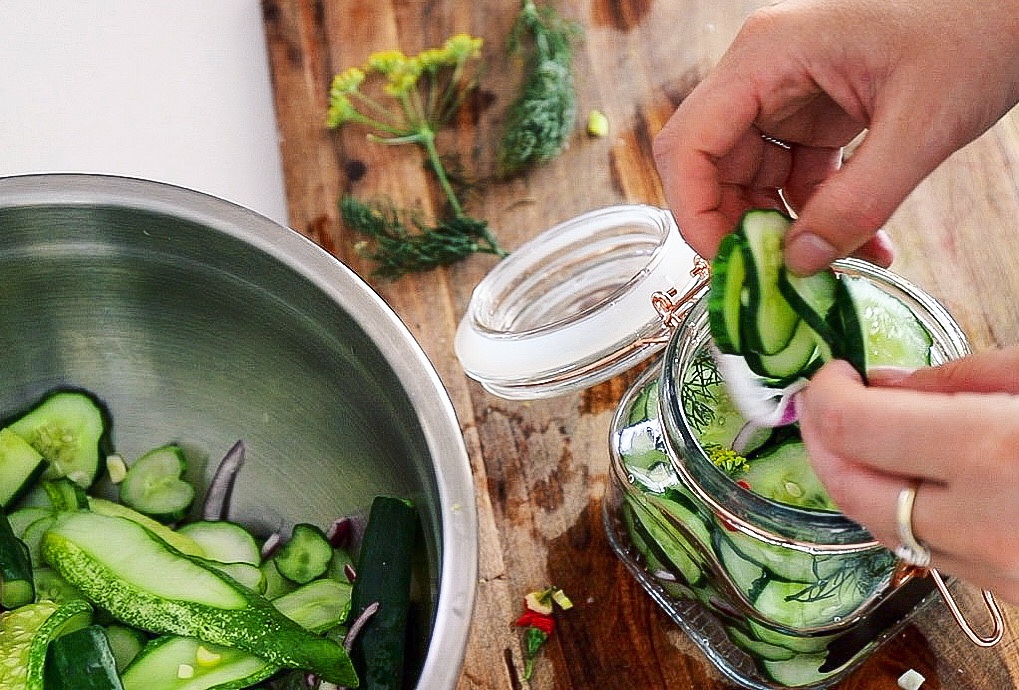
Slice your Cucumbers into spears or round slices and place them in the clean jar.
Pour over your pickling liquid and secure the lid. Carefully place the jar upside down to cool. This helps create a secure seal.
Once the jars are close to room temperature, turn them up the right way and add them to the refrigerator.
They will be ready to eat after 48 hours and use within a month or two.
Notes
Add sliced Red Onion, Dill, or Chilli flakes to your cucumber pickles for extra flavour.
This recipe also works with Zucchini in replace of Cucumbers too.
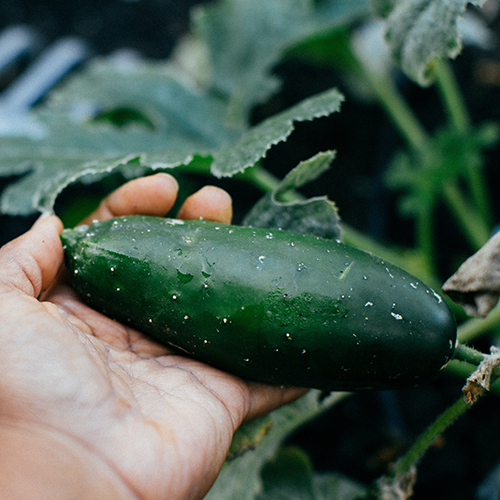
Cucumber (Cucumis sativus) is a delicious and refreshing summer crop that are easy to grow and produce an abundance of food on a single plant. Cucumber can also be grown in pots or grow bags, so they make a fantastic high-yield option for urban gardens.
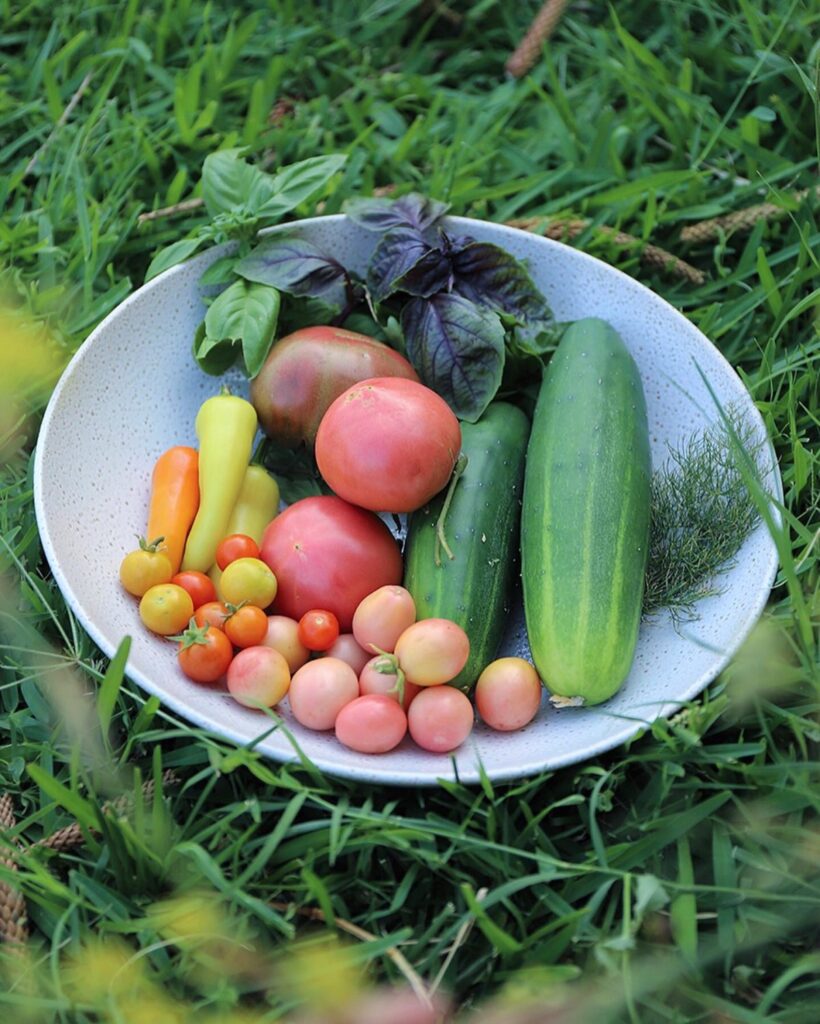
Cucumber is light, fresh, and great for pickling or eating fresh in salads. The great thing about growing Cucumbers is that you will have more than enough to preserve, gift, swap, or trade.
Full – part sun. Protection from harsh midday sun can help.
CARE
Water at the base to prevent mildew on the leaves.
FERTILISE
Feed every 2-3 weeks with liquid seaweed fertiliser.
PESTS
Mildew in humid climates.Rodents may attack the fruit.
HARVEST
Spring and Summer. Usually around 7-weeks after planting.
REPRODUCE
Save seeds from your best Cucumber at maturity.
Why Grow Cucumber?
Cucumber is quick-growing and can be pickled and preserved to use throughout the year. Cucumber is a great base crop to grow, allowing you to create more meals straight from your garden.
Here are some of the many reasons to grow Cucumber:
Easy to grow
Prolific production on each plant
High in Vitamin C & K
Rich in Antioxidants
Can promote healthy digestion
Hydrating food source
Make quick pickles and salsas
Cool, calm and reduce skin inflammation
Generous crops for gifting, swapping, or trading
The whole plant is edible including shoots, stems and leaves
Popular Cucumber Varieties
‘Marketmore‘– Popular green variety. Prolific, quick-growing, disease resistant. 15-20cm sized fruit.
‘Space Master‘ – Compact vine for small spaces. Great for slicing. 20cm green fruit. 30 fruit per plant.
‘Lebanese Mini‘ – Small mini fruit with edible skin. Great for snacks, salads, and pickles. 40 fruit per plant.
‘Crystal Apple‘ – Australian heirloom. White apple-sized fruit with citrus flavours.
‘National Pickling‘ – Small Heirloom variety. Great for pickling, snacks, and salads.
How to Grow Cucumber
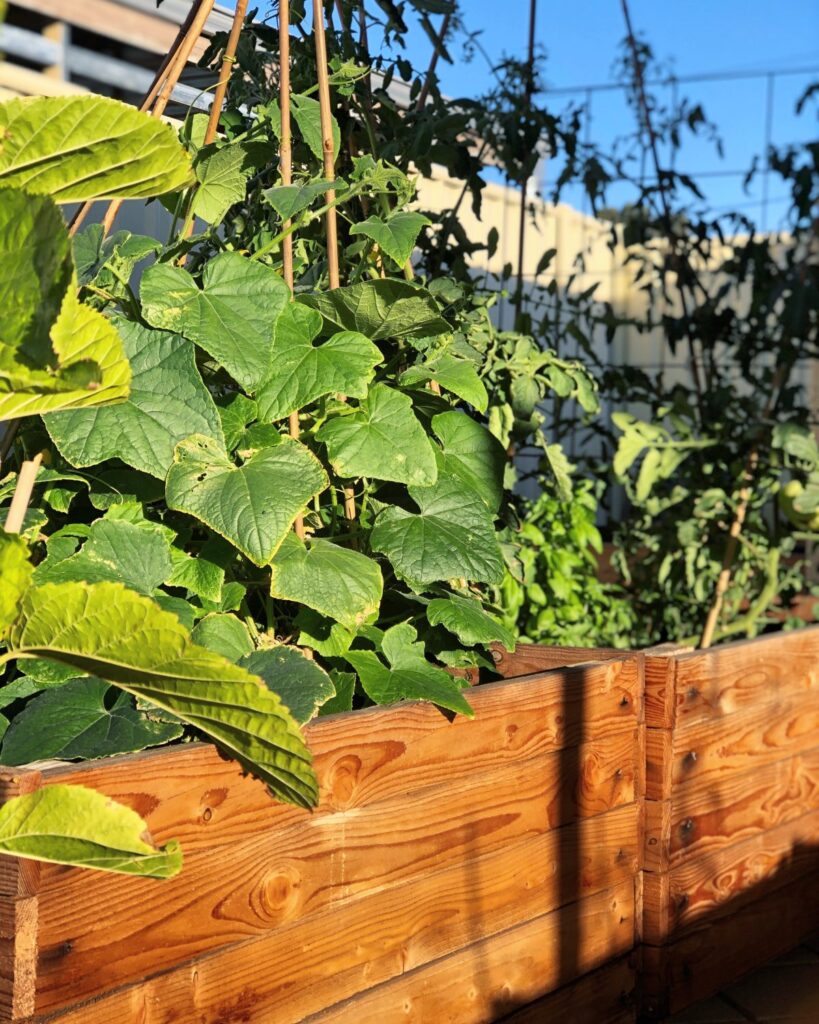
Cucumber grows in a vine structure and can be easily trained to grow vertically up a trellis or a teepee structure. It can be a good idea to get the vines up off the ground to improve airflow and reduce disease. Choose a full sun location with at least 6 hours of sunlight a day. Cucumbers can also be grown in pots and containers. Some varieties are more of a bush than a vine but this will say on the packet.
Cucumbers are warm-loving plants and can be damaged by frosts. It may be best to plant your seeds in small pots or seed trays until your last frost has passed. Plant your seeds as per the packet instruction as each variety and climate will have different growing suggestions. Once your seedlings have 4-5 leaves and your likelihood of frosts has passed, plant your seedlings in free-draining soil with plenty of compost.
When to Plant Cucumber
Plant Cucumber during the warmer months of spring and summer. For early crops, you can plant seeds inside in seed trays and plant outside once your last frost has finished.
Care/ Maintenance
Cucumbers like plenty of water so keep the soil moist and hydrated.
Mulch around your plants to protect the soil and retain moisture. Water the Cucumber at the base to avoid getting the leaves wet, as Cucumber can be prone to powdery mildew. Watering in the morning can also help to prevent this, as the leaves will have time to dry out and not sit wet for too long. If you do see white powdery mildew, remove the affected leaves and make up an organic spray with a mix of 9 parts water to 1 part milk. Spray this over the Cucumber leaves.
It can be beneficial to remove the older leaves at the base of the plant to increase airflow and prevent moisture from sitting around too long. Use sharp and clean secateurs to reduce the spread of any diseases. It can also be helpful to feed your plants withliquid seaweed or garden fertilizerevery 2-3 weeks for added nutrition.
Pollination/ Fruiting
Our bees do a fantastic job at pollinating, so planting flowers nearby will help to encourage plenty of pollinators to your garden. Pick your cucumber harvest often to encourage more to grow.
Pests / Disease
Protect young seedlings from slugs, snails and slaters. They can get some fungal diseases in humid weather. It is important not to wet the leaves to prevent powdery mildew from forming. If you do start to see some powdery mildew, remove the leaves (if it is only a few) or create a spray of 1 part milk to 9 parts water and spray over the affected area. Once the fruits start to mature be aware of rodents or other animals finding your harvests.
How/ When to Harvest
Harvest your Cucumber when they are small and often. They will start to go yellow once they are getting too mature and maybe bitter and the seeds inside will be hard.
Cucumber grows very quickly once the plant is established, so you may need to check every day or every other day for new produce.
The young leaves and tendrils are also edible and can be used in salads and stirfrys.
Reproducing
Cucumber seeds are the easiest way to reproduce. Let 1-2 of your best-looking Cucumbers grow to maturity (until the skin is yellow). This will be when the seeds are mature and ready to harvest. Wash the flesh off the seeds and allow them to dry before storing it in a cool, dry, dark space. Early in the season, you can also take cuttings from the plant and place them in a jar of water. They will spout roots from the nodules where the leaves were and you can replant.
Cooking and Using Cucumbers
Cucumbers are great for adding to summer salads, refreshing water and of course all the pickles!
Diversity is so important for creating a thriving and sustainable edible garden. Choosing edible or medicinal plants to use as companion planting can not only boost the health of your garden but also your own! Each plant type has a different root structure, leaf coverage, height, nutrient absorption, and nutrient excretion and attracts different insects and wildlife to the garden. The more diversity we have in plants, the more life we are encouraging both above the soil and below. Diversity also helps reduce severe deficiencies, as all the plants aren’t competing for the exact same nutrients.
Diversity and companion planting are closely related. Companion planting is generally two different plants that grow well together and have a mutually beneficial relationship. With a diverse garden, we want to build on those relationships and continue to add more and more.
Disclaimer: The information included on this site is for inspirational purposes only and is not intended to be a substitute for medical treatment by a healthcare professional. Because of unique individual needs, the reader should consult their physician to determine the appropriateness of the information for the reader’s situation.
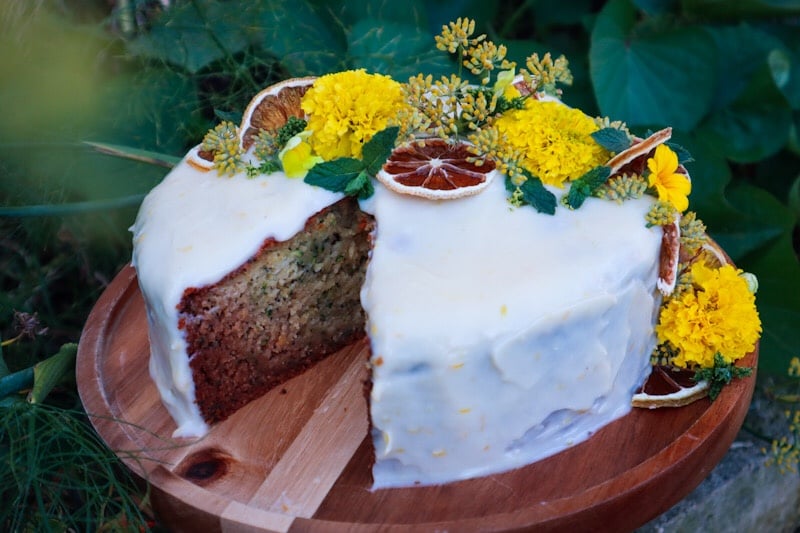
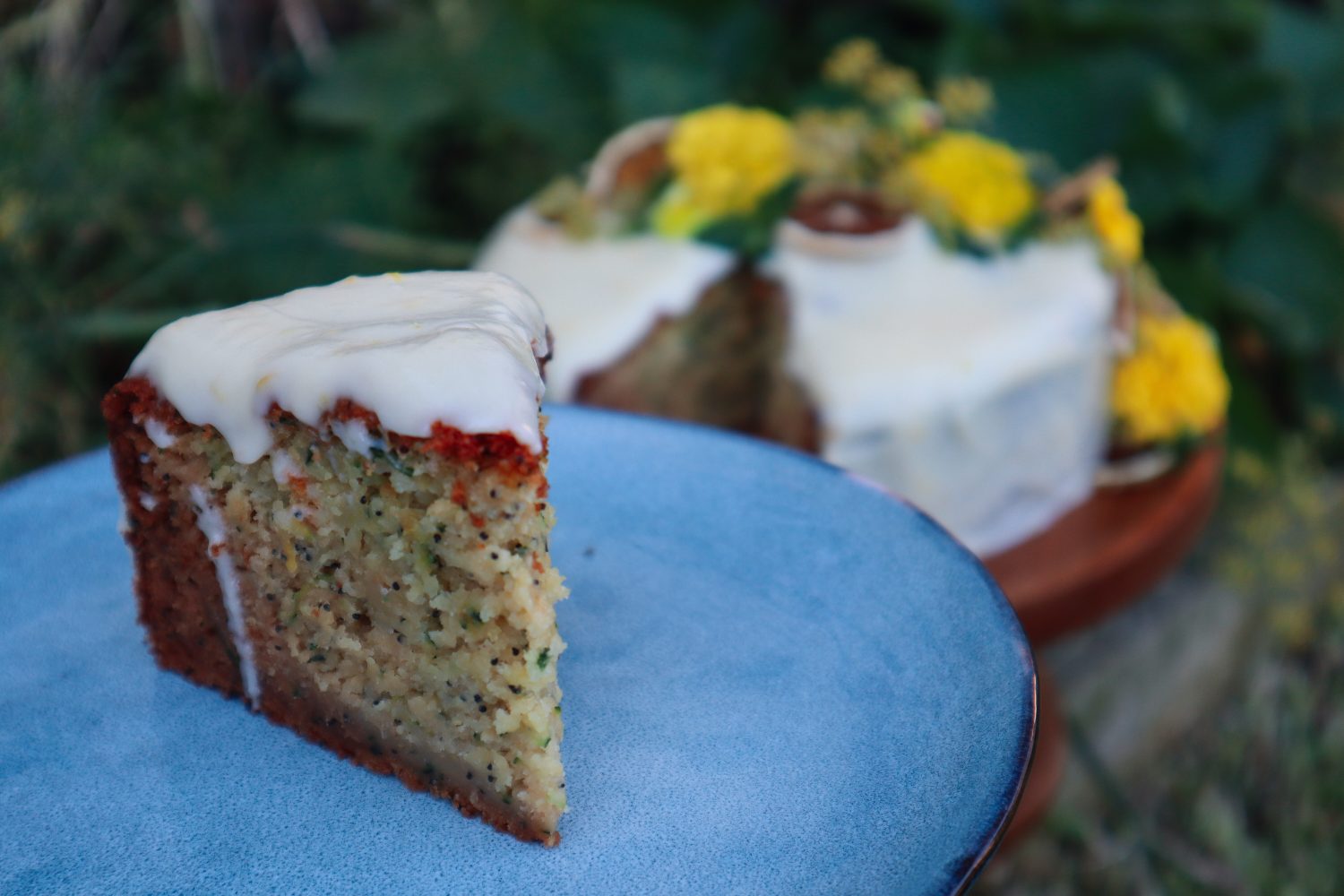
Zucchini are ready and abundant during the warmer months of summer which co-insides with a season of celebrations and events. This Lemon and Poppy Seed Zucchini cake is perfect for any occasion. Light, fresh and easily adaptable to seasonal flavours and fruits.
Lemon and Poppy Seed Zucchini Cake
Prep Time: 10 minutes
Cook Time: 40 minutes
Additional Time: 5 minutes
Total Time: 5 minutes
Ingredients
2 1/2 cups Plain Flour
2 tsp Baking Soda
1/4 tsp Baking Powder
1 Lemon
2-3 Zucchini (3 cups grated with the moisture removed)
3/4 cup Vegetable Oil
1 cup Sugar
1/4 cup Honey
1 tsp Vanilla Essence
3 Eggs
1 TBSP Poppy Seeds
1 tsp salt
extra salt for zucchini (1/4 tsp)
Icing
250g Cream Cheese
1 TBSP Lemon zest
2 TSBP Lemon Juice
1 cup of Icing Sugar
Instructions
Wash and grate the zucchini into a bowl. Sprinkle with roughly 1/4 tsp salt and mix through. Allow to sit while you prepare the other ingredients.
Preheat oven to 175 degrees celsius. In a bowl mix flour, baking soda, baking powder, poppy seeds, and salt and set aside.
In a mixer (or bowl with a whisk) add eggs beat until frothy. Add in the sugar, oil, vanilla, zest, and juice of one lemon. Whist until combined. Gradually add to the flour mix and stir to combine.
Strain and squeeze the extra moisture out of the zucchini using a sieve. Add 3 cups to the mixture and stir to combine.
Grease a cake tin (20cm). Pour in the cake mix and cook for 40 mins to 1hr or until a cake skewer comes out clean.
Remove the cake from the tin and allow to cool.
To make the Icing
Mix Icing ingredients together and ice the cake. Top with Dehydrated citrus and edible flowers.
Notes
To make a special occasion cake, make x2 cakes and add an extra layer of icing between them.