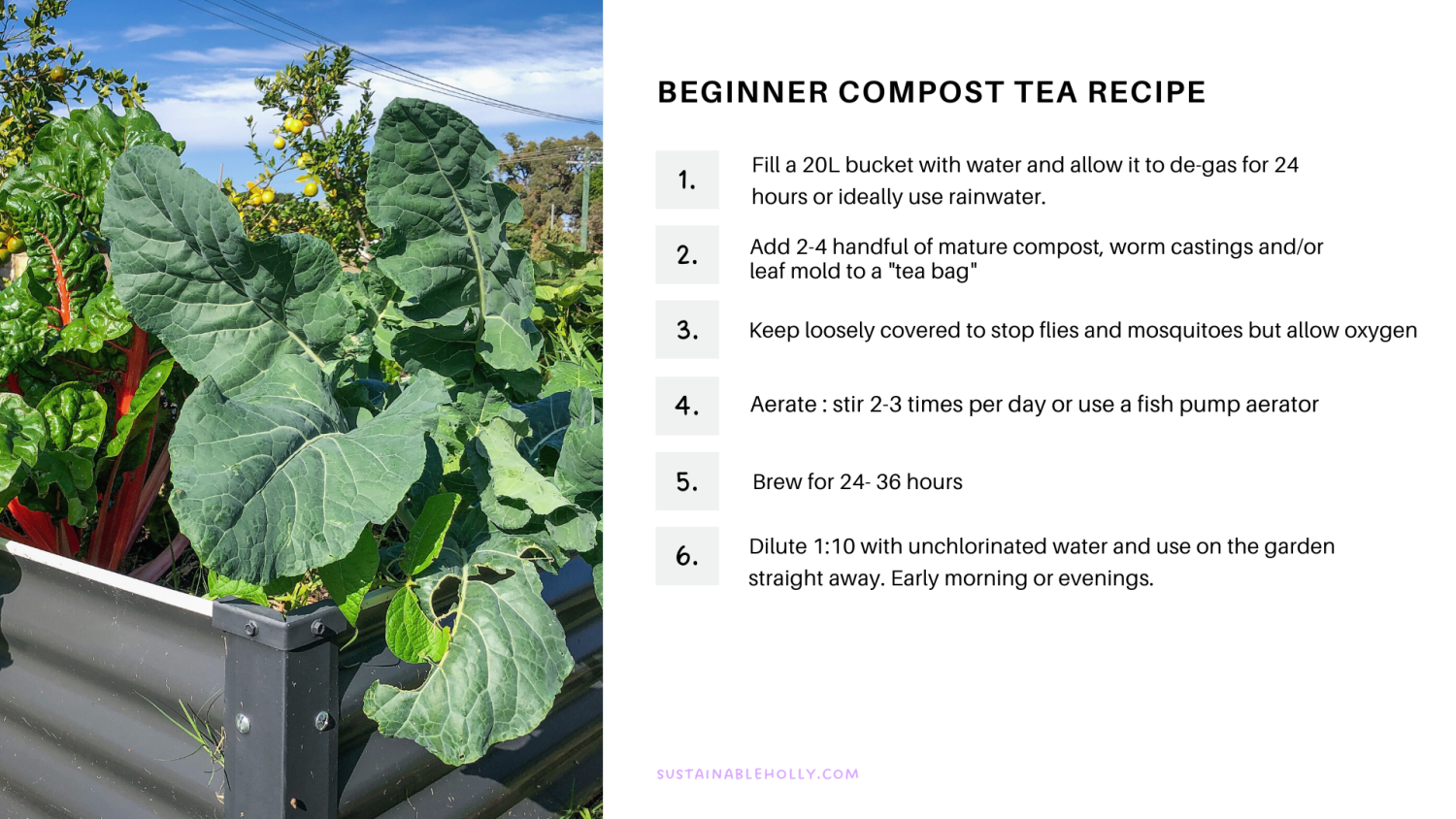
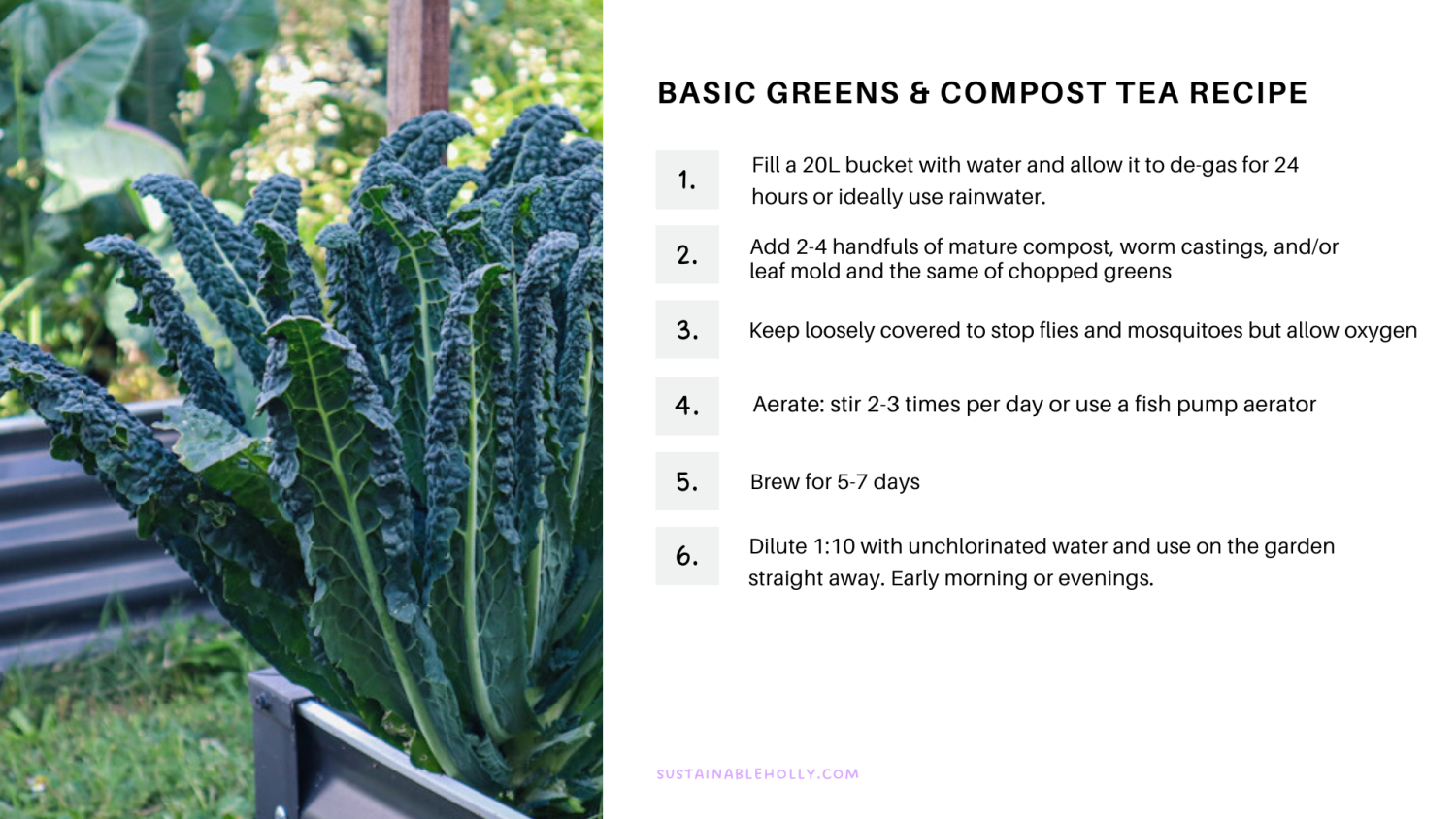
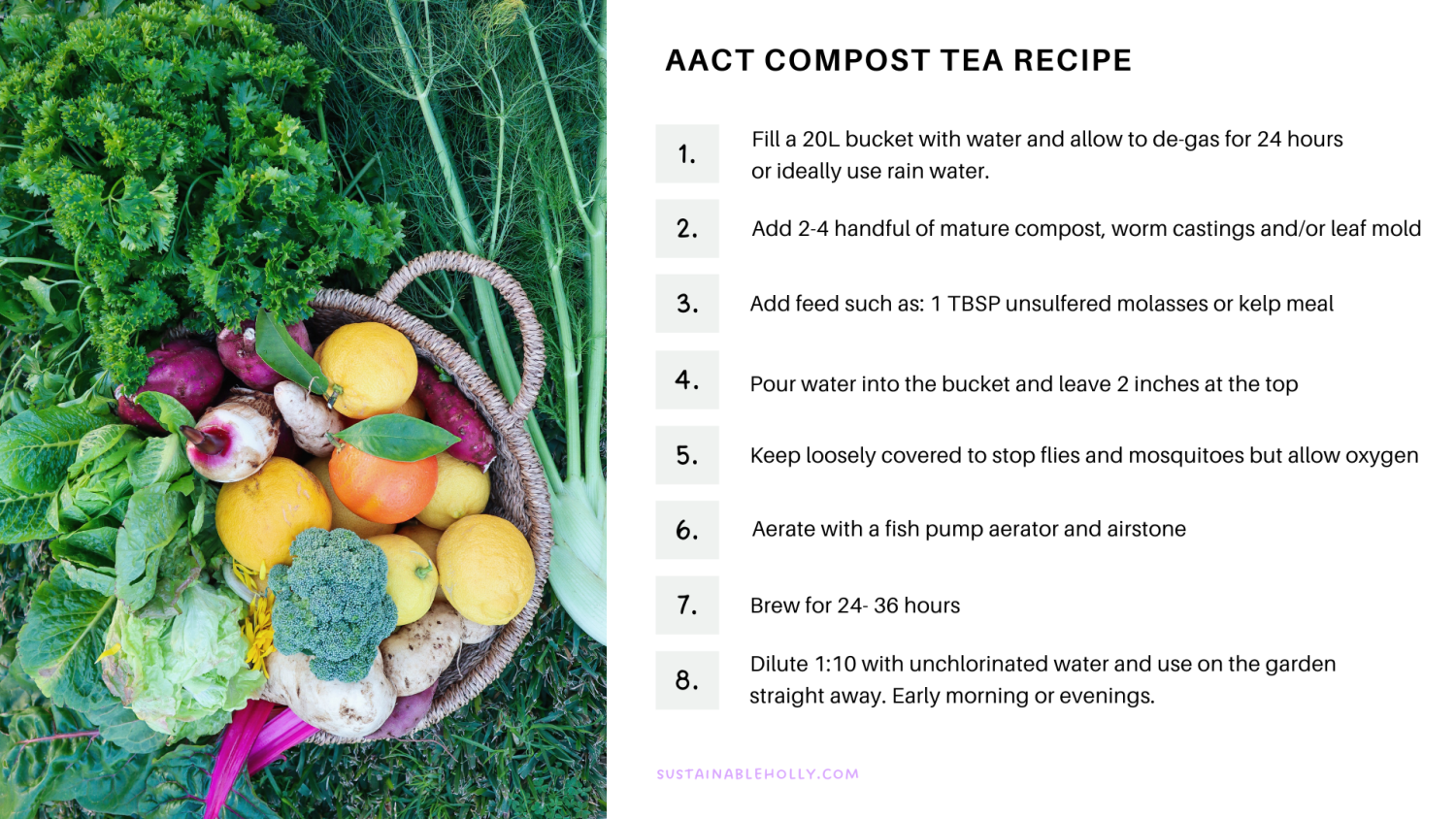
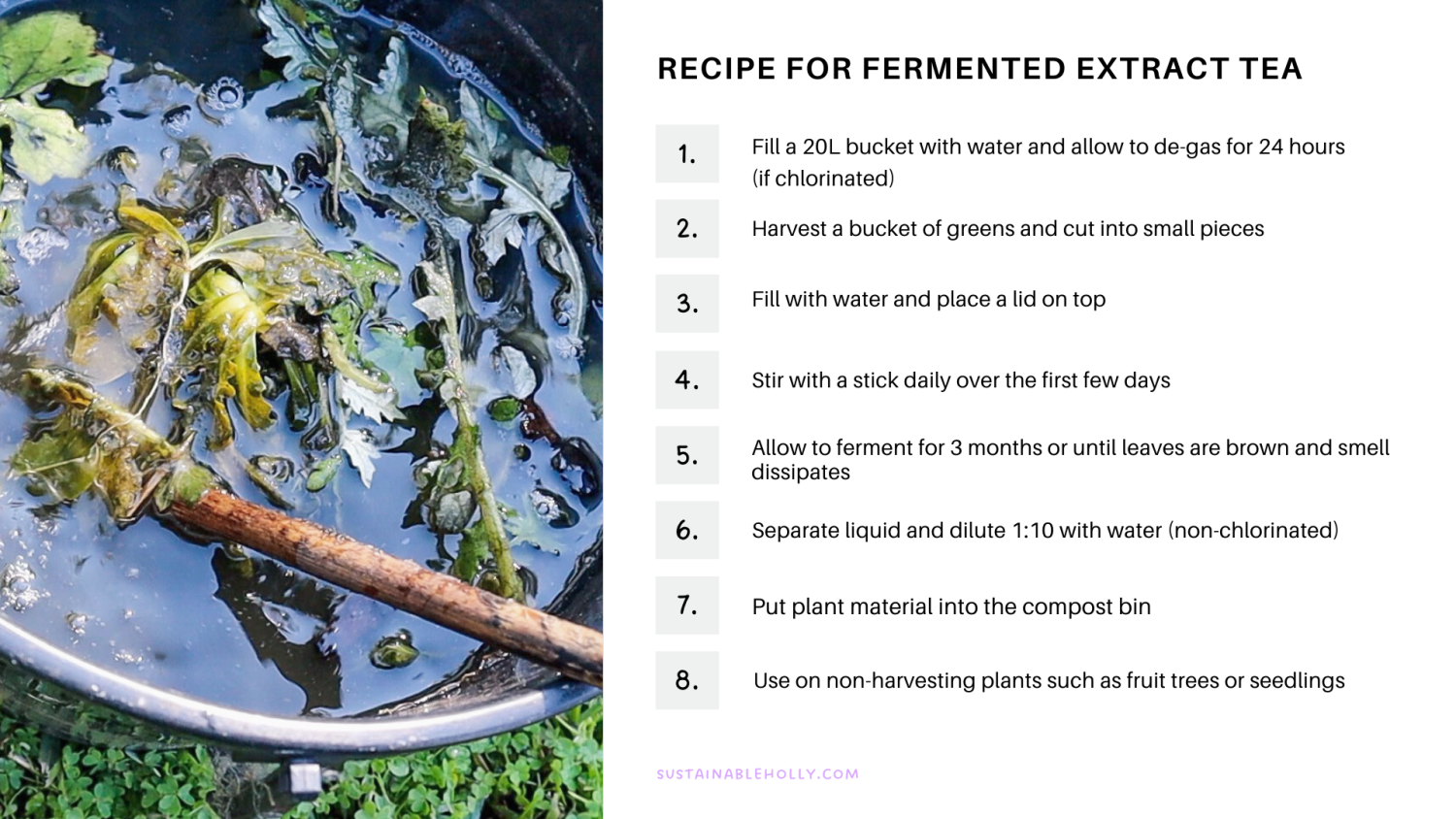
Liquid fertilizers are a great way to regularly add nutrients to the garden. The more we care and feed our soil the healthier our plants will grow. The idea with compost teas is to increase the number of good bacteria and microbes in the soil.
Once you start growing a garden you have everything you need to start making free plant food and there’s no need to buy synthetic ones with who knows what in them!
Creating sustainable systems and habits in the garden will not only save you money but also give you the peace of mind that there are no nasties going into the food you are growing.
Caution: Be careful when handling compost teas, especially during the anaerobic stage (stinky) especially if you are pregnant or immune compromised.
Benefits of liquid teas compared to composting and mulching
Low impact or energy input
Quickly absorbed
Can be absorbed by roots and leaves
Can be used to inoculate plants before the compost
Compost or liquid fertilisers are fast, inexpensive ways to feed and nourish your soil to grow a thriving garden.
Getting the water right
The water we use in these liquid teas is very important. We are wanting to promote good bacteria and often tap water has chlorine in it that can kill off all bacteria. When possible use rain water or natural spring/creek water. If city water is what you have access to then you can de-gas or evapourate the chlorine by these methods:
Fill a bucket and leave to sit for 24hours
Fill a bucket and run a fish pump aerator for 3 hours
The sun will also help speed up the process.
Compost, Worm Casting, and Leaf Mold Soil
It is important to use mature, quality compost that smells earthy and not stinky. Stinky compost will likely already be anaerobic and we want to encourage aerobic bacteria.
Leaf mold is the layer of rich soil underneath layers of leaves. Again, this will have a rich earthy smell and be full of healthy bacteria.
Actively Aerated Compost Tea – AACT
This is the process of adding oxygen to the mix which speeds up the process and encourages good bacteria to breed. You can use any fish pond or aquarium oxygenator or buy a specific compost tea oxygenator similar to this one. Adding oxygen to the fertilisers helps stop the mix from turning anaerobic and stinky.
What are Compost Tea Bags?
Compost tea bags are a way to contain floating particles when creating the brew. This means the liquid is easy to access and add to your watering can or sprayer at the end without clogging up the holes. It is not essential and if you add everything to the bucket you can strain off the liquid at the end through mesh.
Materials to make a tea bag could be: Muslin, shade cloth, lace, mesh, hessian sack etc. use a string to secure the compost in and allow the bag to be easily pulled out.
Notes:
Aerating with a fish pump oxygenator can reduce the time dramatically and skip the stinky stage.
I use my fermented weed tea diluted on plants that I am not harvesting from in the next few months. This is things like fruit trees or seedlings. I would not add it directly onto lettuce or leafy greens I intend to pick and eat the following week or anything like that. just to be safe.
Dynamic Accumulator Plants
Plants that mine minerals from deep down and store them in their leaves can be great to add to liquid fertilisers. These plants also grow back quickly and so giving them a hair cut can be helpful to main their growth.
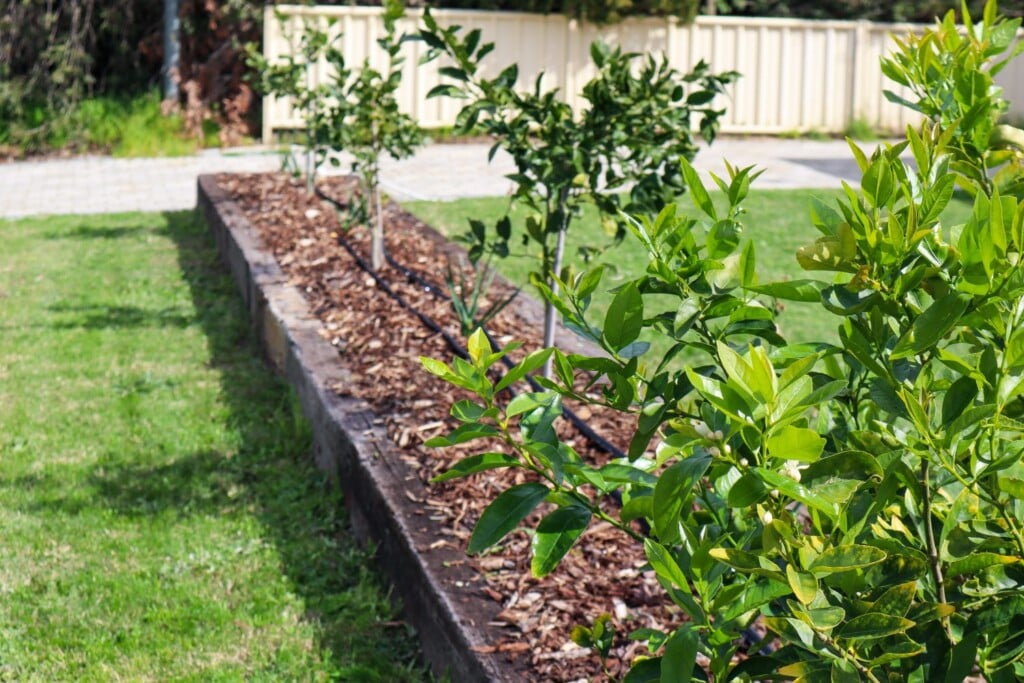
Citrus are a fantastic addition to a home garden because they are hardy, quite forgiving, and easy to use in the kitchen. Here in Perth Citrus grow very well due o our warm sunny climate and sandy soils. Citrus are sun lovers and require at least 6 hours of sunlight per day. They are not a fan of frosts and extremely cold weather. If you do get harsh winters you could try growing citrus in a pot so that you can move it to a warmer location for the winter months. In this guide we will go through all of the steps to growing and taking care of your citrus trees so that you can get delicious and abundant crops of fruit each year.
Types of Citrus
Not all citrus are made equally and each type will have slightly different needs. It is important to look into this when choosing which citrus and also which variety is right for you and your garden.
These guidelines are general in nature and more suited to your classic citrus such as Lemon, Lime, Orange and Grapefruit. Citrus such as native finger limes are a little more delicate and have different feeding and sunlight requirements.
Top Quick Tips
Choose a sunny location
Prepare soil with compost
Loosen roots to ensure it is not root bound when planted
Feed regularly with compost, liquid fertilisers, and mulch
Check for gall wasps in Autumn and winter
Check no shoots are growing from below the graft line!
Mulch and keep weed-free around the base of the citrus
Remove mulch from directly touching the trunk
WATCH the masterclass
Choosing a location
Citrus are sun lovers and require 6+ hours of sunlight per day. Citrus grown in the shade can still fruit but will be less productive and more susceptible to fungus and disease.
However, here in Perth, dappled summer shade in the afternoon could work well to help protect the trees from our harsh summer sun.
Protection from the wind is also desired so that flowers don’t get blown off before they have had time to set as fruit.
Consider the size of the tree for the location you have chosen. Most varieties of citrus are available as dwarfing which means they will grow to a maximum height of 2m. This can be a good idea for small urban blocks.
Soil
Citrus like free-draining soil and don’t like having waterlogged or boggy roots. This can quickly lead to root rot. They also prefer soil that is neutral in pH.
To prepare your soil dig a hole that is twice the size of the pot your tree has come in. You may want to add compost and composted manures (chicken, horse) to amend your soil. Make sure you mix in the soil amendments with your natural soil so that it isn’t a dramatic transition.
For sandy soils: add in some compost and mix it through the sandy soil so that it is free draining but now has a little extra nutrition.
For Clay soils: Add in compost and sandy soil to help create a more free-draining patch. It would also be beneficial to mound the soil up so any excess water drains away from the dree to help reduce clay-bogged soil.
Note: do not put any fertilizer in the hole as this will burn the roots.
When to plant Citrus Trees?
The ideal time to plant out your new citrus tree is in Spring after any chances of frosts and passed. This will give the tree time to get situated before summer. Avoid planting citrus (or any trees) during the peaks of summer. It is already stressful enough for the plant without adding in extreme temperatures. If you buy or receive a citrus tree during summer, keep it in a pot and ensure it doesn’t dry out, or plant it in a larger pot and keep it somewhere protected from summer sun until Autumn when it is safer to plant out.
How to plant out your potted plant?
Firstly make sure you water your plant well – place a tray underneath for it to absorb the water.
Have your hole prepared (twice as big as the pot).
Carefully squeeze the sides of the pots and start to pull the tree out by holding the stem at the base.
Gently loosen the soil around the sides to allow the roots to spread out once it is planted. If your plant is root bound and all the roots are tightly wrapped in the shape of the original pot, you will need to tear away some of the roots to break it free from it’s confined shape. Use the hose to blast away some of the soil and this can also help free up the roots. If you do not break up the roots around the side the plant will remain tightly bound and will not be able to expand and grow.
We the soil with a hose and place the plant in the hole and push the soil back around it. Compact the soil down by gently using your foot.
It can be a good idea to stake your tree for extra support so that it grows straight and doesn’t snap in any strong winds.
Give the tree good water.
Mulch around the base. Wet cardboard can help keep weeds away and then add mulch on top. Mulch out as far as the leaves spread on the tree. Pull back the mulch from about an inch away from the trunk so that it doesn’t rot.
Give your tree consistent water but always check first to see if the soil is moist so as to not overwater it.
It is generally advised to remove fruit for the first 3 years so that the tree can establish strong roots and branches. You will often find the tree will naturally drop fruit itself in the first few years.
Feeding
Mulch around citrus, especially below the canopy line. Citrus have shallow feeder roots so they can dry out, overheat or get too cold if their roots are exposed.
Citrus are quite heavy feeders but young trees in the first year won’t need much if any fertiliser. Use compost, compost teas, worm teas, chicken manure or bedding, and slow-release citrus fertilisers. You can feed citrus every 6 weeks from August to February.
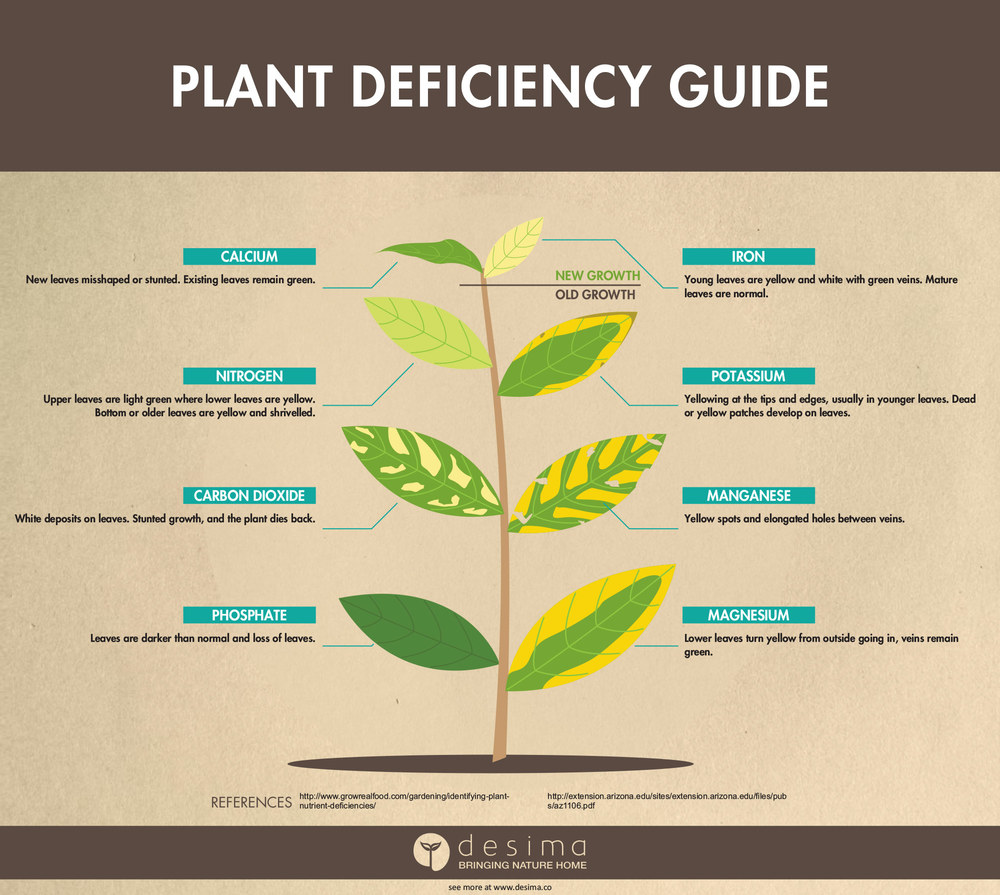
Citrus are very good at telling you what nutrients they are missing by the colour of their leaves. Yellow tips, veiny patterns, brown patches, or yellow leaves that drop off. Sometimes it may just be that the pH of the soil is not right or the soil temperatures are too low for the plant to absorb nutrients. This is why our trees often look a little sad after winter.
May deficiencies can look similar to a balanced NPK fertiliser or regular feeds of compost teas and natural liquid fertilisers can help reduce the chances of deficiencies.
Some of the common issues are:
Lack of Nitrogen – Leaves turning yellow and dropping off. Often caused by excess rain or not enough nutrients being added. Sheep pellets, composted animal manure, garden compost and lawn clippings can help.
Lack of Magnesium: Leaves start to look yellow in patches, tie-dye effect but the base or centre of the leaf remains the greenest. This appears mainly in older leaves. To add magnesium to your plant apply a feed of Epson salts. These can be purchased from the plant store and will have the directions and amounts listed. Usually, 1-2 tsp dissolved in hot water then added to 1L of water per tree. This can also be sprayed on the leaves for a quicker effect but do not do this before a hot sunny day.
Lack of Potassium: Potassium or potash is what helps our flowers and fruits form. Banana peels, wood ash (white part used sparingly) or potassium sulphate.
Heavy rain and temperatures can also affect how nutrients are absorbed so don’t stress too much, often these correct themselves as rain eases or temperatures rise again. balanced regular feeding of compost and increasing diversity helps.
Watering
Citrus like regular and consistent watering. 1-2 times a week in warmer months. It is important that citrus get plenty of water when starting to form fruit. Drip irrigation, weeper hose or other slow-release watering can help to allow water to soak in. Mulching will help retain moisture and temperature around the plants.
Pests and diseases
Citrus are quite hardy and as long as we keep up the nutrition and they have enough sunlight they can usually shake off most pests.
A few to look out for are:
Gall Wasps: These lay eggs in the branches of your tree and swell to look like little lumps. Often we don’t notice them until late summer and autumn. It is important that we remove these during winter before the eggs hatch. You can tell if they have hatched because they leave little exit holes in the lump. The lumps should be removed and ideally burnt. If not secure them in a bag and tie them tight so if they hatch they cannot escape. leave it in the sun for 4 weeks if possible to kill off the larvae. DO NOT put in the compost. If wasps are allowed to hatch they will start to infect your neighbours trees and then you will have more and more issues each year as the surrounding trees get left unchecked. Be aware that removing a lot of branches will affect the following year’s production.
Avoid excess fertilizer in spring or late winter can cause big flushes of new growth. This is what they love to lay eggs in.
Citrus leaf miner: This moth lays eggs and the larvae leave silvery wiggle marks on the leaves similar to a snail trail. Remove affected leaves, especially on young growth. dispose of in a similar way to the above.
Aphids: Aphids will attack new growth, especially in the warmer months. When possible spray them off with a hose to reduce the population. Eco neem oil or dishwashing liquid and water can be applied to the new growth if the infestation is bad or reoccurring.
Sooty Mould: This is a black mould that looks a bit like the plant has been burnt. Sooty mould doesn’t really affect the plant but it is a clear indicator that something else is going on. Usually, this means your tree is being attacked by aphids or spider mites. Once you clear up this issue the sooty mould will dry up and fall off.
Encourage beneficial insects by increasing diversity and flowers to the garden.
Pruning
The great thing about citrus is they don’t require any special pruning. You can prune your trees to shape or keep them at a manageable height. The best time is late winter to early spring once the tree has finished fruiting. Use sharp, clean cutting tools and don’t cut more than 20%. You do not want to do an overall “hedge” prune as this will affect the next season’s harvest. Select specific branches that need to be cut back for height or shape.
Grafted fruit trees are when a delicious variety is attached to the roots of a vigorous growing variety. Most citrus will be grafted.
Keep an eye on the graft line and always remove shoots or suckers that appear below the graft. The graft line is usually easy to see as it will have a different texture and often a different width. This is most important in the first few years of planting the tree. You do not what the graft to grow or it can overtake your tree and kill off the actually selected variety.
How to tell if the rootstock is taken over?
Citrus rootstock often has very sharp spikes. The leaves will be a different shape too. They are usually bush lemons and will produce no fruit or small dry tasteless lemons. Always check below the graft line to ensure all rootstock shoots are removed.
Harvesting
Use sharp secateurs to harvest your fruit rather than ripping off the tree and causing damage to branches. The best way to tell f citrus is ripe is to try one and see. Fruit often take 9-12 months to ripen. Fruit can be left on the tree so that you can eat them fresh as needed. Until they start to fall or you are getting excess rain. Large downpours of rain can cause citrus to burst open and split.
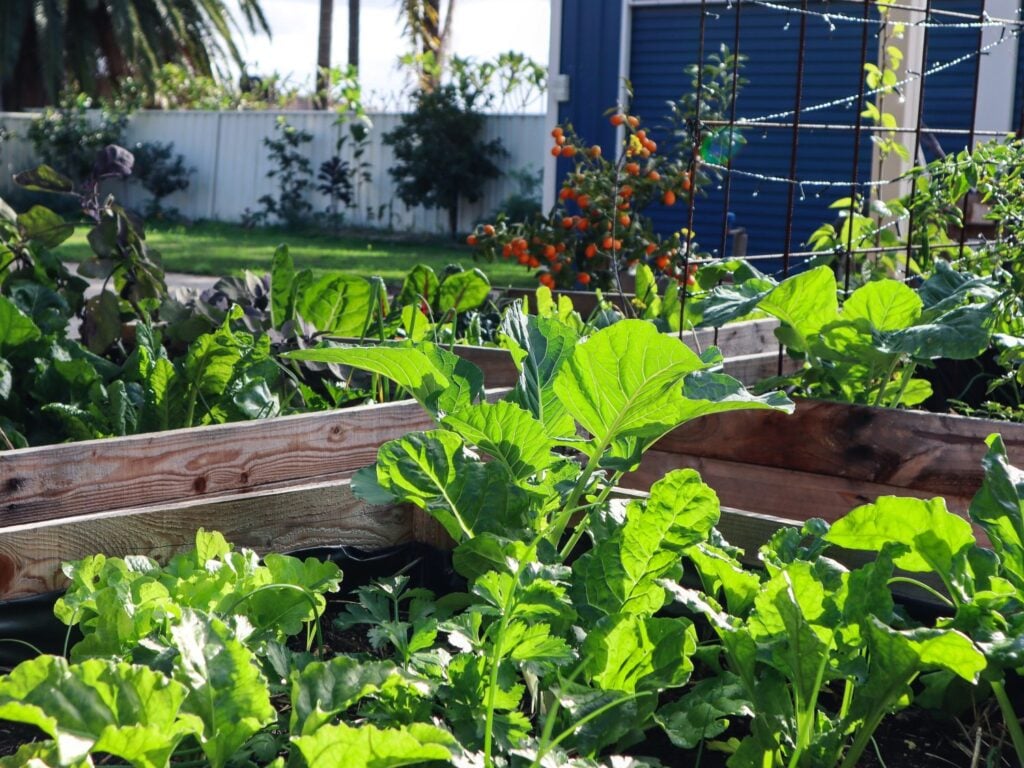
Kitchen gardens are packed full of quick-growing veggies and herbs right outside your kitchen to use in every meal. Integrating a diverse range of plants and structures can help you really maximise the amount of food you can grow in a small space.
In today’s workshop, we will discuss the 7 key steps to set up your kitchen gardens. We will also dive into my own kitchen garden – pallet planters on wheels.
You will also receive a Kitchen Garden Plant list packed with quick-growing edible plants that you can harvest from every single day.
Kitchen gardens are packed full of quick-growing veggies and herbs to use in every single meal.
Quick growing – or pick and come again crops
Often utilising pots or containers
Within eyesight of your kitchen
Flavour enhancing plants
1. Choosing a location
Choosing a location is key to starting a successful kitchen garden.
Close and convenient is key! If you can see it from your kitchen this is ideal! This will be a reminder for you to actually use what you are growing in every meal. It also means you can pick fresh and exactly the amount you need so you don’t have excess waste.
Adequate sunlight – plants need enough sunlight to grow and for most veggies, it is around 6-8 hours.
Moveable containers – maximise summer sun/shade and winter sun
Have a water source nearby.
2. Choose structures or containers
Next up we need something to house our gardens or our soil. There are a wide range of pots and containers or inground gardens that can be used for a kitchen garden. This will be determined whether you are renting, have space available near your house for gardens, or if pots and containers will be best. Multiple pots and containers can be ideal when you are starting out. If you have a plant that gets diseased or something goes wrong your other containers will be ok.
Things to consider with pots and containers:
Black plastic heats up a lot in summer. This can cook our plants.
Timber can rot if not protected – using a lining can be useful.
Do you need them to be moveable? solid casters or pot wheels.
Drainage and raising the pots. It’s important that water can escape out the bottom.
Use recycled containers
Structures
Metal or timber Trellis
T-pee style sticks
Archways
Bamboo stakes
Wire and string lines
3. Soil Tips
Good quality soil is alive! Compost and a mix of sandy soil can help balance and be free of draining.
I also layer small sticks or leftover plant scraps to help bulk up my containers and reduce the amount of soil needed. This breaks down over time to add nutrients and the soil level will drop. Just ensure the top 30cm is just soil.
Add fresh compost each season or I usually do this by-annually before spring planting and before winter planting.
Containers have limited access to nutrients so adding compost or liquid fertilizers is important.
4. Planting and layouts
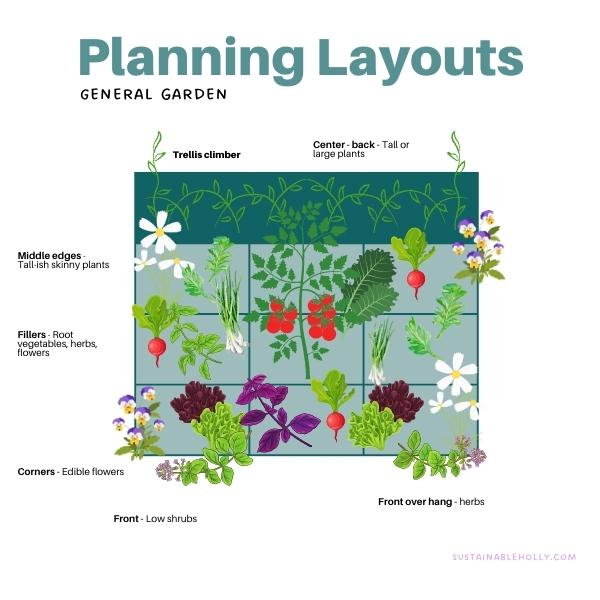
Planting a kitchen garden is fun because it can change each season. I like to plan my gardens with this structure
Back trellis: climbing plants: Cucumber Malabar Spinach
Back-centre: large shrubby plants: Rainbow Chard, Tomatoes,
Corners – edible flowers
Front – smaller low-level plants:
Gaps – root vegetables: Carrots, Radish, Beetroot
Very edge: cascading plants: Thyme, Oregano,
5. Kitchen Garden Planting
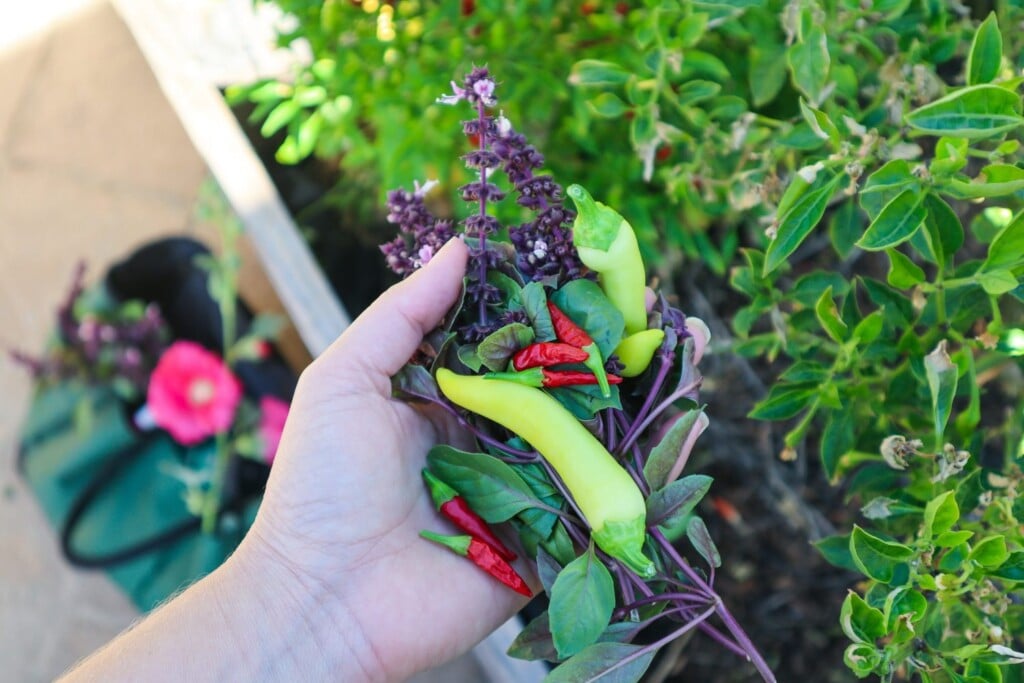
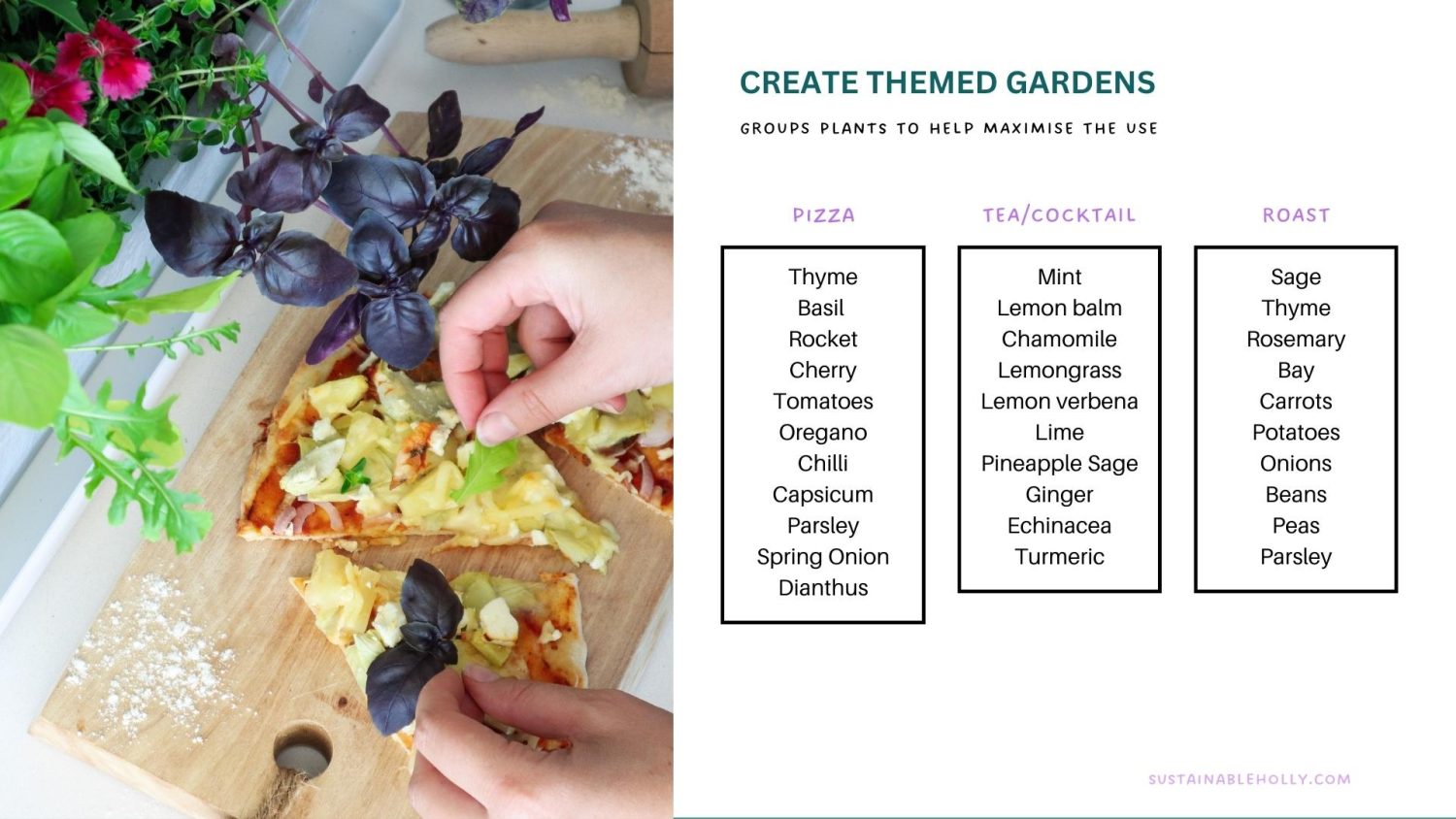
Select plants that grow quickly and have multiple harvests. Miniature versions and “pick and come again” crops are ideal! This means you can harvest small amounts often to use in everyday meals. Growing flavour enhancers such as herbs, lemons and limes means you will have quick and easy access to boost the flavour in your meals or create salad dressings and marinades.
This list will continue to be updated and links for plants that are featured in the A-Z grow guides.
6. Key for Everyday Harvest
The more you cut and use your herbs and veggies the more they will produce. The plant’s main focus or goal is to grow flowers or fruit in order to produce seeds for its future existence. So by harvesting and using your herbs regularly you may receive more abundance from each plant. Try drying out your herbs or chillies or make a delicious garden pesto to preserve and extend your harvests. Dried herbs can be crushed and placed in a jar or added to salt for delicious homemade salt blends. These make fantastic gifts from the garden for everyone to enjoy.
Plant multiples in different beds
Utilise vertical gardening space
Continuously harvest and replant
Succession plant by time and variety
Get into a habit of checking the garden for every meal
7. Maintenance and Feeding
Top up bi-annually or seasonally
Prune and harvest
Liquid fertilisers – worm tea, compost, etc
Empty and clean drip trays
In-bed composting or worm systems
Creating a kitchen garden has so many incredible benefits. It is another way to add design and beauty to your home but with the added bonus of producing delicious, nutrient-dense food. Kitchen gardens are low maintenance and a great way to save money on expensive fresh herbs! In a world where we have lost touch with where our food really comes from, a kitchen garden is a great step towards taking back your food security.
Composting turns organic waste into nutrient-rich soil to help feed and grow incredible gardens. Composting is not only great for the fertility of your soil and the secret to growing abundant gardens, it also stops waste from going to landfill.
Compost is alive with bacteria, micro-organisms, worms and many other beneficial insects. Soil that has been left to die will be dry, lack nutrients and will not promote the growth of your plants. There are many ways to start composting your left-over organic waste, depending on your living situation.
Below are some tips and tricks to start composting at home no matter the size of your garden..
Why should we avoid sending food scraps to landfill?
Food scraps, although natural, should not end up in landfill. The problem is, when food scraps are sent to landfill, they are covered with other rubbish and starved of oxygen. They can not break down correctly so in turn, they produce methane gas. Methane gas has a negative effect on global warming and our future planet. “On average Australians throw out up to 20% of the food they buy, which once sent to landfill is generating methane equivalent to around 6.8 million tonnes of carbon dioxide. Not to mention all the energy used to get that food to your table in the first place”.*
Build Sustainable gardens
Creating your own compost at home will reduce waste and help you create a more sustainable garden. Food that you have grown in your garden, can then be put back into the compost to feed your future plants. It is a sustainable cycle that will not only save you money, but also have positive impacts on the planet. Working with nature instead of against it.
Where to Start with Composting?
To get started on your composting journey there are a few things to consider before you jump right in. Below are some tips on selecting the right compost system for your garden and how to keep your compost healthy. This will go a long way to helping you create a simple and effective compost routine to ensure you get the most out of everything that you grow.
1. Choose your Compost Bin Systems
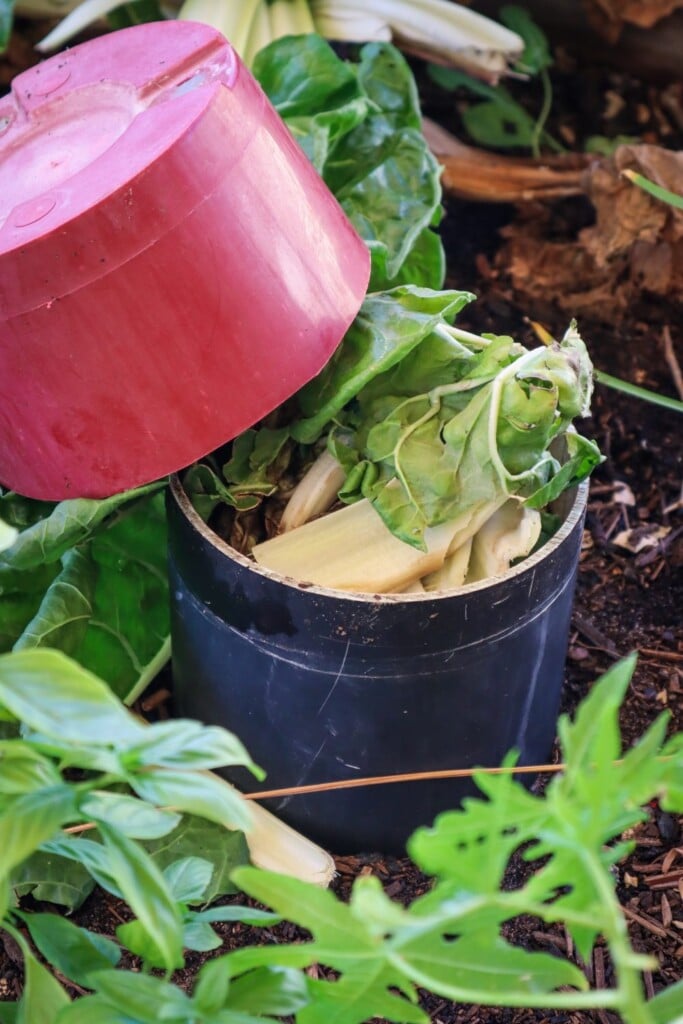
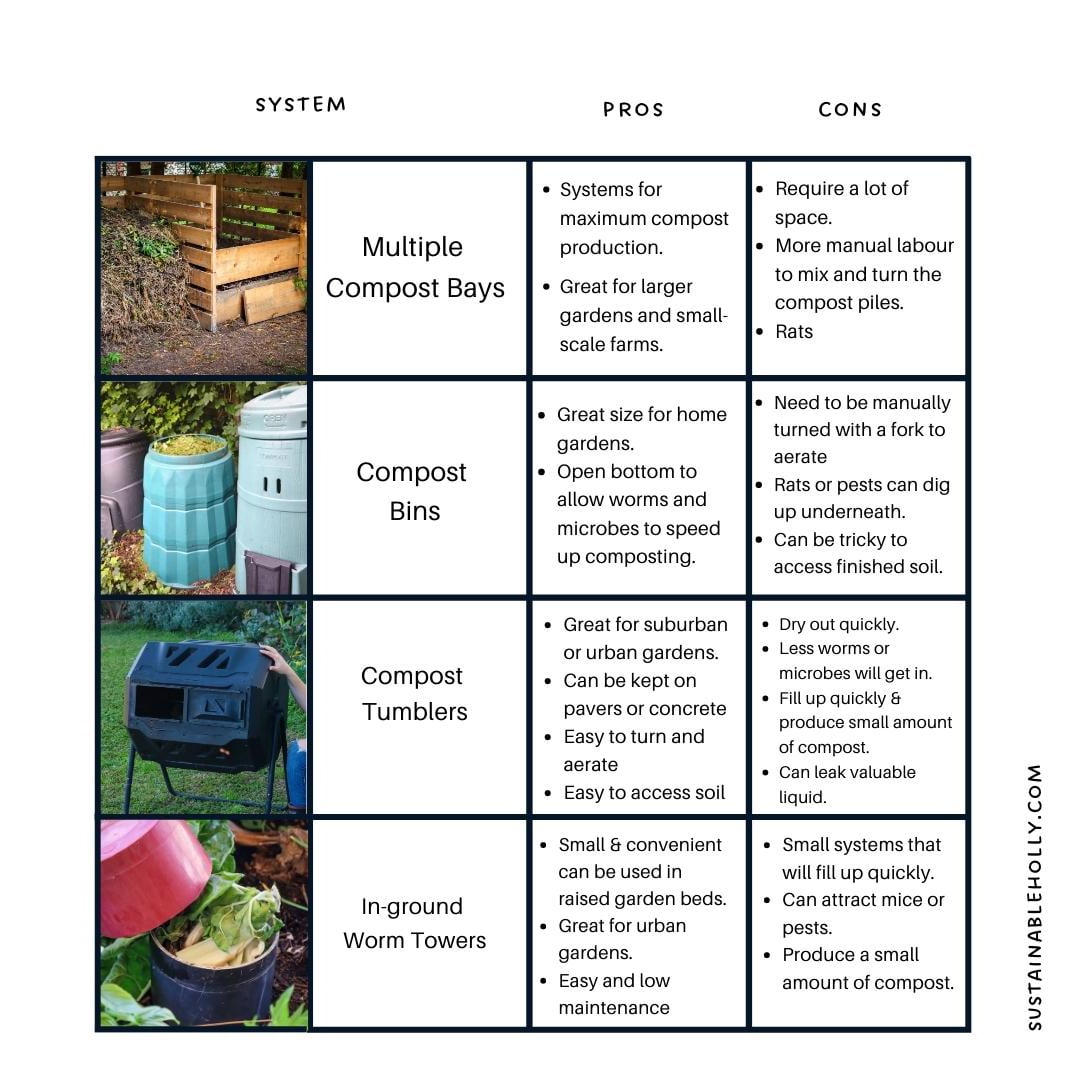
First, you will need something to make your compost in (although you can also just make piles!). There are many systems available depending on the size of your garden. DIY Compost Bays, Compost Bins, Tumblers, or in-ground Worm Towers. To get the most out of your compost it is ideal to have at least two systems. They can be different systems or some compost bins come with two parts already built in. Having two systems means you can stop putting scraps in one once it is full and allow it to break down fully whilst having a second location to put your green waste and scraps.
Below are some pros and cons to help you decide. I plan to have a mix of all these systems throughout my gardens.
2. Choose a location
This is an important part of setting up composting systems. You want the location of your compost system to be close and convenient to both your veggie patch and your kitchen. This will mean you will have easy access to add regular kitchen scraps and plant matter from maintaining your gardens. If it is placed right down the back in a faraway corner you are less likely to utilise it. If you are worried about the smell, following the tips and processes outlined in this workshop will help eliminate that. Having it far away will cause you to neglect the process and this will result in a stinky compost system. A location with part sun – shade will help to retain moisture and stop it from drying out.
If you receive a lot of rain it may be useful to have cover to sop it from getting too wet.
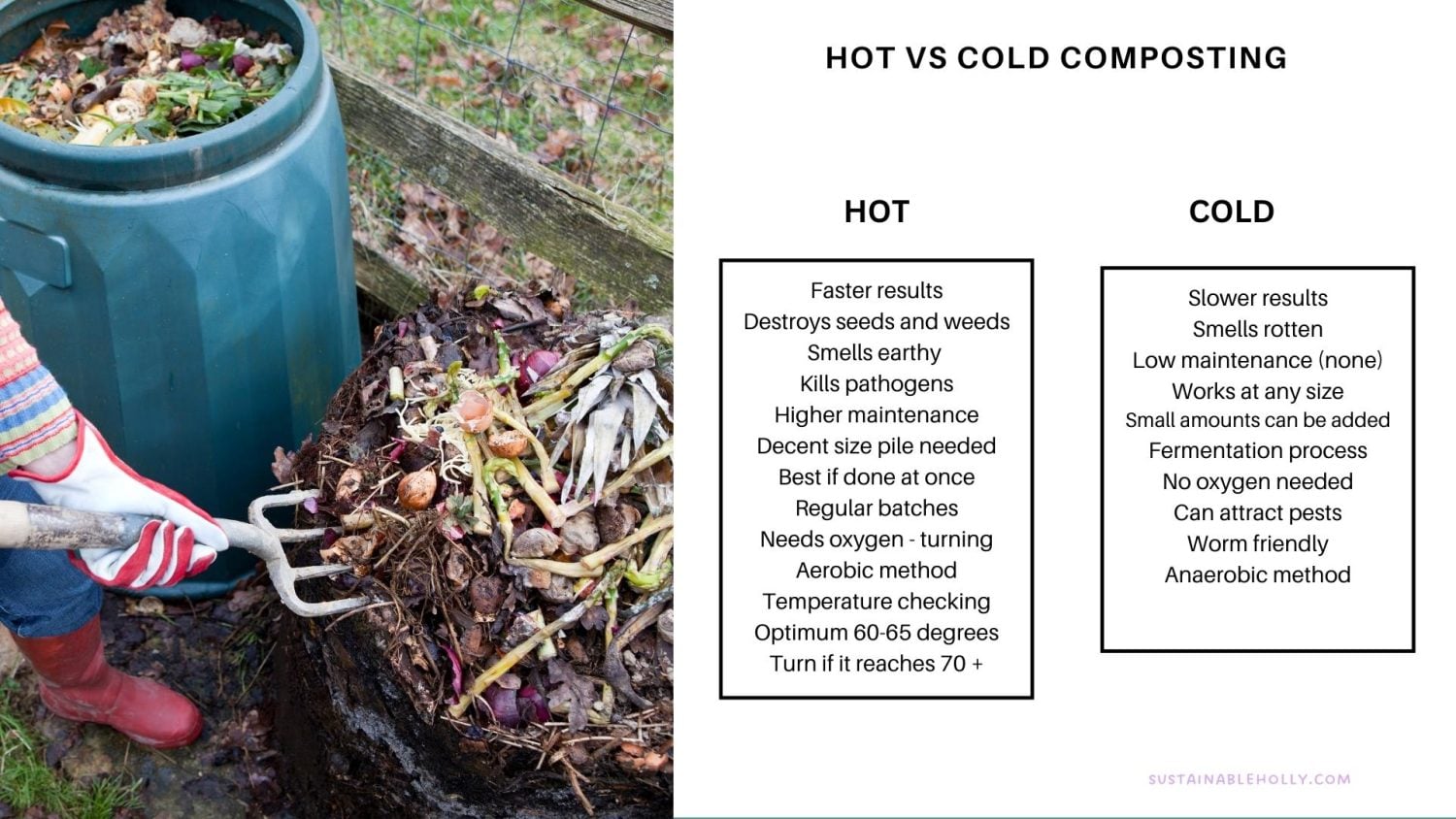
3. Hot vs Cold Compost
You may have heard these terms before and both will work to turn your organic material into the soil but there are clear differences. Again there is no right or wrong but hot composting will produce compost quicker and more efficiently.
For hot composting, the ideal temperatures are 60-65 degrees celsius. If you would like to be efficient and sure that you are reaching these goals you will need to get a temperature gauge to place in the centre of the pile. Once it starts to climb over 70 degrees you will need to tune and aerate with a fork to add oxygen and cool down the pile.
Currently, I do a mix of both. I aim for hot composting but I do not check temperatures and I don’t add all my material in at once. Because of this, my systems will not reach the optimum temperatures. This just means my systems will take a little longer to complete the process and create soil.
To increase temperatures add extra carbon or browns.
4. Inside Compost Bucket
It can be handy to have a small compost bucket with a lid to add your kitchen scraps into. This will make it easy to transfer your inside waste out to your compost bin. Keep it small so that you will need to empty it regularly to reduce odor. I just use a bowl and add kitchen scraps from the meal i am preparing and take it straight out to my compost bin. This reduces any bugs hanging around my kitchen.
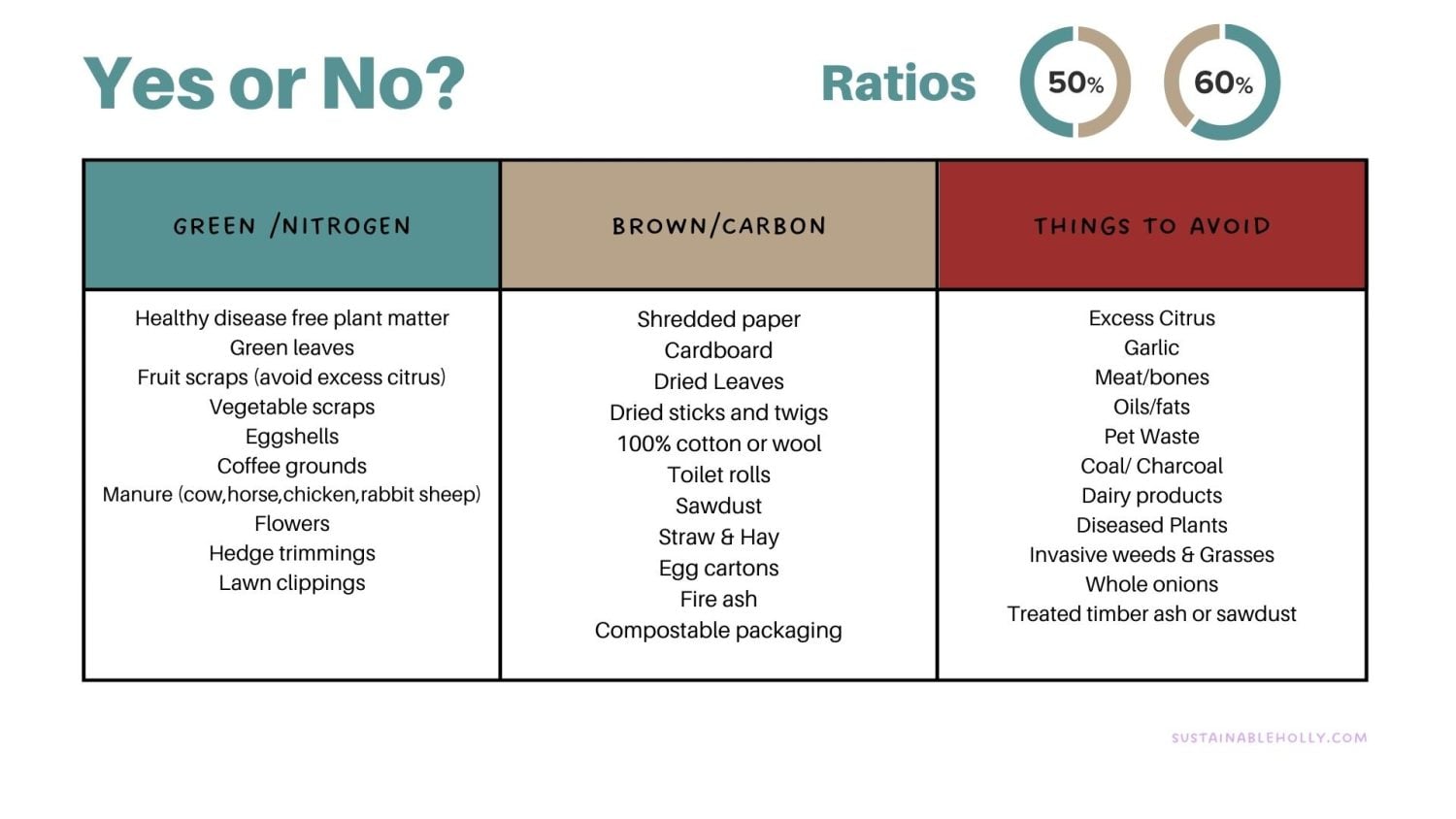
5. What can go in the compost?
Any disease-free waste from your gardens and your kitchen waste can go into the compost. Old plants that have finished or gone to seed, lawn clippings, prunings and so much more! Below is a list of some common things you can put into your compost and a list of things to avoid. It might be useful to print this list out and add to your fridge as a reminder.
You will need to add a mix of green and brown ingredients to create the right temperature and environment for the bacteria to live and start breaking down your scraps. If you add too much green (nitrogen) waste without any brown (carbon) the balance will be off, and you may find the compost bin starts to smell bad and look like a slimy mess. Aim for ratios of roughly 50:50 or 60:40. Green to brown. A good way to maintain this ratio is to add in some dried leaves or brown matter each time you add greens/ scraps to your compost.
6. Have a Carbon/ Brown Bucket
Carbon/ browns are an important part of a compost system or recipe. They can also be quite hard to source if you don’t have access to dried leaves. Having a bucket at your backdoor or somewhere nearby will mean you can keep filling it up every time you come across scrap cardboard or other brown materials from the list.
7. Tools Needed
Secateurs to cut up plant matter, gloves to protect your hands, a rake to collect dried leaves and a large fork to aerate the pile.
8. Spread in Layers
Composting is all about layers. Try to add a mix of green and brown layers as you go. It is also important to spread out your materials and cut up larger items into smaller parts. The smaller the pieces, the quicker they will be able to break down. Grab your secateurs and cut your plants or flowers into smaller pieces. Tear or shred paper and cardboard into smaller pieces and scatter across to form a layer. This will help disperse the materials so that they don’t end up in a thick matted clump, as this will slow down the process.
9. Add Garden Soil
It is not essential to add soil but highly recommended as it can help to add in a few handfuls of healthy soil from your garden. This soil will already have living microbes that will help kickstart your compost!
10. Keep Hydrated
Keep your compost pile moist but not too wet as this is important to speed up the composting process. Ensure you have your hoselink hose nearby and use the shower function to moisten the layers evenly. This is especially important during the warmer months of Spring and Summer. Keep your compost covered to reduce evaporation.
11.Turn and Aerate
The bacteria and microorganisms that get to work breaking down your scraps are alive and need oxygen to live. It is important to tumble or mix your compost regularly to help add oxygen into the centre of the pile. Do this every week or two if possible.
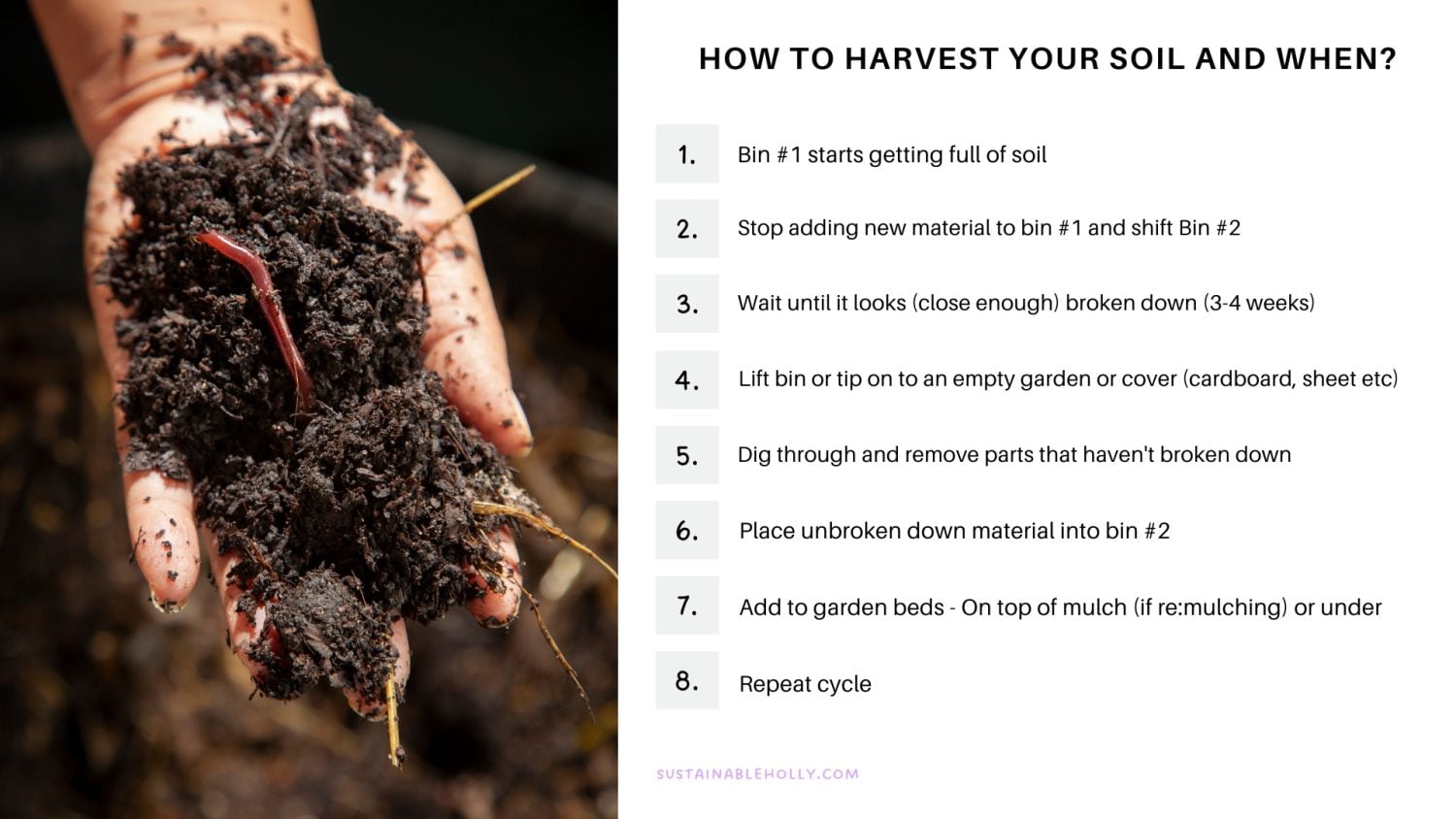
12. Finished Compost
Once all your food scraps and plant material have turned into dark nutrient-rich soil, you can add this to your garden beds to replenish and feed your plants. As plants grow, they draw up nutrients from the soil, so it is important that we continue to replenish and feed our gardens regularly.
Urban Composting
Worm farms are great for urban environments because they take up very little space. There are also new ways for people with no land to connect with others that do, and give them their compost scraps. Community gardens, local Facebook groups or there is even an app! Sharewaste
Keep it Simple
Keep it simple and allow nature to do what it does best. Create systems that replenish and regenerate the earth rather than have a negative impact.
Choose a Convenient Location
Add your Green & Brown Waste
Add soil microbes
Hydrate & Cover
Aerate and Turn
The key to thriving gardens is to feed and nourish your soil just as much, if not more, than your plants.
Care for your soil and your plants will grow with more ease and abundance. Nature is amazing and when we allow nature to do the work, there is balance and flow. Gardening will feel more sustainable and your plants will thrive all year round.
CHALLENGE: Take Cuttings from x3 Edible plants to Swap, Trade or Share
Join the challenge in the community and share which cuttings to are trying out!
About the Live workshops
Join live to participate in the Q&A.
If you can’t make the live and have questions there is a thread set up in the workshop section of the community. Or flick me an email and I will make sure I answer or cover that topic in the workshop.
A replay will be available.
The live link will be available closer to the date.
What happens during a masterclass?
The masterclass will be streamed online live through a private link (available closer to the date) and members are encouraged to say hi and ask any questions they have throughout the lesson. There will also be a time at the end of the masterclass for Q&A. If you want to sit back and just take it all in that is absolutely fine too! If you can’t make the live event, that is ok too, as the replay will still be available within the workshop page.
What do I need to do or bring?
Add the event to your calendar and when the link is published you can click on it and tap notifications for an extra reminder. Try to login and be ready five minutes before the livestream. It will be a good idea to have a pen and paper ready to take any notes or write down inspiration as it comes to you.