Liquid fertilizers are a great way to regularly add nutrients to the garden. The more we care and feed our soil the healthier our plants will grow. The idea with compost teas is to increase the number of good bacteria and microbes in the soil.
Once you start growing a garden you have everything you need to start making free plant food and there’s no need to buy synthetic ones with who knows what in them!
Creating sustainable systems and habits in the garden will not only save you money but also give you the peace of mind that there are no nasties going into the food you are growing.
Caution: Be careful when handling compost teas, especially during the anaerobic stage (stinky) especially if you are pregnant or immune compromised.

Benefits of liquid teas compared to composting and mulching
- Low impact or energy input
- Quickly absorbed
- Can be absorbed by roots and leaves
- Can be used to inoculate plants before the compost
Compost or liquid fertilisers are fast, inexpensive ways to feed and nourish your soil to grow a thriving garden.
Getting the water right
The water we use in these liquid teas is very important. We are wanting to promote good bacteria and often tap water has chlorine in it that can kill off all bacteria. When possible use rain water or natural spring/creek water. If city water is what you have access to then you can de-gas or evapourate the chlorine by these methods:
- Fill a bucket and leave to sit for 24hours
- Fill a bucket and run a fish pump aerator for 3 hours
The sun will also help speed up the process.
Compost, Worm Casting, and Leaf Mold Soil
It is important to use mature, quality compost that smells earthy and not stinky. Stinky compost will likely already be anaerobic and we want to encourage aerobic bacteria.
Leaf mold is the layer of rich soil underneath layers of leaves. Again, this will have a rich earthy smell and be full of healthy bacteria.
Actively Aerated Compost Tea – AACT
This is the process of adding oxygen to the mix which speeds up the process and encourages good bacteria to breed. You can use any fish pond or aquarium oxygenator or buy a specific compost tea oxygenator similar to this one. Adding oxygen to the fertilisers helps stop the mix from turning anaerobic and stinky.
What are Compost Tea Bags?
Compost tea bags are a way to contain floating particles when creating the brew. This means the liquid is easy to access and add to your watering can or sprayer at the end without clogging up the holes. It is not essential and if you add everything to the bucket you can strain off the liquid at the end through mesh.
Materials to make a tea bag could be: Muslin, shade cloth, lace, mesh, hessian sack etc. use a string to secure the compost in and allow the bag to be easily pulled out.
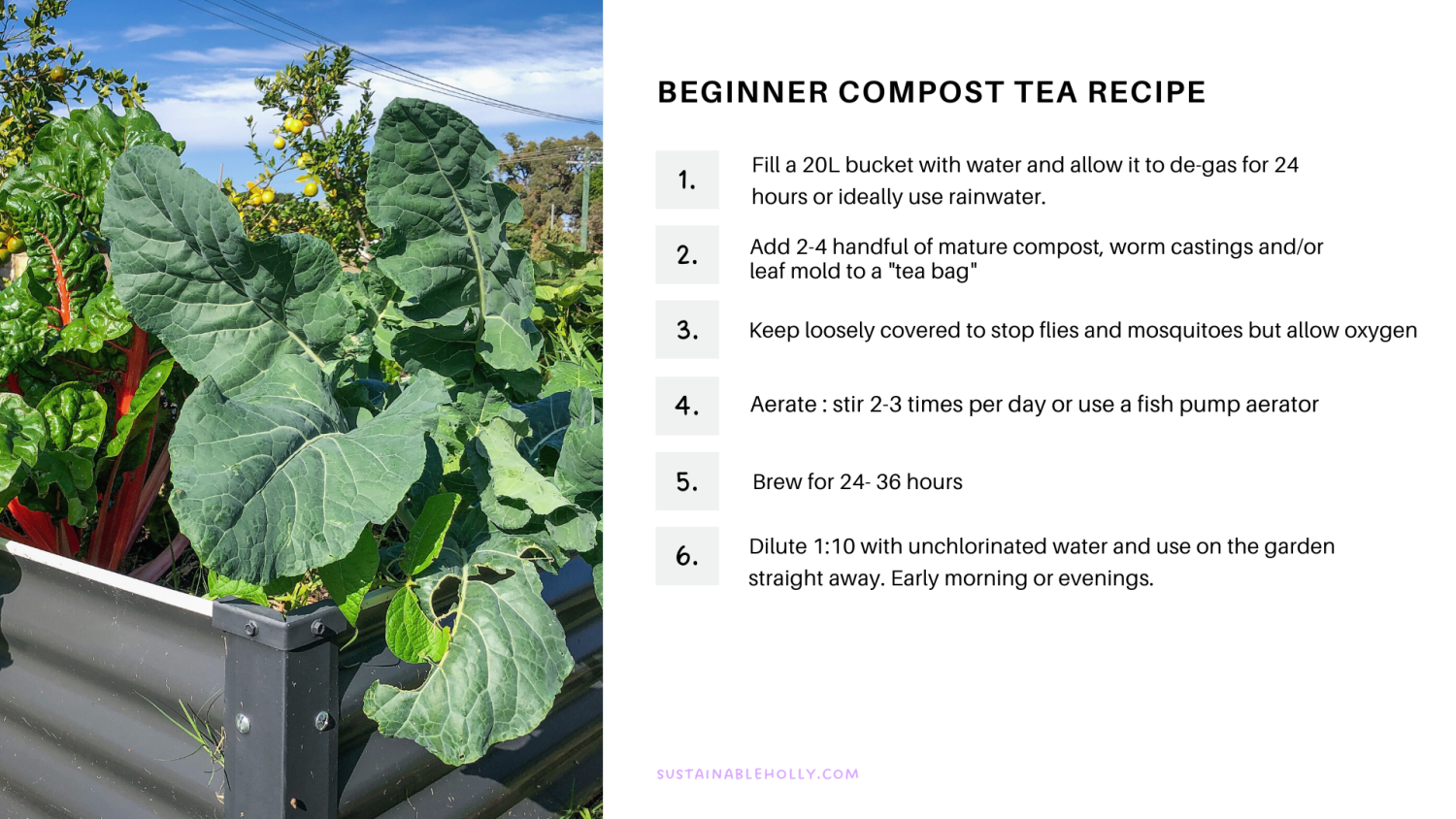
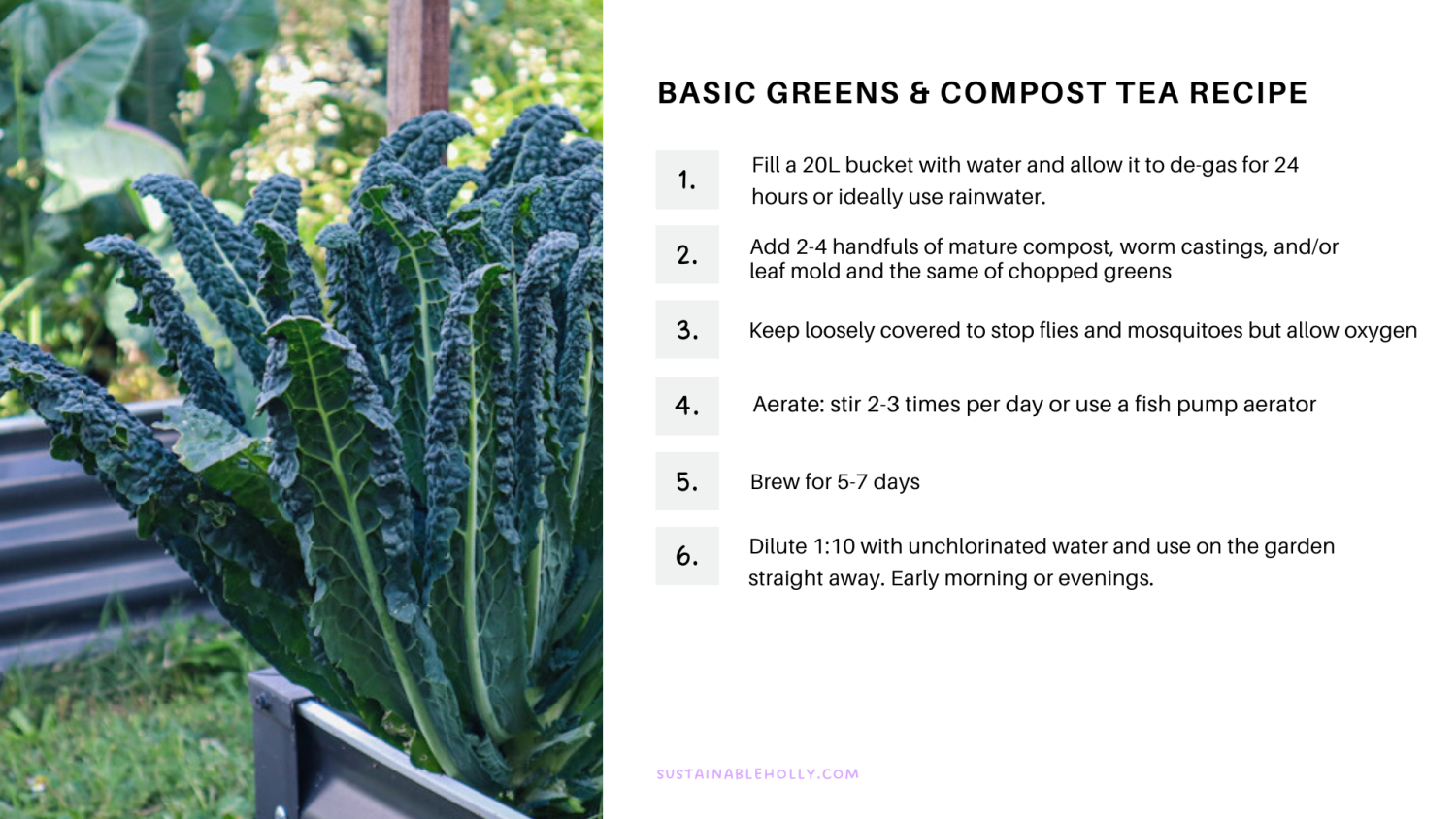
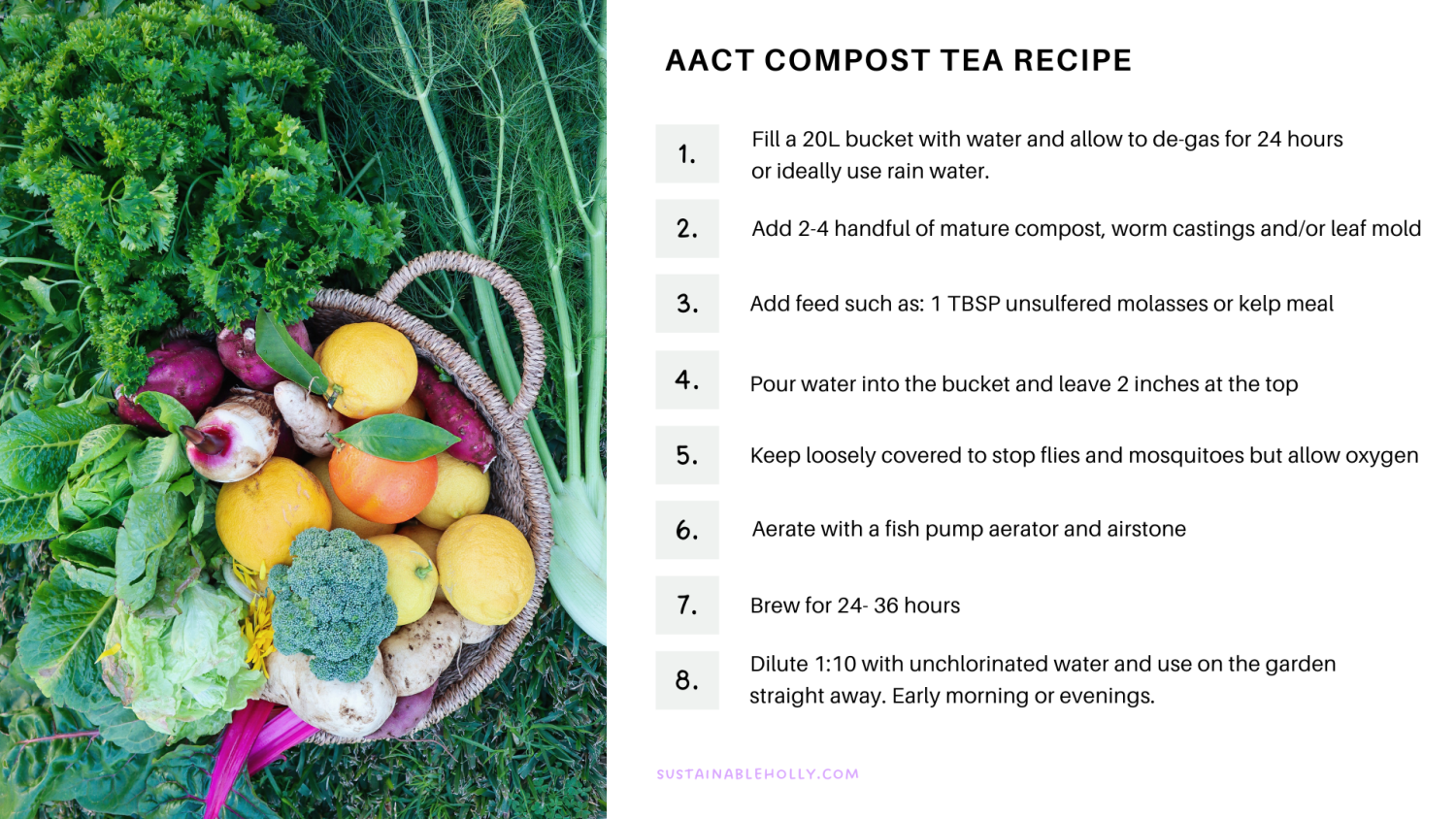
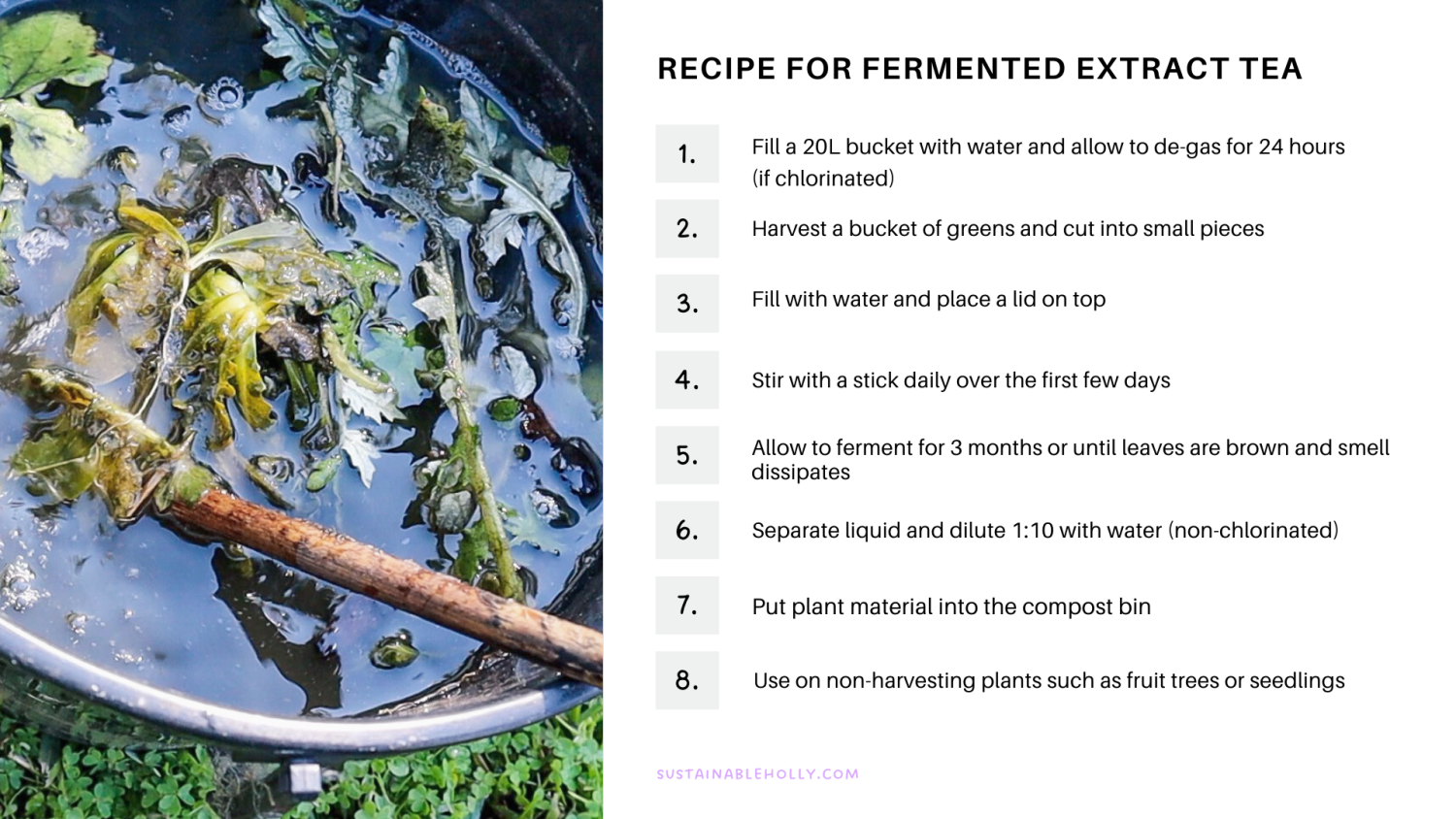
Notes:
Aerating with a fish pump oxygenator can reduce the time dramatically and skip the stinky stage.
I use my fermented weed tea diluted on plants that I am not harvesting from in the next few months. This is things like fruit trees or seedlings. I would not add it directly onto lettuce or leafy greens I intend to pick and eat the following week or anything like that. just to be safe.
Dynamic Accumulator Plants
Plants that mine minerals from deep down and store them in their leaves can be great to add to liquid fertilisers. These plants also grow back quickly and so giving them a hair cut can be helpful to main their growth.
- Comfrey
- Borage
- Chickweed
- Yarrow
- Nettles
- Sorrel