Citrus are a fantastic addition to a home garden because they are hardy, quite forgiving, and easy to use in the kitchen. Here in Perth Citrus grow very well due o our warm sunny climate and sandy soils. Citrus are sun lovers and require at least 6 hours of sunlight per day. They are not a fan of frosts and extremely cold weather. If you do get harsh winters you could try growing citrus in a pot so that you can move it to a warmer location for the winter months. In this guide we will go through all of the steps to growing and taking care of your citrus trees so that you can get delicious and abundant crops of fruit each year.


Types of Citrus
Not all citrus are made equally and each type will have slightly different needs. It is important to look into this when choosing which citrus and also which variety is right for you and your garden.
These guidelines are general in nature and more suited to your classic citrus such as Lemon, Lime, Orange and Grapefruit. Citrus such as native finger limes are a little more delicate and have different feeding and sunlight requirements.
Top Quick Tips
- Choose a sunny location
- Prepare soil with compost
- Loosen roots to ensure it is not root bound when planted
- Feed regularly with compost, liquid fertilisers, and mulch
- Check for gall wasps in Autumn and winter
- Check no shoots are growing from below the graft line!
- Mulch and keep weed-free around the base of the citrus
- Remove mulch from directly touching the trunk
WATCH the masterclass

Choosing a location
Citrus are sun lovers and require 6+ hours of sunlight per day. Citrus grown in the shade can still fruit but will be less productive and more susceptible to fungus and disease.
However, here in Perth, dappled summer shade in the afternoon could work well to help protect the trees from our harsh summer sun.
Protection from the wind is also desired so that flowers don’t get blown off before they have had time to set as fruit.
Consider the size of the tree for the location you have chosen. Most varieties of citrus are available as dwarfing which means they will grow to a maximum height of 2m. This can be a good idea for small urban blocks.
Soil
Citrus like free-draining soil and don’t like having waterlogged or boggy roots. This can quickly lead to root rot. They also prefer soil that is neutral in pH.
To prepare your soil dig a hole that is twice the size of the pot your tree has come in. You may want to add compost and composted manures (chicken, horse) to amend your soil. Make sure you mix in the soil amendments with your natural soil so that it isn’t a dramatic transition.
For sandy soils: add in some compost and mix it through the sandy soil so that it is free draining but now has a little extra nutrition.
For Clay soils: Add in compost and sandy soil to help create a more free-draining patch. It would also be beneficial to mound the soil up so any excess water drains away from the dree to help reduce clay-bogged soil.
Note: do not put any fertilizer in the hole as this will burn the roots.
When to plant Citrus Trees?
The ideal time to plant out your new citrus tree is in Spring after any chances of frosts and passed. This will give the tree time to get situated before summer. Avoid planting citrus (or any trees) during the peaks of summer. It is already stressful enough for the plant without adding in extreme temperatures. If you buy or receive a citrus tree during summer, keep it in a pot and ensure it doesn’t dry out, or plant it in a larger pot and keep it somewhere protected from summer sun until Autumn when it is safer to plant out.
How to plant out your potted plant?
- Firstly make sure you water your plant well – place a tray underneath for it to absorb the water.
- Have your hole prepared (twice as big as the pot).
- Carefully squeeze the sides of the pots and start to pull the tree out by holding the stem at the base.
- Gently loosen the soil around the sides to allow the roots to spread out once it is planted. If your plant is root bound and all the roots are tightly wrapped in the shape of the original pot, you will need to tear away some of the roots to break it free from it’s confined shape. Use the hose to blast away some of the soil and this can also help free up the roots. If you do not break up the roots around the side the plant will remain tightly bound and will not be able to expand and grow.
- We the soil with a hose and place the plant in the hole and push the soil back around it. Compact the soil down by gently using your foot.
- It can be a good idea to stake your tree for extra support so that it grows straight and doesn’t snap in any strong winds.
- Give the tree good water.
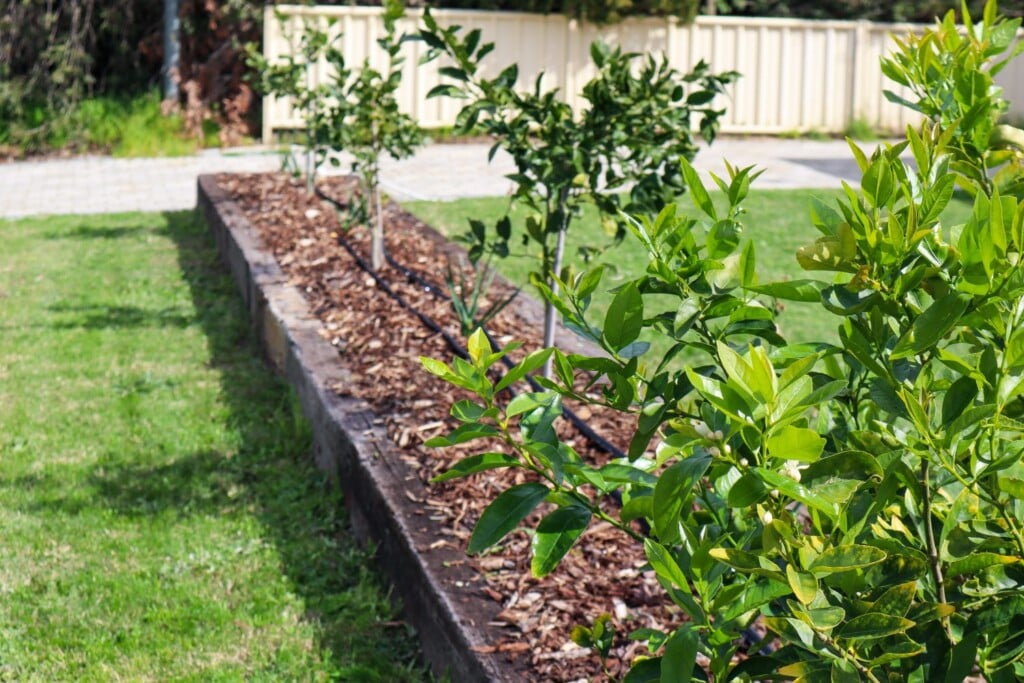
- Mulch around the base. Wet cardboard can help keep weeds away and then add mulch on top. Mulch out as far as the leaves spread on the tree. Pull back the mulch from about an inch away from the trunk so that it doesn’t rot.
- Give your tree consistent water but always check first to see if the soil is moist so as to not overwater it.
- It is generally advised to remove fruit for the first 3 years so that the tree can establish strong roots and branches. You will often find the tree will naturally drop fruit itself in the first few years.
Feeding
Mulch around citrus, especially below the canopy line. Citrus have shallow feeder roots so they can dry out, overheat or get too cold if their roots are exposed.
Citrus are quite heavy feeders but young trees in the first year won’t need much if any fertiliser. Use compost, compost teas, worm teas, chicken manure or bedding, and slow-release citrus fertilisers. You can feed citrus every 6 weeks from August to February.
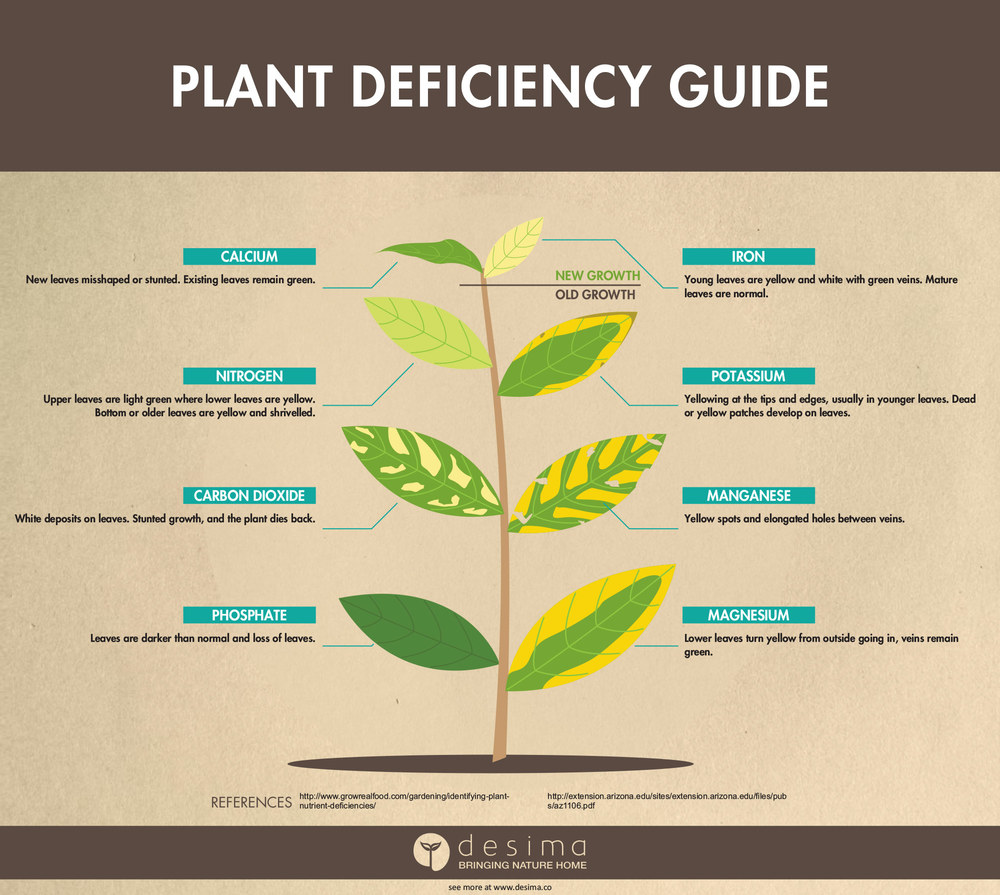
Citrus are very good at telling you what nutrients they are missing by the colour of their leaves. Yellow tips, veiny patterns, brown patches, or yellow leaves that drop off. Sometimes it may just be that the pH of the soil is not right or the soil temperatures are too low for the plant to absorb nutrients. This is why our trees often look a little sad after winter.
May deficiencies can look similar to a balanced NPK fertiliser or regular feeds of compost teas and natural liquid fertilisers can help reduce the chances of deficiencies.
Some of the common issues are:
Lack of Nitrogen – Leaves turning yellow and dropping off. Often caused by excess rain or not enough nutrients being added. Sheep pellets, composted animal manure, garden compost and lawn clippings can help.
Lack of Magnesium: Leaves start to look yellow in patches, tie-dye effect but the base or centre of the leaf remains the greenest. This appears mainly in older leaves. To add magnesium to your plant apply a feed of Epson salts. These can be purchased from the plant store and will have the directions and amounts listed. Usually, 1-2 tsp dissolved in hot water then added to 1L of water per tree. This can also be sprayed on the leaves for a quicker effect but do not do this before a hot sunny day.
Lack of Potassium: Potassium or potash is what helps our flowers and fruits form. Banana peels, wood ash (white part used sparingly) or potassium sulphate.
Heavy rain and temperatures can also affect how nutrients are absorbed so don’t stress too much, often these correct themselves as rain eases or temperatures rise again. balanced regular feeding of compost and increasing diversity helps.
Watering
Citrus like regular and consistent watering. 1-2 times a week in warmer months. It is important that citrus get plenty of water when starting to form fruit. Drip irrigation, weeper hose or other slow-release watering can help to allow water to soak in. Mulching will help retain moisture and temperature around the plants.
Pests and diseases
Citrus are quite hardy and as long as we keep up the nutrition and they have enough sunlight they can usually shake off most pests.
A few to look out for are:
Gall Wasps: These lay eggs in the branches of your tree and swell to look like little lumps. Often we don’t notice them until late summer and autumn. It is important that we remove these during winter before the eggs hatch. You can tell if they have hatched because they leave little exit holes in the lump. The lumps should be removed and ideally burnt. If not secure them in a bag and tie them tight so if they hatch they cannot escape. leave it in the sun for 4 weeks if possible to kill off the larvae. DO NOT put in the compost. If wasps are allowed to hatch they will start to infect your neighbours trees and then you will have more and more issues each year as the surrounding trees get left unchecked. Be aware that removing a lot of branches will affect the following year’s production.
Avoid excess fertilizer in spring or late winter can cause big flushes of new growth. This is what they love to lay eggs in.
Citrus leaf miner: This moth lays eggs and the larvae leave silvery wiggle marks on the leaves similar to a snail trail. Remove affected leaves, especially on young growth. dispose of in a similar way to the above.
Aphids: Aphids will attack new growth, especially in the warmer months. When possible spray them off with a hose to reduce the population. Eco neem oil or dishwashing liquid and water can be applied to the new growth if the infestation is bad or reoccurring.
Sooty Mould: This is a black mould that looks a bit like the plant has been burnt. Sooty mould doesn’t really affect the plant but it is a clear indicator that something else is going on. Usually, this means your tree is being attacked by aphids or spider mites. Once you clear up this issue the sooty mould will dry up and fall off.
Encourage beneficial insects by increasing diversity and flowers to the garden.
Pruning
The great thing about citrus is they don’t require any special pruning. You can prune your trees to shape or keep them at a manageable height. The best time is late winter to early spring once the tree has finished fruiting. Use sharp, clean cutting tools and don’t cut more than 20%. You do not want to do an overall “hedge” prune as this will affect the next season’s harvest. Select specific branches that need to be cut back for height or shape.
Grafted fruit trees are when a delicious variety is attached to the roots of a vigorous growing variety. Most citrus will be grafted.
Keep an eye on the graft line and always remove shoots or suckers that appear below the graft. The graft line is usually easy to see as it will have a different texture and often a different width. This is most important in the first few years of planting the tree. You do not what the graft to grow or it can overtake your tree and kill off the actually selected variety.
How to tell if the rootstock is taken over?
Citrus rootstock often has very sharp spikes. The leaves will be a different shape too. They are usually bush lemons and will produce no fruit or small dry tasteless lemons. Always check below the graft line to ensure all rootstock shoots are removed.
Harvesting
Use sharp secateurs to harvest your fruit rather than ripping off the tree and causing damage to branches. The best way to tell f citrus is ripe is to try one and see. Fruit often take 9-12 months to ripen. Fruit can be left on the tree so that you can eat them fresh as needed. Until they start to fall or you are getting excess rain. Large downpours of rain can cause citrus to burst open and split.