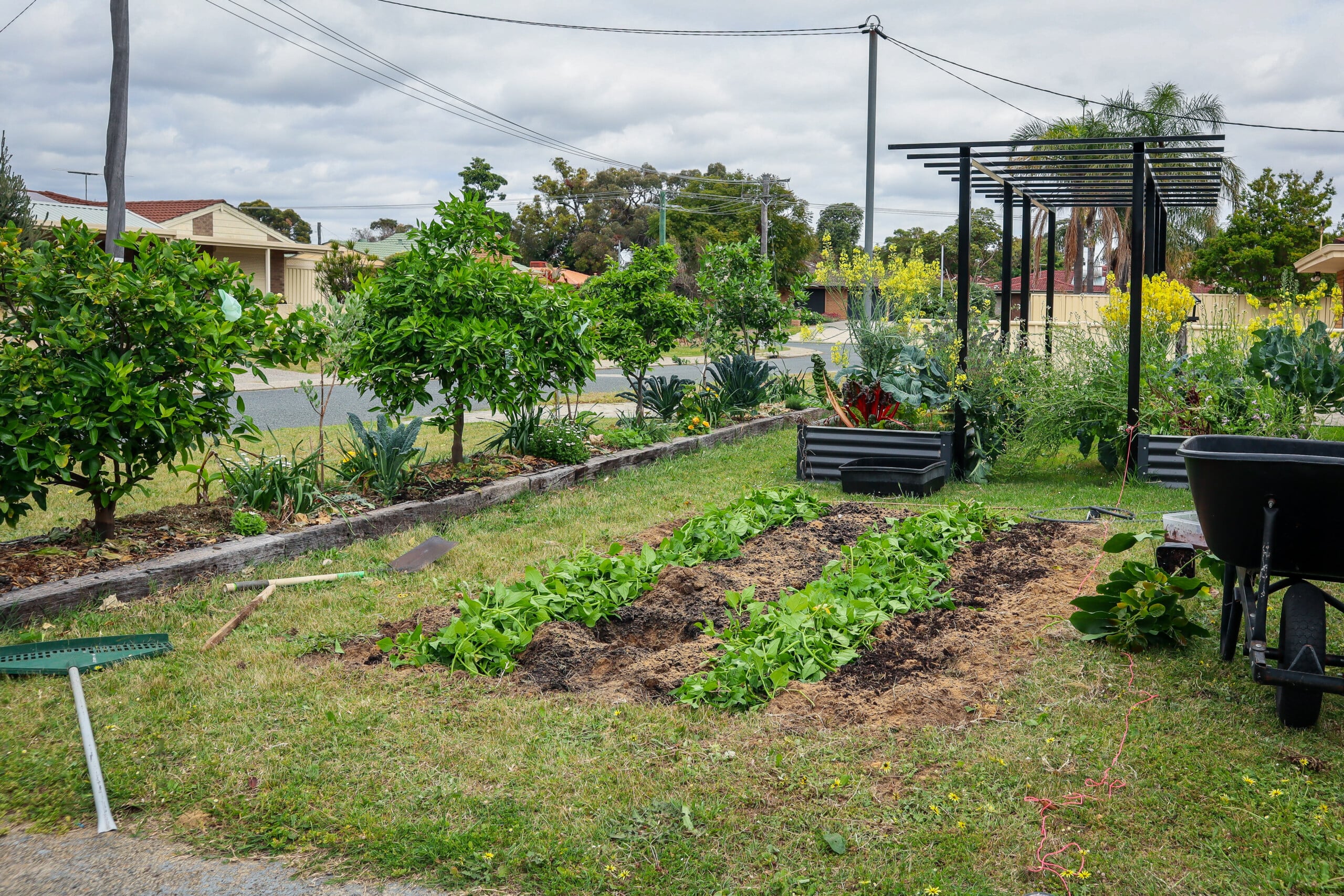
Creating a small wildlife pond in the garden

Creating a small wildlife pond in the garden

Wildlife and beneficial insects are key to creating a sustainable self-sufficient garden. They help form part of a balanced ecosystem and creating a small wildlife pond in the garden is an incredible way to attract them. Wildlife ponds can be a transformative addition to any garden or outdoor space, offering many amazing benefits including beauty, tranquility, and increased pollination. Whether you have a sprawling backyard or a compact urban garden, a small DIY wildlife pond has the potential to create a thriving ecosystem, attract beneficial insects, and help your gardens grow an abundance of food.

Today I’m going to share the process of creating my own DIY wildlife pond including choosing a location, pond plants, and why I have chosen native Australian fish for the pond.

One of the key advantages of having a wildlife pond is the ability to attract beneficial insects. Many of these insects, such as ladybugs, lacewings, and hoverflies, are natural predators of garden pests. By providing them with a water source and a suitable habitat, you can encourage their presence and create a natural pest control system within your garden. No need for harmful chemical pesticides making your garden healthy, thriving, and sustainable.

Click to WATCH the transformation or continue reading below

Planning Your Wildlife Pond

1. Choose a location for your wildlife pond

The first step in creating your small wildlife pond is to find suitable location options. Look for an area that is relatively level and away from large trees or shrubs whose roots may interfere with excavation or cause water quality issues. Consider the overall layout of your garden and how the pond will fit into the existing landscape. Keep in mind that a wildlife pond can range in size from a small, shallow pond to a larger, more expansive water feature, so choose a location that suits the space you have available.

Important things to consider when choosing the location for your wildlife pond:

Sunlight – most pond plants will need 6-7 hours of sunlight per day. This is more important in spring and summer than in winter as many pond plants will slow or die down over winter anyway.

Shade – Shade is also important, especially during the hottest part of the day. Shade will help keep the pond cool, especially in summer and reduce the algae. Adding plants will help shade out the pond.

Water source – Having a water source or hose available nearby is important especially in summer if the pond water gets low or too hot.

Safety and access – Pets or young children – depending on the size of your pond you will want to consider access if you have young children or pets (my water-loving dog would jump in immediately!). It would be worth checking out your local council’s requirements for ponds.

Close proximity to gardens – If you are wanting to attract wildlife to your gardens to help with pollination and pest management then it would be a good idea to have it close to your veggie patch or gardens. Existing gardens will also create wildlife corridors for safe access to and from the pond.

My pond location:

  • Front garden away from my water-loving dog
  • In an existing garden bed for a wildlife corridor
  • Outside my office window to enjoy the aesthetics and tranquility
  • 6-7 hours of sunlight mainly in spring and summer
  • Afternoon shade to reduce heat
  • Beside my main food-producing raised garden beds
  • Hose/water source within 1m of the pond

2. Choosing Your Wildlife Pond Structure

The size and design of your wildlife pond could be determined by the space available or the structure you choose to use. Whether that is a prefabricated pond, pot or barrel pond, or full DIY pond with a pond liner.

I sourced a preformed poly pond that was roughly 1m x1m and 30cm deep. There is a huge range of preformed ponds available to fit a range of spaces. Baths, tubs, and tanks also make great DIY pond structures.

3. Filling and Balancing the Pond

Having a water source nearby is important to be able to top up or cool the pool down during the warmer months. Rainwater would be ideal to fill your pond but if like me, you only have access to mains or system water you will need to do a few extra steps to balance and remove the chlorine.

To condition the water you can either leave it to sit and gas off for 2-3 weeks or you can speed up the process by running an aeration pond pump in the water. The other way to condition the water is to purchase some water conditioning treatment. This is what I did and I also waited two weeks before adding in fish just to be sure and to allow natural bacteria to build up. I also added “splosht” which are small dissolving sachets of good bacteria to help keep the pond clean. The ones I used are made here in Western Australia so it is native bacteria. Speak to your local pond shop to see what will work best for your pond.

4. Introducing Plants to the Pond

Selecting plants for your pond is an exciting time! Firstly, it is important to determine what types of wildlife you would most like to attract to your pond. This will help you select plants to suit and reduce some of the overwhelm.

  • Frogs like lily pad like leaves and grasses or reeds to hide in.
  • Small birds like nectar-producing flowers and dense shrubs to hide in.
  • Bees like a variety of flowers
  • Ladybugs and beneficial insects like pollen-rich flowers such as herb flowers
  • Lizards like low-lying dense ground covers to easily hide in
  • Native wildlife often are attracted to native plants and flowers

Another thing to consider is whether you would like them to all be edible or a mix of both. I chose to plant edibles, natives, and herbs. A wide range of leaf types and plant heights/structures will help encourage a wider array of wildlife to your pond.

There are 4 main types of plants you may like to select for your pond:

Full Aquatic Plants: These grow completely submerged underwater such as Water lilies, and Vallis grass. They are great for deeper parts of the pond and can help oxygenate the water.

Filtration plants: These help keep the water clean and act as natural filtration. These are plants such as: Lebanese Cress, Water Mints, Gotu Kola, Pennywort, Watercress, Kang Kong. Most of these plants like to be partially submerged. I have mine propped up on bricks with 1 inch out of the water.

Marginal Plants: These are plants that can be planted around the edge of the pond or in shallow water. These are plants like: Fairy Lights, Blue Grass, Reeds, Bull Rush, Taro, Water Chestnuts, Mint, Queensland Arrowroot, Iris, Lebanese Cress, Watercress, Thalia, Papyrus, Society Garlic, Sweet Violet, and Moneywort.

Floating cover plants: These plants multiply quickly and cover the surface of the water. This can help regulate the pond temperature and shade out the pond. This can reduce algae and also offer food to many fish. Plants such as: Duckweed, Azolla, Frogbit and Hornwort.

Check out the video for a full tour of the plants I selected for this project.

5. Adding Natural Elements

Natural elements such as logs, rocks, and sticks offer surfaces for wildlife to rest on, cross over or hide under. It is important to make easy access in and out of the water. This will allow frogs, lizards, and bees the ability to get in and out. Shallow areas, ledges, ramps, and varying heights around the edge of the pond will help with this. It will also help your pond blend in and look more natural and integrated within the garden.

6. Adding Fish to the Pond

Adding fish to your pond can help with filtration and keep mosquito larvae in check. Understanding what type of wildlife you would ideally like to attract to your wildlife pond can help determine the type of fish for your pond. I am hoping to get frogs in my pond and many introduced fish such as goldfish or Koi may eat frogs’ eggs. This can be ok in a large pond with more space for frogs to hide and lay eggs. As I have a small pond and would like to encourage frogs, I have decided to go with West Australian Perch and White Cloud minnows that eat mosquito larvae but not the frogs eggs. They are also low maintenance and can handle ponds without pumps.

After purchasing the fish from the pond store, I let the bags sit in the pond water for 5 minutes to let the water in the bag adjust to the pond temperature. I then gently opened the bag and let the fish out. The Minnows dart about on the surface often but the Perch love to hide and I never see them! So that is something to consider.

7. Maintaining Your Wildlife Pond

It is important to regularly check on the pond, especially during the first year as things grow and temperatures change. Observing will allow you to see what types of wildlife are using the pond and what changes or additions you could make. Adding a small pump or water fountain will also help keep the pond cool and reduce algae. I do plan to add a solar pump and fountain eventually.

  • Scoop out dead leaves or excess algae
  • Top up water in summer if needed
  • Regular top-ups of “Splosht” good bacteria or similar
  • Repotting plants or managing overgrowth

8. Adding Solar Lights

I decided to add solar lights to the pond as it is outside my office window and is nice to view during the evenings when I’m working late. I selected floating solar lights and also spotlights to point at feature plants. The fun thing about these lights is that I can change the colours and turn them on and off via a remote. The floating lights also offer more protection for the fish whilst the plants are established.

Solar Floating lights

Solar Spotlights

Just like the rest of your gardens your pond will change and develop over the seasons and the years. It will require some tweaking and editing as you go to find a good balance. There are so many amazing reasons to create a wildlife pond for your gardens.

By creating a wildlife pond, you are not only providing a habitat for a variety of natural life but also fostering diversity in your surroundings. These ponds act as sanctuaries for a wide array of wildlife, including frogs, lizards, birds, dragonflies, and beneficial insects such as bees and butterflies. These creatures play essential roles in pollination, pest control, and maintaining a balanced ecosystem.

Links included in this description might be affiliate links. If you purchase a product or service with the links that I provide I may receive a small commission. There is no additional charge to you! Thank you for supporting my blog so that I can continue to provide you with free content.

Sautéed Rainbow Chard on Toast with Feta, Crispy Sage and Pickled Onions

Sautéed Rainbow Chard on Toast with Feta, Crispy Sage and Pickled Onions

Sautéed Rainbow Chard is a quick and easy way to prepare a nutritious side of greens. This recipe is fresh, vibrant and so so delicious! Infused with garlic, lemon zest and topped with Crispy Sage and pickled onions this is the Ultimate garden-to-plate breakfast (lunch or dinner!). The pickled onions are best to make at least the day before so they have time to infuse and pickle.

Sautéed Rainbow Chard on Toast with Feta and Crispy Sage

Sautéed Rainbow Chard on Toast with Feta and Crispy Sage

Yield: serves 2
Prep Time: 20 minutes
Cook Time: 10 minutes
Total Time: 30 minutes

Fresh, nutritious and full of flavour, this garden-to-plate breakfast is easy and delicious! Make the most of the Rainbow Chard season.

Ingredients

  • 2-3 garlic cloves
  • 1 TSBP butter (or olive oil)
  • 1 tsp lemon zest
  • 3-4 Rainbow chard stalks and leaves
  • 2 TBSP Feta (or add halloumi or cottage cheese)
  • 2 TBSP Pepitas/ pumpkin seeds (or sunflower seeds)
  • Pickled red onions to serve (see recipe below)
  • 2-4 Eggs (optional)
  • Salt to season
  • 4 pieces Sourdough

Instructions

  1. Peel and finely slice garlic. Add to a pan on medium heat with butter. Cook for 2 mins.
  2. Roughly slice Rainbow chard stalks (1cm chunks) and add them to the pan. Cook for a further 2 minutes.
  3. Chop leaves and keep to the side.
  4. In another pan fry the eggs to your liking.
  5. Add chard leaves to the garlic and stalks and cook for 1-2 mins until wilted. Stir through Lemon zest and season with salt.
  6. Turn the oven grill on to 180 degrees. Drizzle Sage with olive oil or butter and place on an oven tray along with Pepitas. Toast under the grill until slightly golden watching carefully as this will take less than 1 minute. Alternatively, this can be done in the pan along side eggs.
  7. Toast sourdough and butter.
  8. Place two pieces of toast on each plate and evenly distribute rainbow chard mix, crumble on feta, top with eggs, sprinkle on toasted pepitas, and top with Red Pickled Onions.
  9. Add edible flowers for colour - I used Cornflowers and pea shoots.

Notes

The pickled onions are best to make at least the day before so they have time to infuse and pickle.

simple pickled red onions

Simple Pickled Red Onions

Prep Time: 10 minutes
Cook Time: 2 minutes
Total Time: 12 minutes

Quick and easy pickled red onions add flavour to any meal. Add your seasonal garden herbs such as Fennel, Dill or Chilli to boost the flavours.

Ingredients

  • 3 Red Onions
  • 1/4 cup Apple Cider Vinegar
  • 1/4 cup White Vinegar
  • 1 1/2 TBSP Raw Sugar*
  • 1 1/2 tsp Salt
  • 1 cup Water
  • 1/2 tsp Chilli flakes (optional)

Instructions

  1. Finely slice the red onions - using a mandoline is the easiest option.
  2. Cram as many red Onions into a clean sterilised jar.
  3. In a saucepan add the vinegar, sugar, and salt and stir until the sugar has dissolved and the mix starts to simmer.
  4. Add any extra flavours to the jar such as chilli, fennel flowers, fennel fronds, fennel seeds, mustard seeds, or peppercorns ( 1tsp per jar).
  5. Pour over the liquid and secure the lid.
  6. Allow cooling for one hour and place in the fridge.

    Notes

    To sterlise the jars place in a hot dishwasher run or wash and heat in the oven for 10-15 minutes at 110 degrees Celsius.

    You can swap and use just one type of vinegar if you prefer.

    *Swap to honey (1 1/2 TBSP)

    Add herbs or spices for extra flavour

    Use within 3 weeks.

    YouTube video
    How to Grow Sage – The Ultimate Garden-to-Plate Guide

    How to Grow Sage – The Ultimate Garden-to-Plate Guide

    How to Grow Sage

    Learn how to grow Sage with this Garden-to-Plate Guide and preserve this staple herb. Sage (Salvia officinalis) is a hardy perennial herb found in many home gardens. Sage is known for its soft fleshy leaves and has a long history in plant medicine. Sage is a great addition to your kitchen garden due to its culinary flavour-enhancing qualities along with a long list of medicinal values.

    Sage also produces beautiful flowers and is a great pollinator-friendly plant.

    What parts of Sage are edible?

    Quick Tips on How to Grow Sage at Home

    PLANT

    Plant in Spring or Autumn

    SOIL

    Free-draining soil.

    LOCATION

    Full sun – part shade. Doesn’t like wet soggy ground.

    CARE

    Prune if it gets too woody to promote new growth.

    FERTILISE

    Feed with compost and keep well mulched.

    PESTS

    Aphids, snails, spider mites.

    HARVEST

    Harvest as needed, early morning or evening.

    REGROW

    Seed, cuttings and splitting the clump.

    Why Grow Sage?

    Here are some of the many reasons to grow Sage

    • Hardy, low-maintenance herb
    • Perennial
    • Ornamental and edible
    • Flavour-enhancing culinary herb
    • Low-lying food forest layer
    • Pollinator-friendly
    • Can have Antimicrobial qualities
    • Can have Antiseptic qualities
    • Can have Anti-inflammatory qualities

    Popular Sage Varieties

    Sage is part of a huge Salvia family, but for this grow guide, we are just focusing on the common Sage – Salvia officinalis

    Common – Silvery grey, slim leaves. Bright purple flowers.

    Variegated – Striking gold and green variegated leaves. Adds a beautiful contrast to the garden.

    Purple – Dark green and purple leaves, this variety can get a bit lost in the shadows. Beautiful colour and has great flavour.

    Tri-coloured – Stand-out colour and patterns with green, silver, white, and purple/pink tones.

    White-edged – Stunning white and silver variegated leaves.

    Berggarten – Broad, silvery green leaf popular for culinary uses. Does not flower often. Compact shrub.

    QUICK TIPS ON HOW TO GROW SAGE

    • Choose a sunny location
    • Mulch
    • Prune in spring to encourage new growth
    • Avoid wet or boggy situations
    • Take cuttings to repopulate easily

    When to Plant

    Ideally, plant your Sage in Spring, although you should be able to plant seedlings throughout the year. Protect young plants in the heat of summer and allow plenty of sun over winter.

    Top Tips on How to Grow Sage

    • Plant sage seedlings in a warm sunny position. If you live in a wet or humid climate, it can be a good idea to grow sage in pots and containers. This allows you to move it about to reduce the time it stays wet.
    • Dig a hole twice as big as the pot and loosen the roots if they are tightly bound.
    • Mulch to regulate temperatures and reduce weeds. Give it a water.
    • Sage grows quite slowly from seed. Plant in spring.

    How to Care and Maintain Sage

    Feeding

    Sage is quite low maintenance but can benefit from compost tea or worm tea in Spring and Autumn.

    Watering

    Sage doesn’t like wet feet. If you live in a wet climate, it can be a good idea to plant on mounds so excess water can run off.

    Pruning

    Once Sage has finished flowering, it can be a good time to prune back the flower stems and older growth.

    Pests / Disease

    Caterpillars, snails, aphids and slaters can eat your Sage plants, especially when they are young or in Spring with new growth. Check out Natural pest management for more tips.

    How and When to Harvest Sage

    The great thing about growing Sage is that you can harvest small amounts throughout the year. Pick individual leaves or shoots as needed. Sage can also be harvested and dried to use throughout the year.

    Reproducing Sage

    Sage does send off sideshoots that can be split off the main plant. This is the quickest and easiest way to reproduce sage from an established plant. Cuttings are the next best way. Choose stems with semi-hard wood and place them in a jar of water or moist soil to send off roots. Remove larger leaves and keep 2-3 at the top to reduce energy and moisture loss.

    Ways to Cook and Use Sage

    Sage is commonly used to add flavour to roast veggies but there are so many delicious ways to use Sage.

    Sage pairs well with: Garlic, Butter, Apple, Blackberry, Chard, Potato, Parsley, Chilli, Pear, Onion, Tomato, Pumpkin, Squash, Beans, Asparagus, Rosemary, Eggs,

    Sage ideas:

    How to Preserve your Sage Harvest

    Sage can easily be dried to use throughout the year. Lay flat on a rack or hang upside down in a dry, dust-free area. Alternatively, dehydrate sage on low at 40 degrees Celsius.

    IMPORTANT

    Sage is best used in moderation. Avoid if pregnant and breastfeeding, as Sage has been known to reduce milk production. Seek guidance from medical professionals.

    Sage Posts

    Previous Feature Plants

    How to Grow Feijoa / Pineapple Guava – The Ultimate Garden-to-Plate Guide

    How to Grow Feijoa / Pineapple Guava – The Ultimate Garden-to-Plate Guide

    How to Grow Feijoa

    Learn how to grow Feijoa and what to make with their abundant crops! Feijoas or Pineapple Guava (Feijoa Sellowiana) are an abundant-producing fruit tree with green, sweet-tasting fruit. The trees are evergreen with dark green and silver foliage. Feijoas are easy to grow and, due to their thick foliage, they make a great screening tree or edible hedge!

    This fruit tree is a prolific producer and can grow in a range of climates from temperate to subtropical, but grows best from zones 8-11.

    What parts of Feijoa are edible?

    Quick Tips on How to Grow Feijoa at Home

    PLANT

    Plant in Spring or Autumn

    SOIL

    Free-draining compost.

    LOCATION

    Warm sunny location at least 6-8 hours of sun

    CARE

    Prune for size in autumn. Keep well watered in summer when fruiting.

    FERTILISE

    Feed with compost and keep well mulched.

    PESTS

    Rats, fruit flies, birds, guava moth, possums, scale.

    HARVEST

    Ripe when they fall from the tree. Collect daily.

    REPRODUCE

    Can grow from seed but best results are from grafted plants.

    feijoa

    Why Grow Feijoa?

    Here are some of the many reasons to grow Feijoa

    • It produces in abundance!
    • It is self-fertile
    • Evergreen – ornamental all year round
    • Delicious juicy fruit that are sweet with a perfumey flavor
    • Green fruit, which is harder to see from pests
    • Hardy tree – easy to grow
    • The whole fruit is edible!
    • Flowers are edible
    • Foliage is said to have fire-retardant qualities
    • Drought tolerant
    • Dense foliage can be pruned into a hedge for screening areas

    Popular Feijoa Varieties

    Feijoas are commonly sold as seedling plants under the name Pineapple Guava or Feijoa Sellowiana these will perform with mixed results and can take 6+ years to start fruiting. Choosing a grafted or named variety will offer a quicker-producing tree that will be true to type. Varieties will vary from country to country.

    Duffy – Medium – large-sized fruit. Popular all-around variety.

    White Goose – Large fruit with juicy white flesh. Early season fruiting that can last quite a long time.

    Mammoth – Large round fruit with thick wrinkled skin. Can benefit from a pollinator tree. Tall upright tree.

    Apollo – Medium – large oval fruit. Smooth light green skin. Tall upright tree. Semi-self-fertile – benefits from another pollinator tree.

    Unique – Medium-sized fruit. Smooth, juicy, and sweet. Starts fruiting from a young age.

    Triumph – Medium-sized fruit. Slightly gritty but good flavour. Late season bearing.

    Nazemetz – Large oval/pear-shaped fruit. Smooth skin with sweet flesh. Self-fertile but will bear heavily with cross-pollination.

    QUICK TIPS ON HOW TO GROW FEIJOA

    • Choose a named variety (x2 different ones for bonus pollination)
    • Choose a sunny location
    • Add plenty of compost
    • Mulch
    • Ensure plenty of water during fruiting (summer)
    • Fruit is ready in Autumn

    When to Plant Feijoa Trees

    Plant your Feijoa plants in Spring or Autumn to avoid added stress from summer and winter temperatures.

    How to Grow Feijoa

    To plant your Feijoa, pick a sunny spot, they like full sun for 6-8 hours at least. And quite a bit of space, as these trees will grow quite large (2-5m). You can prune them back heavily though, so it’s not a major issue. They will also grow well in a large pot.

    Dig a hole twice as big as the pot and mix a little compost in with the soil. If your plant has tightly bound roots, free them up before planting them out. Firmly pack the soil back around and cover it with mulch. Just pull back the mulch from the trunk so you don’t rot the trunk. Feijoas have shallow feeder roots so keep weeds and plants at a minimum under the tree line.

    Give it big water! Now you basically don’t have to do anything for the first couple of years except keep it watered, especially during the dry season. You may get flowers in the first year or it makes take a couple of years until it is established enough to put out flowers. It flowers in spring and the fruits are usually ready and ripe in Autumn.

    How to Care and Maintain Feijoa Trees

    Feeding

    Once your tree is established and starting to flower and fruit you can look at more fertilizing and watering. You can feed your plants near the end of winter, spring, and summer with compost or worm teas, or liquid seaweed. I don’t do a lot of feeding but I do chop and drop the prunings and add layers of mulch each year.

    Watering

    Another key tip is to ensure your plants get plenty of water during summer and late summer as the fruits are developing. This is something we struggle with here in Perth because we basically get no rain in summer. This last summer was so dry in Perth, and my trees were loaded with fruit. I obviously didn’t water them enough for the amount of fruit they had and the results are a strange hollow center. The fruit still tastes delicious, just not quite as juicy as it should be.

    So I will have more mulch and more water next season. From memory, I was only hand watering max twice a week, and it was extremely hot here, so I’m not surprised really.

    Pruning

    Once your feijoas have finished fruiting, and you have picked up all the dropped fruit. It can be a good time to prune your trees if you want. I like to prune mine each year so that the fruit is always within reach. Otherwise, it ends up over the neighbor’s fence or is bruised from falling so far to the ground. Feijoas love a prune and it can actually improve fruiting. I cut back about 20-30% each year and I find that it grows back about that much so my trees stay relatively the same height by doing this.

    Plus, by cutting back 20% of the tree, I get a whole lot of green material to chop and drop. In my food forest-style garden, I don’t remove anything so all prunings go directly back into the garden. I prune using hedge shears or loppers for larger branches and then run them through my small mulcher. You can also chop them into small pieces, then lay them around the trees. This will break down and act as a natural fertilizer.

    Pollination

    You may notice lots of small birds in your trees when they are flowering. Don’t worry as they are helping pollinate the flowers. They harvest the nectar and also eat the petals but generally allow the main flower to stay put and fruit. Bees and small birds are the main types of pollinators.

    One tree will still perform amazingly as they are self-fertile but having multiple just increases your harvests. It can also extend your season. Meaning different varieties take longer or shorter to flower or ripen and you can get extended harvests.

    One thing to note is that feijoas ripen quickly and in bulk. So they come in hard and fast.

    Pests / Disease

    Rats and possums will love your fruit, and also parrots and birds. You may want to net or bag fruits if you are worried. I definitely have rats and parrots but so far I haven’t needed to bag fruit as they are doing minimal damage to my large harvests. Fruit flies and guava moths are also a problem in other areas. Again, this would mean you need to bag the fruit or net the tree when the fruit is young before they get stung.

    How/ When to Harvest Feijoa

    Now comes the fun part – harvesting. How do we tell when the fruit is ripe if it remains green? Well, it falls off the tree. So each morning, you can go out and pick up all the fruit from the ground. It is important to pick all the fruit up because otherwise, you will attract pests like rats and possums, or fruit flies. Feijoas do continue to ripen off the tree so you want to eat them quite quickly or use and preserve them. I like the tartness of fresh feijoas, and they get sweeter and more perfumy as they ripen, which is why I never like feijoas from the stores, as I find them too overripe.

    Most people will cut the fruit in half and scoop out the inside to eat but you can eat the whole fruit. Especially when they are quite ripe the skin is sour and the inside is sweet it has a nice balance.

    Reproducing

    Ripe feijoas may have small brown seeds inside. These can be planted in moist soil. Feijoas do not grow true to type from seed so they may produce fruit different from the one you saved the seeds from.

    Ways to cook and use Feijoa

    Feijoas are delicious when eaten fresh off the tree. You can eat the whole fruit or cut it in half and scoop out the insides. Once they fall from the tree, they may still be a little tart. Allow them to ripen for a few days, and they will become softer, sweeter, and juicier. However, they will continue to ripen and become over-ripe. Fruit flies may also find them on the bench, so I like to keep them in the fridge.

    Feijoa flowers are beautiful, and the petals are edible. I saved a bunch to add to teas. Just carefully remove the soft white and pink petals without removing the whole flower.

    Feijoa pairs well with: Ginger, Coconut, Apple, Cinnamon, Chilli, Citrus, Pear, Nuts, Dark chocolate, Yogurt

    Feijoa ideas:

    • Juices
    • Smoothies
    • Cakes
    • Jam
    • Crumble
    • Muffins
    • Icecream

    Preserving your Feijoa Harvest

    Feijoa trees, once mature, will produce bucketloads of fruit! They can be frozen to use in smoothies and juices or baking, or preserved in jams, chutney, alcohol infusions, and bottled.

    More Feijoa Tips and Recipes

    Other Grow Guides

    Shady situations: How to grow food in a shady garden 🌿 Homegrown Podcast

    Shady situations: How to grow food in a shady garden 🌿 Homegrown Podcast

    Our gardens will inevitably get shadier as mature trees start to grow. We will also get more shade in our gardens throughout the year during different seasons. In this episode of the Homegrown Podcast, we will discuss how to grow food if you have areas of shade in the garden. What to plant, how to maximise production and minimise disease.

    Be sure to subscribe for future episodes.

    Listen on Apple Podcast: click here

    Listen on Spotify: click here

    Watch the episode

    YouTube video

    More posts you might like

    A Guide to Growing Citrus

    A Guide to Growing Citrus

    Citrus are a fantastic addition to a home garden because they are hardy, quite forgiving, and easy to use in the kitchen. Here in Perth Citrus grow very well due o our warm sunny climate and sandy soils. Citrus are sun lovers and require at least 6 hours of sunlight per day. They are not a fan of frosts and extremely cold weather. If you do get harsh winters you could try growing citrus in a pot so that you can move it to a warmer location for the winter months. In this guide we will go through all of the steps to growing and taking care of your citrus trees so that you can get delicious and abundant crops of fruit each year.

    Types of Citrus

    Not all citrus are made equally and each type will have slightly different needs. It is important to look into this when choosing which citrus and also which variety is right for you and your garden.

    These guidelines are general in nature and more suited to your classic citrus such as Lemon, Lime, Orange and Grapefruit. Citrus such as native finger limes are a little more delicate and have different feeding and sunlight requirements.

    Top Quick Tips

    • Choose a sunny location
    • Prepare soil with compost
    • Loosen roots to ensure it is not root bound when planted
    • Feed regularly with compost, liquid fertilisers, and mulch
    • Check for gall wasps in Autumn and winter
    • Check no shoots are growing from below the graft line!
    • Mulch and keep weed-free around the base of the citrus
    • Remove mulch from directly touching the trunk

    WATCH the masterclass

    YouTube video

    Choosing a location

    Citrus are sun lovers and require 6+ hours of sunlight per day. Citrus grown in the shade can still fruit but will be less productive and more susceptible to fungus and disease.

    However, here in Perth, dappled summer shade in the afternoon could work well to help protect the trees from our harsh summer sun.

    Protection from the wind is also desired so that flowers don’t get blown off before they have had time to set as fruit.

    Consider the size of the tree for the location you have chosen. Most varieties of citrus are available as dwarfing which means they will grow to a maximum height of 2m. This can be a good idea for small urban blocks.

    Soil

    Citrus like free-draining soil and don’t like having waterlogged or boggy roots. This can quickly lead to root rot. They also prefer soil that is neutral in pH.

    To prepare your soil dig a hole that is twice the size of the pot your tree has come in. You may want to add compost and composted manures (chicken, horse) to amend your soil. Make sure you mix in the soil amendments with your natural soil so that it isn’t a dramatic transition.

    For sandy soils: add in some compost and mix it through the sandy soil so that it is free draining but now has a little extra nutrition.

    For Clay soils: Add in compost and sandy soil to help create a more free-draining patch. It would also be beneficial to mound the soil up so any excess water drains away from the dree to help reduce clay-bogged soil.

    Note: do not put any fertilizer in the hole as this will burn the roots.

    When to plant Citrus Trees?

    The ideal time to plant out your new citrus tree is in Spring after any chances of frosts and passed. This will give the tree time to get situated before summer. Avoid planting citrus (or any trees) during the peaks of summer. It is already stressful enough for the plant without adding in extreme temperatures. If you buy or receive a citrus tree during summer, keep it in a pot and ensure it doesn’t dry out, or plant it in a larger pot and keep it somewhere protected from summer sun until Autumn when it is safer to plant out.

    How to plant out your potted plant?

    1. Firstly make sure you water your plant well – place a tray underneath for it to absorb the water.
    2. Have your hole prepared (twice as big as the pot).
    3. Carefully squeeze the sides of the pots and start to pull the tree out by holding the stem at the base.
    4. Gently loosen the soil around the sides to allow the roots to spread out once it is planted. If your plant is root bound and all the roots are tightly wrapped in the shape of the original pot, you will need to tear away some of the roots to break it free from it’s confined shape. Use the hose to blast away some of the soil and this can also help free up the roots. If you do not break up the roots around the side the plant will remain tightly bound and will not be able to expand and grow.
    5. We the soil with a hose and place the plant in the hole and push the soil back around it. Compact the soil down by gently using your foot.
    6. It can be a good idea to stake your tree for extra support so that it grows straight and doesn’t snap in any strong winds.
    7. Give the tree good water.
    8. Mulch around the base. Wet cardboard can help keep weeds away and then add mulch on top. Mulch out as far as the leaves spread on the tree. Pull back the mulch from about an inch away from the trunk so that it doesn’t rot.
    9. Give your tree consistent water but always check first to see if the soil is moist so as to not overwater it.
    10. It is generally advised to remove fruit for the first 3 years so that the tree can establish strong roots and branches. You will often find the tree will naturally drop fruit itself in the first few years.

    Feeding

    Mulch around citrus, especially below the canopy line. Citrus have shallow feeder roots so they can dry out, overheat or get too cold if their roots are exposed.

    Citrus are quite heavy feeders but young trees in the first year won’t need much if any fertiliser. Use compost, compost teas, worm teas, chicken manure or bedding, and slow-release citrus fertilisers. You can feed citrus every 6 weeks from August to February.

    Citrus are very good at telling you what nutrients they are missing by the colour of their leaves. Yellow tips, veiny patterns, brown patches, or yellow leaves that drop off. Sometimes it may just be that the pH of the soil is not right or the soil temperatures are too low for the plant to absorb nutrients. This is why our trees often look a little sad after winter.

    May deficiencies can look similar to a balanced NPK fertiliser or regular feeds of compost teas and natural liquid fertilisers can help reduce the chances of deficiencies.

    Some of the common issues are:

    Lack of Nitrogen – Leaves turning yellow and dropping off. Often caused by excess rain or not enough nutrients being added. Sheep pellets, composted animal manure, garden compost and lawn clippings can help.

    Lack of Magnesium: Leaves start to look yellow in patches, tie-dye effect but the base or centre of the leaf remains the greenest. This appears mainly in older leaves. To add magnesium to your plant apply a feed of Epson salts. These can be purchased from the plant store and will have the directions and amounts listed. Usually, 1-2 tsp dissolved in hot water then added to 1L of water per tree. This can also be sprayed on the leaves for a quicker effect but do not do this before a hot sunny day.

    Lack of Potassium: Potassium or potash is what helps our flowers and fruits form. Banana peels, wood ash (white part used sparingly) or potassium sulphate.

    Heavy rain and temperatures can also affect how nutrients are absorbed so don’t stress too much, often these correct themselves as rain eases or temperatures rise again. balanced regular feeding of compost and increasing diversity helps.

    Watering

    Citrus like regular and consistent watering. 1-2 times a week in warmer months. It is important that citrus get plenty of water when starting to form fruit. Drip irrigation, weeper hose or other slow-release watering can help to allow water to soak in. Mulching will help retain moisture and temperature around the plants.

    Pests and diseases

    Citrus are quite hardy and as long as we keep up the nutrition and they have enough sunlight they can usually shake off most pests.

    A few to look out for are:

    Gall Wasps: These lay eggs in the branches of your tree and swell to look like little lumps. Often we don’t notice them until late summer and autumn. It is important that we remove these during winter before the eggs hatch. You can tell if they have hatched because they leave little exit holes in the lump. The lumps should be removed and ideally burnt. If not secure them in a bag and tie them tight so if they hatch they cannot escape. leave it in the sun for 4 weeks if possible to kill off the larvae. DO NOT put in the compost. If wasps are allowed to hatch they will start to infect your neighbours trees and then you will have more and more issues each year as the surrounding trees get left unchecked. Be aware that removing a lot of branches will affect the following year’s production.

    Avoid excess fertilizer in spring or late winter can cause big flushes of new growth. This is what they love to lay eggs in.

    Citrus leaf miner: This moth lays eggs and the larvae leave silvery wiggle marks on the leaves similar to a snail trail. Remove affected leaves, especially on young growth. dispose of in a similar way to the above.

    Aphids: Aphids will attack new growth, especially in the warmer months. When possible spray them off with a hose to reduce the population. Eco neem oil or dishwashing liquid and water can be applied to the new growth if the infestation is bad or reoccurring.

    Sooty Mould: This is a black mould that looks a bit like the plant has been burnt. Sooty mould doesn’t really affect the plant but it is a clear indicator that something else is going on. Usually, this means your tree is being attacked by aphids or spider mites. Once you clear up this issue the sooty mould will dry up and fall off.

    Encourage beneficial insects by increasing diversity and flowers to the garden.

    Pruning

    The great thing about citrus is they don’t require any special pruning. You can prune your trees to shape or keep them at a manageable height. The best time is late winter to early spring once the tree has finished fruiting. Use sharp, clean cutting tools and don’t cut more than 20%. You do not want to do an overall “hedge” prune as this will affect the next season’s harvest. Select specific branches that need to be cut back for height or shape.

    Grafted fruit trees are when a delicious variety is attached to the roots of a vigorous growing variety. Most citrus will be grafted.

    Keep an eye on the graft line and always remove shoots or suckers that appear below the graft. The graft line is usually easy to see as it will have a different texture and often a different width. This is most important in the first few years of planting the tree. You do not what the graft to grow or it can overtake your tree and kill off the actually selected variety.

    How to tell if the rootstock is taken over?

    Citrus rootstock often has very sharp spikes. The leaves will be a different shape too. They are usually bush lemons and will produce no fruit or small dry tasteless lemons. Always check below the graft line to ensure all rootstock shoots are removed.

    Harvesting

    Use sharp secateurs to harvest your fruit rather than ripping off the tree and causing damage to branches. The best way to tell f citrus is ripe is to try one and see. Fruit often take 9-12 months to ripen. Fruit can be left on the tree so that you can eat them fresh as needed. Until they start to fall or you are getting excess rain. Large downpours of rain can cause citrus to burst open and split.