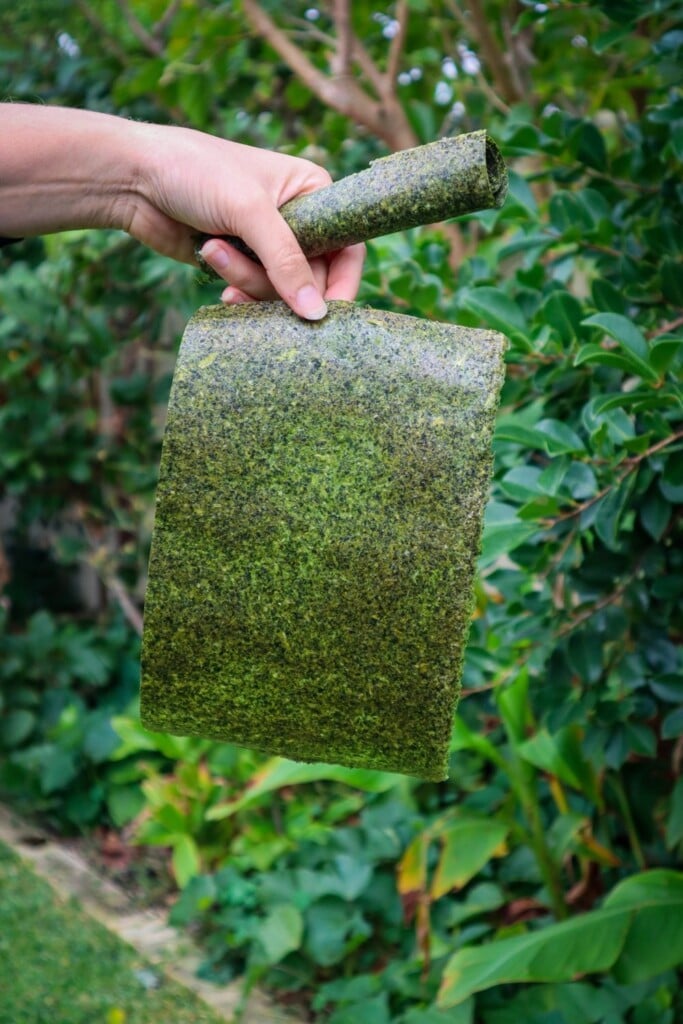
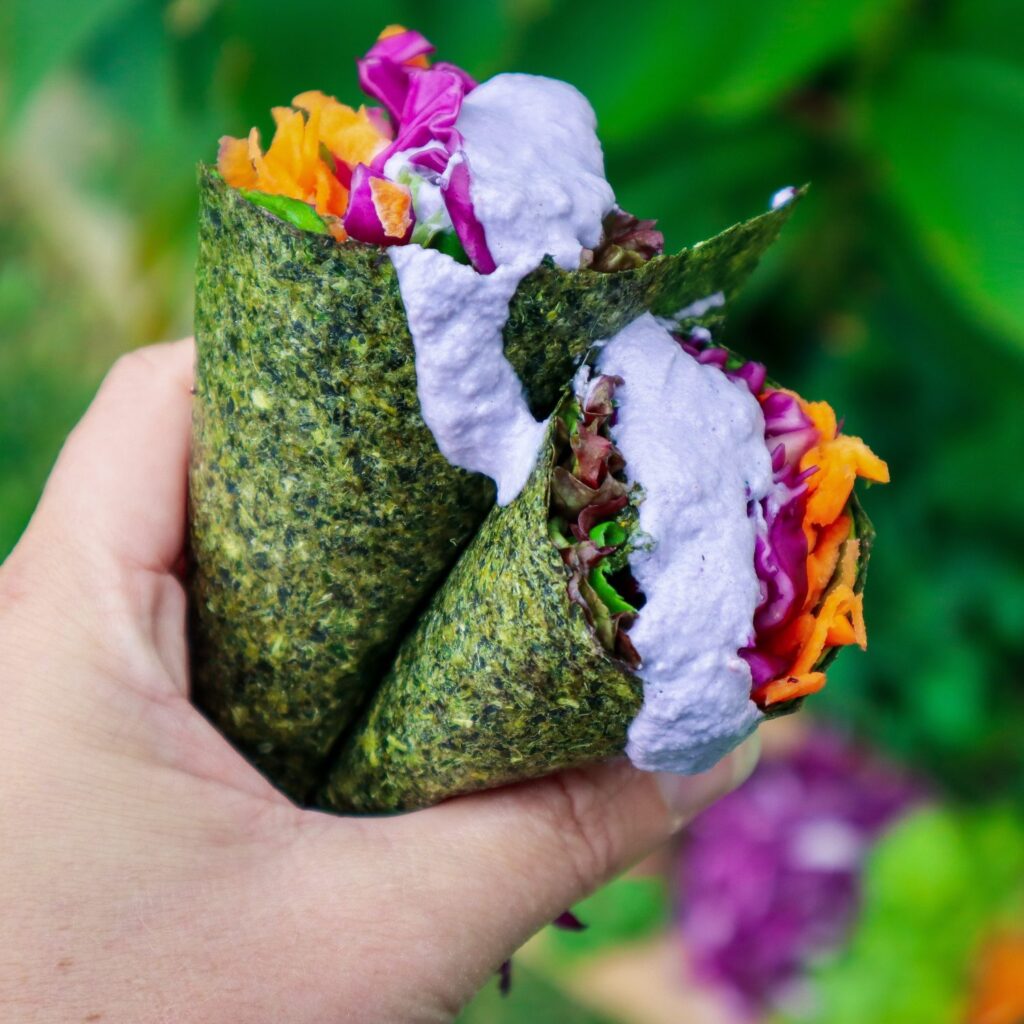
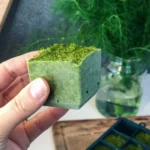
Looking for a healthy, homemade wrap alternative? These DIY spinach sushi wraps are a delicious and nutritious way to use up garden greens and create quick, wholesome meals. Whether you follow a gluten-free, low-carb, or plant-based lifestyle, these wraps are a game-changer. Made from fresh spinach, herbs, and garden vegetables, they’re packed with nutrients and completely free from preservatives and additives.
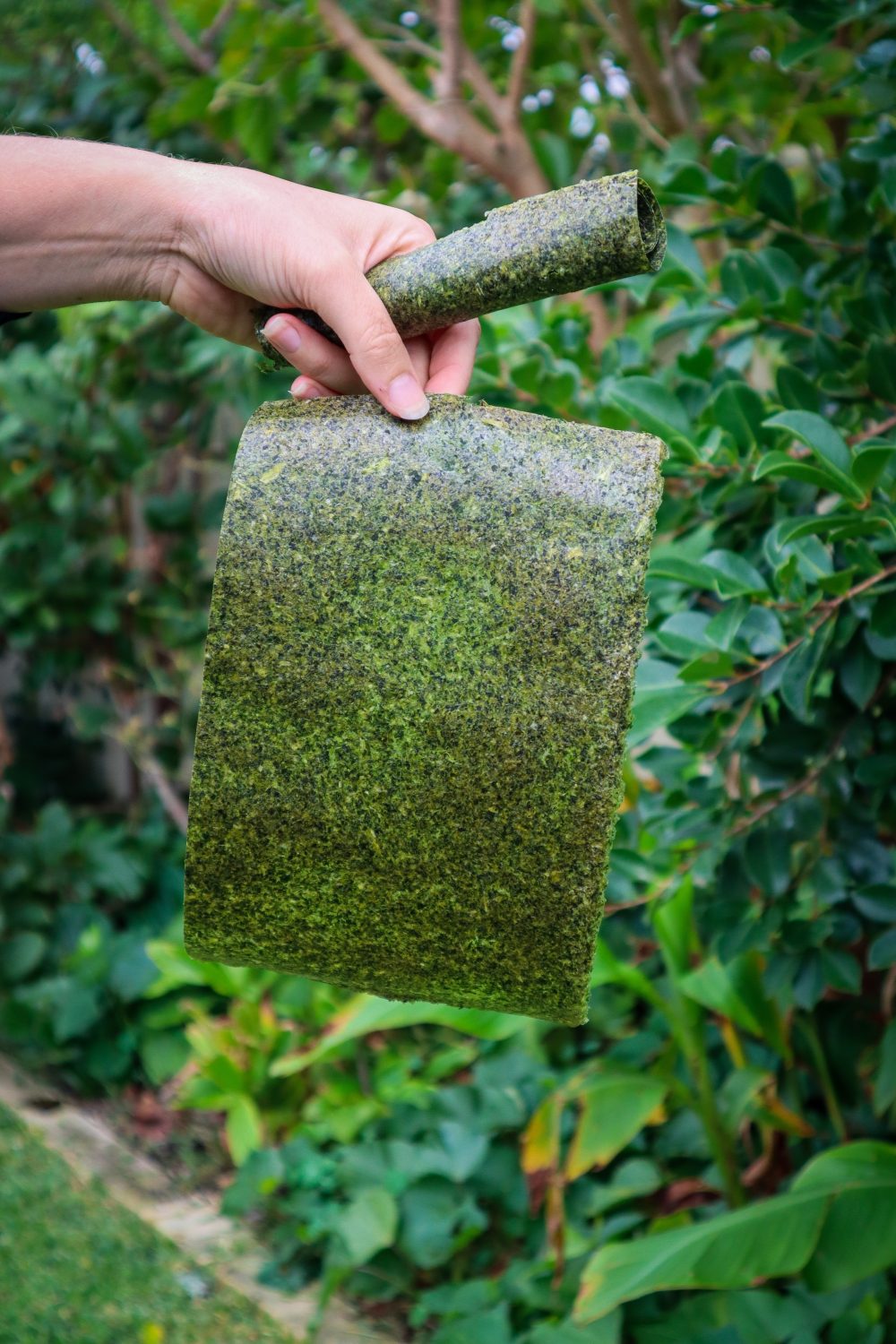
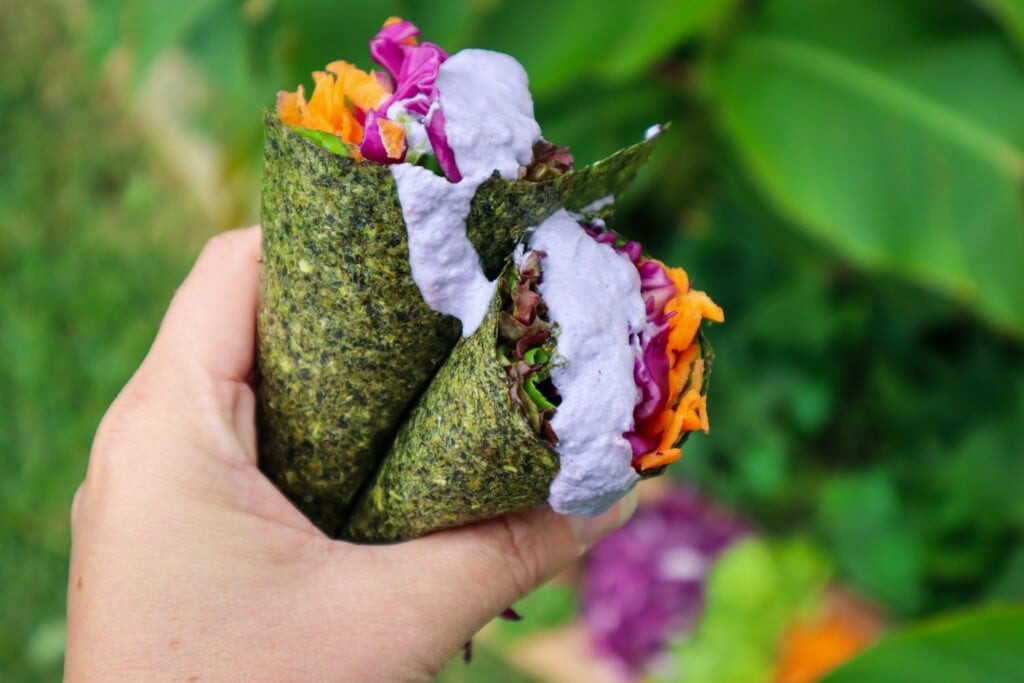
These wraps have the texture of nori but are 100% vegetable-based. Use them for sushi, wraps, or as a healthy tortilla alternative. This is the perfect recipe for zero-waste gardeners who want to make the most of their seasonal harvests. I am so impressed with how amazing these are!
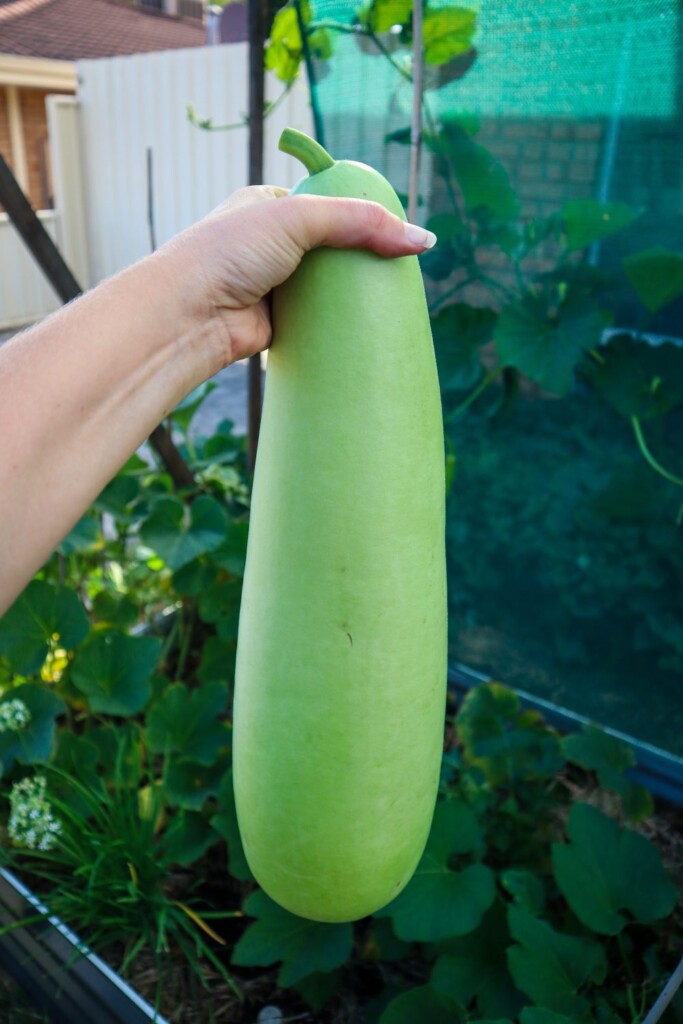
These dehydrated spinach sushi wraps taste and feel just like the real deal but I know exactly what is in them. Use excess garden greens along with bottle gourd or zucchini to make a batch of sushi wraps for a quick and easy lunch. Like most of my recipes, you can mix and match different greens and herbs depending on what’s in season or in abundance in your garden.
Garden Vegetable Variations
Don’t have spinach? No problem. Try other leafy greens such as:
NZ spinach (Tetragonia)
Swiss chard
Rocket/arugula
Sweet potato leaves
Amaranth greens
You can even mix in edible weeds like chickweed or purslane for extra nutrition.
Recipe Notes
Psyllium Husk helps bind the mixture and gives flexibility.
Herbs are optional but add great flavor.
Dehydration Time varies depending on water content and thickness.
Spinach “sushi” wraps
Easy way to preserve excess produce and have wraps on hand for a quick garden-to-plate lunch when you need it.
Rinse the greens and quickly blanch for 30 seconds in hot water then transfer to iced water to cool.
Strain and add to a mixer or blender. (use the blanching water on the garden once it has cooled down)
Peel Bottle gourd using a vegetable peeler, remove the center seeds and pith then chop into 2-3cm cubes. If using zucchini there is no need to peel.
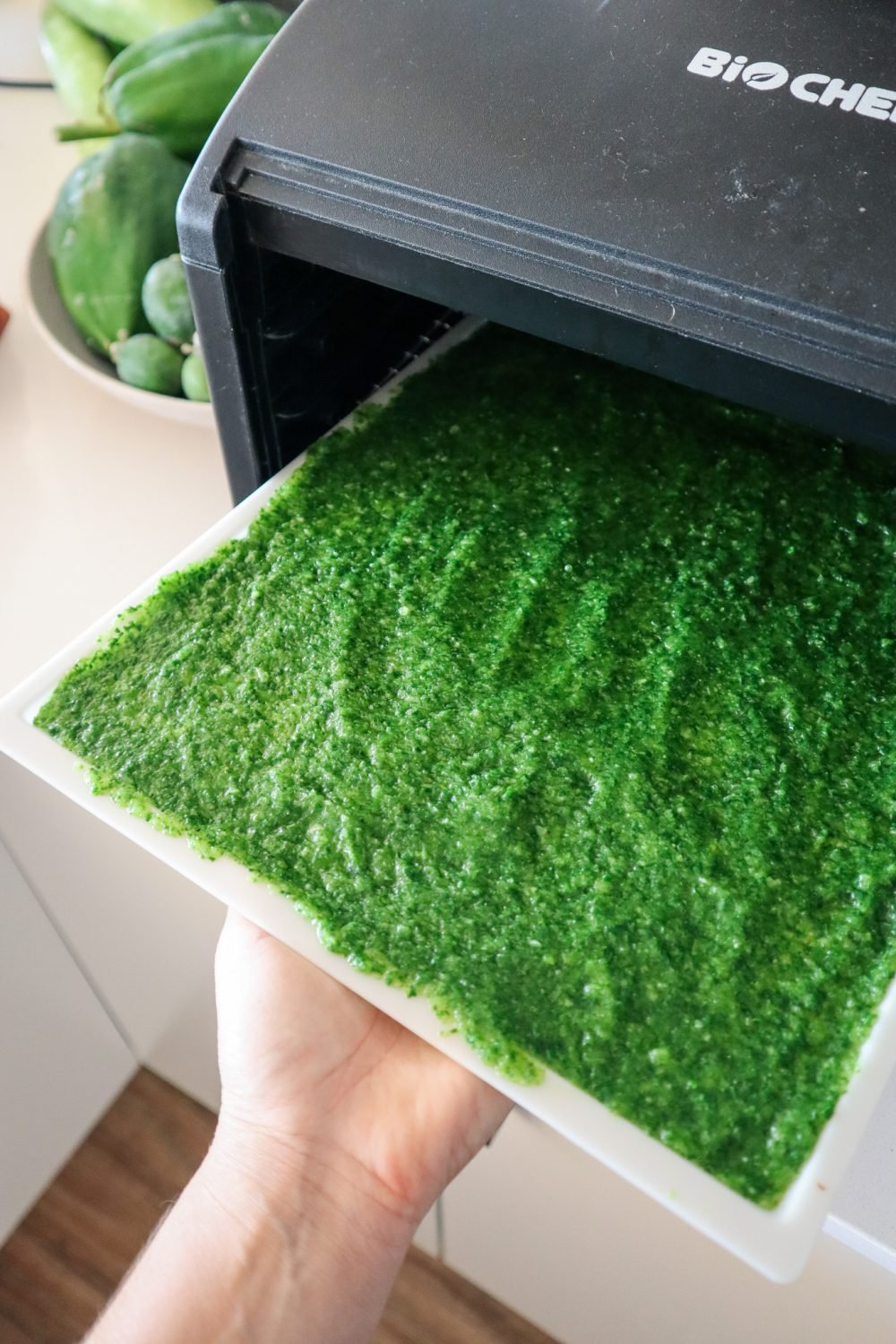
Add all the ingredients to a blender or mixer and blitz until combined. You may need to move things about with a spoon to get it mixed or add a dash more water. You want a thick paste-like consistency not too watery.
Spread the mixture onto 3-4 silicon dehydrator trays. You may need to do this in batches or use baking paper and a tray if you do not have enough of the silicon trays. The mixture should be thick enough to not see through to the tray or paper but also as thin and even as you can (before seeing through to the tray)
Dehydrate at 50 degrees celsius until dry. Check after 2-3 hours as the time will vary depending on the water content of the greens you used.
Remove and carefully run a knife around the edges to loosen it. Carefully peel off the sheet it is best to do this one bit at a time holding the sheet as close to the tray as possible as to not tear it.
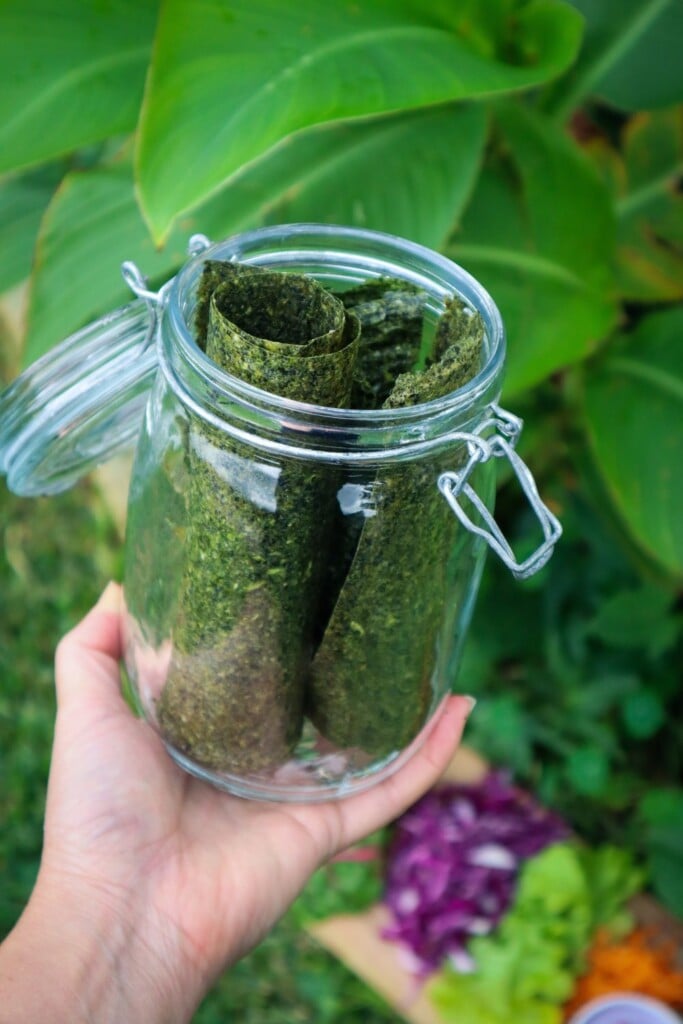
Once removed from the tray cut the sheets into the desired size (I cut in half for wraps but I keep them whole for sushi rolls) then roll them up and place them in an airtight storage jar. Or use them straight away. would
Use the wraps with your favorite salad ingredients and grilled chicken, haloumi or similar.
Notes
Greens – I used NZ spinach including the young stems but you could use any spinach or greens such as chard, rocket, sweet potato leaves etc just remove any thick stems.Herbs – add herbs or leave them out (replace with more greens) completely up to you. Try adding 1/2 cup of herb such as parsley, chives or coriander for added flavour.If you do not have a dehydrator you can use an oven on low to 50 degrees but be aware it may take up 6 hours so ensure you are home and not leaving the oven unattended.
These homemade spinach sushi wraps are a sustainable way to reduce kitchen waste and boost your nutrition. Whether you’re preserving an abundant garden harvest or just trying to eat healthier, they’re a delicious, eco-friendly addition to your kitchen staples.
Explore how to grow Bottle Gourd in your garden and how to preserve the harvest! Bottle Gourds are an abundant climbing plant that produces a range of different-sized and shaped fruits depending on the variety. Not only do they produce a huge amount of food, but they can also be dried to use as bowls, cups, bottles, and other vessels or containers.
So far this season, each vine has produced over 30kg of food with the potential for much more! Once you know how to grow and use bottle gourd, it may just become one of the most-used vegetables in your garden.
Help train the vines up structures. Prune older leaves to improve airflow. Hand pollinate when possible.
FERTILISE
Feed with compost teas and keep well mulched.
PESTS
Rats, aphids, snails.
HARVEST
Harvest when large and still green for eating or leave to dry out for bottles.
REPRODUCE
Grows easily from seed.
Why Grow Bottle Gourd?
Here are some of the many reasons to grow Bottle Gourds
Easy to grow
One plant provides an abundance!
Climbing vine – vertical gardening
Cover or create shade for the garden
Versatile crop
Make bowls or vessels
Base crop to make many dishes
Grows well in containers
Popular Bottle Gourd Varieties
Gourds come in many different shapes.
New Guinea Bean – Lagenaria siceraria – Italian heiloom. Popular in India where it grows easily. Large pale green tube-like gourds that can grow over 1m if left. Harvest at 40cm for eating. creamy white flesh simular to Zucchini.
Birdhouse Gourd – Lagenaria siceraria – Round bowl-shaped gourds with a narrow neck that can be used green as a zucchini substitute or left to dry and make into bowls and hanging bird feeders.
Round Bottle Gourd –Lagenaria siceraria – Large round bottle gourds that are perfect for making bowls. Can be eaten when young and green.
Mini bottle Gourd –Lagenaria siceraria – Popular for crafts. Round on the bottom then a skinny center with another bowl at the top similar to an hourglass shape.
Cucuzza Squash – Lagenaria siceraria– Slim elongated pale yellow-green gourd. Can be used as a Zucchini substitute.
Speckled Swan or Gooseneck Gourd –Lagenaria siceraria – Dark green with light speckles. Bowl-shaped base with a curved neck to look like a swan. Very decorative gourds.
When to Plant Bottle Gourd?
Gourds love warm weather! Plant your seedlings out into the garden after your last frost when the weather is starting to warm up. Seeds can be started indoors until it is warm enough to go into the garden.
Top Tips on How to Grow Bottle Gourd
Choose a sunny spot with 6-8 hours of sunlight or dappled part shade.
Plant seeds directly in the garden or in seed trays first.
Ensure you have a decent-sized trellis or arbor for them to grow up. Bottle gourds are vigorous growers similar to a pumpkin. It is best to train them up off the ground. Pergola-type structures or tunnels work best so that the bottle gourds can hang down.
Keep new plants well watered, especially during summer
Prune older leaves off that are starting to go brown or damaged to allow more airflow. Bottle gourds, like pumpkins, can get powdery mildew in wet or humid weather.
Hand pollinate to ensure successful harvests. I have found that even with bees about hand-pollinating is often necessary. Remove the petals from the male flower (which has no baby fruit on it) and dust the female flowers with pollen (they have baby fruit at the base of the flower)
How to Care and Maintain Bottle Gourd
Bottle Gourd plants will grow quickly in late summer and may need help to be trained or directed in the right direction to remain on the trellis. Hand-pollinate for added success. Remove powdery mildew leaves.
Pests / Disease
Rats may eat the fruit. Slugs and snails can be an issue when the plants are still small.
How/ When to HarvestBottle Gourd?
Bottle gourds can be harvested at many stages. While the skin is still soft and can be easily scratched, they are best for eating.
To get a continuous crop harvest regularly, so the plant has more energy to keep producing. Near the end of summer, when the plant slows dow,n you can leave the gourds on the vine to dry and go brown for crafts and vessels.
ReproducingBottle Gourd
Bottle Gourds grow easily from seed.
Allow the gourd to mature on the plant (until it stops getting bigger and starts to get harder skin or go brown and dry). Cut the gourd open and scoop out the seeds. Separate from the flesh and allow to dry completely on a plate. Pop in a container or brown paper bag, label and date, then store in a coo,l dark location until next spring.
Ways to Cook and Use Bottle Gourd
Bottle Gourd can be used fresh, dried, or frozen. Bottle gourd is used in a similar way to Zucchini. Peel the outer skin off using a vegetable peeler. If the gourd has started to go hard on the outside, you may need to use a knife to slice the outer skin. Remove the center pith and seeds.
Bottle gourd has very little flavour and makes a great vegetable to use as a filler or to carry flavours via dressings and marinades. Bottle gourd is a great way to thicken up smoothies.
Bottle Gourd can be frozen to use in soups, curries, or smoothies. Dehydrated strips using a vegetable peeler or zoodle maker can be dried and used as an alternative to pasta.
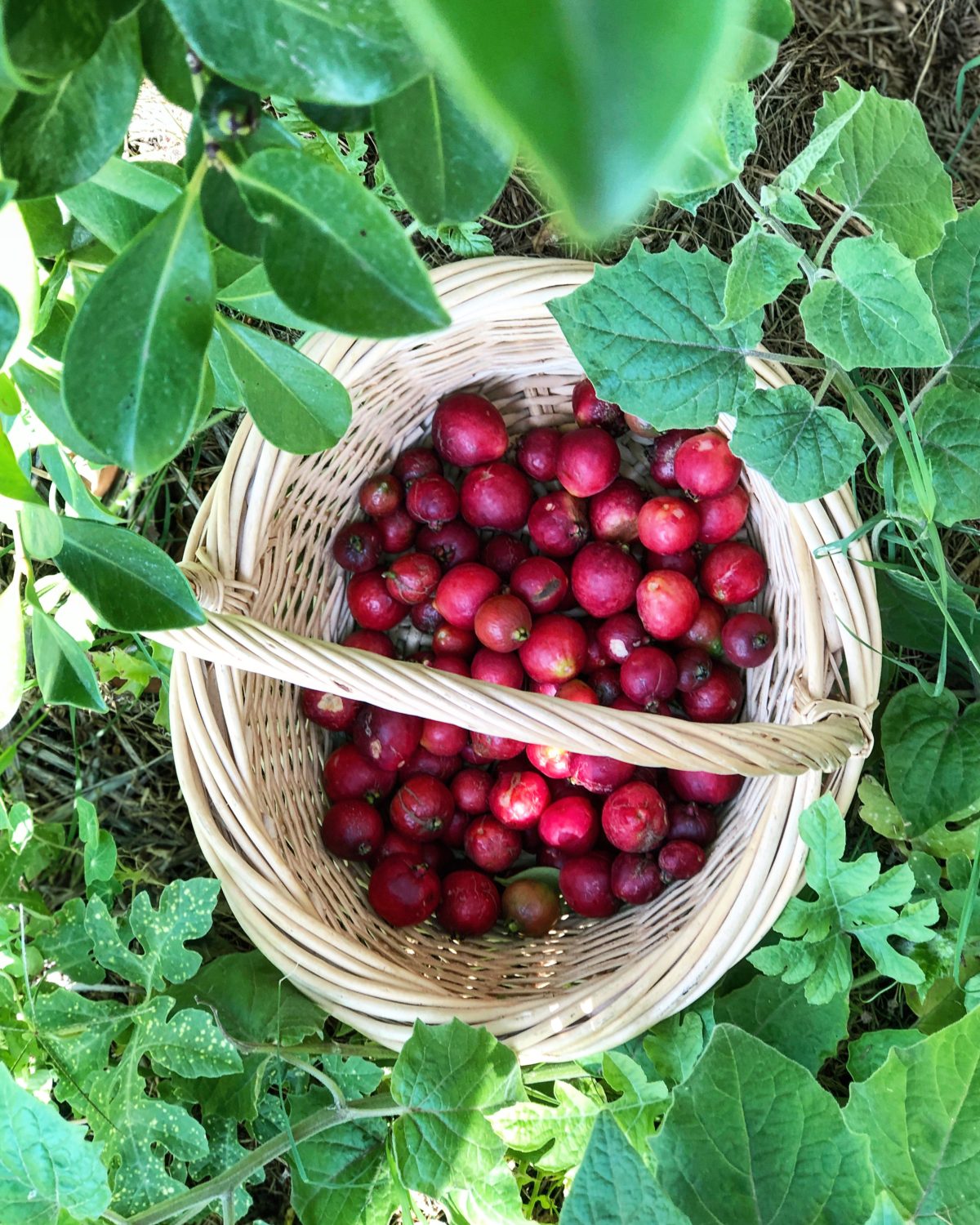
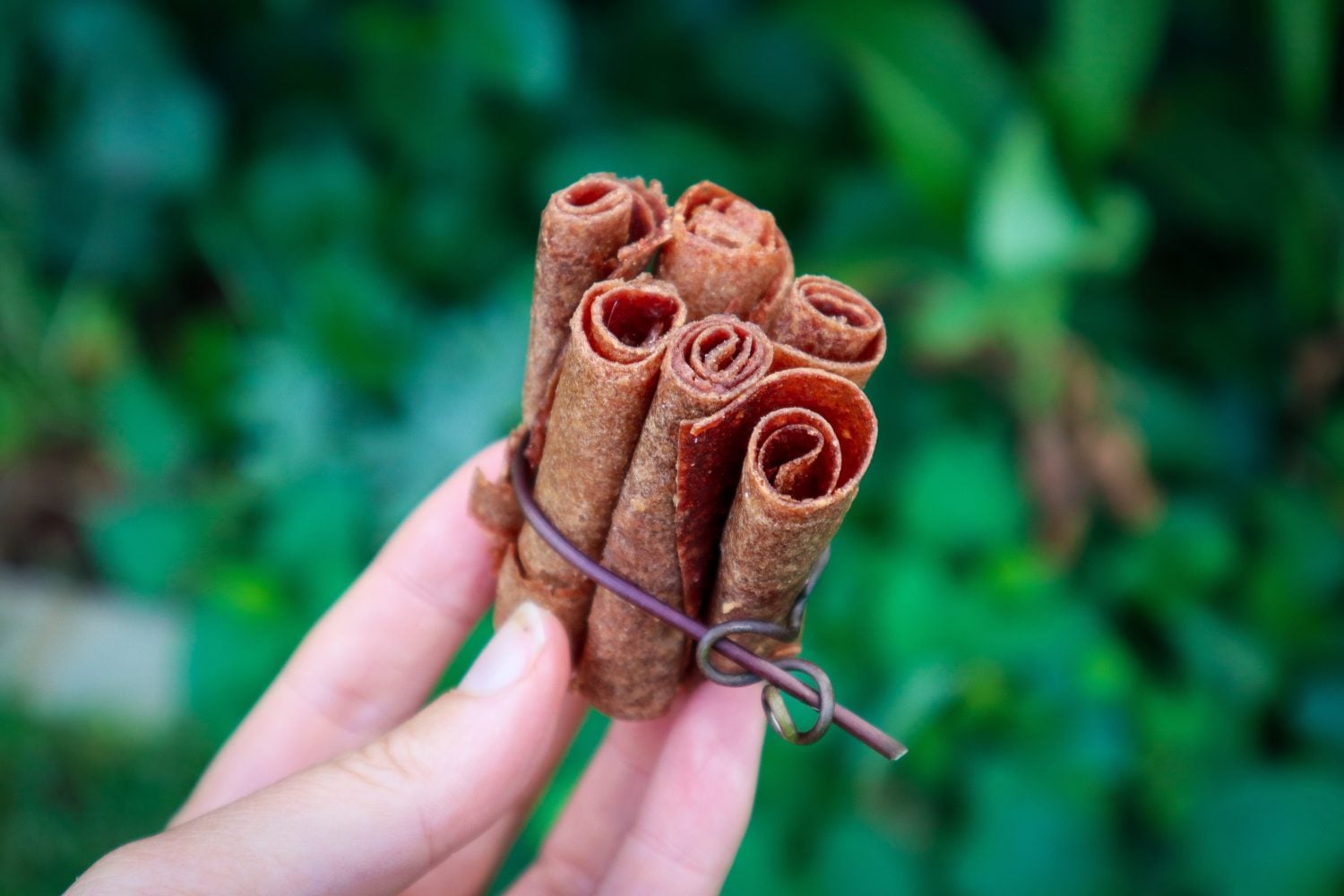
If you are growing Strawberry Guava you will almost certainly experience huge bowls of fruit after a few years. They ripen quickly and new fruits are ready each day during summer or autumn. These can be eaten fresh or extras frozen to collect a bulk amount to preserve. This fruit leather is sweet and delicious and a great way to preserve and enjoy your guava harvests without the hard seeds.
Naturally sweet and delicious garden-to-plate snacks.
sustainableholly
Strawberry Guava and Apple Fruit Leather
5 from 42 votes
Sweet and tangy this fruit leather is a great way to enjoy your bumper crops without the hard seeds.
3Cupsor large hand fulls of Strawberry Guava (fresh or frozen)
2Apples
1tspfresh lemon Juice
1TBSPHoney or raw sugaroptional
Method
Wash and cut the ends of the guavas (the pronged part). Place the guava in a blender and the ends in a jar to make a scraps vinegar (see below recipe) or add to the compost.
Wash, peel, and core apples (peels can go in the scraps jar too). Slice the apples and cook in a saucepan with a splash of water until soft.
Blend the guava, apple, lemon juice, and honey until you get a smooth consistency with no chunks – there will still be seeds.
Using a mesh strainer pass the mixture through a sieve to separate out the seeds. This is best done in small batches. Push down and mix around until the mixture comes out the bottom and the seeds are left behind. It seems hard at first but only takes about 10 minutes to complete. Remove the seeds (add to scraps jar or compost).
Taste and add more sweetener or lemon juice (if too sweet).
Using the fruit leather plastic tray of your dehydrator (or wax-free baking paper and tray) spread the mixture out to form one flat layer. Try to get it as even as possible.
Dehydrate until dry and only slightly sticky approx 6 hours at 60 degrees Celsius. Can take up to 10 or 12 with high moisture or thicker trays.
Remove and slice into long strips while still warm then roll up in wax-free baking paper to form roll-ups.
Store in an air-tight jar for 1-2 weeks or store in the fridge for 1 month.
Notes
Any fruit can be used for this. If they are firm fruit like apple or stonefruit, cook down first until soft or try Mango raw, so yum!
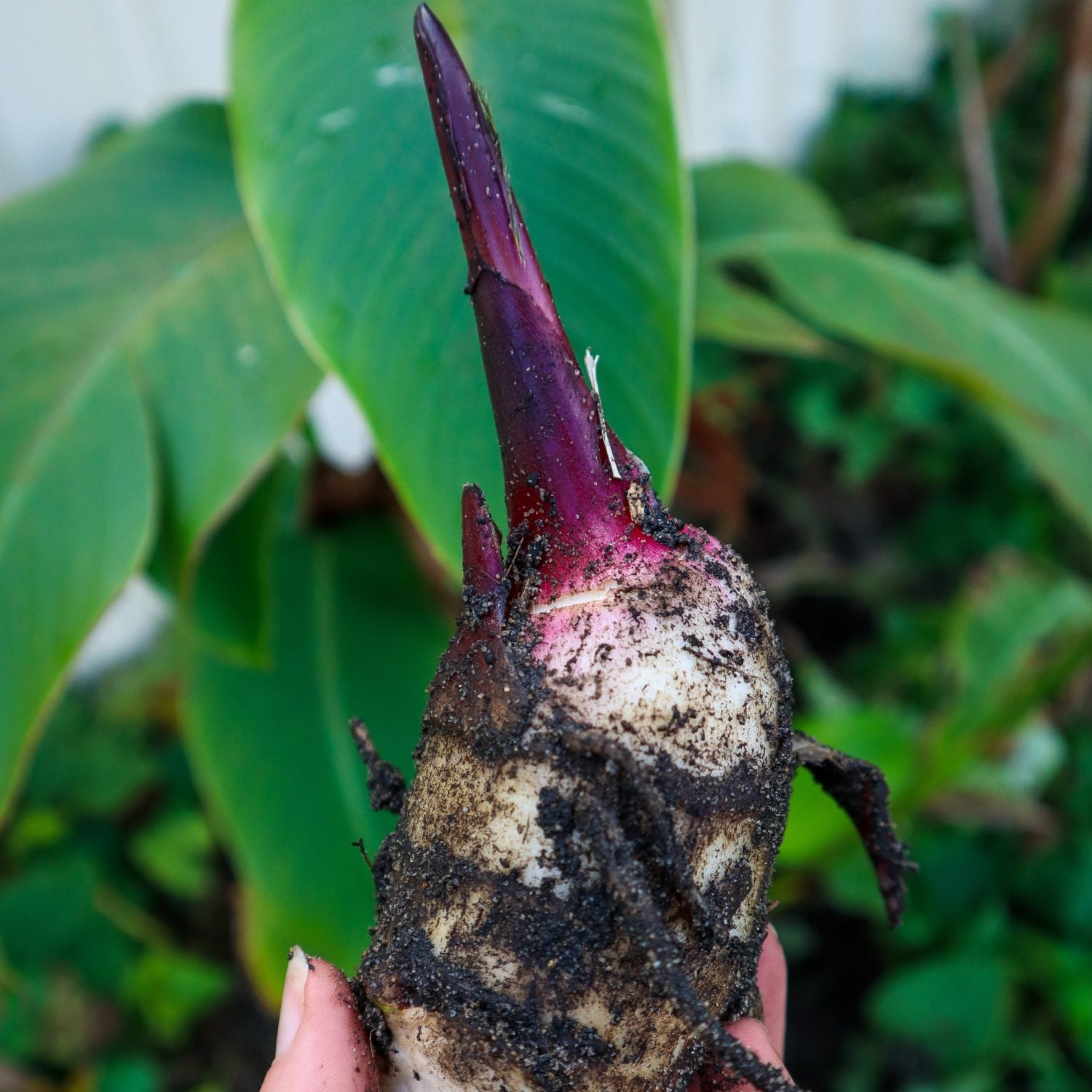
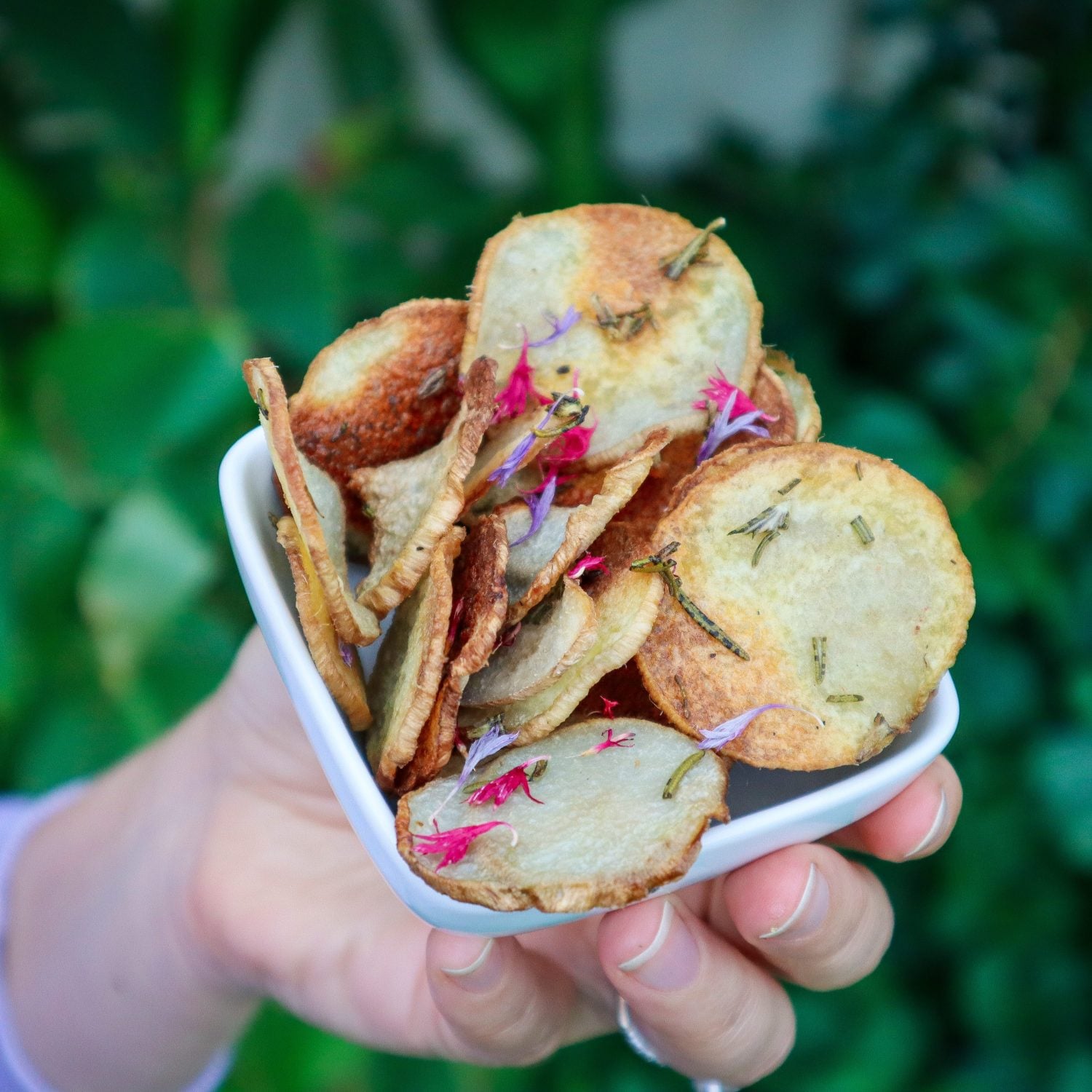
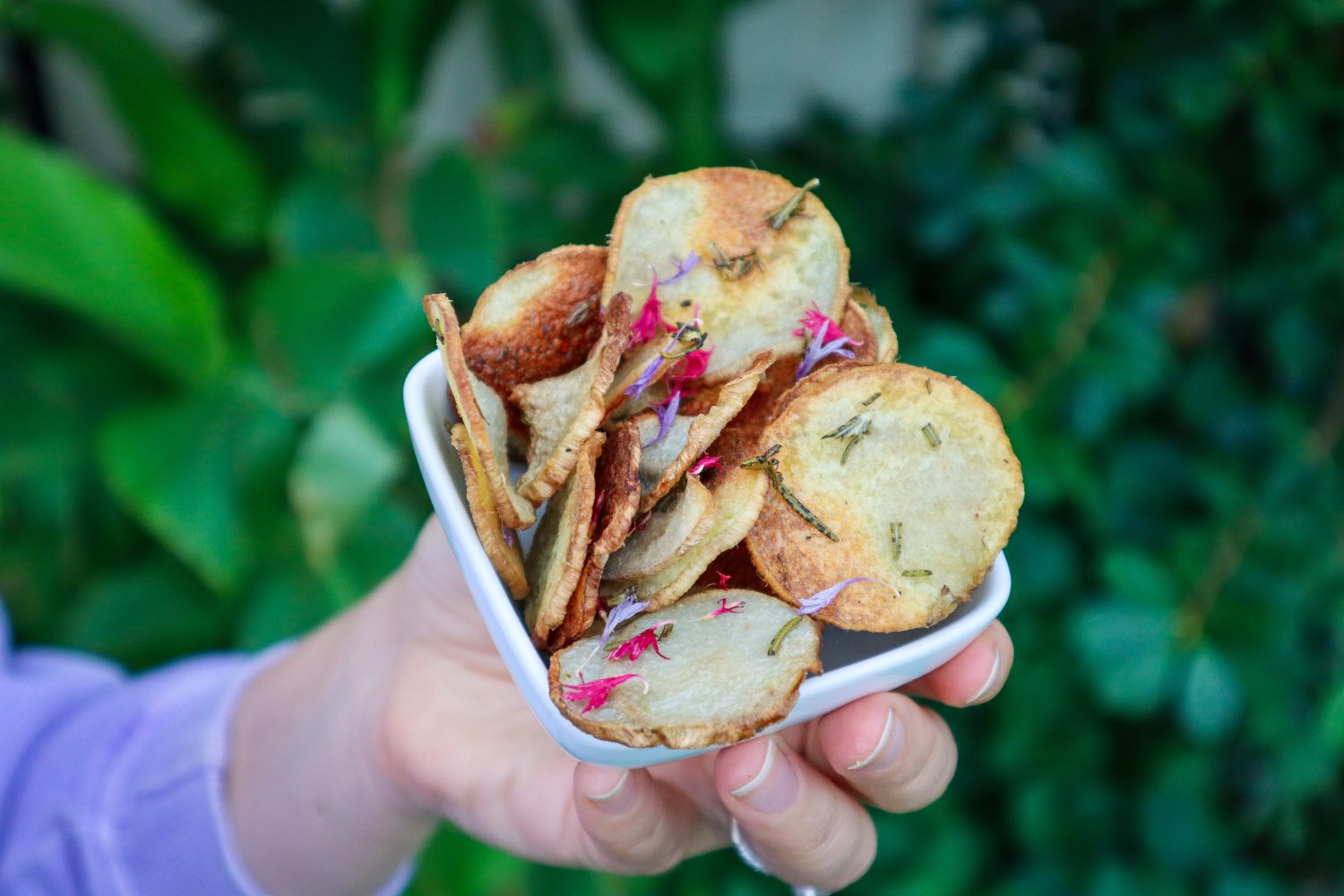
Extra crunchy chips using the Queensland Arrowroot or Canna Edulis. This is a beautiful tropical plant that can be used as a perennial substitute for potatoes. It creates a fantastic middle layer in a food forest-style garden and has lush green leaves and grows rhizomes under the ground. Both the young shoots and the rhizomes are edible.
This is my main mulch plant for the garden, and it repopulates like crazy!! So I want to create some delicious recipes to utilise this slightly wild crop! These crispy Queensland Arrowroot chips were 100% a hit and will be a regular in my home.
What is Queensland Arrowroot?
Queensland arrowroot (often referred to as Canna edulis or Canna indica) is a fast-growing perennial plant grown primarily for its edible rhizomes (like underground tubers). Despite the name, it isn’t a true arrowroot..but it serves a similar purpose in the kitchen. The rhizomes are starchy, mild in flavour, and incredibly versatile.
Traditionally, arrowroot has been used for:
Starch extraction to make flour
Baking and thickening
Roasting or boiling like a root vegetable
And, of course, turning into crispy chips
One of the best things about Queensland arrowroot is how quickly it grows in poor soil and hot climates. Once planted, it forms dense clumps, creates an abundance of chop-and-drop mulch, and produces a generous harvest year after year.
In a food forest, it works beautifully as a lower canopy or ground-level productive crop.
Preparing Arrowroot for Cooking
Before turning arrowroot into chips, proper preparation makes a big difference.
Step 1: Wash thoroughly
Remove all soil and debris. A brush helps for stubborn dirt.
Step 2: Peel (optional)
You can peel the outer skin if it’s tough, but younger rhizomes may not need it.
Step 3: Slice thinly
Thin, even slices are key for crispiness. A mandoline slicer works best, but a sharp knife also works.
Step 4: Soak in water
Soak slices in cold water for 20–30 minutes to remove excess starch. This helps achieve a lighter, crispier chip.
Step 5: Dry completely
Pat dry with a towel. Moisture is the enemy of crispiness.
Crispy Queensland Arrowroot Chips
Crunchy and delicious snacks made using the perennial Queensland Arrowroot. Quick and easy to make.
Wash and peel the Queensland arrowroot and quickly submerge it in water. Using a mandoline (or hand cut) evenly slice into thin slices then quickly submerge in cold water.
Allow to sit in cold water for 5 minutes then change the water and sit again for a further 5 minutes repeat if necessary until the water remains clear (it will be murky brownish the first time).
Preheat oven to 200 degrees fan bake.
Remove the chips from the water and pat dry. Drizzle over olive oil and season with salt and chopped rosemary.
Oil a baking tray and add chips.
Bake for 5 minutes then turn over and bake until slightly golden and crispy. Remove and place on a tray to cool (they will get a little crispier as they cool).
Enjoy!
Notes
Choose young Rhizomes that only have small shoots starting. Older ones will be more bitter. Gently pull and separate from the main older rhizome. The Queensland arrowroot oxidizes quickly and goes brown. Keeping it in water helps reduce this.For extra flavour try soaking in a mix of vinegar and sugar for salt and vinegar chips!
Serving Ideas
These chips are such a yummy snack but can also be use to:
Serve with dips like aioli or hummus
Add crunch to salads
Serve alongside BBQ meals
Use as a topping for soups
Pair with tropical or Asian-inspired dishes
They’re especially good as a “garden-to-table” addition when you want to just use what is growing in the garden. You will never be short of “potatoes” again!
Keep It In Check
Queensland arrowroot is such a generous plant, but it does need to be kept in check. Regular harvesting of the rhizomes will keep it under control. So I will be busy making lots more recipes using this crop!
If you’re building a self-sufficient garden or food forest, this is a plant worth experimenting with — especially in warm climates like Perth, where it thrives with very little effort.
Learn how to grow Guava and what to make with their abundant crops in this guide. Guavas are beautiful ornamental trees that produce delicious, tropical-tasting fruit. There are many different varieties that all have their own unique flavour. Guava trees are prolific producers and can be a great addition to your homestead. Guava trees can also be grown in pots very successfully.
Sow seeds in spring- autumn. Plant trees in Spring or Autumn.
SOIL
Free-draining compost.
LOCATION
Full sun – part shade.
CARE
Prune to maintain size after fruiting has finished in Autumn.
FERTILISE
Feed with compost teas and keep well mulched.
PESTS
Rats, birds, fruit flies, bats.
HARVEST
Harvest regularly. Fruit will drop from the plant when ripeor come off easily in your hand.
REPRODUCE
Grows easily from seed. Seeds can be saved from ripe fruit. Cuttings can be taken.
Why Grow Guava?
Here are some of the many reasons to growGuava
Easy to grow
One plant provides an abundance
Lush evergreen leaves
Cover or screening
Shade protection
Immune booster
High Vitamin A and C
High antioxidants
Folate
Popular Guava Varietiesto Grow
Guavas come in many different types a few key types, depending on your location, are:
Strawberry / Cherry Guava – Psidium cattleianum – Popular small red guava – prolific. Taste is sweet with hints of strawberry and a little tart and bitter. Dense coverage of small shiny evergreen leaves.
Lemon Guava – Psidium cattleianum – Small yellow guava similar to the strawberry but with sweet slight lemon flavours. Dense coverage of small shiny evergreen leaves.
Hawaiian Guava –Psidium guajava – Large tropical-tasting fruit with bright pink centre and yellowish outside when ripe. Large matte leaves that can be used for tea.
Ruby Supreme –Psidium guajava – Popular selection of hawaiina guava. Large tropical-tasting fruit with bright pink centre and yellowish outside when ripe. Large matte leaves that can be used for tea.
Indian Guava – Psidium guajava– Large crunchy guava with green skin and white flesh. Large matte leaves that can be used for tea.
Mexican cream –Psidium guajava – Medium yellow guava with light creamy flesh. Large matte leaves.
Purple Malaysian Guava –Psidium guajava – Deep crimson red-purple leaves. Pink flowers and the fruit have striking purple flesh.
When to PlantGuava?
It is best to plant new Guava plants is in Spring to Autumn so they have time to get established before winter. Avoid planting during the peak of summer as this can stress new plants out.
Top Tips onHow to GrowGuava?
Choose a sunny spot with 6-8 hours of sunlight or dappled part shade.
Dig a hole twice the size of the current pot. Prepare the soil with free-draining compost.
Small trees may need a sturdy stake to support them.
Keep new plants well watered, especially during summer
Keep the base weed-free and well-mulched. Pull mulch away from the trunk to avoid rotting.
Prune in Autumn after they fruit to maintain size.
Plants will grow quickly and can be pruned in late Autumn after fruiting has finished. Young trees may produce more fruit than they can hold if branches look under stress you may need to thin fruits off before branches snap. Fruits are susceptible to fruit fly. Net the tree or individual fruits after the flowers have finished and turned into small fruit. Strawberry guavas ripen quickly, and regular harvesting can reduce fruit fly.
Some trees will get damaged by frost and lose their leaves. Plant in warm protected areas of your garden.
Pests / Disease
Rats and birds love the sweet fruit. Exclusion nets or bags may help or harvest regularly. Fruit fly and guava moth are a common problem. Ensure you net your fruit trees just as the fruit is setting to avoid worms in your fruit 😬
How and When to Harvest Guava
Guavas will ripen around late summer – autumn. Each variety will vary, and strawberry guava will often put on multiple crops.
Guavas will change colour and come off easily in your hand when ready.
Guavas can be eaten when they are still crunchy, or allow them to soften for a more creamy texture.
Reproducing Guava plants
Guava can be grown from both cuttings and seeds. Easy to grow from seeds but may be slightly different to the original plant. I have had plenty of success with seed-grown plants, though.
Save seeds from mature well ripe fruit. Rinse off the flesh and soak in a jar of water for 24 hours. Plant seeds in quality compost and potting mix and keep warm and well-watered until they sprout.
Take 15cm cuttings from semi-hardwood. Remove the bottom half of the leaves and the top shoot. Place in moist soil to root. Keep in the shade to prevent cutting and drying out.
Tips for Cooking and Using Guava
Guava can be used fresh or frozen.
Guava pairs well with: Citrus, Strawberry, Lime, Watermelon, Papaya, Peach, Pineapple, Mango, Melon, Coconut, Kiwifruit, Pear, Chilli, Mint, Ginger, Apple
Guava can be frozen to use in larger batches as you wait for more to ripen. Make jams, jelly, chutney, or preserves in syrup. This Apple and Guava fruit leather is a must-try!
I am so excited to announce the launch of my brand new live show and podcast – Homegrown with Sustainable Holly. Homegrown the live show is a live podcast for those who want to grow food at home and live a more sustainable lifestyle.
Welcome to the edible gardening Podcast x Livestream where you can listen, ask questions, or watch live and be a part of an interactive gardening show. Together we will sow seeds, discuss what’s happening in the garden, make plans, and track goals to grow more food at home naturally and sustainably.
Homegrown is hosted by Holly an Edible Gardener, YouTuber, and Photographer creating a more sustainable life in the suburbs of Perth, Australia. Join us Wednesdays at 5pm AWST – live on YouTube and grow your own nourishing homegrown food!
Be sure to subscribe to get updates on when new episodes go live! And if you found some inspiration from the show I would love it if you could give me a rating and review. This helps me grow the show and be able to get lots more exciting guests.
Why is it a live show?
Live streaming allows us to have real, raw and unedited conversations about growing food at home and also behind the scenes of growing a business from the garden it’s going to be an evolving show but we are starting right here in my kitchen. I’m so excited to have you along for the journey and to see where we can go next with this live cast. I already have some incredible inspirational guests that are crazy enough to put their hands up to join us here in future episodes.
And just a forewarning whether you are watching is live on YouTube or listening to the podcast after the fact i just want to put it out there that this is a live show so there may at times real life background noise like my dog Tama barking at someone driving down “his” street or people turning up, neighbors on power tool. I mean who knows what is going to happen but its all part of the adventure right?
How can I get involved?
Join for the livestream over on YouTube on Wednesays and get involved! Join in the live chat, ask questions and make suggestions for future episodes. To keep the flow of the show for those that are listening to it after recording, i will answer questions at the end. So pop any questions you have in the livechat and write a Q at the start so i can see them clearly from the comments and stick around to the end and i will feature some of your questions!
Want to be a Guest on the show? Send me a quick message with a little info about your garden and we will take it from there!
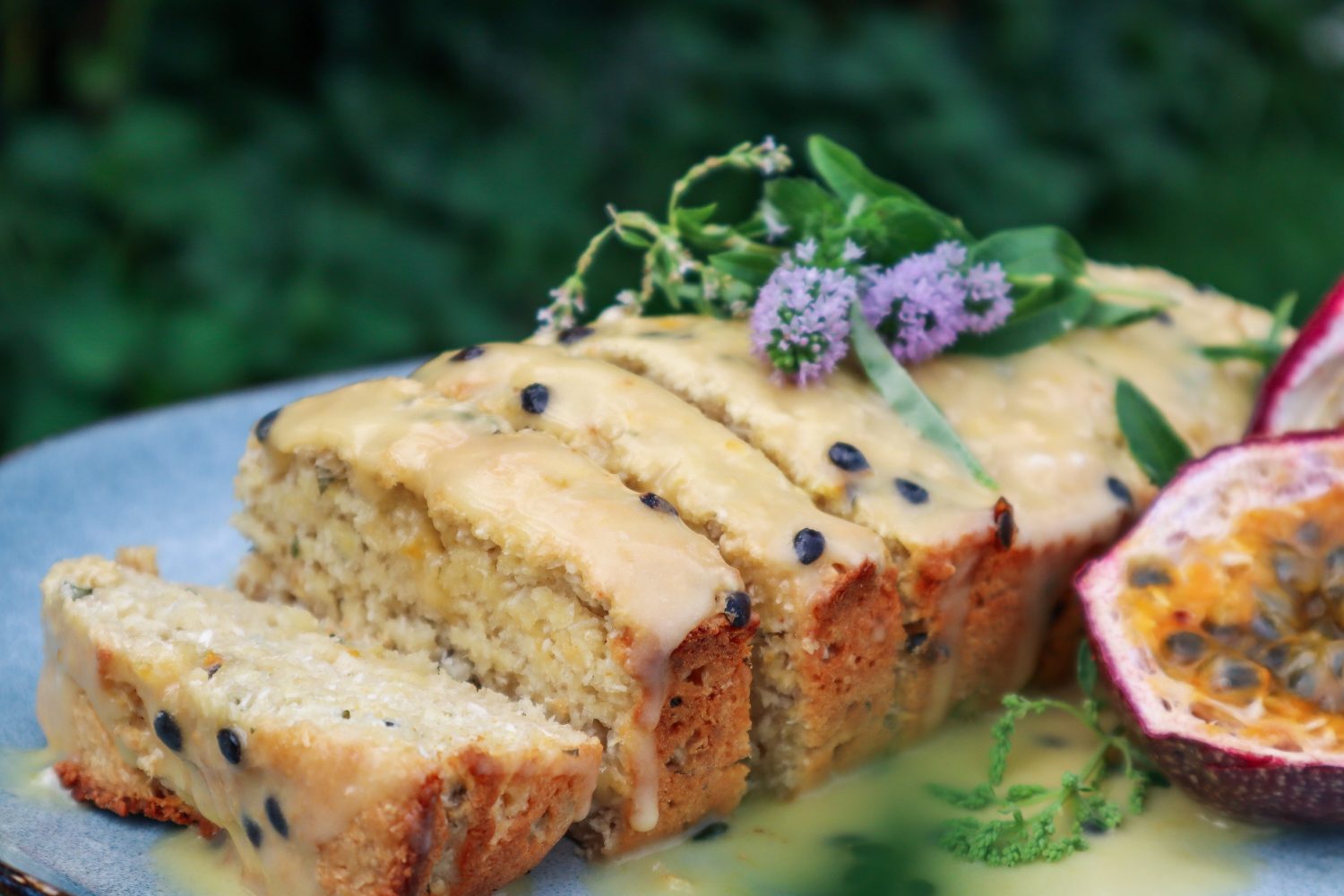
This coconut and lemon verbena loaf is so easy to make. Whip up a loaf or two for a Sunday Afternoon tea and sit back and enjoy your garden. Crunchy and chewy on the outside and soft in the middle. Lemon Verbena has a fragrant lemony flavour and pairs deliciously well with coconut and passionfruit.
Coconut and Lemon Verbena Loaf with Passionfruit
This is the perfect loaf to spend Sunday afternoon in the garden.
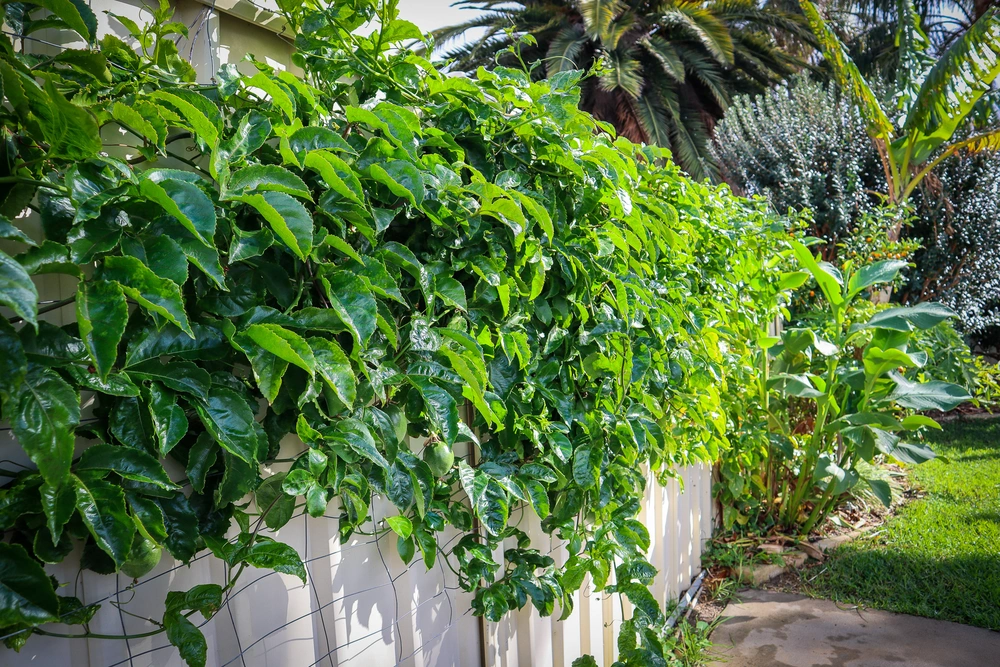
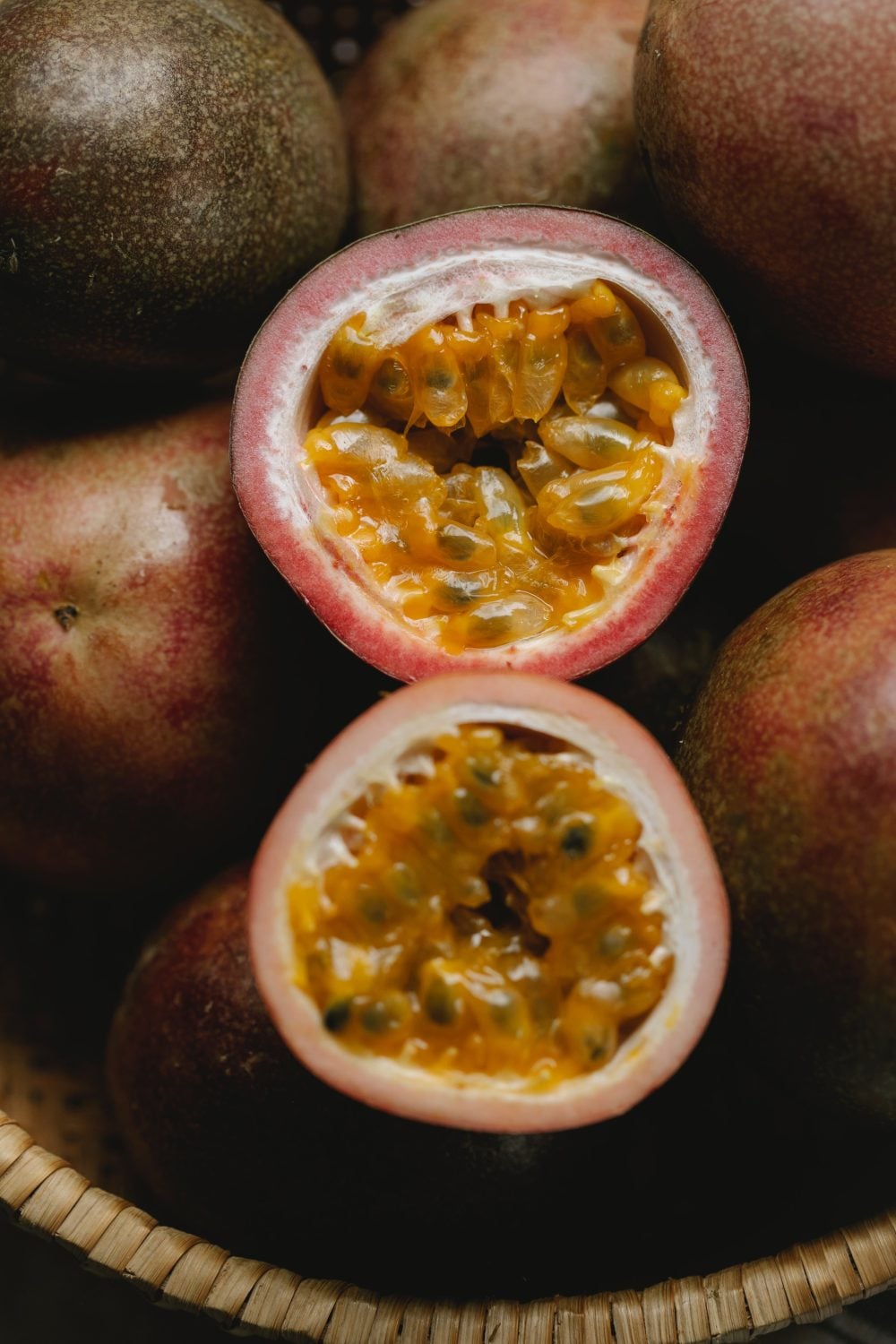
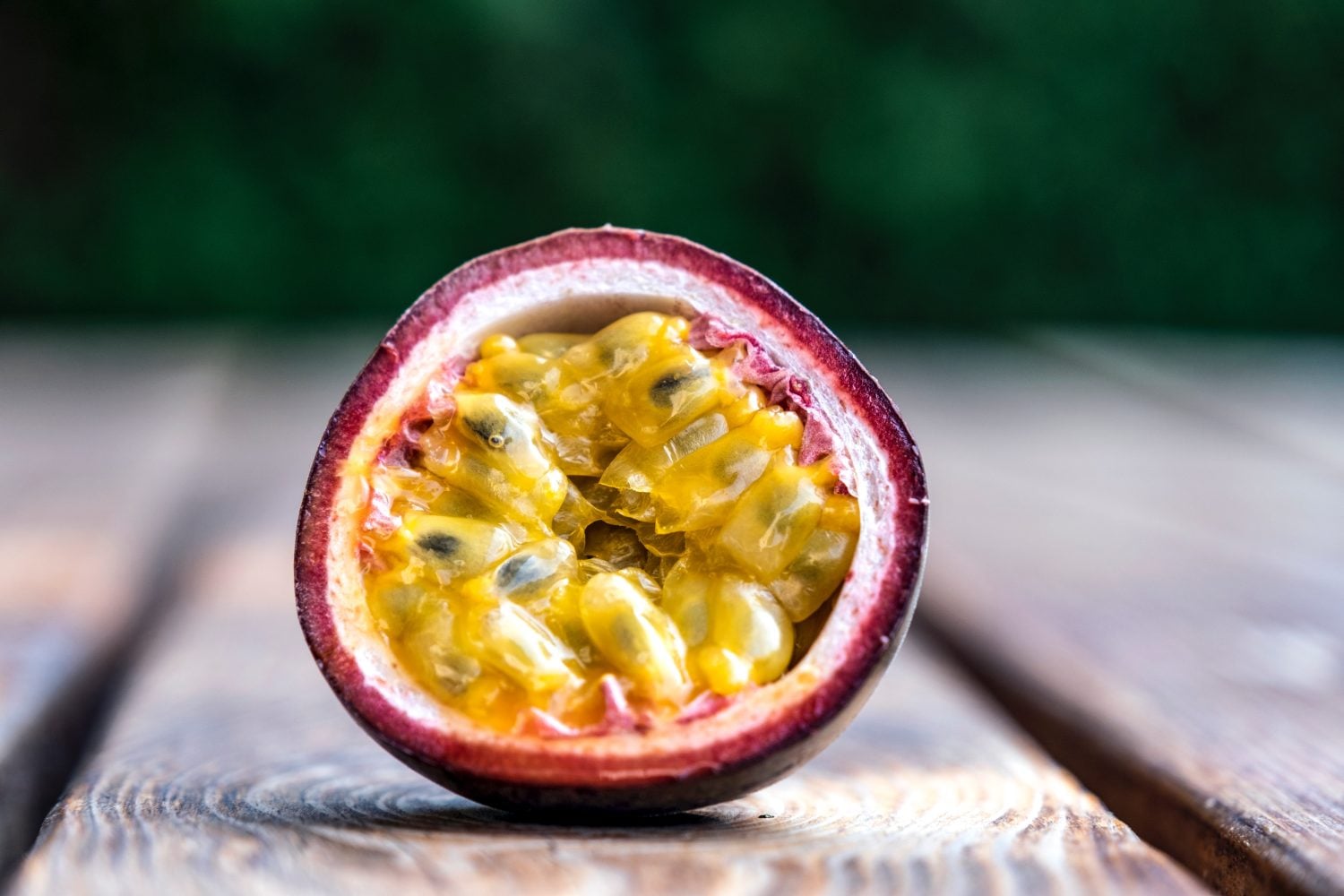
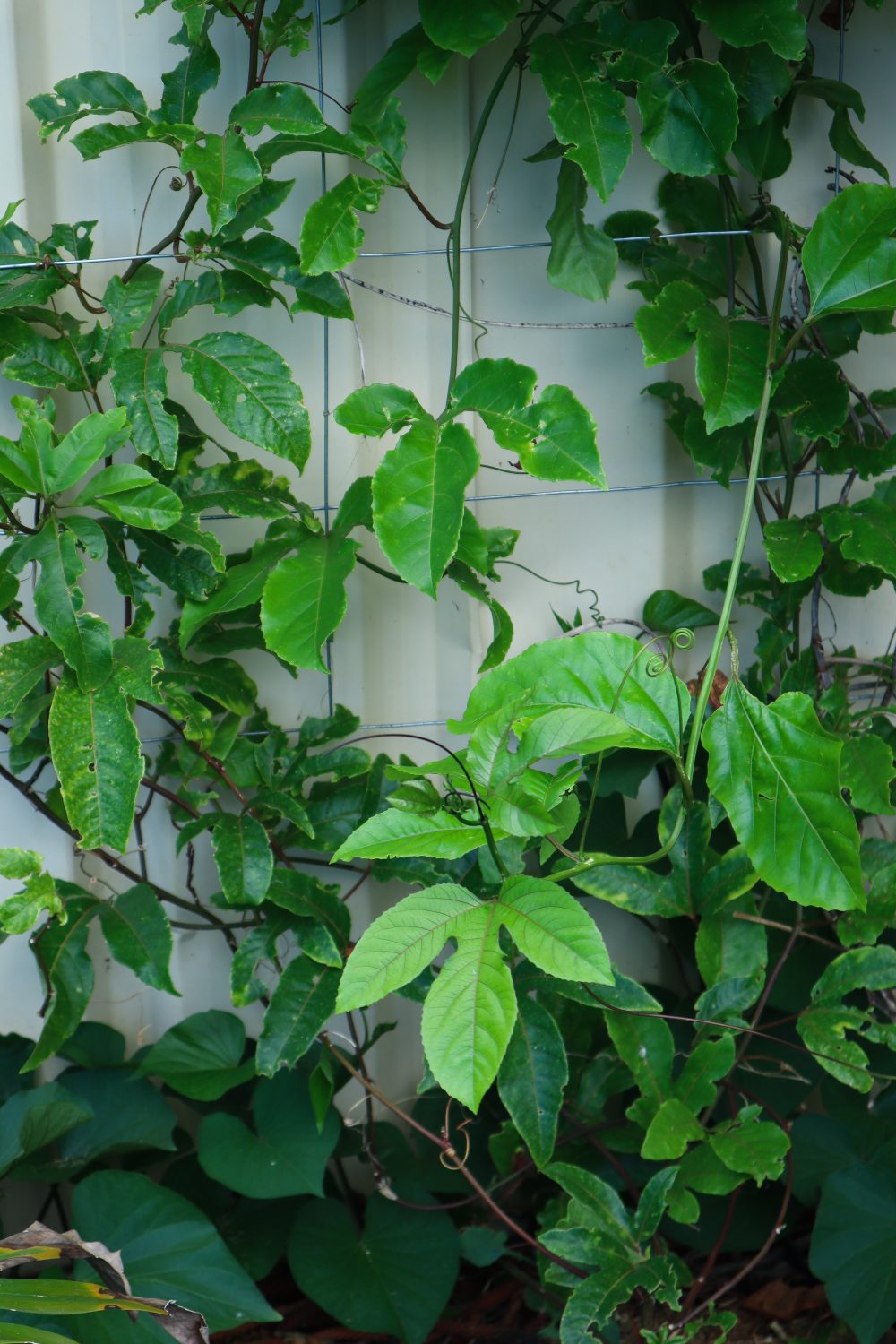
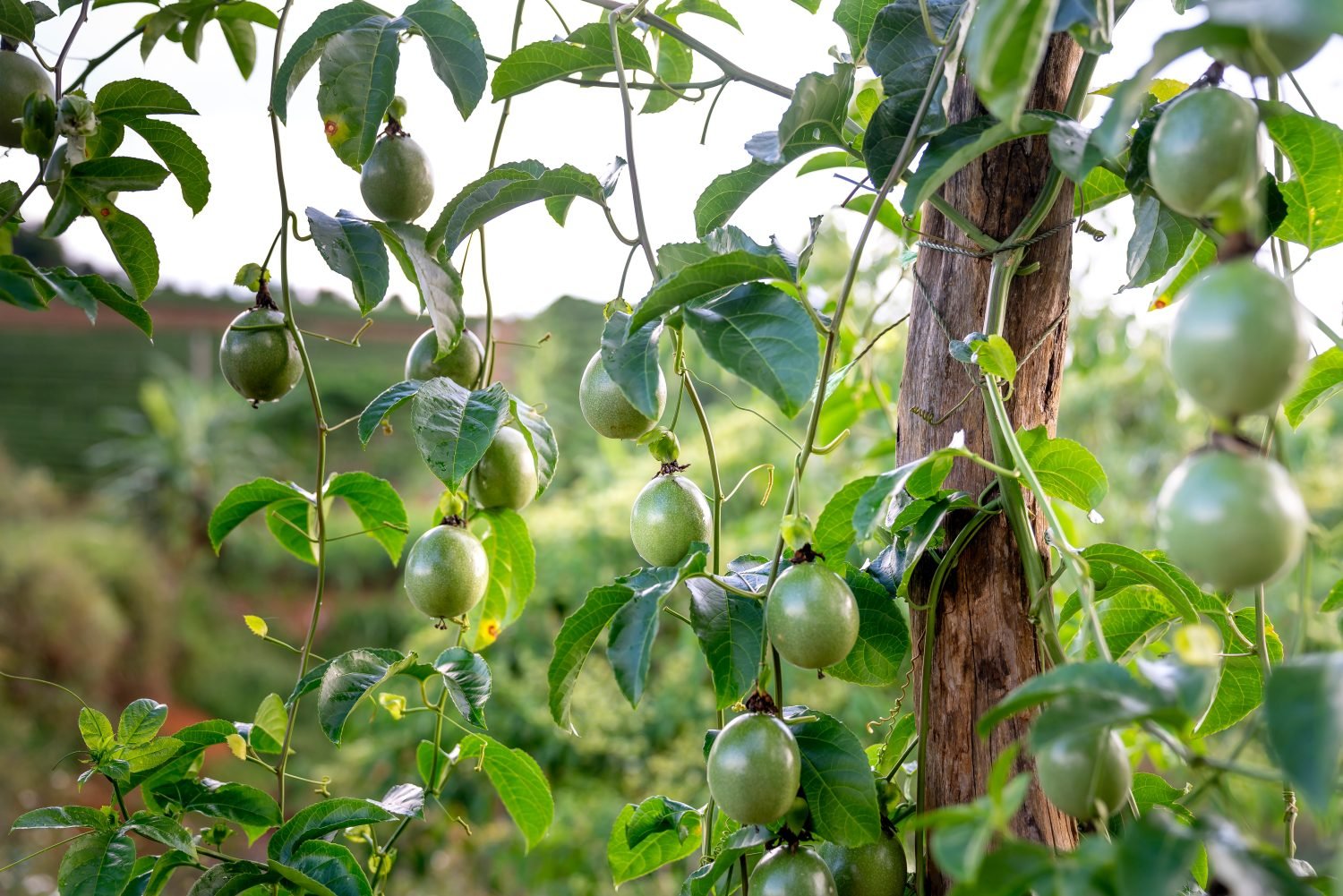
Passionfruit are a prolific edible climber that produces delicious-tasting fruit. Semi-deciduous and have a thick layer of lush green leaves over the warmer months. Passionfruit have a sweet and sometimes tart tropical flavour depending on their ripeness.
Like many edible plants, they come in a huge range of varieties! They are hardy and easy to grow in even hot dry climates. There are a few important things to know before choosing a variety that will be best for your garden. Read more below.
Full-part sun. Protect from harsh midday sun in summer.
CARE
Regular water and feeding. Training new shoots.
FERTILISE
Heavy feeders. Compost teas or added compost.
PESTS
Snails, slaters, rats, mice.
HARVEST
Harvest regularly. Fruit will drop from the plant when ripe.
REPRODUCE
Allow to go overripe and save seeds.
Why Grow Passionfruit?
Here are some of the many reasons to growPassionfruit
Easy to grow
One plant provides an abundance
Lush evergreen leaves
Cover or screening
Shade protection
Immune booster
High Vitamin A and C
High antioxidants
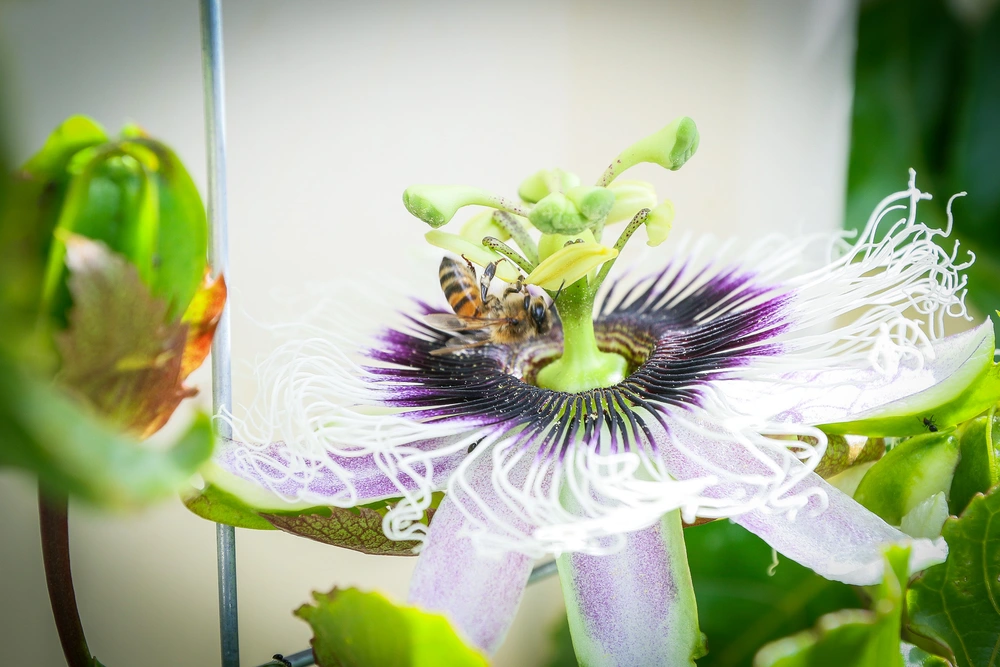
Attracts Butterflies to flowers
Important Information
Many Passionfruit are sold grafted which means they are two types of passionfruit merged together. The rootstock often used in Australia is extremely invasive and can cause issues for many years to come. I recommend avoiding grafted passionfruit at all costs. Check carefully before purchasing. Not all passionfruit flowers and leaves are edible – the blue passionfruit flowers from the rootstock are not edible. Check you do not have a rootstock variety that has taken over!
WATCH below for more info on grafted passionfruit.
Popular Passionfruit Varieties
Passionfruit come in many different types a few key types are:
Note: some types of Banana Passionfruit are classified as an invasive weed in some countries, including New Zealand.
Sunshine Special – Passiflora edulis – Popular purple passionfruit for Perth Gardens. Large fruit and heavy crops!
Panama Gold – Passiflora flavicarpa – Popular tropical passionfruit with yellow skins. Allow to fully ripen and drop before harvesting. Fast-growing and more frost/cold tolerant than many.
Panama – Passiflora edulis – Large red/burgundy fruit with sweet gold flesh.
Banana Passionfruit – Passiflora mollissima – Long yellow fruit with sweet pulp. frost hardy. Light pink flowers. Can be invasive.
When to Plant
It is best to plant new Passionfruit plants in Spring so they have time to get established before winter.
How to Grow
Choose a sunny spot with 6-8 hours of sunlight
Prepare the soil with free-draining compost
Keep well watered, especially during summer
Fertilise in Spring and benefit from high Potassium
Prune in Autumn after fruit – Passionfruit fruit more on new growth.
Fertilize with compost after pruning
Care/ Maintenance
Keep plants well watered. Train and direct new shoots regularly to keep them under control. If you are growing a grafted variety, check and remove any suckers or side shoots from below the graft – weekly.
Passionfruit do not like soggy or wet ground – if you receive a lot of rain it is best to grow passionfruit on mounds to allow water to run off and prevent root rot.
If you are having trouble with passionfruit flowering but not fruiting – check out this guide
Pests / Disease
Check for slugs, slatters and snails when the plants are young. Barriers may need to be put around the main stem. Ripe fruit are popular with Rats and Possums. Harvest regularly and you may need to net some fruit to ensure you get a harvest.
How/ When to Harvest
Passionfruit will usually start fruiting by the start of their 1st year – may be longer in cold climates.
Passionfruit drop from the vine when they are fully ripe. They can be picked earlier if you like fruit with a little more tart flavour. Choose deep-coloured fruit.
Passionfruit varieties will fruit at different times of the year but many are ripe during late Summer – Winter.
Reproducing
Passionfruit can be grown from both cuttings and seeds.
Save seeds from mature well ripe fruit. Rinse off the flesh and soak in a jar of water for 24 hours. Plant seeds in quality compost nd potting mix and keep warm and well watered until they sprout. Transplant to a larget pot once they have 4-5 leaves.
Take 20cm cuttings from semi-hardwood. Remove the bottom half of the leaves and place in a jar of water or moist soil to root.
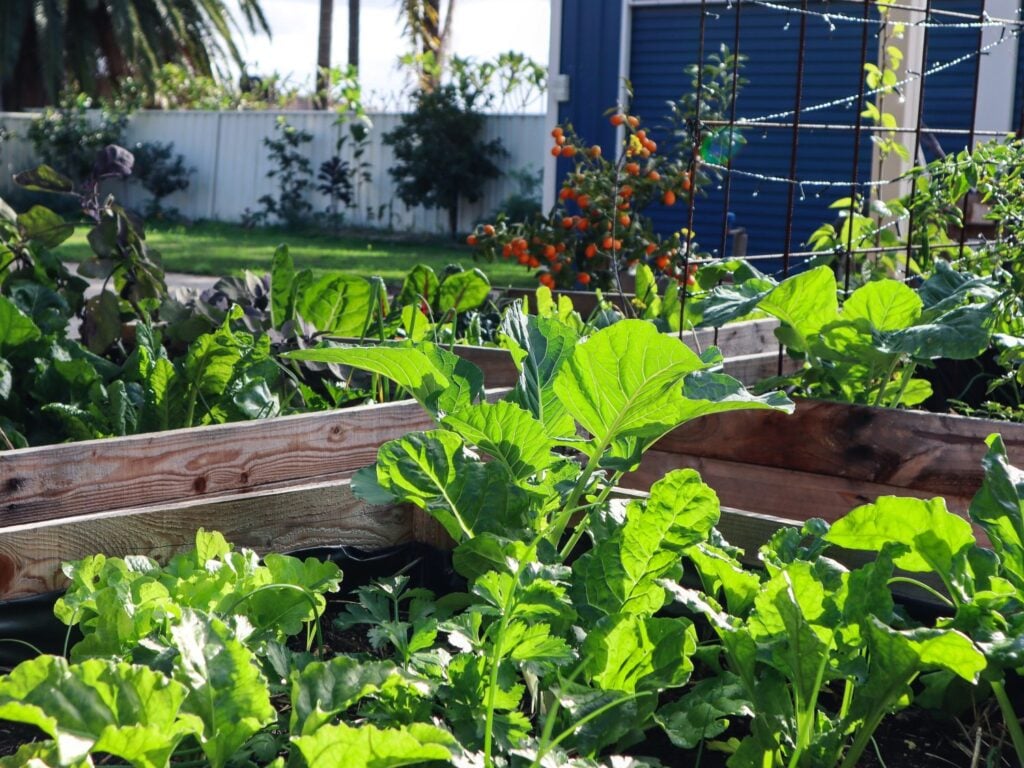
Kitchen gardens are packed full of quick-growing veggies and herbs right outside your kitchen to use in every meal. Integrating a diverse range of plants and structures can help you really maximise the amount of food you can grow in a small space.
In today’s workshop, we will discuss the 7 key steps to set up your kitchen gardens. We will also dive into my own kitchen garden – pallet planters on wheels.
You will also receive a Kitchen Garden Plant list packed with quick-growing edible plants that you can harvest from every single day.
Kitchen gardens are packed full of quick-growing veggies and herbs to use in every single meal.
Quick growing – or pick and come again crops
Often utilising pots or containers
Within eyesight of your kitchen
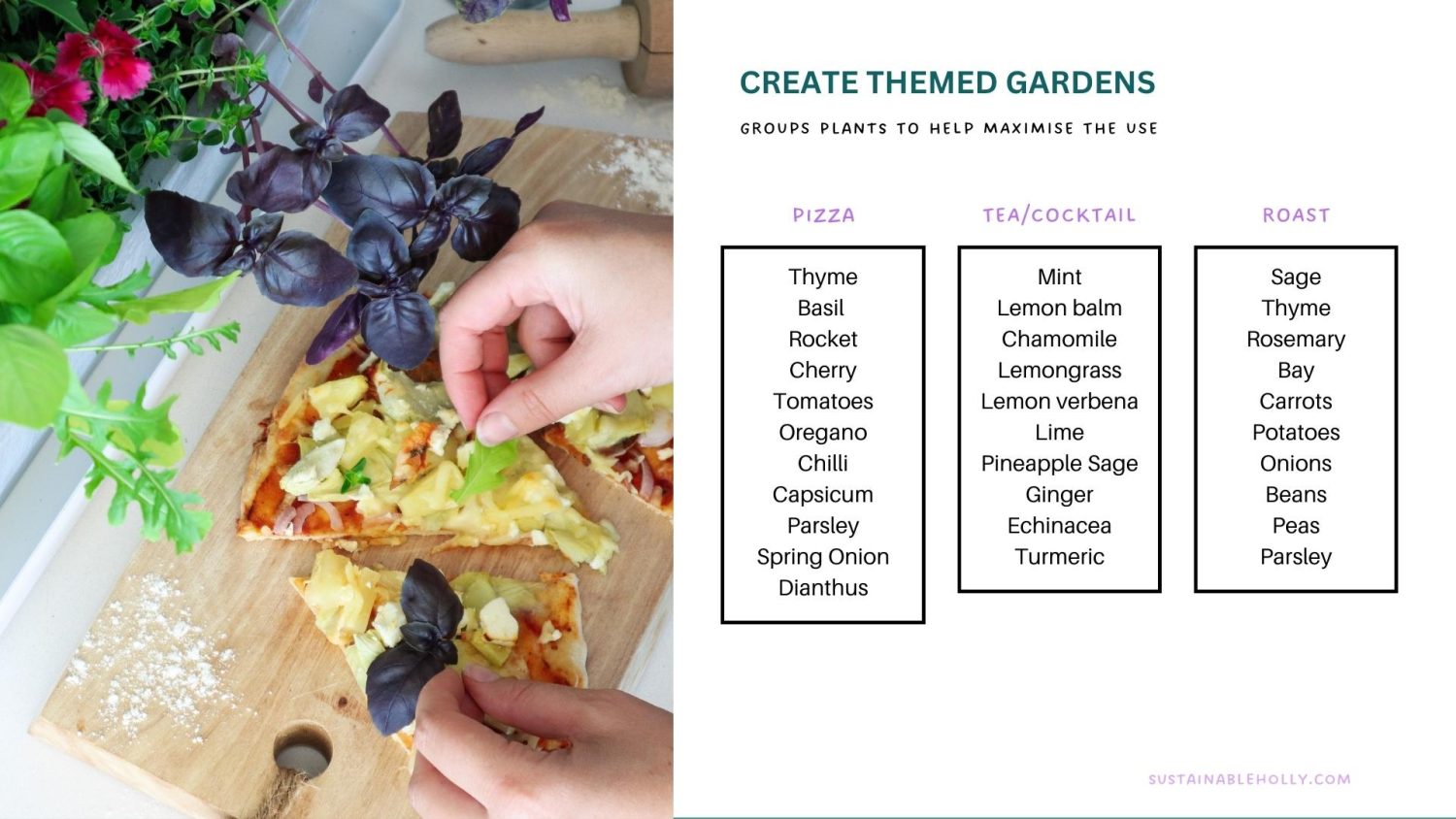
Flavour enhancing plants
1. Choosing a location
Choosing a location is key to starting a successful kitchen garden.
Close and convenient is key! If you can see it from your kitchen this is ideal! This will be a reminder for you to actually use what you are growing in every meal. It also means you can pick fresh and exactly the amount you need so you don’t have excess waste.
Adequate sunlight – plants need enough sunlight to grow and for most veggies, it is around 6-8 hours.
Moveable containers – maximise summer sun/shade and winter sun
Have a water source nearby.
2. Choose structures or containers
Next up we need something to house our gardens or our soil. There are a wide range of pots and containers or inground gardens that can be used for a kitchen garden. This will be determined whether you are renting, have space available near your house for gardens, or if pots and containers will be best. Multiple pots and containers can be ideal when you are starting out. If you have a plant that gets diseased or something goes wrong your other containers will be ok.
Things to consider with pots and containers:
Black plastic heats up a lot in summer. This can cook our plants.
Timber can rot if not protected – using a lining can be useful.
Do you need them to be moveable? solid casters or pot wheels.
Drainage and raising the pots. It’s important that water can escape out the bottom.
Use recycled containers
Structures
Metal or timber Trellis
T-pee style sticks
Archways
Bamboo stakes
Wire and string lines
3. Soil Tips
Good quality soil is alive! Compost and a mix of sandy soil can help balance and be free of draining.
I also layer small sticks or leftover plant scraps to help bulk up my containers and reduce the amount of soil needed. This breaks down over time to add nutrients and the soil level will drop. Just ensure the top 30cm is just soil.
Add fresh compost each season or I usually do this by-annually before spring planting and before winter planting.
Containers have limited access to nutrients so adding compost or liquid fertilizers is important.
4. Planting and layouts
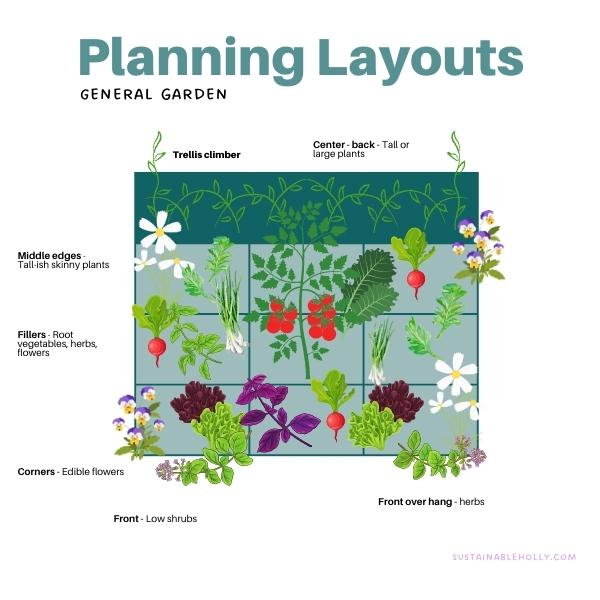
Planting a kitchen garden is fun because it can change each season. I like to plan my gardens with this structure
Back trellis: climbing plants: Cucumber Malabar Spinach
Back-centre: large shrubby plants: Rainbow Chard, Tomatoes,
Corners – edible flowers
Front – smaller low-level plants:
Gaps – root vegetables: Carrots, Radish, Beetroot
Very edge: cascading plants: Thyme, Oregano,
5. Kitchen Garden Planting
Select plants that grow quickly and have multiple harvests. Miniature versions and “pick and come again” crops are ideal! This means you can harvest small amounts often to use in everyday meals. Growing flavour enhancers such as herbs, lemons and limes means you will have quick and easy access to boost the flavour in your meals or create salad dressings and marinades.
This list will continue to be updated and links for plants that are featured in the A-Z grow guides.
6. Key for Everyday Harvest
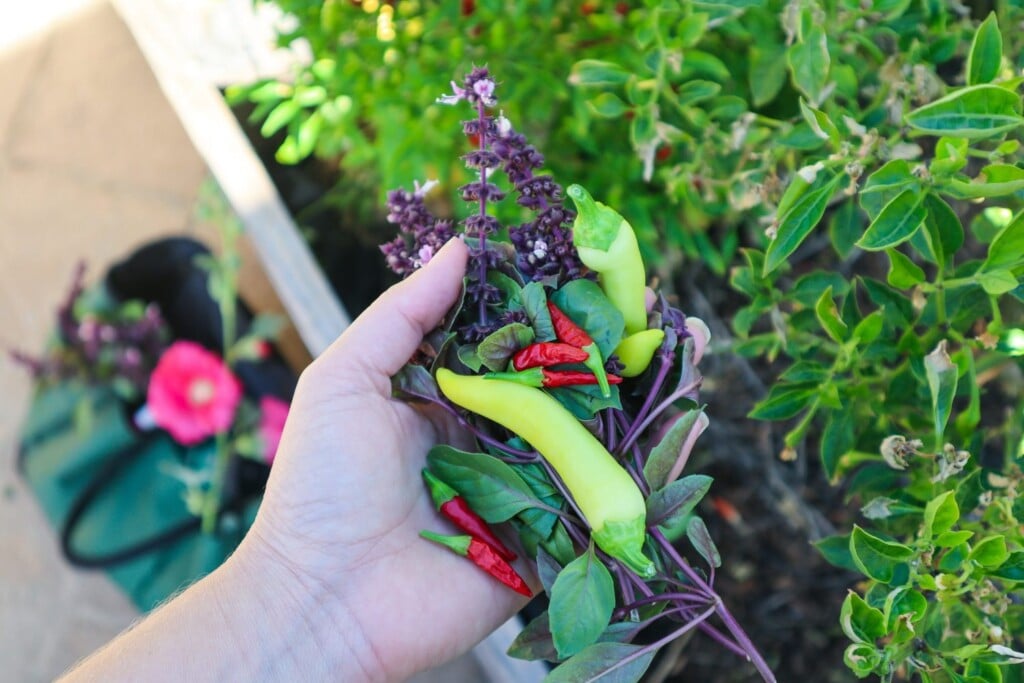
The more you cut and use your herbs and veggies the more they will produce. The plant’s main focus or goal is to grow flowers or fruit in order to produce seeds for its future existence. So by harvesting and using your herbs regularly you may receive more abundance from each plant. Try drying out your herbs or chillies or make a delicious garden pesto to preserve and extend your harvests. Dried herbs can be crushed and placed in a jar or added to salt for delicious homemade salt blends. These make fantastic gifts from the garden for everyone to enjoy.
Plant multiples in different beds
Utilise vertical gardening space
Continuously harvest and replant
Succession plant by time and variety
Get into a habit of checking the garden for every meal
7. Maintenance and Feeding
Top up bi-annually or seasonally
Prune and harvest
Liquid fertilisers – worm tea, compost, etc
Empty and clean drip trays
In-bed composting or worm systems
Creating a kitchen garden has so many incredible benefits. It is another way to add design and beauty to your home but with the added bonus of producing delicious, nutrient-dense food. Kitchen gardens are low maintenance and a great way to save money on expensive fresh herbs! In a world where we have lost touch with where our food really comes from, a kitchen garden is a great step towards taking back your food security.