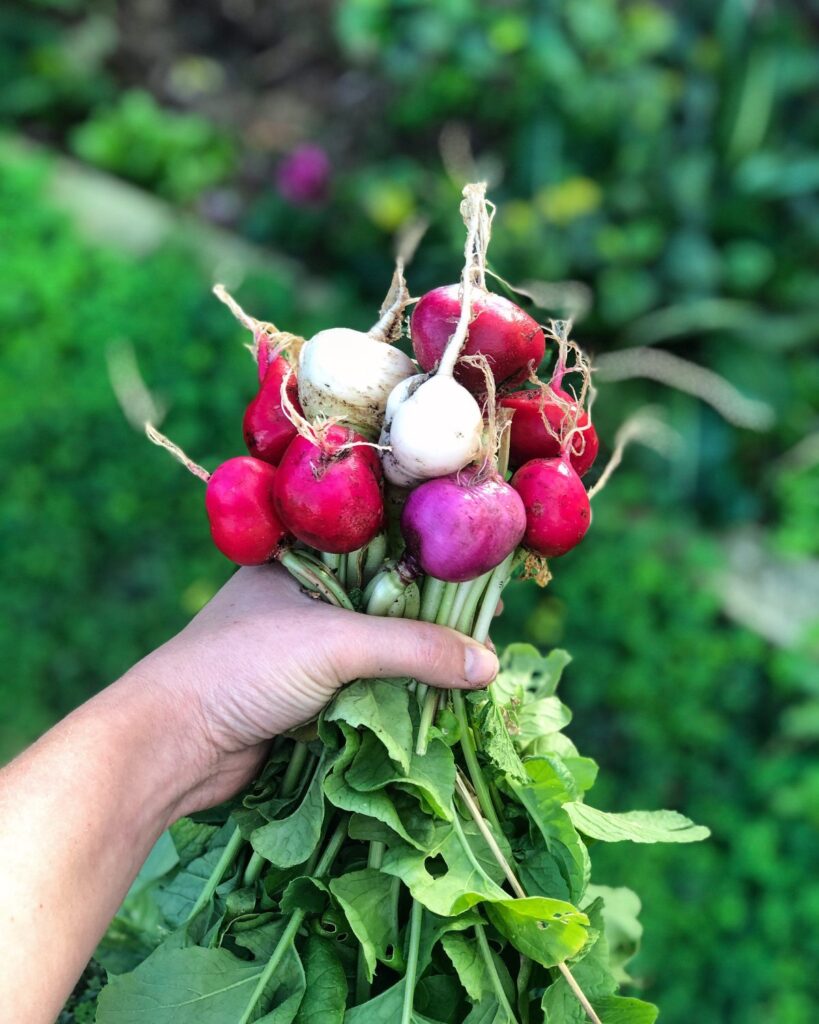
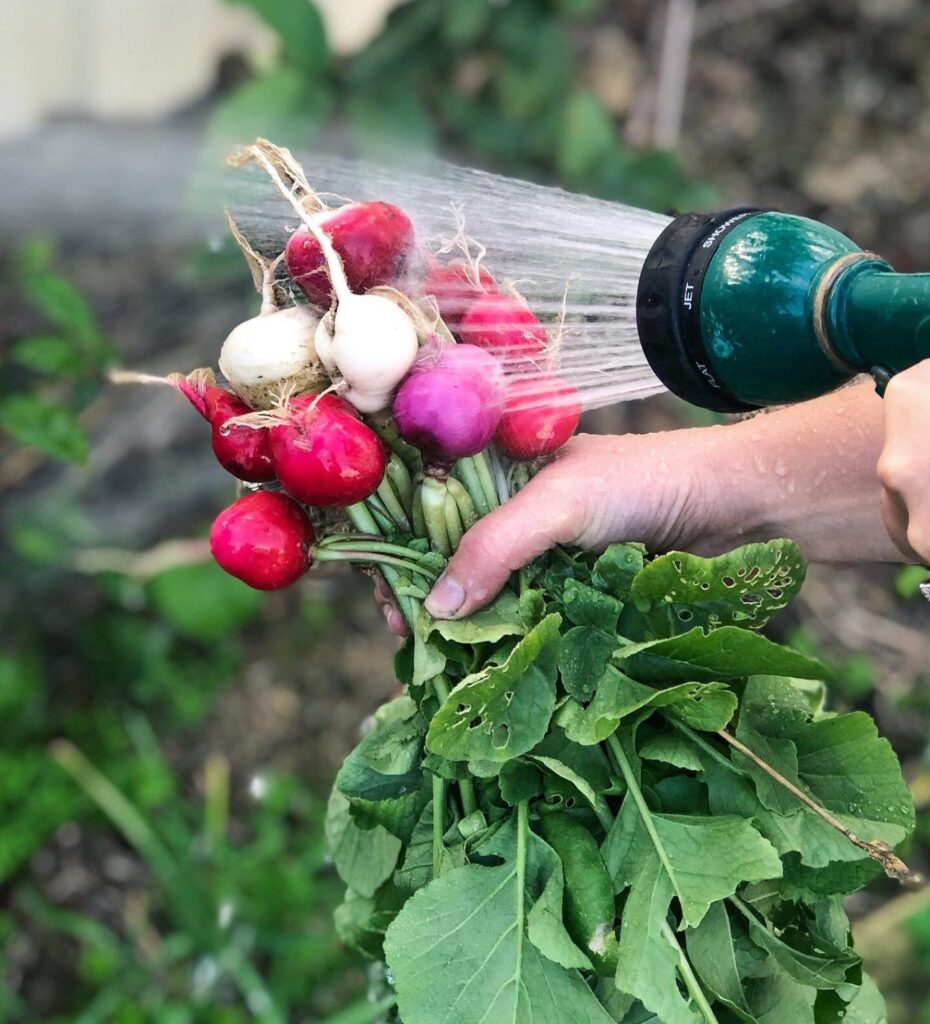
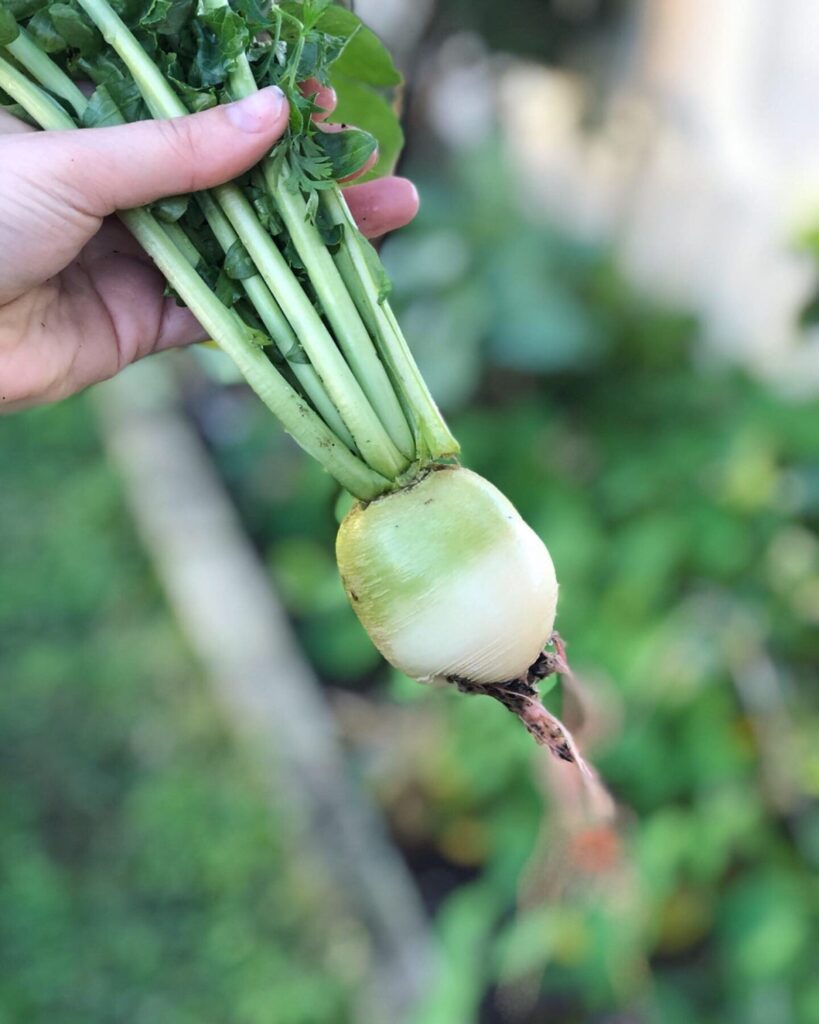
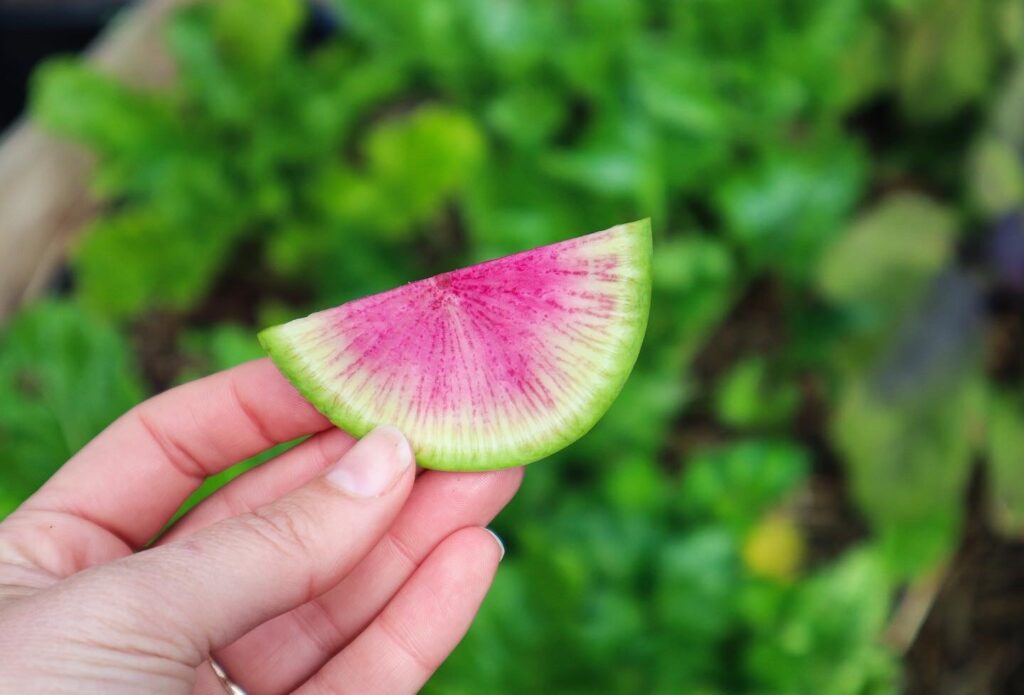
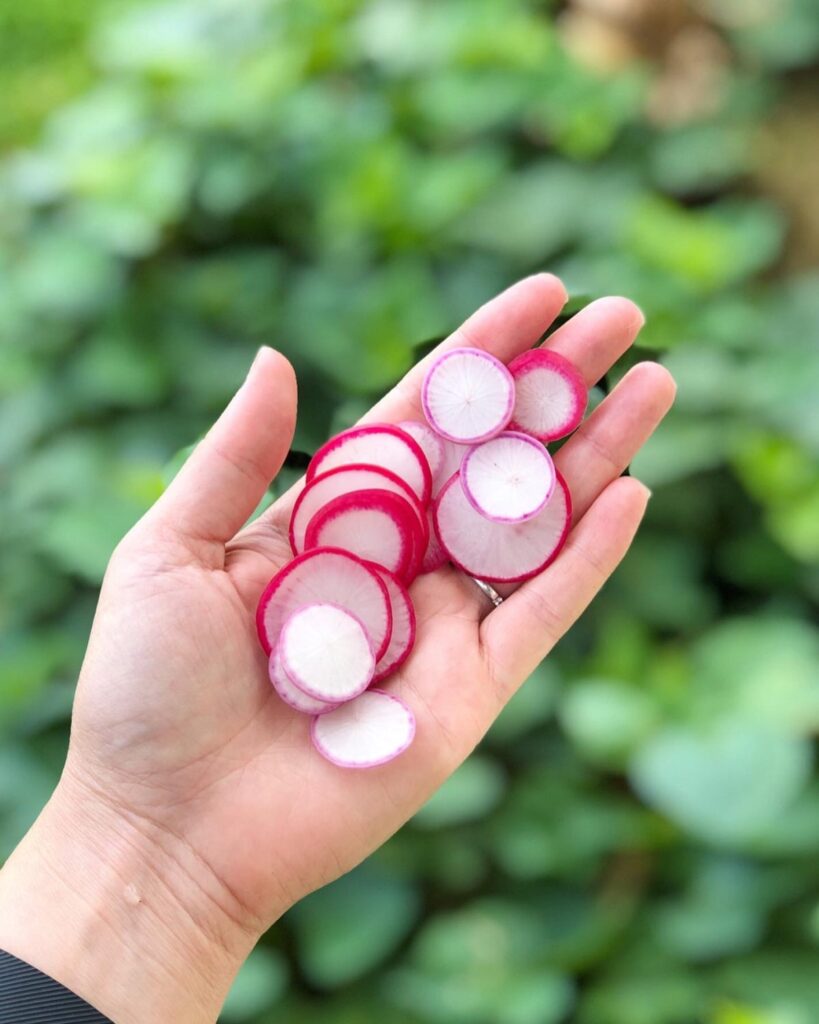
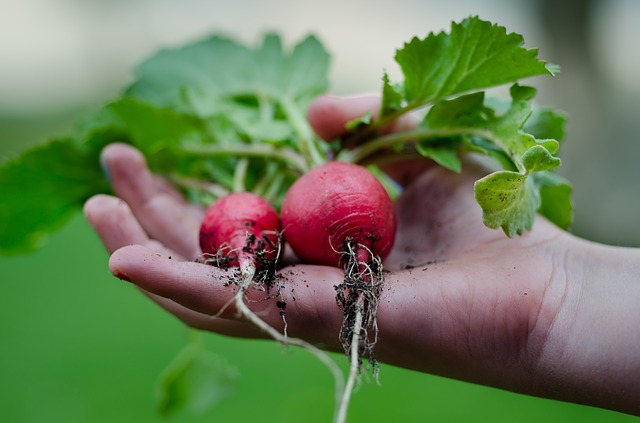
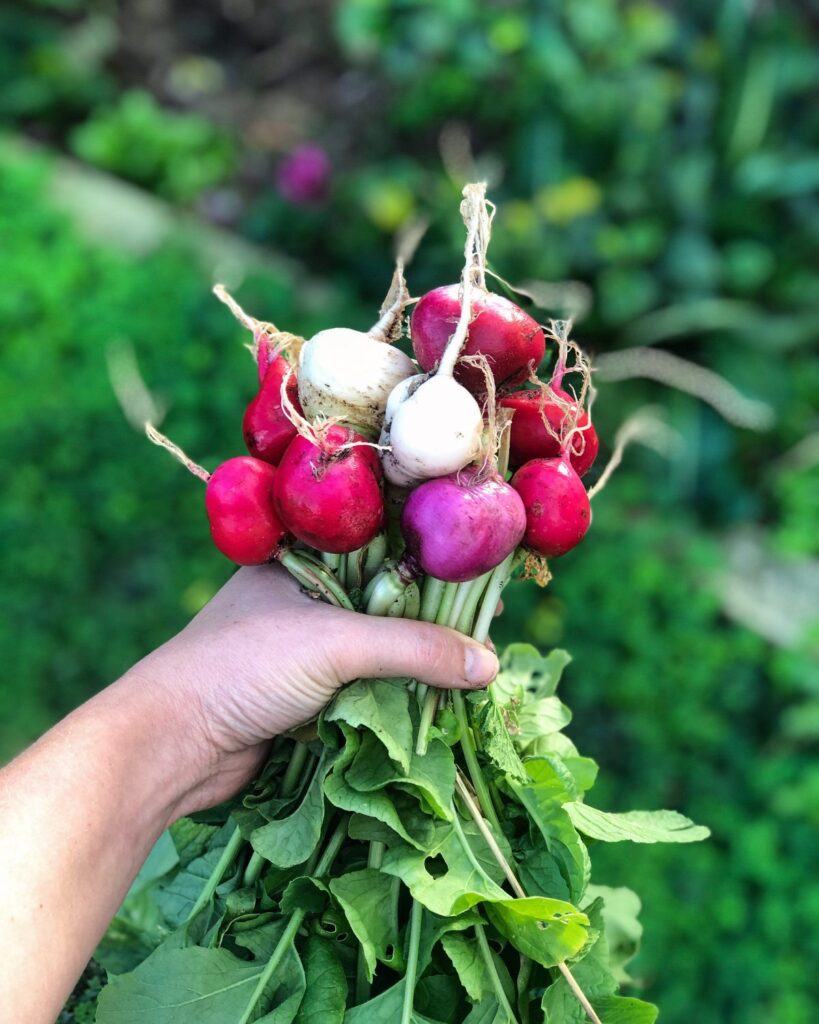
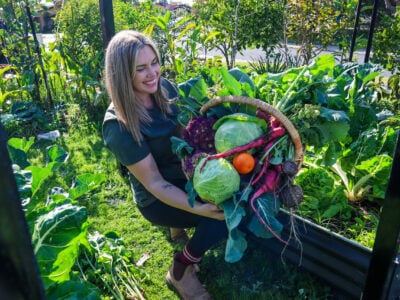
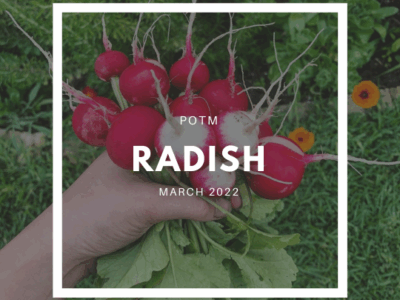
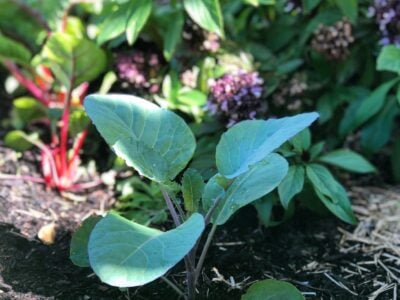
Radish (Raphanus sativus) are my favourite “filler” plants because they grow quickly and don’t take up much space. Radish are great for filling in the gaps between other plants or sowing alongside them as they will be ready to harvest well before your other vegetables need the space. The whole plant can be eaten root to shoot making it an excellent source of food.
Radish is easy to grow and can be grown for most of the year if given the right environment.
‘Black Spanish Long‘ – Black skin with contrasting white flesh. Fun to grow for something different.Strong flavour. Great fresh or roasted. Harvest 22-60 days.
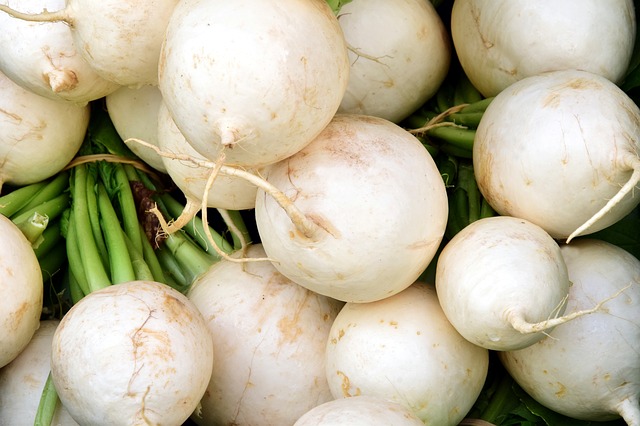
‘Diakon‘ – Large white radish. Mild flavour. Great for pickling and fermenting. 60cm long. Harvest 30-60 days.
How to Grow Radish
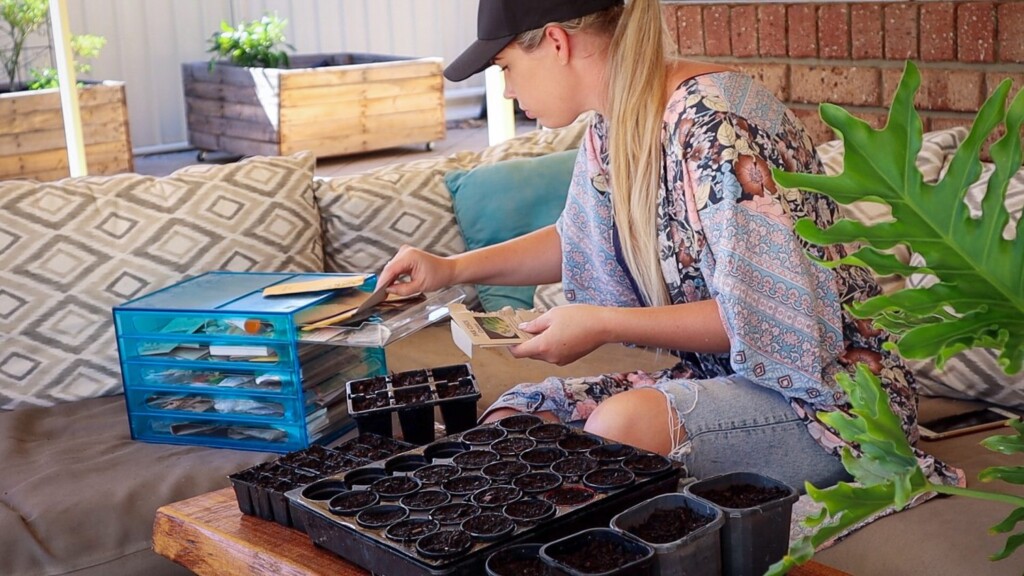
During Spring and Summer find a sunny spot with periods of shade so the Radish doesn’t get too hot and go to flower. In the cooler months of autumn and winter plant your radish in a full sun position. Radish and root vegetables tend to do best when sown directly into the garden. Prepare your soil by adding in compost or composted manure. Free draining soil that is not compact will allow the roots to grow. Wet down the soil first and place your radish seeds 3-4cm apart. Sprinkle with a thin layer of soil just enough to cover the seeds. Water again with a light sprinkle. Keep the soil moist and the seeds should pop up within the first few days.
Radish can also be grown in pots or containers.
I like to plant a few seeds around other vegetables such as cabbage, broccoli etc. The radish will be ready to eat before the other plants have grown big enough to shade them out or need the space. This can help you maximise the space you have to produce food.
When to Plant Radish
All Year round in most locations. In some cold climates, they may not grow in the winter. When growing in summer provide some shade or plant between other plants to offer protection from the midday heat.
Care/ Maintenance
Small radish seedlings can be a delicious snack for your garden pests. Check them regularly when they are young. Radish will benefit from some liquid feed or natural fertilizer such as seaweed solution about two weeks into their growth cycle. Be careful not to get it on the leaves as this can burn the delicate growth.
Pests / Disease
Young Radish will be vulnerable to pests such as slugs, snails, slaters and aphids. Check your seedlings regularly.
How/ When to Harvest
Radish are best picked when they are young or just ready. Leaving radish too long will result in a fibrous texture. After about 4 weeks the roots will start to rise out of the soil and you can harvest the larger ones first. If the bulbs start to split harvest them straight away. Radish will split when they get an excess of water. So it can be a good idea to harvest your radish before big rains.
Reproducing
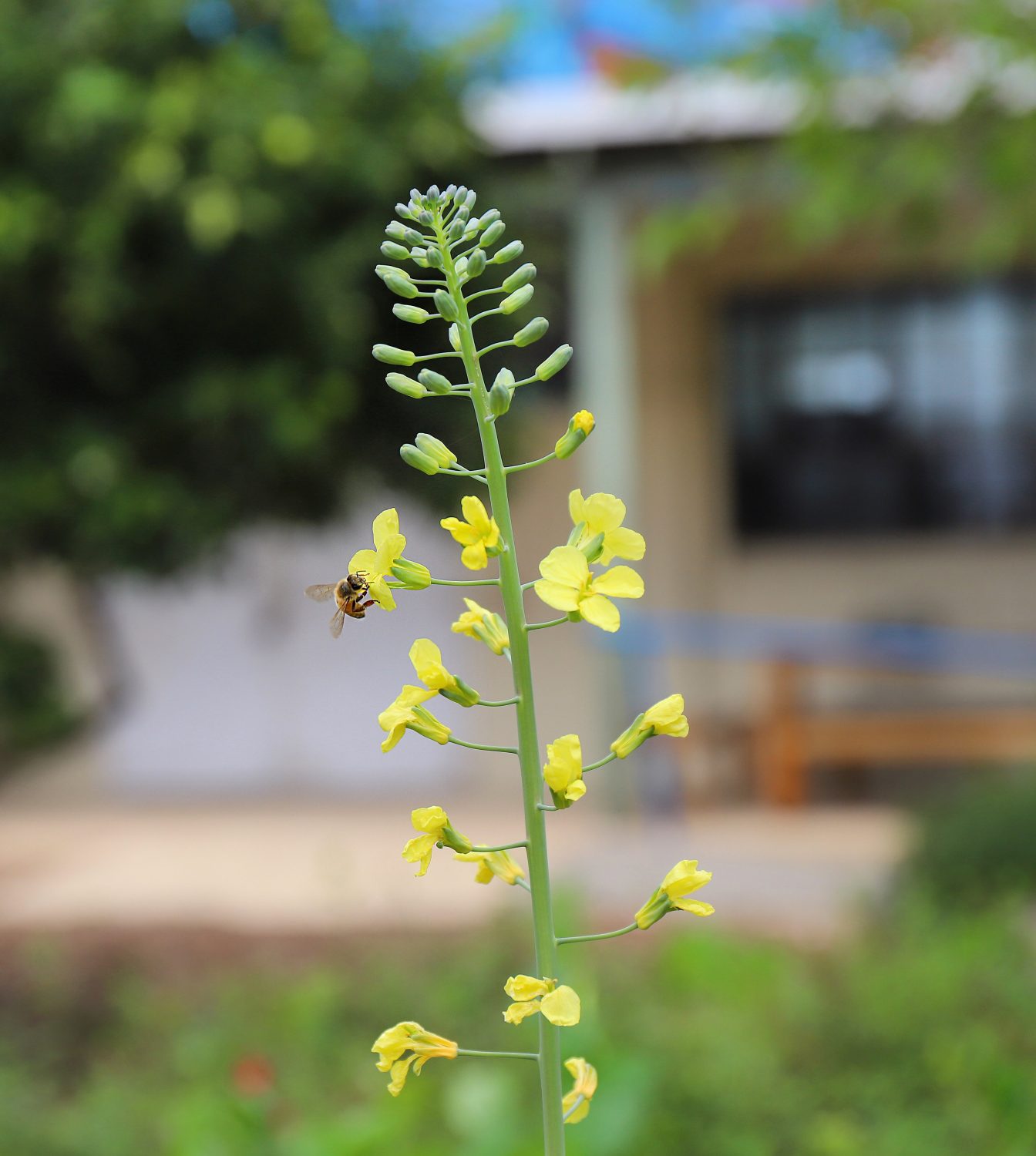
The best way to reproduce radish is to save the seeds. Let some of your best-looking radishes go to flower and then small seed pods will appear. Let them go until they are starting to go brown and hard. Then harvest the pods and let them dry. The seeds will be inside the pods. Split them open and shake out the tiny seeds into a brown paper bag. Save these somewhere dry and cool to replant.
Cooking and Using Radish
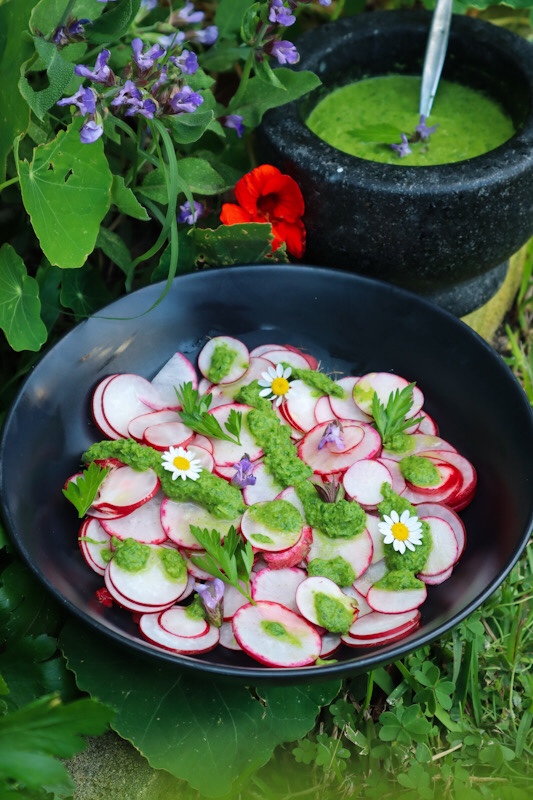
Radish tends to be underutilised in the kitchen. They are great fresh in a salad but there are so many other delicious ways to use your radish harvests.
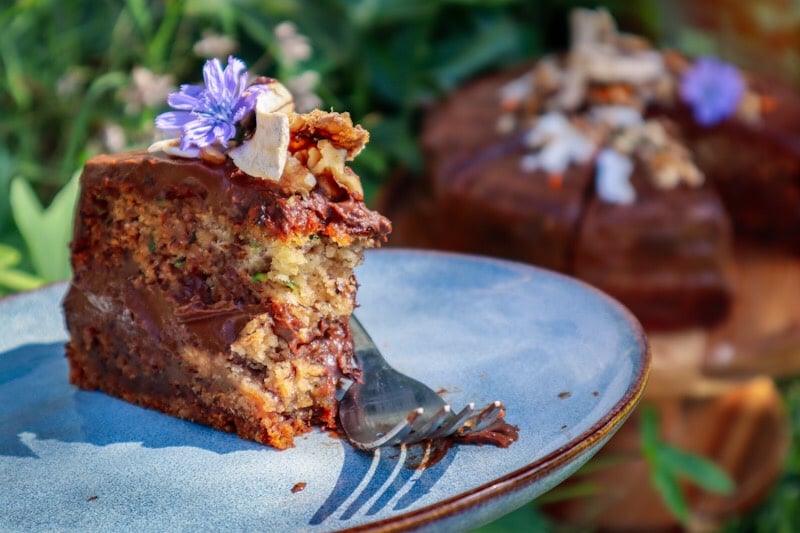
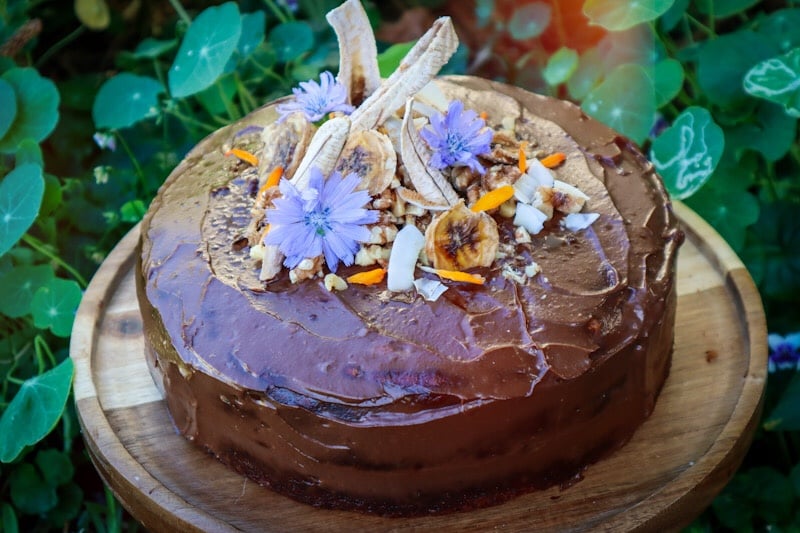
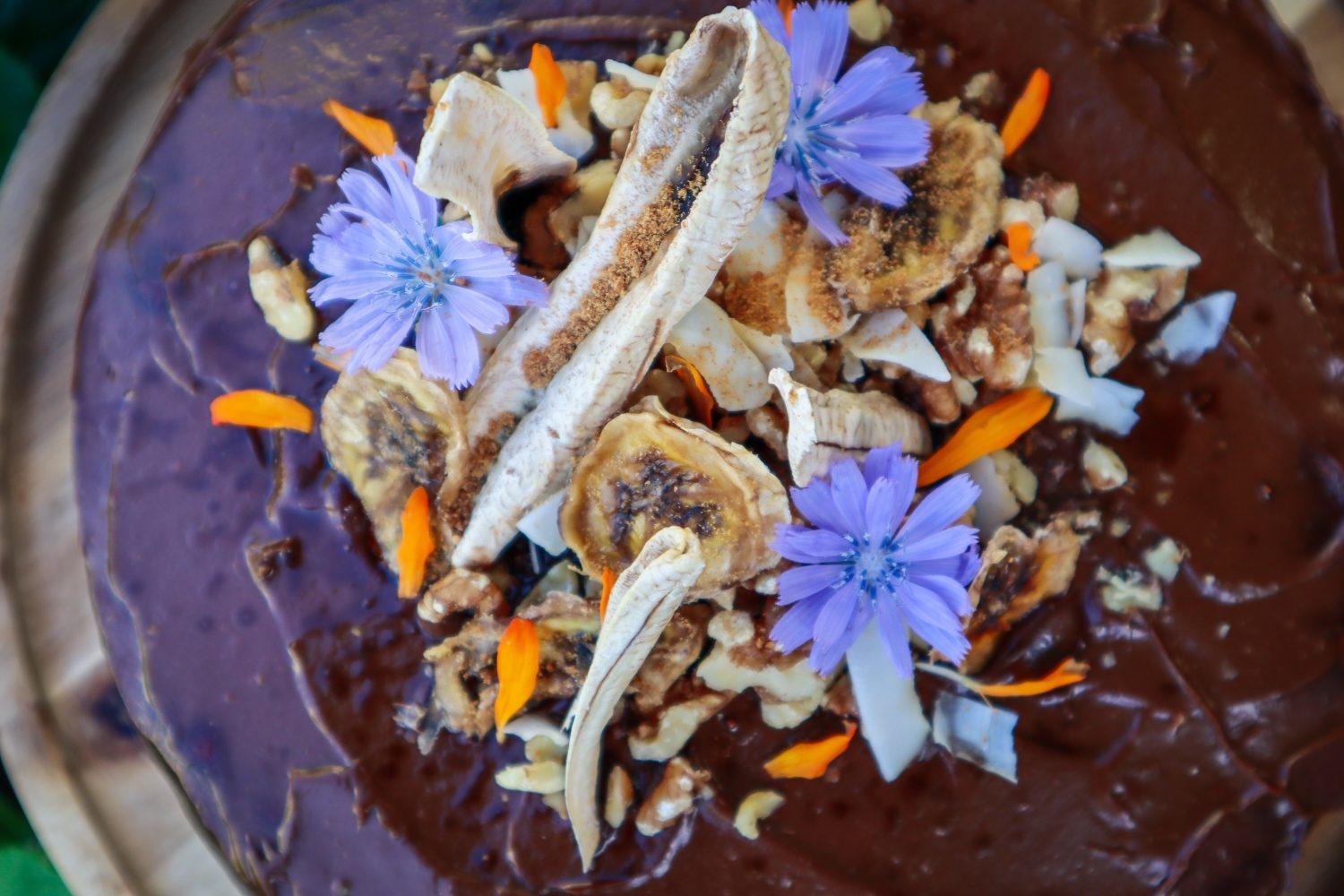
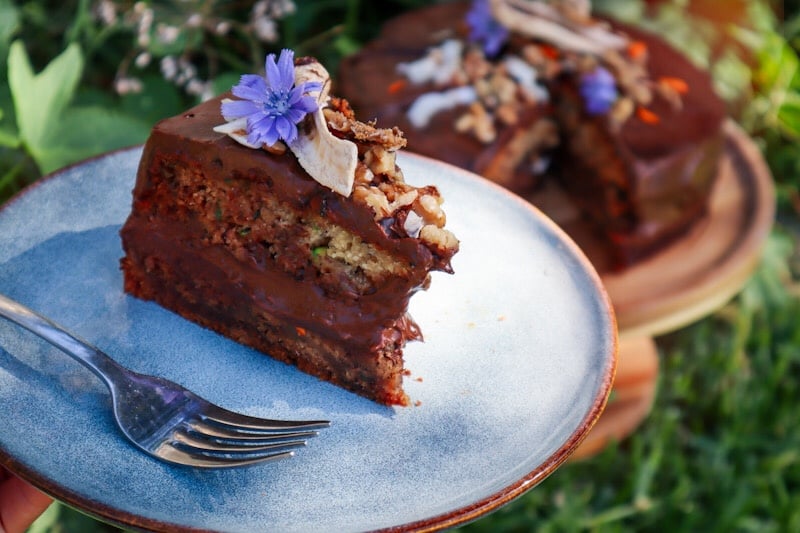
What do Banana, Zucchini, and Avocado have in common? They make a dream cake that is out of this world! This Banana Cake is so decadent and delicious! No one will even know there are hidden veggies.
Whether you’re looking for a way to use overripe bananas, a giant zucchini from the garden, or a bumper avocado harvest, this garden-to-plate cake is probably the most delicious creation I have ever made! Decadent, rich, and moist without being overly sweet, I hope you enjoy it just as much as I did.
Why Seasonal Gardening Recipes Are So Important
Something I am really passionate about is creating recipes that use seasonal harvests that are ready at the same time. Instead of being overwhelmed and confused with what to make with your harvests….you can create delicious garden-to-plate dishes that celebrate the seasonal produce. This recipe is ideal during summer and autumn when zucchini plants are producing heavily, and avocado trees are full of ripe fruit. If your bananas ripen all at once, peel and freeze them so you’re always ready to bake a cake like this.
One of my favourite things about growing food is discovering unexpected ways to use the harvest. This banana, zucchini and avocado cake is a perfect example. Three productive garden crops combine to create a cake that’s moist, flavourful, and surprisingly nourishing. Creating recipes is no easy task with plenty of failures, but when they do come together like this delicious cake, it is even sweeter!
Today I’m going to share with you 10 tips to grow more food from your edible home garden. These tips are so easy and you can implement them today to boost your garden’s production. No matter whether you are renting or living in an apartment.
It is no secret that we are facing a very real food security and shortage with many supermarket shelves completely empty. There has never been a better time to start growing your own food or ramp up your home gardens production. These tips will help you maximize the amount of fresh homegrown food you can produce from home. Starting NOW!
WATCH 10 tips to Produce more Food
10 tips to Produce more Food at Home
1. Trim your Herbs
Especially if they are starting to flower. Herbs such as Basil, Mint, and Thyme can all be grown in pots, and trimming the tops will promote a bigger bushier plant. When plants get hot, stressed, or are just left to just grow, they will send off flowers to produce seeds for another generation. Trimming off these seeds will let your herbs know that it’s not time yet, and to keep producing. Just chuck the tops and seeds back in the garden and they will sprout new plants, dry or preserve your herbs, or pop the purple stems in vinegar and make a vibrant basil infusion! You can then use this to make salad dressings by mixing with a little olive oil and lemon juice.
2. Regularly Plant “quick-to-grow” Crops
Quick-growing crops are great to continuously interplant in your garden to get quick wins. Edible plants such as Radish and Rocket are super quick to germinate and grow. Plant radish in the gaps of your garden for quick and easy food production. Radish isready from seed to table in just 28 days and is one of the quickest things you can grow! Radish not only provides fresh crunchy vegetables to add to salads but you can also eat the leafy tops by making pesto or chimichurri. If you are not a fan of the spicey radish, then try them with your roast veggies! So sweet and delicious!
3. Succession Planting
A little planning goes a long way in an edible home garden. If you know your veggies will be finishing up soon, plant new seeds to have seedlings ready to go. You can plant your new seedling out before you have pulled out the old ones so that you can transition straight away and prevent empty spaces from going to waste without producing food. I also like to grow different varieties so I plant each type two weeks apart to help stagger the crops.
4. Hand Pollinate
In an ideal world we will have lots of bees and pollinators in our home gardens to do the work for us. This isn’t always the case, especially if you live in an apartment or your gardens are new. Hand-pollinating can help ensure more of your fruit and veggies are pollinated and set to form full-sized fruit. We definitely want to encourage bees and pollinators by planting flowers but hand-pollinating can be an added insurance. This works best on plants such as Melon, Squash, Zucchini, and Pumpkin. Click here for more info on how to hand pollinate.
Your plant’s main goal is actually not to make delicious food to feed us humans… but to produce seeds to secure its future generation. If the plant feels it has enough fruit or vegetables produced with seeds it will slow or stop producing. Regularly picking your harvest when it is just ready will make the plant think that it has lost its seeds to predators so it will continue to produce more and more. So try not to leave things too long on the plant once they look ready. This also reduces the risk of other critters nabbing your produce first too.
7. Learn more about Root to Shoot
Conventionally 30-50%, maybe even more of the edible plants are discarded. Crops such as Beetroot leaves, Carrot tops, Brassica leaves and stems, Sweet Potato leaves, male Pumpkin or Zucchini flowers, and so much more! Learn what parts of the plant are edible and you could double the amount of food you have in your garden in a matter of hours!! I have some recipes on my blog but this is something we dive deeper into inside my membership.
8. Plant Perennials
Perennials are plants that last longer than 2 years. These may be a little slower to establish but once they do, they produce an abundance of food with just a little maintenance. These are plants such as Berries, Fruit trees, Artichoke, Asparagus, perennial Spinach varieties, Rhubarb and so much more! Having perennials in your garden will help you maintain your food supply. I also have an article on A-Z edible perennials available inside my membership.
9. Stack in Time and Space
Use the space you have in your edible home garden to grow both horizontally and vertically. This can maximize the amount of food you can grow. Having a trellis at the back of your garden or container can help create structure and expand your food production capabilities. I also let plants use my fruit trees to grow up. Whether that’s beans, tomatoes, melons, or pumpkins. Growing vertically can double the amount of food you can grow in a single space. Stacking in time is just like succession planting. Plant crops that will be starting to take off as the previous ones are finishing up. If you have a vertical crop that may produce more shade on the lower levels this can also provide a cooler climate to grow some more sun-sensitive crops such as lettuce. Especially in these hot summers.
10.Utilise Space with Container Gardens
Even if you have a large veggie patch, container gardens still have plenty of use. Container gardens are great for growing prolific plants that can be a little invasive. These are plants such as Mint, Nasturtium, and Sunchokes. Not only will you get lots of food but your precious garden space won’t be overrun with the weed-like growth of these plants. Containers are also good for maximizing the sun and shade. You can move them around during the year to follow the sun or reduce the amount of direct sunlight in summer.
Start TODAY with these 10 tips to produce more food from your edible home garden! Let me know if any of these tips sparked inspiration with you in the comments below.
Edible Perennial Plants are an investment in your future food production. Perennials grow back each year and provide long-term sustainable harvests. When creating a self-sufficient garden, edible perennials can form a really good base to build from. Annual vegetables can be a lot of work and it can be devastating if you lose a crop after all that time and effort. Having a mix of edible perennials in your garden will give you the comfort of knowing you will still have food available that will re-grow year after year.
Most of the vegetables we see in the supermarkets are annual vegetables that are grown for a single season and then harvested. This means that perennials are a little unusual for home gardeners to grow and cook.
What is a Perennial Vegetable?
Annuals – Grow for a single season and then harvested completely or die off
Biennials – Grow for a season and then flower or seed for the second season. Most are grown as annuals or left to collect seeds.
Perennials – Grow for more than two years and many can continue to grow for decades. They often die back in winter and re-grow in spring on their own accord.
Why Grow Edible Perennial Plants?
Re-grow each year without planting
Stable consistent food supply
Create diversity in the garden
Economical plant purchases
Low maintenance
Form deeper root systems to require less watering
Stabilise soil and reduce erosion
Require less feeding as they are slow-growing
Habitat for wildlife long term
Support no-dig gardens
Pros and cons of Edible Perennial Plants vs Annuals?
Many edible perennial plants are quite slow-growing. This helps them form strong established root systems to feed and support their growth for many years to come. This can mean that you may not get food from your perennial plants within the first year or two. However, all good things take time and time is going to pass anyway. Think of it as an investment that will have compounding growth and provide you with a sustainable future food supply. Saving your future self, time, and money!
Perennials stay in the same spot and regrow year after year so you need to make sure you select a suitable spot from the start. Look into how much sunlight/shade and type of soil they prefer before planting. This also means your garden beds will be allocated to that plant long-term. The great thing about annuals is that you can mix and match different plants constantly.
Note: Plants behave differently in each climate. What may grow as a perennial in some climates may not in others. For instance if it gets too cold or too hot each year the plant may die off and need to be replanted each year just like an annual would.
A-Z Top Edible Perennial Plants
Artichoke
Cynara cardunculus var. scolymus
Full Sun – summer harvest
Edible flowers
Beautiful aesthetic plant
Very popular with the bees!
Most produce in their second year
Harvest buds before they flower
Reproduce from side suckers
Asparagus
Asparagus officinalis
Full sun – spring & summer harvest
Produces for up to 30 years
Beds can look bare for part of the year
Grow underground and pop up in spring
Mulch well
Feed with animal manure
Seeds form from berries
Brazilian Spinach
Alternanthera sisssoo
Sub-tropical or tropical climate – All year round
Low growing lush green plant
Hardy easy to grow plant
Use as you would spinach
Propagate from cuttings
Likes humid weather
Blueberry
Vaccinium sect. Cyanococcus
Full sun – part shade
Grow to about 2m tall
Can fruit for up to 30 years
Likes acidic soil
Fruit starts really producing after two years
High in antioxidants
Produce up to 7kg of fruit each year
Chicory
Cichorium intybus
Full sun – part shade
Eat fresh or cooked to reduce bitterness
Great animal feed
Beautiful edible flowers
Attracts bees for pollination
Can be grown as an annual or perennial
Short lived 7 year perennial
Fennel
Foeniculum vulgare
Full sun – part shade
Green variety can be invasive
Edible leaves, flowers, seeds and bulbs
Easy care free plant
Leaves, seeds and flowers are great for flavouring pickles and ferments
Medicinal qualites
Horseradish
Armoracia rusticana
Full sun – part shade
Root crop that spreads (can be invasive)
Edible leaves and roots
“wasabi” like flavour used as a condiment
Great for flavouring pickles and ferments
Medicinal qualities
Likes cooler climates
Jerusalem Artichoke (sunchoke)
Helianthus tuberosus
Full sun
Edible roots
Low maintenance
Attracts Bees and Butterflies
Abundant production of crops
Drought tolerant
Good for mulch and biomass
Can be invasive – keep conatained
Pepino
Solanum muricatum
Full sun – part shade
Low-lying fruiting shrub
Melon flavour
Abundant production
Frost sensitive
Easy to grow, low maintenance
Easily grown from cuttings
Pineapple
Ananas comosus
Full sun – warm climates
Low maintenance
Re-grow from the top and side suckers
Low lying and can be grown in pots
Slow growing can take 2 years to fruit
Regrow to have many on the go and have regular fruit
Turn leftover Banana peels into a natural dried banana fertilizer to grow an abundance of fruit and vegetables.
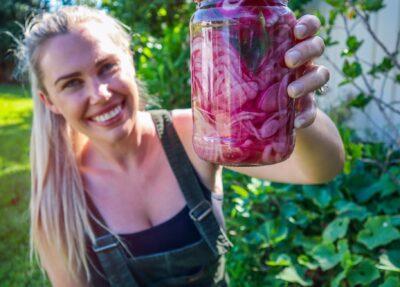
My name is Holly and I am on a mission to create a self-sufficient edible garden in my suburban property. I am converting grass into thriving urban permaculture gardens.
It’s important to reduce the amount of organic matter going to landfills because when it does go to the landfill, it is piled up and starved of oxygen. This process is not conducive to breaking down our scraps and they end up producing methane gas, which is not good for our environment. That’s where composting and turning our scraps into natural fertilizers not only boosts the health and production of our gardens but is also better for our planet.
Watch how to make Dried Banana Peel Fertilizer
Which plants will benefit the most from banana peel fertilizer?
Banana peels have potassium which is an essential nutrient for promoting more flowers and fruit on plants. Prioritize your dried banana peel fertilizer on your flowering plants such as Pumpkin, squash, capsicum, and fruit trees. Promoting flowers will offer more chances of fruit!
Having potassium on hand can help when you have deficiencies in the soil. Potassium deficiency can show as leaves turning yellow one falling off especially the older leaves.
If you are growing your own bananas and you get to harvest the fruit, then you can use your peels to feed the plants and create your own fully self-sufficient gardening system!
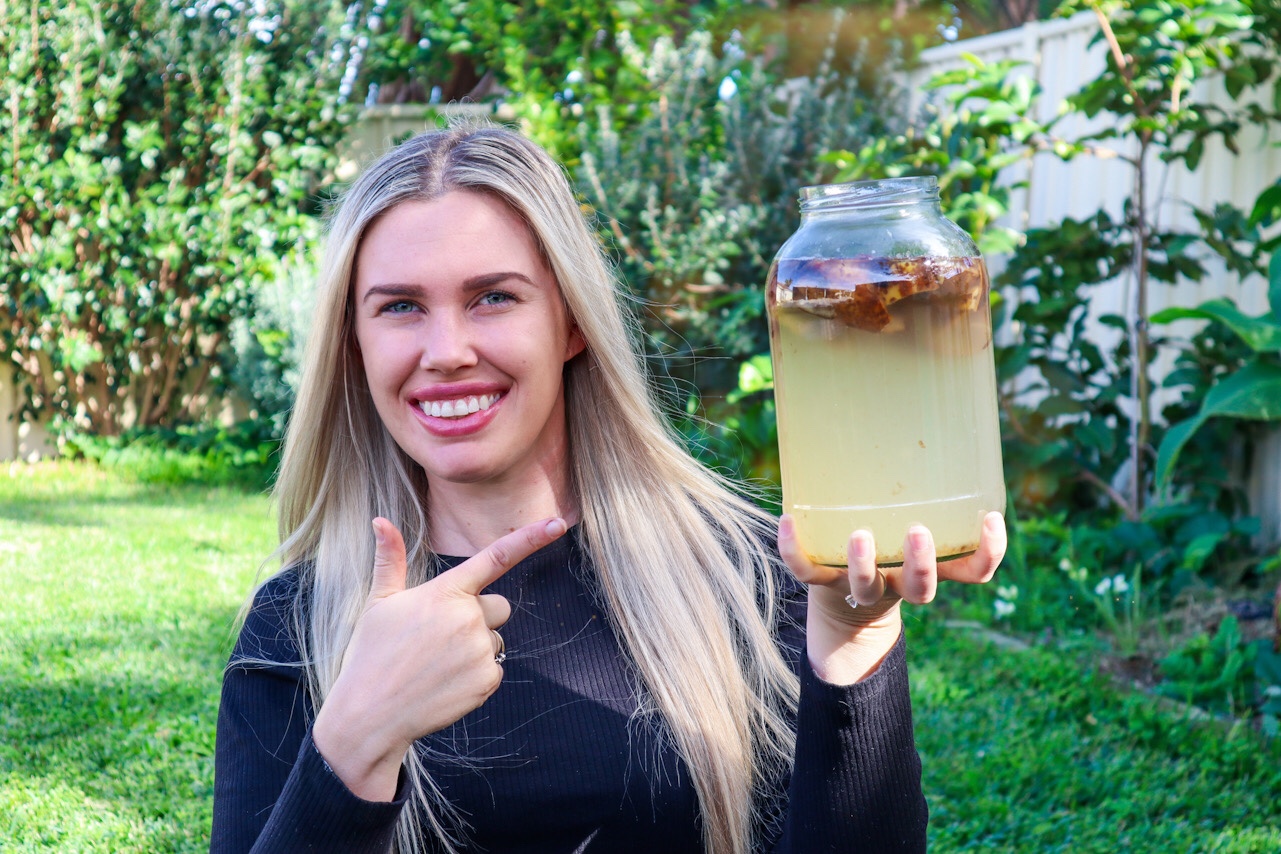
You can also make a banana peel fertilizer by soaking the peels in water. I talk more about that on my video about 15 natural fertilizers so definitely check that out for more ways to turn your homegrown produce into fertilizers to grow more of your own food.
How to make dried banana peel fertilizer?
To make dried banana fertilizer take your banana peels and lay them out on a tray to dry. You want to keep them somewhere warm and dry until they turn black and crispy. Natural Sunlight is great and will take 1-2 days to dry depending on the temperatures. You could also use a dehydrator to remove the moisture.
Chop the peels up a little to help speed up the drying process. Remove the ends and compost them as these will take a lot longer to dry.
Then once they are completely dry and crumbly. Crush them up into a powder using a mortar and pestle or a coffee grinder/spice grinder.
Sprinkle a couple of TBSP around your fruit and veggie plants. It’s that easy! You can also add 2 TBSP to a jar of water and mix to pour around your plants.
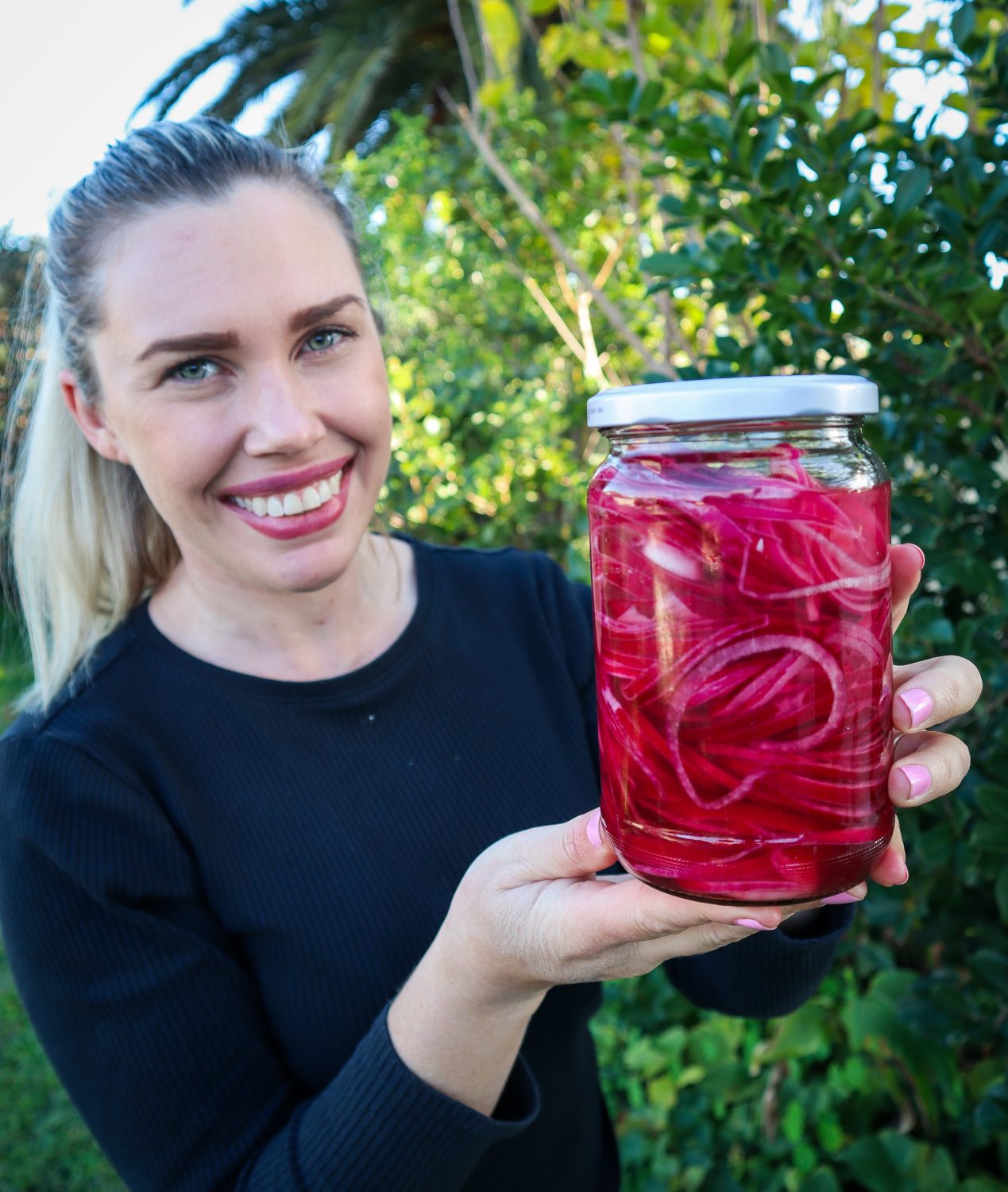
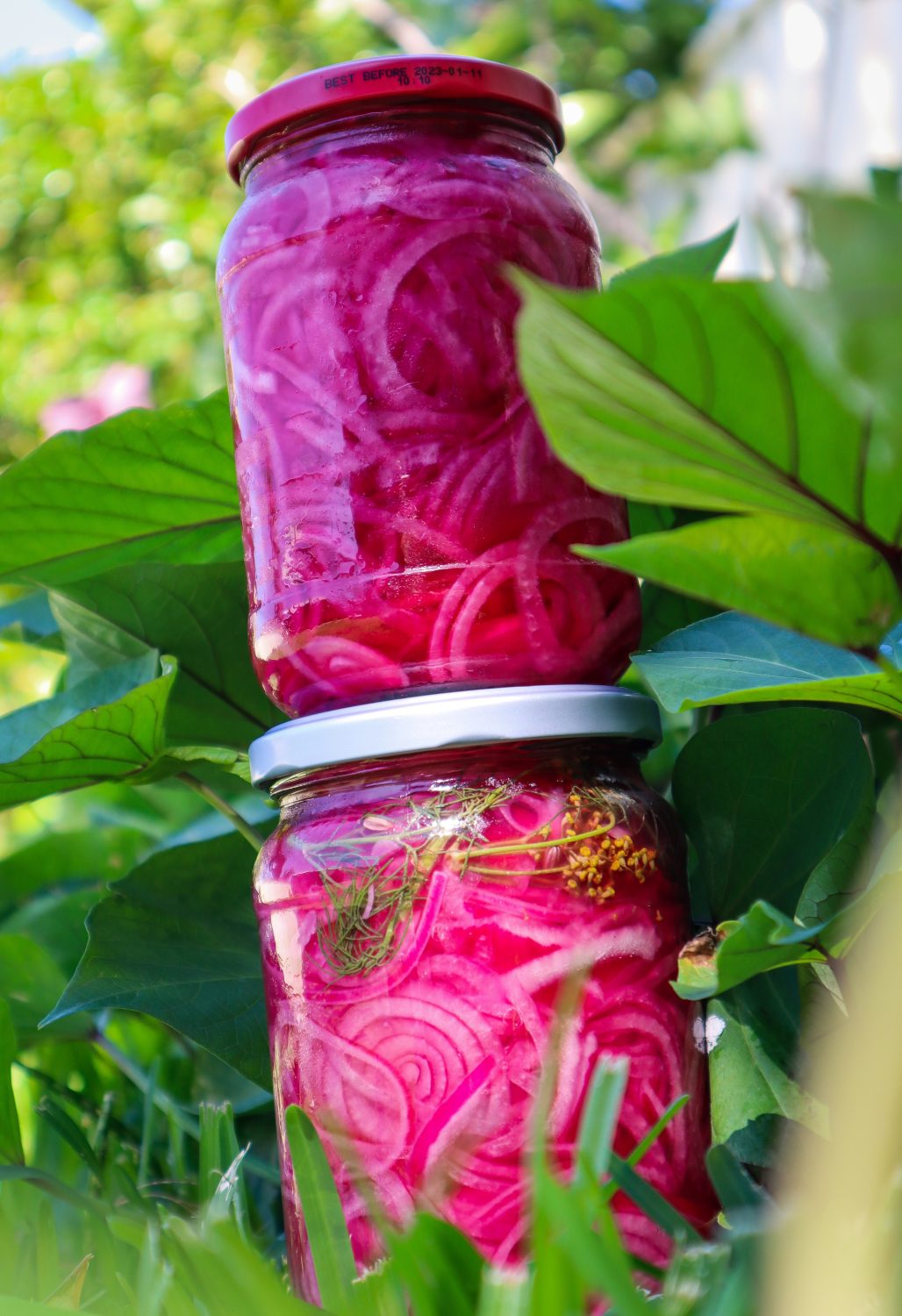
This simple homemade pickled red onion recipe is so easy and delicious! I can easily demolish a jar of pickled red onions in a week. They just get better and better as they continue to pickle and infuse. You can eat these pickled red onions on absolutely anything!! And I mean anything…avocado on toast, salads, stir-fries, tacos, noodles, cheese, and crackers, or in sandwiches. They also make beautiful, delicious garden-to-table gifts for your friends and family.
What You Will Need:
3 medium red onions, thinly sliced
¼ cup apple cider vinegar
¼ cup white vinegar
1 ½ tbsp raw sugar*
1 ½ tsp salt
1 cup water
½ tsp chilli flakes (optional, for heat)
The Benefits of Homemade Pickled Red Onions
Making homemade pickled red onions means you control everything from the ingredients to the flavour. No preservatives, no artificial colours, just simple pantry staples and fresh onions. I like mine on the sweeter side, but if you like yours spicy, then add more chilli. Plus, the flavour is far better than store-bought. I find store-bought (I’ve tried a lot of brands!) are weak and dull, and not to mention expensive! Not these! They are packed full of flavour and go a vibrant all natural hot pink colour.
sustainableholly
Simple Pickled Red Onions
Quick and easy pickled red onions add flavour to any meal. Add your seasonal garden herbs such as Fennel, Dill or Chilli to boost the flavours.
Finely slice the red onions – using a mandoline is the easiest option.
Cram as many red Onions into a clean sterilised jar.
In a saucepan add the vinegar, sugar, and salt and stir until the sugar has dissolved and the mix starts to simmer.
Add any extra flavours to the jar such as chilli, fennel flowers, fennel fronds, fennel seeds, mustard seeds, or peppercorns ( 1tsp per jar).
Pour over the liquid and secure the lid.
Allow cooling for one hour and place in the fridge.
Video
Notes
To sterlise the jars place in a hot dishwasher run or wash and heat in the oven for 10-15 minutes at 110 degrees Celsius.
You can swap and use just one type of vinegar if you prefer.
*Swap to honey (1 1/2 TBSP)
Add herbs or spices for extra flavour
Use within 3 weeks.
Homemade is best!
Homemade pickled red onions taste so much better, and they are so quick to make. I prepare a batch on Sundays, and it usually is gone within the week! Enjoy these Simple Pickled Red Onions on your morning breakfast toast with avocado (my favourite way) and egg, or in burgers, wraps, salads, and more! It’s such a versatile addition to your garden-to-plate meals!
Customise Your Homemade Pickled Red Onions
One of the best things about homemade pickled red onions is how easy they are to adapt. Add herbs like thyme, fennel flowers or dill for a fresh twist, or try slices of jalapeño or ginger for an extra kick. You can even swap in red wine vinegar for a bold colour. Once you start experimenting, you’ll find a version that suits your taste perfectly.
Want more Garden Tips?
🌱 Want a Thriving Garden? Get exclusive gardening tips, seasonal advice, and delicious homegrown recipes delivered straight to your inbox every Tuesday! Stay updated on new plants, garden projects, and more.Sign up now and grow with us! 🌿✨
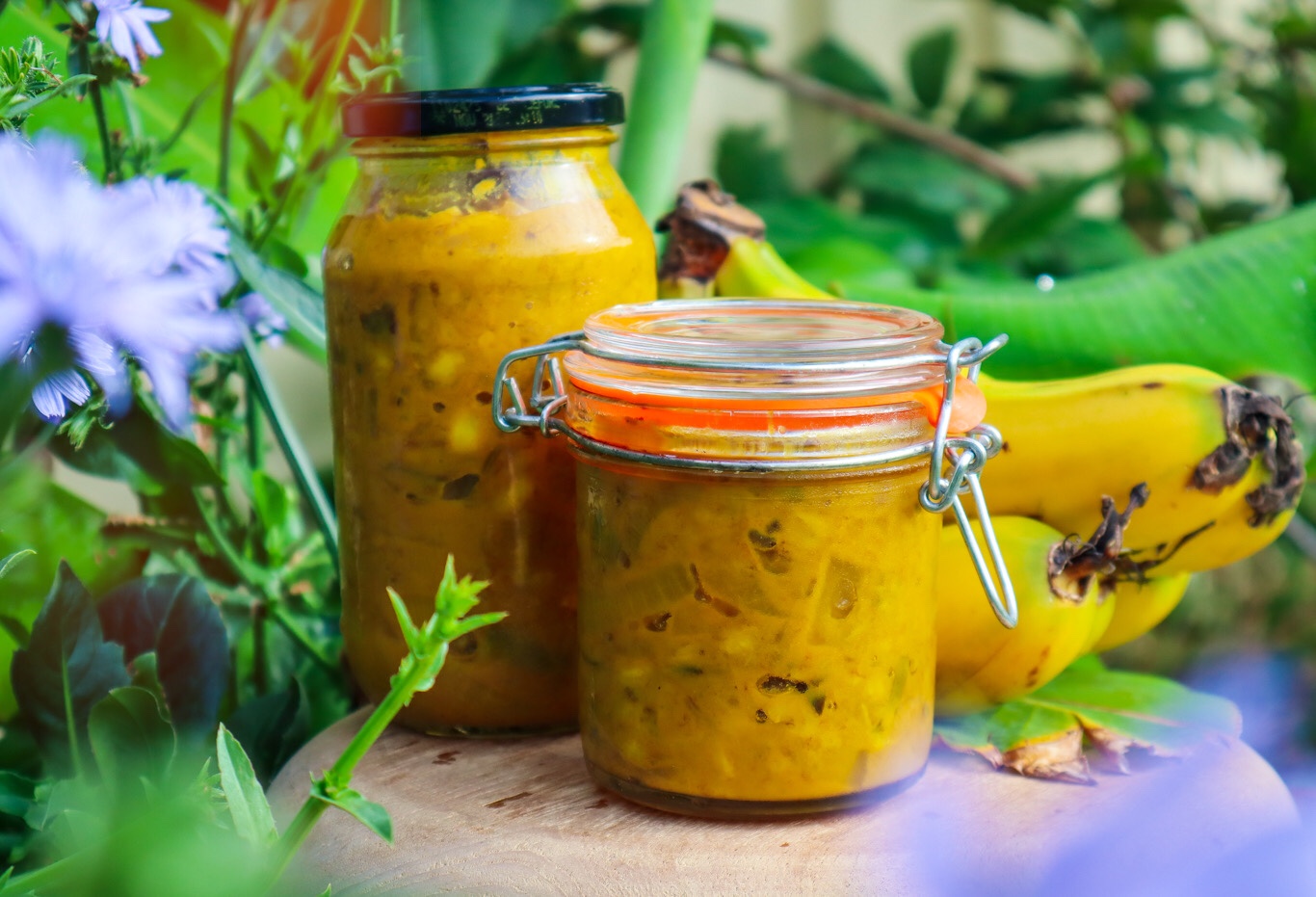
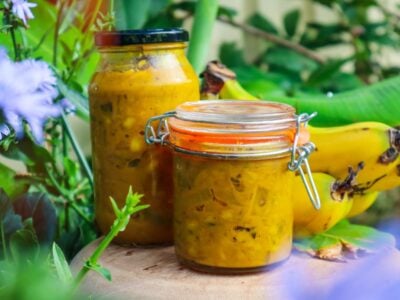
Banana peels are often discarded but they have so many uses both in the garden AND the kitchen! This Banana Peel Chutney is just one way to use up your leftover Banana Peels. This chutney has a warming, spicy kick to it and would go great served with fish or just on a platter with cheese. The banana peels are cooked down to be soft and have a similar texture to cooked onions. Give this Banana peel chutney recipe a try to produce more food and less waste.
[wlm_private “Garden to Plate Membership”]
Banana Peel Chutney
Warming Banana Peel and Onion chutney with turmeric and chilli.
Wash your Banana Peels well. It is best to use yellow-greenish organic Bananas. Cut off the ends and place the peels in a saucepan of water. Simmer on low-medium heat for 20 minutes. This helps soften the skins.
While your bananas are cooking, slice up your onion and cook in a frypan with oil. Stir regularly until onions have softened and started to brown (approx 20-25 mins)
Remove the Banana Peels, strain, and slice into small strips or chunks approx 1cm.
Add the garlic (crushed or finely chopped) to the onion pan. Stir for 1-2 minutes.
Add in the Tumeric, green chilli, and stir to combine.
Add in the mustard, vinegar, salt, and sugar. Mix to combine.
Add in the Banana Peels and mashed Banana, stir to combine. Simmer for 5-10 minutes until all the flavour has been incorporated into the banana peels. Taste and add extra salt or sugar to your liking.
Spoon into Sterilised Jars and allow to cool before placing in the fridge.
Notes
To sterilise your jars either run them through a hot wash on the dishwasher, cover them in boiling water, or clean and heat them in the oven at 110 degrees Celcius for 10 – 15 minutes.
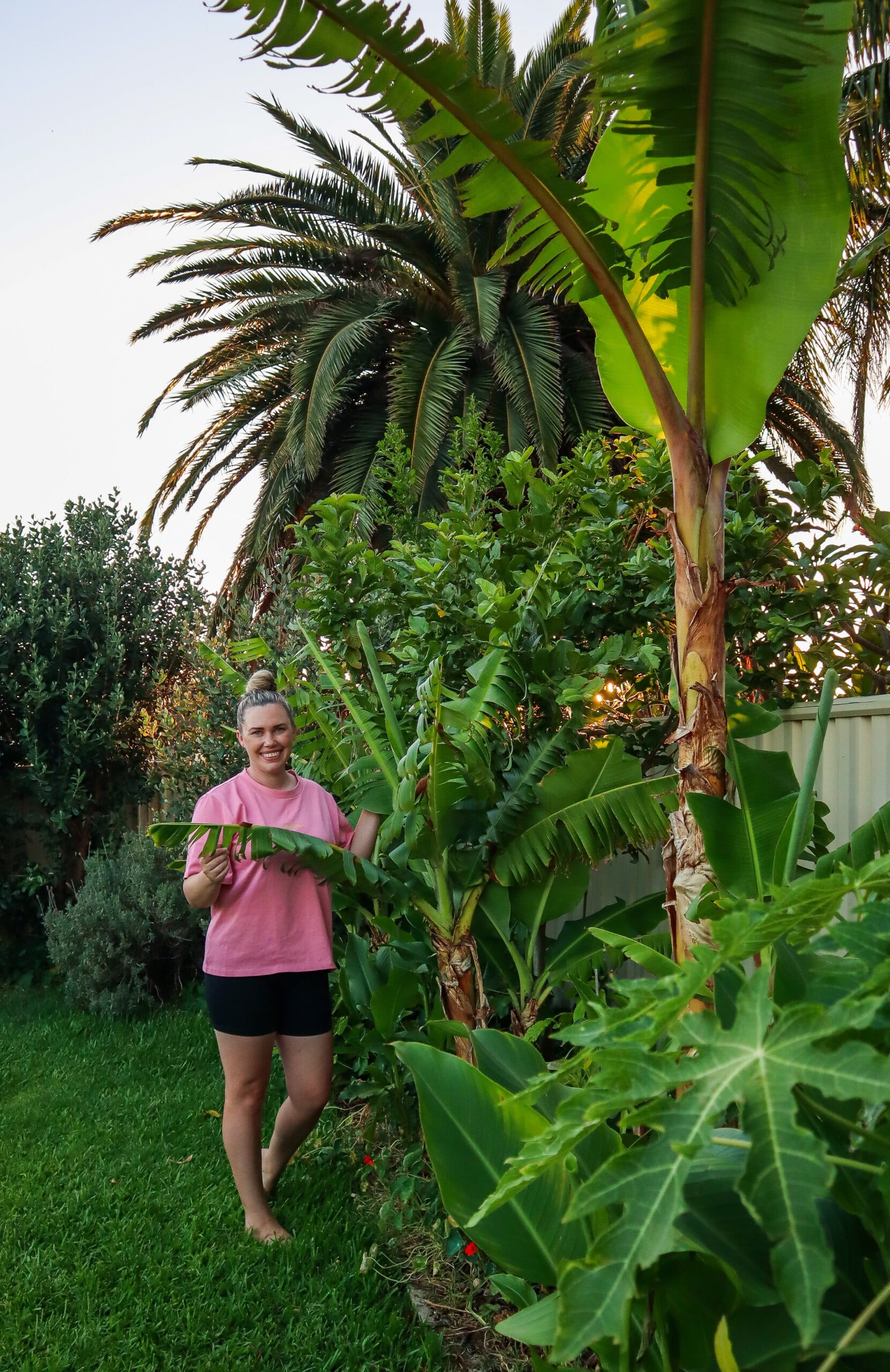
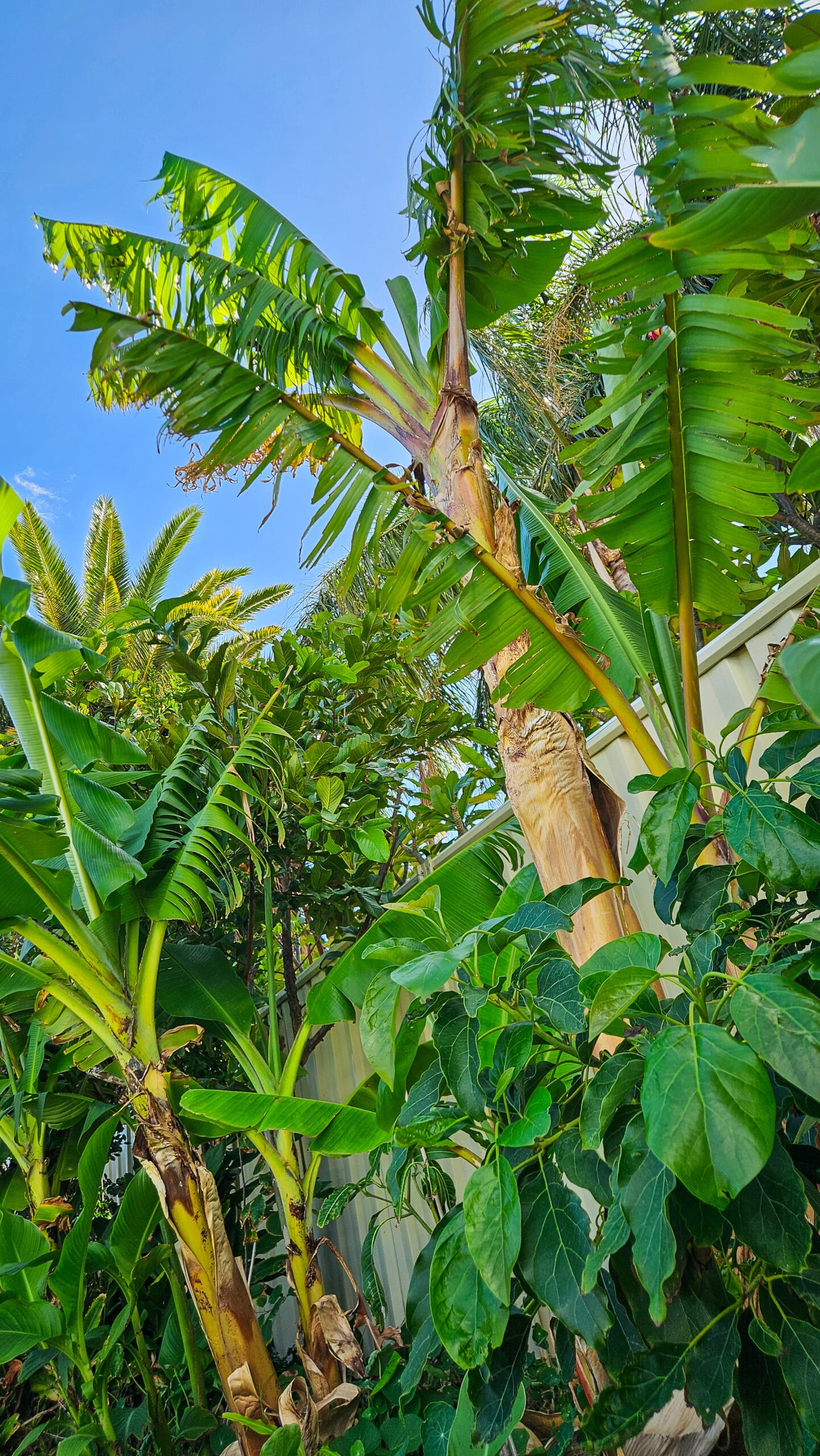
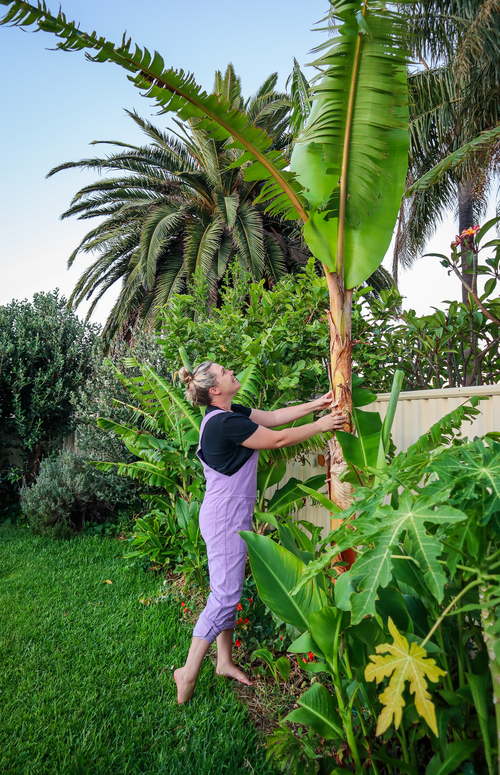
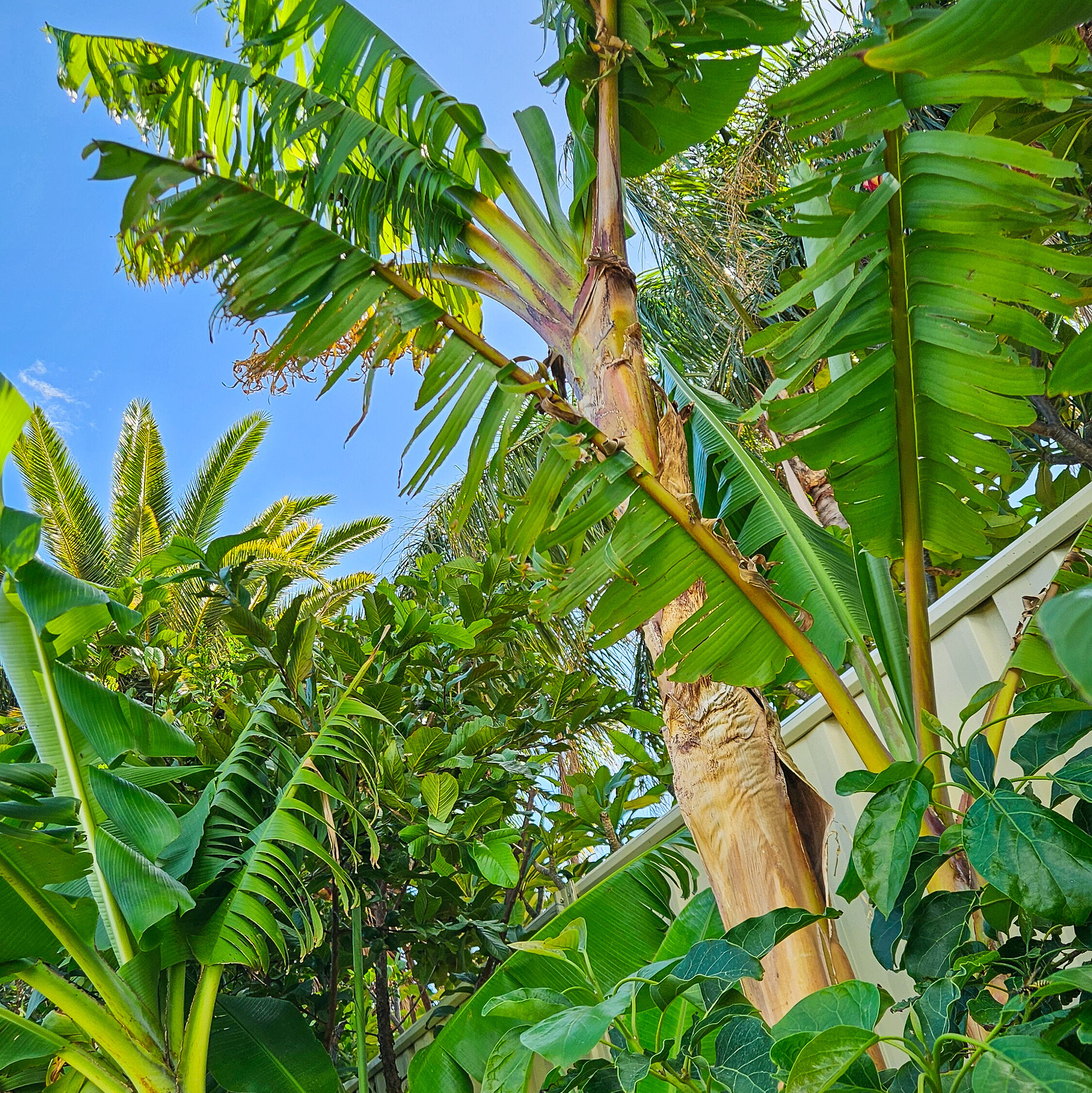
Learn tips and tricks on how to grow bananas and get abundant harvests. Bananas (Musa) are fantastic permaculture plants because they have so many uses both in the garden and the kitchen. Bananas are in fact, a perennial herb, not a tree. The bananas grow from a stalk that emerges from the centre of the banana palm.
Bananas come in both full-size and dwarf varieties, allowing you to grow them in both large and small space gardens. Plus, you just can’t beat the flavour of homegrown bananas!
Rich fertile compost and well-drained soil. Mound soil up.
LOCATION
Full sun. Protection from harsh winds.
CARE
Water and feed regularly.
FERTILISE
Feed with compost and with liquid seaweed fertiliser.
PESTS
Rodents may attack the fruit.Root rot in wet soils.
HARVEST
9 months +
REPRODUCE
Small “pups” form at the base of the main trunk.
Why Grow Bananas?
Bananas are quick-growing and have many beneficial relationships within the garden. Once you know what conditions bananas thrive in, they are easy to grow.
Here are some of the many reasons to grow Bananas:
‘Ladyfinger‘– Popular backyard banana. Small, sweeter fruit. Don’t turn brown once cut. Plant size 2-5m tall.
‘Gold Finger‘ – Cross between ladyfinger and Cavendish. High wind resistance. Quickest to fruit. Plant size 2-5m tall.
‘Cavendish – Williams’ – Medium-sized bananas. Popular variety. Thin peel and creamy texture. Plant size 2-5m tall.
‘Blue Java‘ – Cold-tolerant variety. Known as the ice cream bananas due to their creamy texture. Plant size 2-5m tall.
‘Red Dacca‘ – Dwarf sized plant. Deep maroon-red peel when ripe. Plant size 2.5m tall.
‘Dwarf Cavendish’ – Smaller version of the Cavendish. Ideal for pots or urban gardens. Plant size 1m tall.
‘Dwarf Ducasse‘ – Dwarf sized plant. Known as the sugar banana due to sweetness. Plant size 1-2m tall.
‘DPM 25‘ – Variety of Cavendish developed to resist Panama disease. Plant size 2-5m tall.
How to Grow Bananas?
Bananas like warm, sunny, sheltered areas. Choose a full sun location with at least 6 hours of sunlight a day. Bananas can be damaged by extreme heat, so in some places like Perth, semi-shade may also work well. Bananas are grown from small plants or “pups” so check out which varieties you want to grow and visit your local nurseries. Due to the spread of diseases, there are restrictions in Australia around swapping and trading bananas. Bananas are heavy feeders, so make sure you add lots of compost and composted animal manure into your soil. Make a mound around the base so that the water drains off and the banana has plenty of food.
In permaculture design, bananas are often grown in a banana circle. This way you can add piles of compost, mulch and plant matter to break down and feed all the plants around the circle.
Papaya and root crops such as turmeric and ginger are often planted alongside the bananas to utilise the space. They are also heavy feeders, so make sure there is plenty of compost and plant matter around them. Bananas grow quickly and can be great for preventing soil erosion on sloped blocks.
When to Plant Bananas?
Plant Bananas during the warmer months of spring and summer.
Care/ Maintenance for Bananas
Banana plants are made up of a high percentage of water so they do need adequate moisture to grow. They just don’t like having soggy roots. Well-draining, fertile soil with plenty of mulch or cover crops will help retain moisture. Bananas want all THE FOOD so regularly feeding of compost, natural fertilisers and mulch can help your bananas thrive. The leaves will get damaged by winds and turn brown. You can cut these off and lay them at the base of the plants to return nutrients back into the soil.
Pollination/ Fruiting
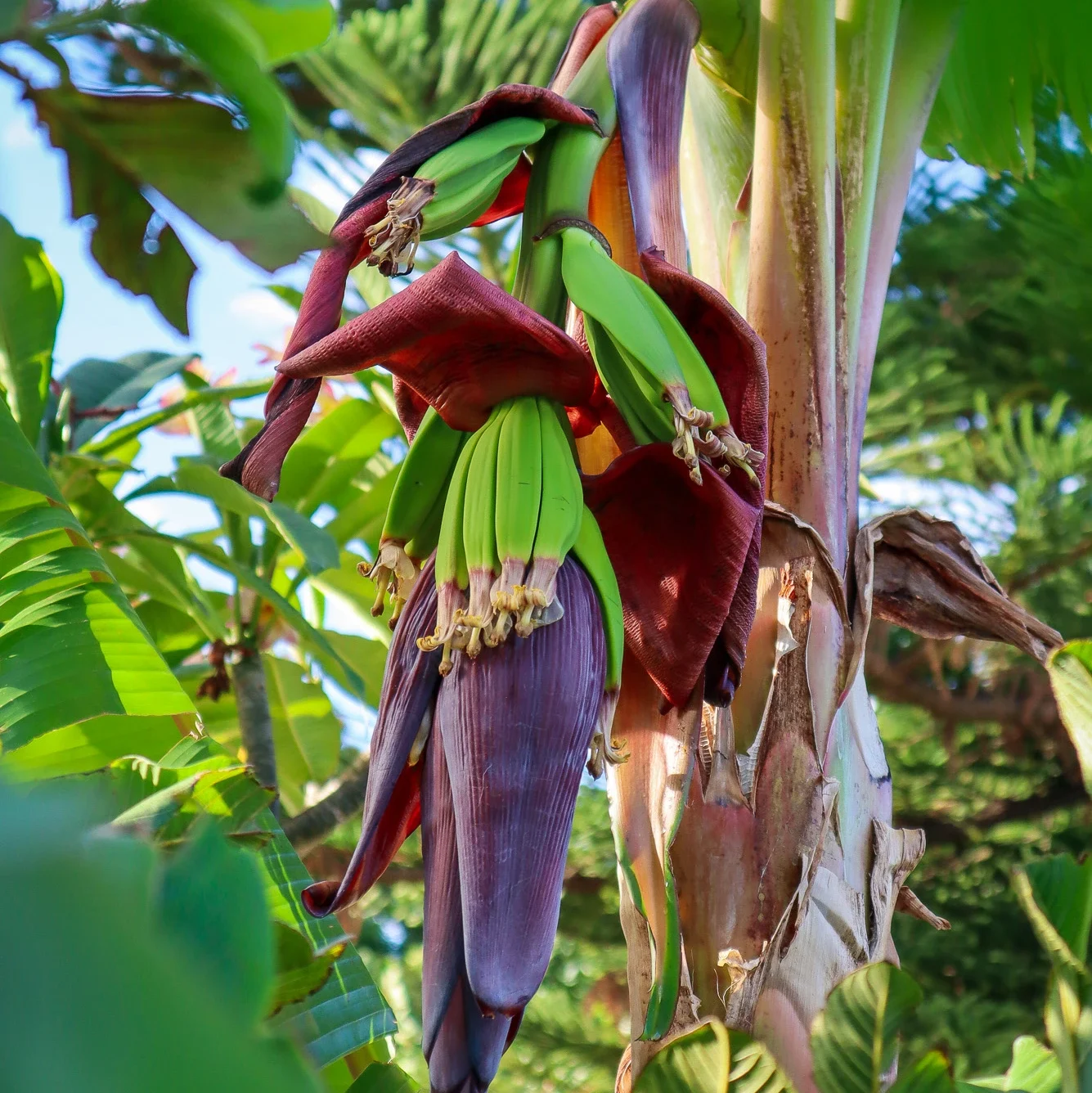
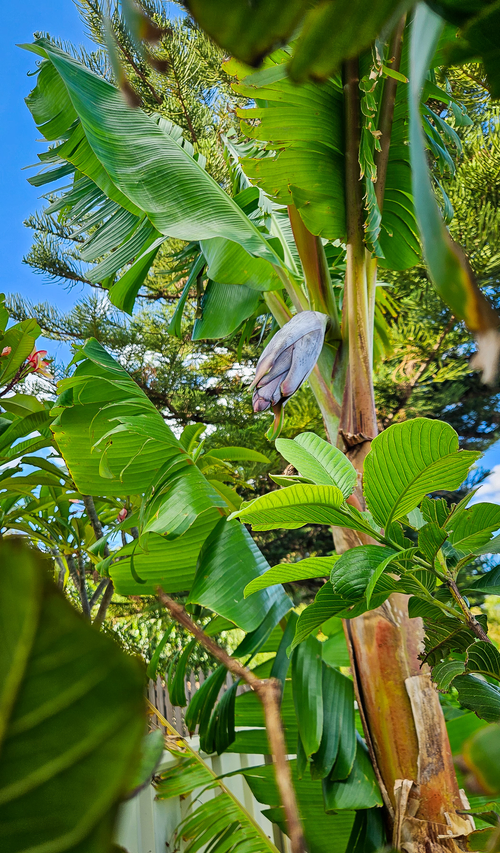
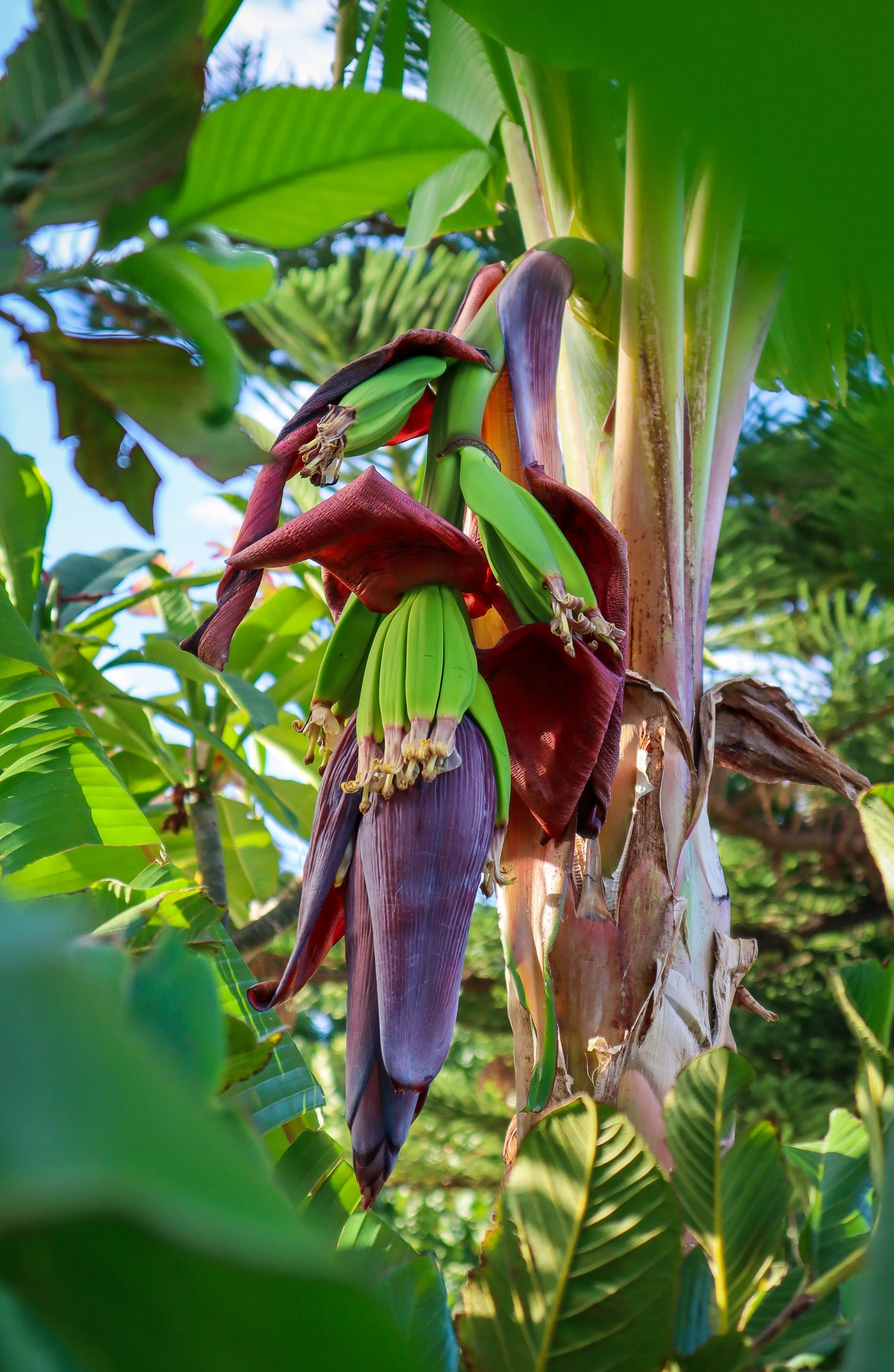
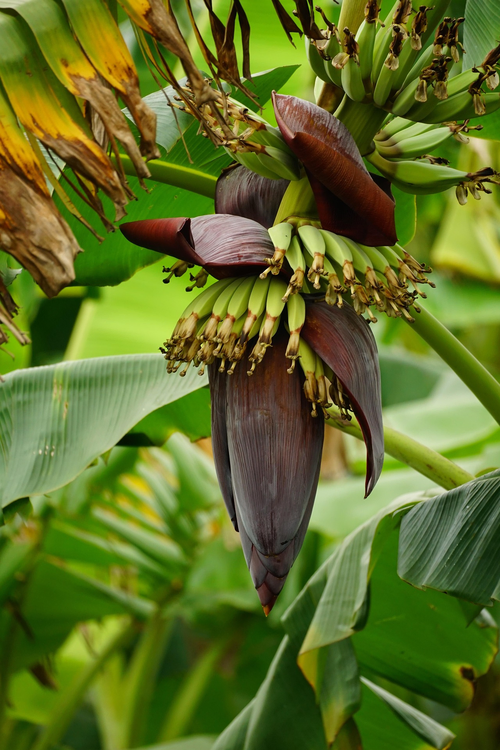
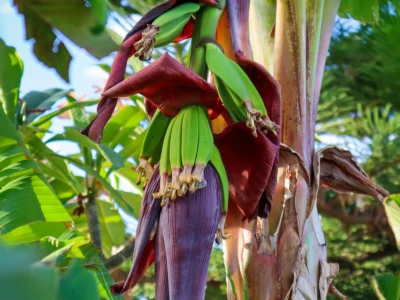
Bananas first send up a short leaf about half the size of normal, closely followed by the “flaf leaf”, this is a sure sign a flower is on the way! The flag leaf is short and grows straight upwards. Bananas send up a flower through the centre of the plant on a spike called the inflorescence. The flowers will have both male and female so you do not need multiple plants for pollination to occur. Once the bananas form, you may need to add support to the bunch to stop the weight from pulling the whole tree down. This will depend on the size and strength of the plan,t and also if you have strong winds or storms.
The small bananas will start to form facing downwards. Once they turn upwards over a few days, it may be beneficial to cover the bunch with a bag. This protects the bananas from birds, bats and other insects.
How to tell when bananas are ready to harvest?
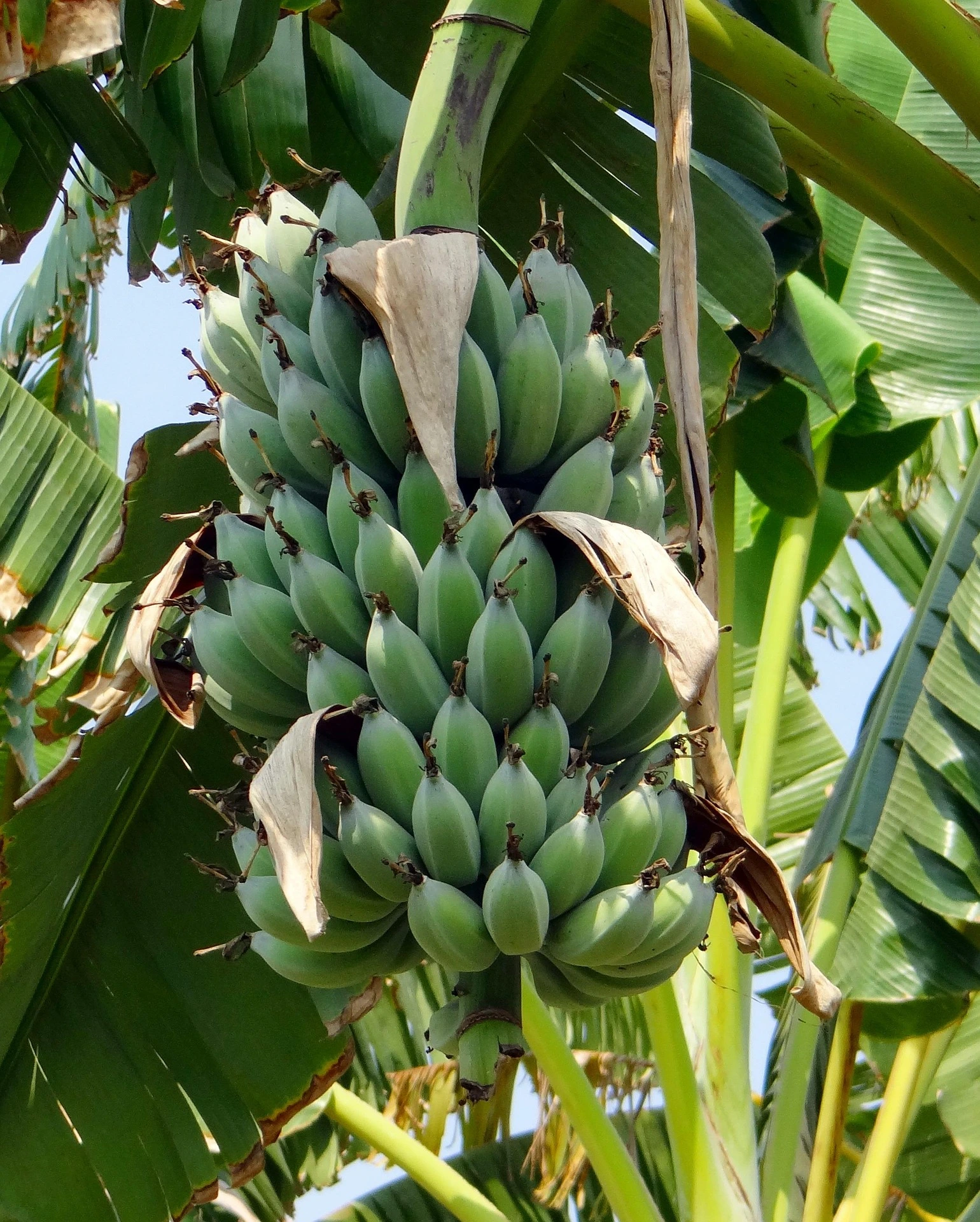
The bananas will ripen off the plant if you harvest them at the right time. You want to wait until the bananas start to be more round and less angular. Or wait until the first banana goes yellow, then they will be ready to harvest. You can harvest each “hand” of bananas as they start to ripen, or you can remove the whole bunch and hang it somewhere dark, dry, warm and protected to ripen off the tree. Under a patio or veranda is always a good option.
Bananas only fruit once from each single plant. Once your bananas are ready, you can chop the entire plant down. Cut this up and add to your banana patch as mulch to break down and add nutrients back into the soil.
Pests / Disease
Bananas can be prone to diseases, and due to our high commercial crops here in Australia, there are regulations to help stop the spread of diseases. This includes only purchasing plants from trusted nurseries and not swapping and trading plants around the community.
Bananas are popular among many pests such as birds, bats, rats and fruit flies. Covering the bunch with a banana bag or a recycled plastic bag can help reduce the risk of losing your delicious crop.
How/ When to Harvest Bananas
Bananas will be ready to harvest when they:
Are light green to yellow
Have no harsh angles but are rounded and smooth
The flower remnant at the ends of each banana comes off easily
Cut the stalk with at least 20cm at the top to hold and hang
Cut the whole tree down as it will die anyway, and use for mulch
Remove the ripe bananas and hang the main bunch up somewhere cool and dark to continue ripening.
The purple blossom end is also edible. Remove the hard outer leaves to reveal the soft pale centre.
Note:
Remove the bag for hanging and ripening purposes, or they will ripen too quickly.
Ensure they are hung somewhere that pests cannot get to them.
Bananas can be picked when they are still green to use as a savoury “potato” substitute.
Reproducing Bananas
Bananas have been cultivated to have no seeds for optimum eating. The best way to reproduce bananas is to dig up the small suckers or “pups” that start growing from the base of the main stem. Look for suckers that are at least 30cm tall and have narrow, sword-like leaves. The broadleaf suckers will still grow, but have smaller root systems as they rely on the main plant for water. Use a sharp blade or spade to detach and dig up the side sucker.
Cooking and Using Bananas
Bananas are super versatile and can be used for both sweet and savoury dishes. The banana leaves can also be used as a substitute for baking paper to steam and infuse flavours into meals. This technique is often used for steaming fish or rice. Banana leaves also make great natural platters, plates and serving dishes. Simply compost them after!
Bananas produce in huge abundance and can ripen quicker than you can eat them. Freezing and dehydrating bananas is a quick and easy way to get the most out of your harvest. Below are a few ways to utilise your ripe bananas:
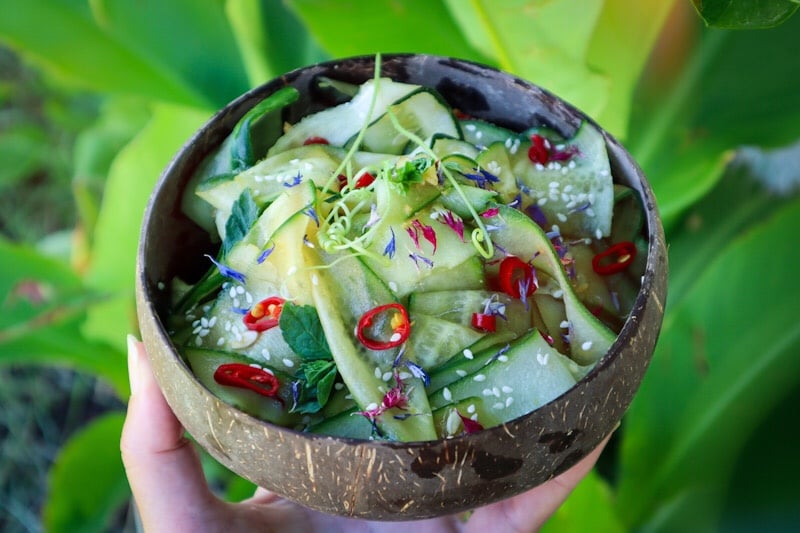
Cucumber salad is a quick and easy way to use up your summer harvests. This salad is a light and refreshing side dish that would go great with any summer BBQ or rice dish. Simple, vibrant, fresh ingredients are what make a salad!
Cucumber Salad with Ginger Tamari Dressing
Light and refreshing cucumber salad with ginger, tamari dressing.
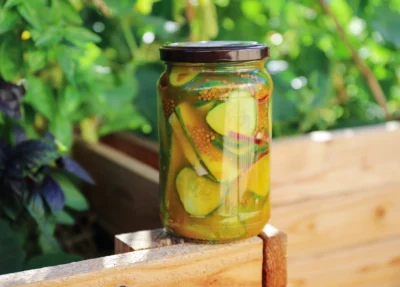
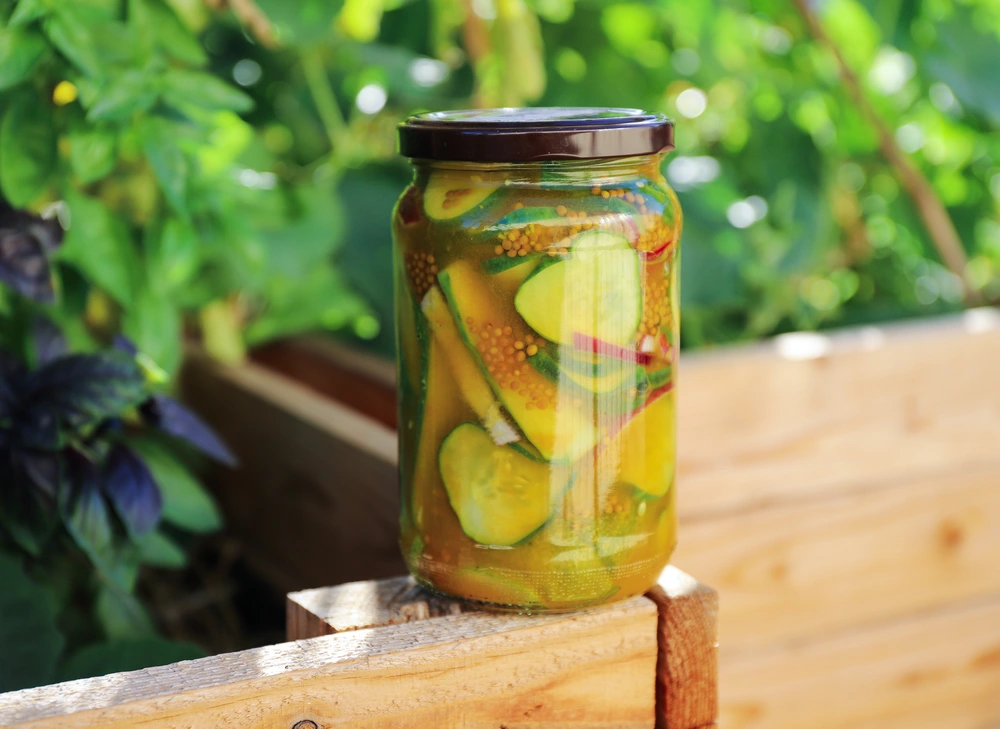
Make the most of your abundant Cucumber harvest with these delicious,Quick Sweet & Sour Turmeric Refrigerator Pickles. Turmeric has anti-inflammatory properties, and the Apple Cider Vinegar has anti-microbial properties and antioxidants. These quick pickles are great for adding to sandwiches, salads, burgers, and of course…a cheese platter (or in my case…literally anything)!
What Are Refrigerator Pickles?
Refrigerator pickles are cucumbers preserved in a vinegar-based brine and stored in the fridge rather than being heat-processed for long-term storage. Because they aren’t canned, they retain a fresh texture and crisp bite… plus they are quick and easy to make! Pickles do not last long in my fridge 😅
The pickles begin developing flavour within a few hours but are best after 24–48 hours when the brine has had time to infuse into the cucumber slices. They can typically be stored in the refrigerator for up to one month.
Best Cucumbers for Pickling
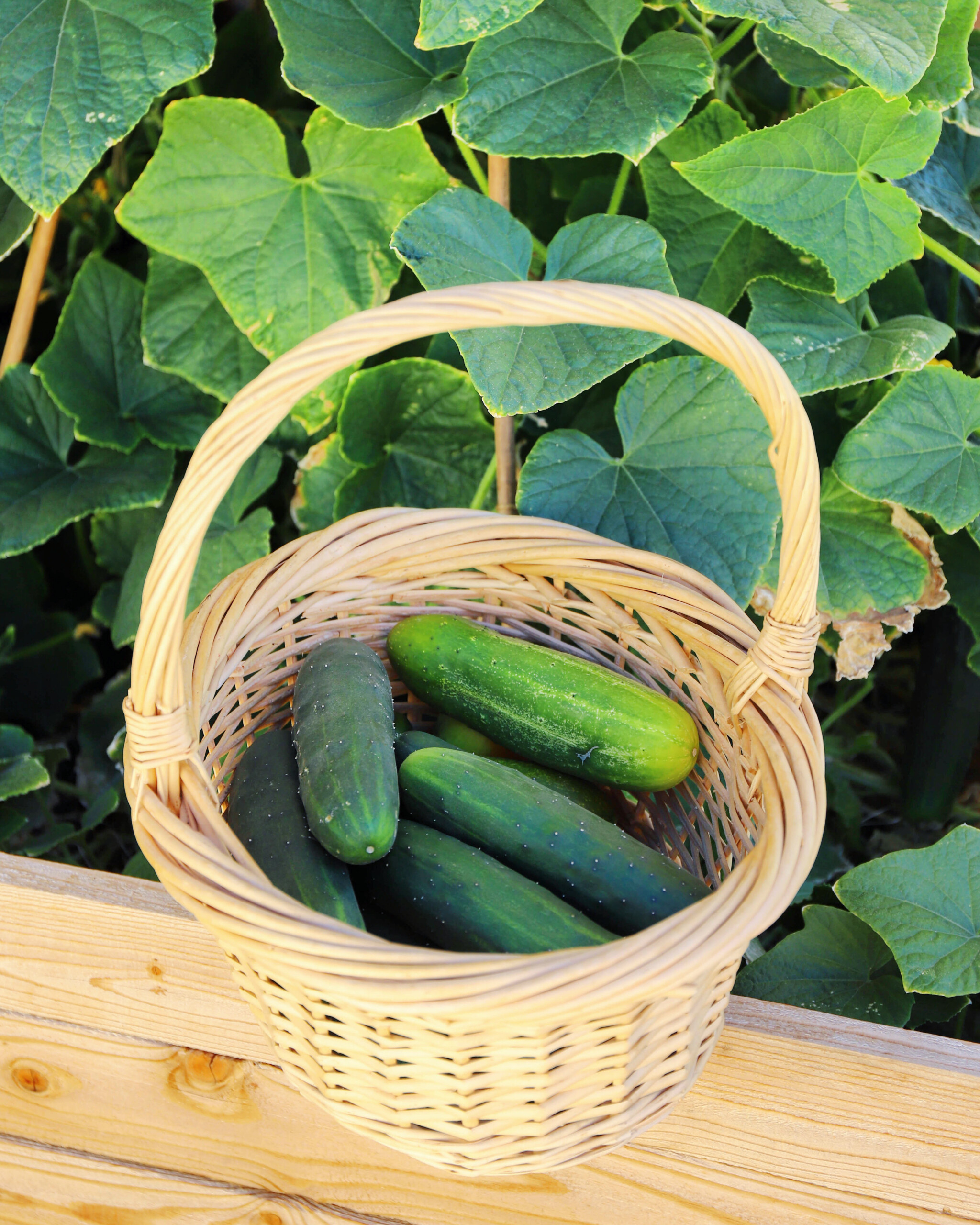
Almost any cucumber can be used for refrigerator pickles (even zucchini), making this recipe ideal for preserving your homegrown harvests. I love pickles and utilise whatever i have growing in the garden to adapt to this recipe (including rainbow chard and asparagus). Some of the best cucumber varieties include:
Lebanese cucumbers
Pickling cucumbers
Mini cucumbers
Marketmore cucumbers
For the crunchiest results, harvest cucumbers while they are still young and firm. Larger overgrown cucumbers can still be used, but removing the seeds first may improve the texture.
Adding Turmeric to Pickles
One of my favourite ingredients in this recipe is turmeric. Not only does it give the pickles a beautiful golden colour, but turmeric has long been valued for its anti-inflammatory properties. Combined with apple cider vinegar, which contains antioxidants and natural antimicrobial compounds, these pickles are a simple way to turn an abundant harvest into something both delicious and practical.
Tips for Extra Crunchy Pickles
Use freshly harvested cucumbers whenever possible.
Slice cucumbers evenly so they pickle consistently.
Chill the pickles overnight before serving.
Use a clean glass jar with a tight-fitting lid.
Avoid soft or overripe cucumbers.
Quick Sweet & Sour Turmeric Pickles
Sweet and sour Refridgerator pickles are so quick and easy to make!
2-3Medium Cucumbers or two jars of whole small pickling Cucumbers
1cupApple Cider Vinegar
1cupWater
1TBSPMustard Seeds
2TBSPSugar
1tspSalt
1tspground Turmeric powder
Method
Sterilise your jars by heating them in the oven face down at 120degrees Celsius or in the dishwasher on high heat. Sterilise the lids in a bowl by pouring boiling water on them.
In a saucepan add your vinegar, water, sugar, turmeric, salt, and mustard seeds (*optional chili flakes see notes) and bring to a simmer.
Slice your Cucumbers into spears or round slices and place them in the clean jar.
Pour over your pickling liquid and secure the lid. Carefully place the jar upside down to cool. This helps create a secure seal.
Once the jars are close to room temperature, turn them up the right way and add them to the refrigerator.
They will be ready to eat after 48 hours and use within a month or two.
Notes
Add sliced Red Onion, Dill, or Chilli flakes to your cucumber pickles for extra flavour.
This recipe also works with Zucchini in replace of Cucumbers too.
Simple Seasonal Preserving
After months of watering, mulching, and caring for your plants, finding ways to use every cucumber feels incredibly rewarding. These turmeric refrigerator pickles are one of the simplest ways to turn a seasonal abundance into something delicious that can be enjoyed long after harvest day.
Other Vegetables You Can Make Refrigerator Pickles With
Once you start making refrigerator pickles, it’s hard to stop….I love everything pickled! While cucumbers are the classic choice, many other vegetables can be transformed into crunchy, sweet and sour pickles using the same simple method. Pickling is a fantastic way to preserve seasonal abundance, reduce food waste, and add flavour to everyday meals.
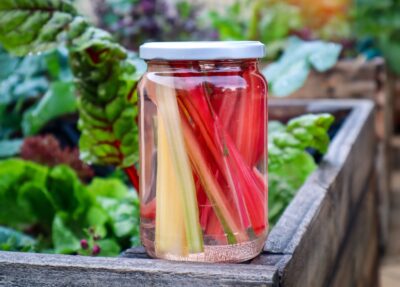
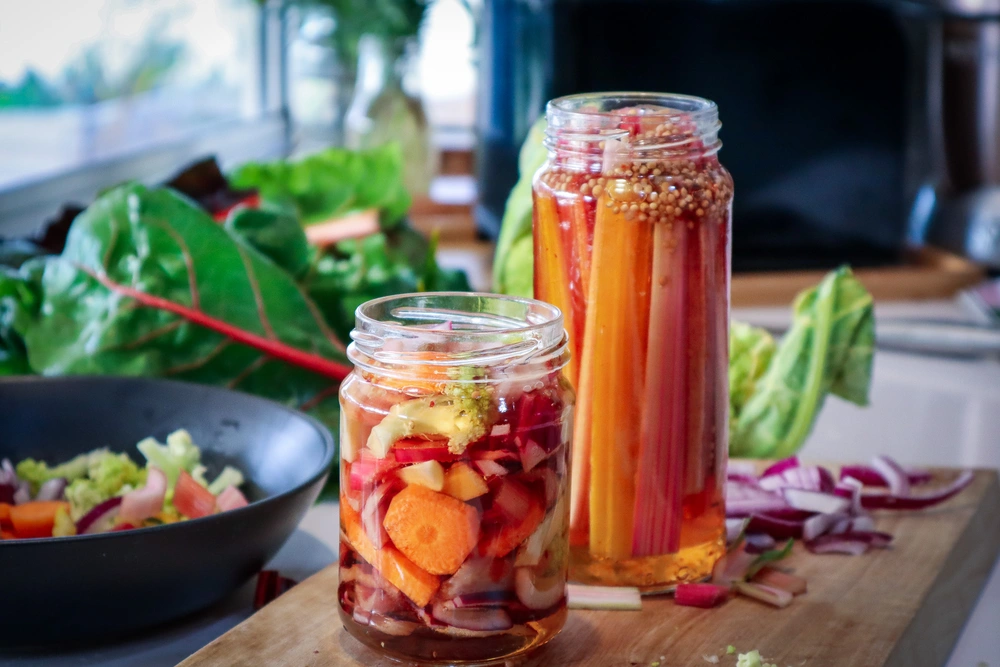
Don’t throw away your rainbow chard stems. Their vibrant colours make some of the most beautiful pickles you’ll ever make. The stems retain a satisfying crunch and develop a mild tangy flavour that works wonderfully on cheese platters, in sandwiches, or served alongside grilled vegetables.
Tip: Save the leaves for salads, stir-fries, soups, or green smoothies and pickle the stems separately.
Quick pickled red onions are one of the easiest and most versatile refrigerator pickles. Their sharp flavour softens in the vinegar brine, creating a bright, tangy topping that adds colour and crunch to tacos, burgers, salads, grain bowls, and sandwiches.
They’re ready to eat within a few hours and can instantly elevate even the simplest meal.
If you’re lucky enough to have an asparagus harvest, refrigerator pickling is a great way to enjoy the spears for longer. Pickled asparagus develops a delicious balance of crunch and acidity and makes an impressive addition to grazing boards, antipasto platters, and charcuterie spreads.
For best results, use young, tender spears and pack them vertically into a tall jar.
Pickled Radishes
Radishes become milder and slightly sweeter once pickled while still maintaining their signature crunch. Their vibrant pink colour also turns the brine a beautiful shade of magenta, making them as attractive as they are delicious.
Try adding pickled radishes to tacos, wraps, salads, or poke bowls.
Pickled Carrots
Crunchy pickled carrots are a favourite in our household. Their natural sweetness balances perfectly with the tangy vinegar brine, making them a great snack straight from the jar or a colourful addition to salads and sandwiches.
Pickled Cauliflower
If your cauliflower plants have produced more than you can use fresh, refrigerator pickling is a simple way to preserve the harvest. Cauliflower florets absorb the flavours of the brine beautifully while retaining a satisfying crunch. They’re delicious added to antipasto platters, tossed through salads, served alongside sandwiches, or enjoyed straight from the jar as a tangy snack.
For extra flavour and colour, try adding turmeric, garlic, mustard seeds, or chilli flakes to the pickling brine. The cauliflower will become more flavourful over time and can be enjoyed for weeks in the refrigerator.
Pickled Jalapeños and Chillies
For gardeners growing chillies, pickling is one of the easiest ways to preserve a bumper harvest. Pickled jalapeños add heat and flavour to nachoes, pizzas, burgers, tacos, and sandwiches while extending the life of your harvest.
A Simple Way to Preserve Seasonal Abundance
One of the joys of growing your own food is finding creative ways to use everything you harvest. I mean it is not always easy to get to the actual harvest phase…so we sure do want to ensure nothing is wasted! Refrigerator pickling is quick, beginner-friendly, and works with a surprising range of vegetables. Whether you’re preserving cucumbers, rainbow chard stems, onions, asparagus, or a mix of garden produce, a simple jar of pickles can help extend the season and add flavour to meals for weeks to come.