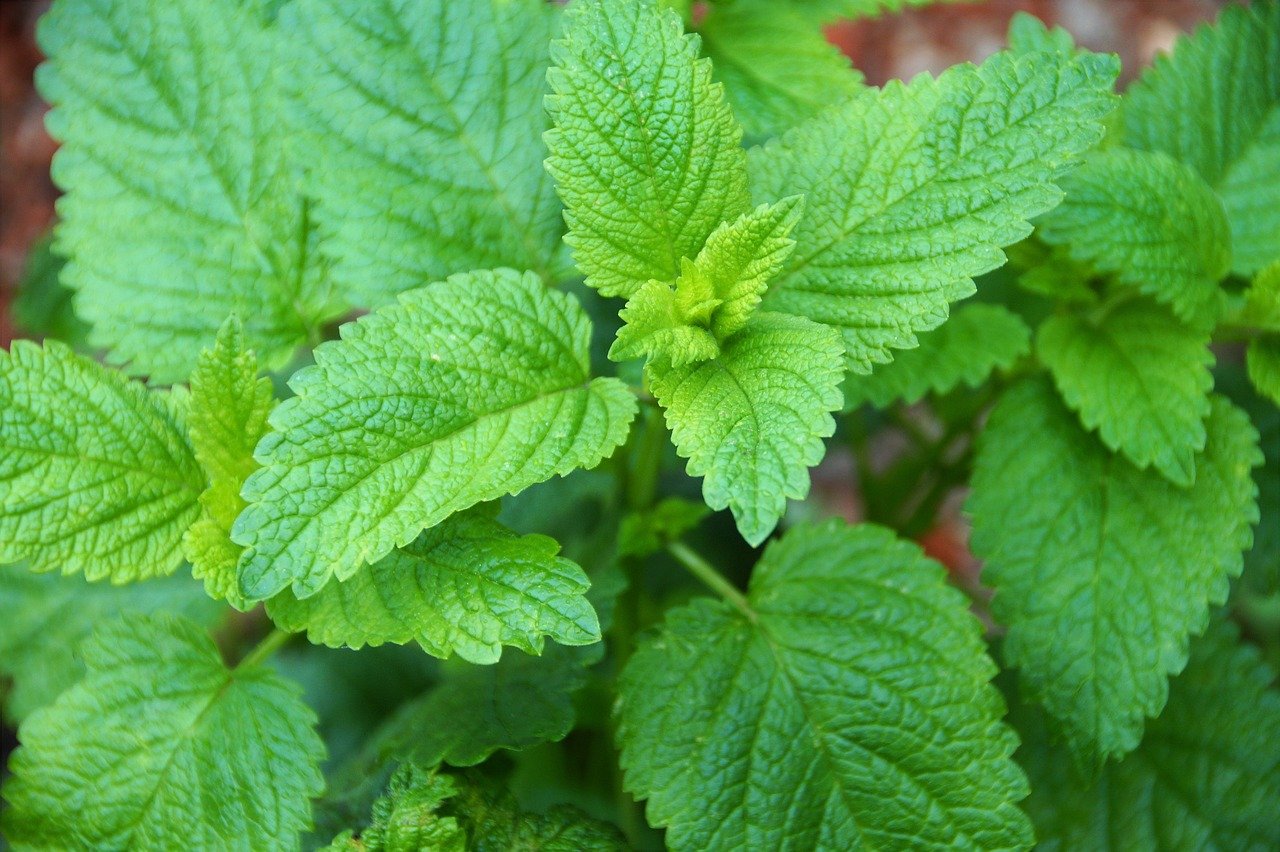
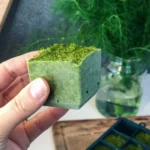
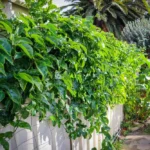
Lemon Balm (Melissa officinalis) is a perennial herb with fragrant lemon-scented leaves. Lemon balm is part of the Mint family and is known for having weed-like growth and self-seeds easily. With hundreds of small white flowers, the lemon balm is a powerful bee attractant. It has toothed edges and slightly hairy leaves with a lemony scent.
Lemon balm-like many herbs, has been traditionally used to aid in an array of health conditions. With calming and relaxing properties as well as anti-viral and anti-bacterial qualities, lemon balm is a great addition to a kitchen garden.
Springafter the last frost.Can be grown all year round in many climates.
SOIL
Fertile, moist, well-drained soil. Will grow in most soil types.
LOCATION
Full sun – Dappled or shaded position.
CARE
Regular watering – is a thirsty plant.
FERTILISE
Easy to grow and doesn’t need much help.
PESTS
Snails, slaters, and aphids.
HARVEST
Harvest regularly to keep contained.
REPRODUCE
Grows easily from cuttingsor save seeds after flowering.
Why Grow Lemon Balm?
There are many reasons to grow Lemon Balm and it is so easy to grow!
Here are some of the many reasons to grow Lemon Balm
Easy to grow
Fragrant lemon scent and flavour
Grows well in containers
Low maintenance
Pollinator plant
Relaxant
Antiviral
Aids in Cold sores
Great for teas
Salad dressings
Cut and come again harvest
Pest resistant
Reduce stress and anxiety
When to Plant Lemon Balm
Lemon balm grows well most of the year. New plants should be planted after the last frost. If planting in summer, keep well watered.
How to Grow Lemon Balm
Choose a sunny spot with dappled or part shade in the heat of summer.
Prepare the soil with rich compost
Direct sow seeds or plant in seed trays first.
1 plant is plenty.
Can benefit from protection during the heat of summer.
Care/ Maintenance
Lemon balm, like Mint is a thirsty plant. Keep well watered and have a drip tray for pots. Cut back the plant after it has finished flowering to promote new growth.
Once the plant is well-established, harvest sprigs as needed.
Use clean, sharp kitchen scissors to cut your harvest, or just pick with your hands to prevent the spreading of diseases.
Cut and come again crop that will regrow quickly. I often harvest and use in cold drinks or teas every other day.
Reproducing
Take cuttings and allow to root in a jar of water. Refresh the water every few days. Seeds can also be saved and will flower with white flowers on the stem. Once the seeds form and turn brown, collect them and dry them further. Keep in a dark, cool and dry environment.
Cooking and Using Lemon Balm
Lemon balm is best used fresh. Dried leaves lose their scent and flavour.
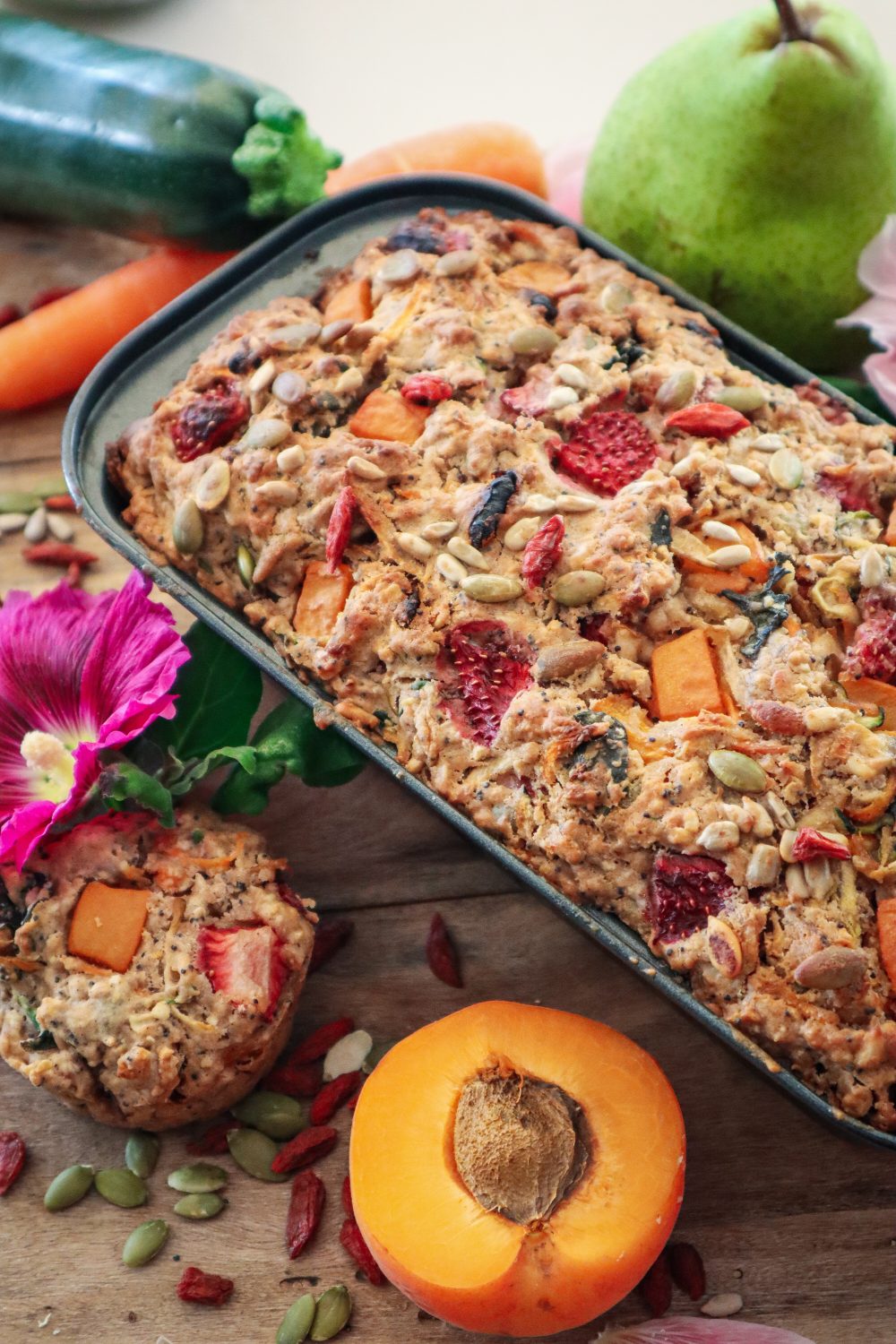
Have odd fruit and veggies to use up? This leftover breakfast loaf is a great way to reduce waste and make a delicious and healthy breakfast (or anytime) alternative. This recipe is flexible to allow a range of fruits, nuts, and seeds you have available.
Leftover Breakfast Loaf
Have random odd fruit and veggies that need to be used up? This leftover breakfast loaf is a delicious way to make sure they don't go to waste.
1cupdiced Apricot & strawberryswap for berries or cherries
Method
Preheat oven to 180 degrees.
Mix dry ingredients in a bowl.
Grate and add chopped fruit and veggies to a bowl along with all the wet ingredients. Stir to combine.
Fold in the dry to the wet mix and combine with minimal mixing (don't over-mix).
Grease a loaf or bread tin and add in the mix. Bake for 45 minutes or until the skewer comes out clean.
If there is a little too much for the tin ( in my case) add to muffin trays (but these will only take 20 minutes).
Allow the tin to cool for 10 minutes then remove the loaf and cool for a further 10-15mins on a wire rack (do not slice straight out of the oven or it will fall apart and turn dry).
Notes
To freeze the extra loaf cut it into slices first and pop it in the compostable ziplock bags. Mix and match fruit, veggies, nuts, and seeds to make your own delicious blends.Frozen berries can be used add them in frozen don't thaw them out first.
Gift-giving doesn’t need to be expensive, stressful, or hard! These sustainable DIY gift ideas will have you inspired to create more gifts from your garden – all year round! Whether you are visiting a friend or trying to find a Birthday, Mother/fathers day, or Christmas gift there’s something for all occasions in this gift guide.
Click to watch my gift guide ideas below
My thoughts around gift giving
I don’t always buy or give gifts for special occasions…It can seem strange at first to skip out on gift-giving. We may feel guilty, awkward, or just like a bad friend or partner! But if nothing is popping up as the perfect gift idea then I don’t waste money on consuming more “stuff” that they may not even like.
BUT….what I do is.. make more homemade gifts myself! It’s much more personalised and can spark inspiration in others. If you gift produce or create gifts from your garden you may even inspire the receiver to reconnect with their own garden. I also give small gifts from my garden each time I visit friends and family. In short, my gift-giving is sporadic and you may receive an amazing gift from me, regular handmade gifts, or nothing at all. But if I find the perfect idea later in the year I just gift it then. Who doesn’t love a surprise gift?
Garden to Gift Ideas
These gift ideas can be used all year round to create personalised gifts from your garden. The great thing is, they are free/low cost, low waste, and easy to put together for last-minute (oops I forgot ) gift ideas.
—- GET CREATIVE —-
1. Framed Art
Pressed flowers make beautiful garden art ideas. Mixed with small illustrations or paintings. TIP: Choose small frames as nearly everything looks cute in a small frame… You could also get second-hand frames and paint them for an extra thrifty option.
2. DIY Colouring in Book
Draw basic outline illustrations and create a custom colouring books for kids. They don’t need to be professional artworks just choose objects that they love and use their name to make them feel special. Choose themes such as Farm, Beach, Woodland, Food Forest, and Veggie patch!
3. Photography
Framed photos or prints make great gifts! They are low-cost and can be easily personalised. Close-ups from the garden, scenic landscapes, and photos of friends and family. I love getting printed photographs because it is something I rarely do anymore. In this digital age, we rarely take the time to sort through our hundreds of photos so sometimes it’s nice to do.
4. Custom Clothingand Plant Dye
DIY Jackets are a fun way to get creative and make custom gifts. Denim jackets can always be found at secondhand shops and upcycled. I love making jackets for significant events like weddings and first birthdays. They make great keepsakes too. Paint flowers from your garden or sew fabric patches. Get extra creative and make your own natural plant dyes from the garden.
—-GETPRESERVING —-
5. Homemade Jam, Chutney & Sauces
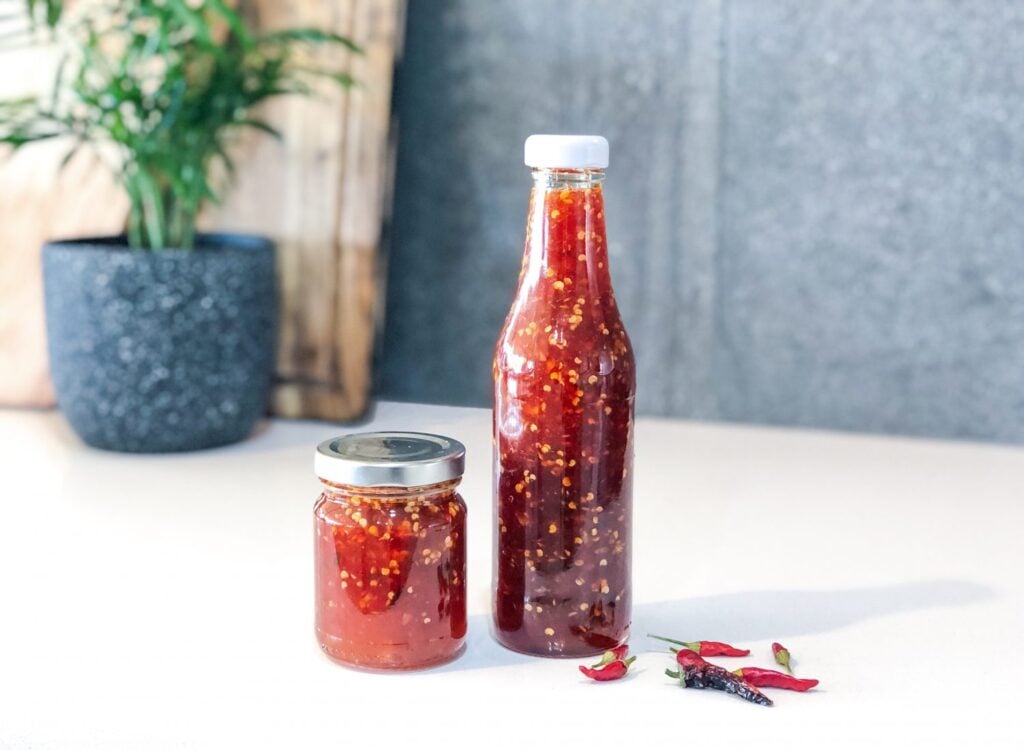
Homemade preserves make such great gifts! Especially if they are made from delicious fruit and vegetables grown in your home garden. Create fun, custom labels easily using Canva templates. You can also create DIY tags and notes using leaves and small bundles of herbs and flowers.
Herbs produce in abundance and drying them is a great way to preserve them to use throughout the year. Make your own mixed herb blends and gift them to others to use in their kitchen. Homemade dried herbs are so much better than the greyish uninspiring supermarket editions.
7. Dehydrated Fruit
Dehydrated fruit is one of my go-to garden to gift ideas! I make large batches and always have enough on hand to either pop in a recycled jar or cut up and mix with dried flowers for a tea blend or a cocktail garnish blend. Dried citrus can be used in teas, cocktails, cakes, and baking. Also, incredible in mulled wine! Try chocolate-dipped for something extra special!
8. Flavoured Sugar and Salts
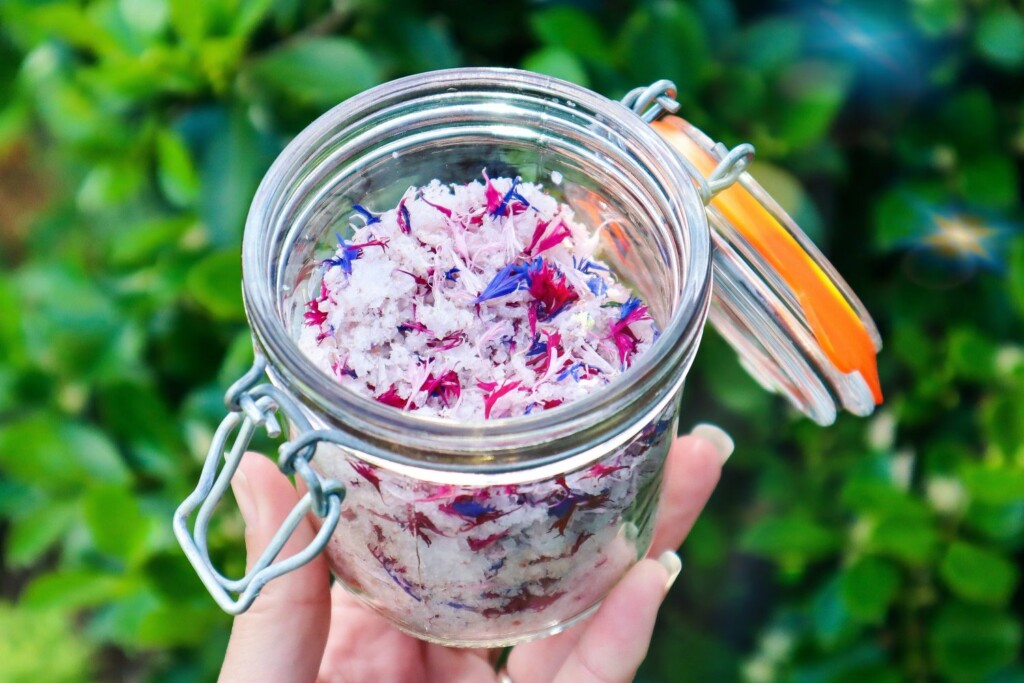
Herbal sugars and salts are such a fun and easy way to incorporate produce from your garden in a unique way. Simply blitz herbs and mix through salt and allow to fully dry. Dried edible flowers, herbs and citrus can be added to sugar to create flavoured sugars. Try Mint sugar in a hot chocolate!
Tea blends make incredible gifts from the garden. See the list and mix and match to make your favourite blends. Dry herbs and flowers fully first either air dry or in a low-temperature oven or dehydrator (30-40 degrees Celcius). Dried fruit, herbs, and flowers also make great cocktail garnishes. Add to a nice jar and create a DIY Label.
—-GET BAKING —-
10. Bake Bread
Homemade bread is so delicious and makes a great gift idea. Baking great bread is not a skill everyone possesses so if you do, share the love and make a sourdough loaf or even a Garden Foccacia using herbs and fresh ingredients from your garden. Wrap it in brown paper with a note and place a small bundle of herbs or flowers. Done!
11. Sweet Treats
Who doesn’t love sweet treats? Homemade cookies, cakes and slices always make great gifts. Get creative and use edible flowers, herbs and fruit from your garden to create something special!
12. Savoury snacks
Savoury snacks are an entertainer’s dream. Try some botanical crackers for a great way to use herbs from your garden. Other delicious snacks could be scrolls, scones, slices, quiche or flavoured nuts.
—-GET GROWING —-
13. Cuttings and Seedlings
Take extra cuttings and pot them up to have extra gifts on hand at all times! Cuttings such as Sweet potato, mint, rosemary, fig and mulberry are easy to get striking. Check out my Cuttings Ebook for more ideas. If you have extra plants pop up in the garden, (hello volunteers!) simply pot them up to give as gifts.
14. Plant Extra Seeds
It’s always a good idea to plant extra seeds in case something happens to your others. I do this in stages so I plant extra seeds 3-4 weeks after my first lot. That means if my seeds have made it to the garden as seedlings but get eaten or damaged I have replacements already on the way. However, if I don’t need the backs up then I have plenty to gift to friends and family.
15. Edible Bouquets
I love picking wild vegetable and herb flowers that have gone to seed, herbs and edible flowers to create beautiful edible bunches to gift. There are so many great reasons to do this!
They smell amazing
Look beautiful and a little wild
Don’t cost anything!
Can be used to flavour meals and tea
Can be regrown in their own garden.
The great thing about keeping herbs such as Mint, Rosemary, Basil and Lavender in jars of water is that they will send off roots! Let your gift receiver know what they can replant.
16. Fresh Produce
Extra produce makes incredible gifts! This can be vegetables, herbs, flowers or fruit you have grown in your garden. Pop in a basket or box and deliver to your friends and family. The great thing about gifting produce from your garden is they get to try different things that may not be at the supermarket. You may also inspire them to reconnect with where their food comes from and start growing their own. You really don’t know how much you can inspire and make a change by simply gifting some homegrown produce.
17. Gifting Seeds
Once your gardens get established you will have plenty of seeds to start harvesting. Pop some in a brown envelope with a note of what they are, when you harvested them and who they were from. Seeds are great gifts because they bring with them so much inspiration and potential!
If you found these gift ideas helpful please share this post with others and help to inspire more people to create their own Homemade Garden to Gifts.
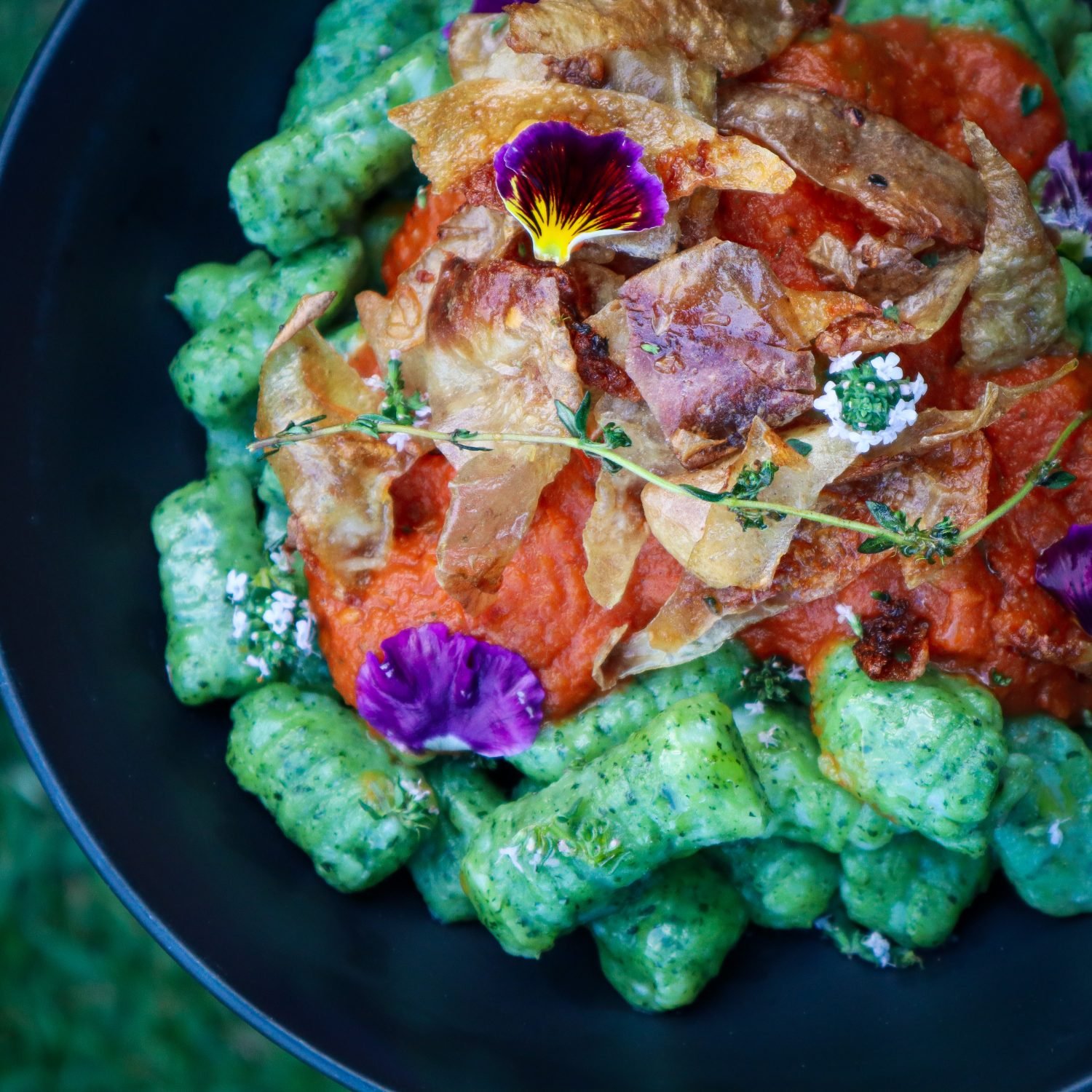
Soft pillowy spinach gnocchi with crispy potato skins. Serve with herbed butter or the simple roasted tomato sauce recipe. Delicious! Unlike most spinach varieties, the NZ Spinach / Warrigal greens produce in abundance over the summer! This edible ground cover is a powerhouse in the garden and pairs well with so many dishes. Spinach gnocchi is so vibrant and delicious! Making gnocchi can seem scary but this recipe has just 4 ingredients and is so worth it! I have used NZ spinach, but you could swap it out for regular spinach, chard, or any other leafy greens you have growing in the garden.
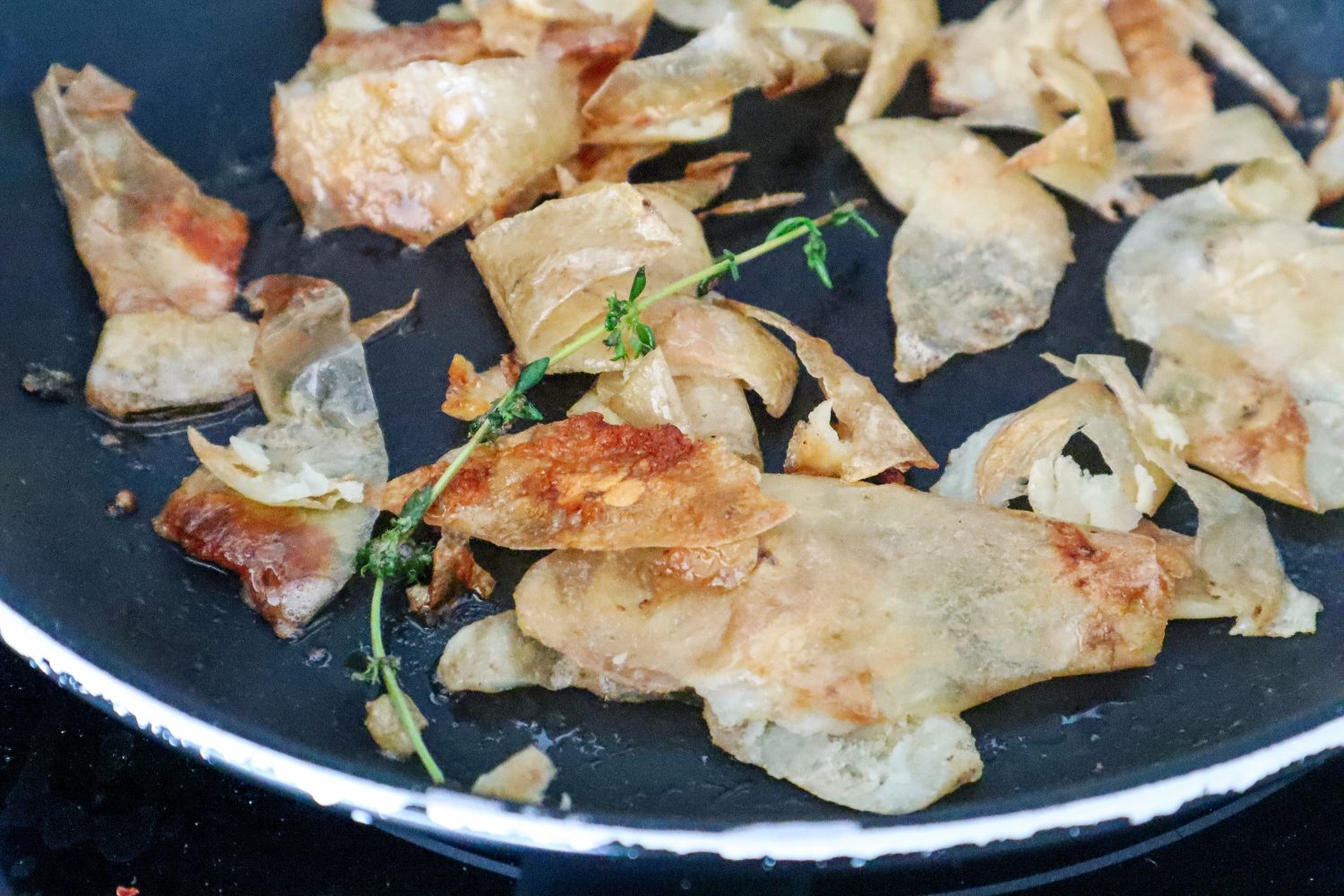
Most recipes call for the skins to be removed so after the potatoes are baked we fry them up and add them on top for a low-waste delicious meal!
Which Potatoes Work Best?
Floury potatoes work best (not waxy) such as Desiree, Yukon Gold, and Creme Royle. AVOID – Red Royle, Kipler. Normal “white potatoes” at the supermarkets tend to be quite waxy. This means your gnocchi will have more little lumps in but still possible.
Can I use Different Greens?
Yes! I love my recipes to be flexible with what is in season and growing in my garden. Try swapping NZ spinach for: Chard (remove stalks and fry them up to add to the dish), other spinach varieties, Kale, Beetroot leaves, Sweet potato leaves, or a mixed combination!
NZ Spinach Gnocchi with Crispy Potato skins
5 from 1 vote
Soft pillowy spinach gnocchi with crispy potato skins. Serve with herbed butter or the simple roasted tomato sauce recipe. Delicious!
2cupsNZ Spinachor other leafy greens such as chard or spinach
1 1/4cupsfloursee notes
1tspsalt
Crispy Potato Skins
1-2sprigs of fresh Thyme
1TBSPButter
Method
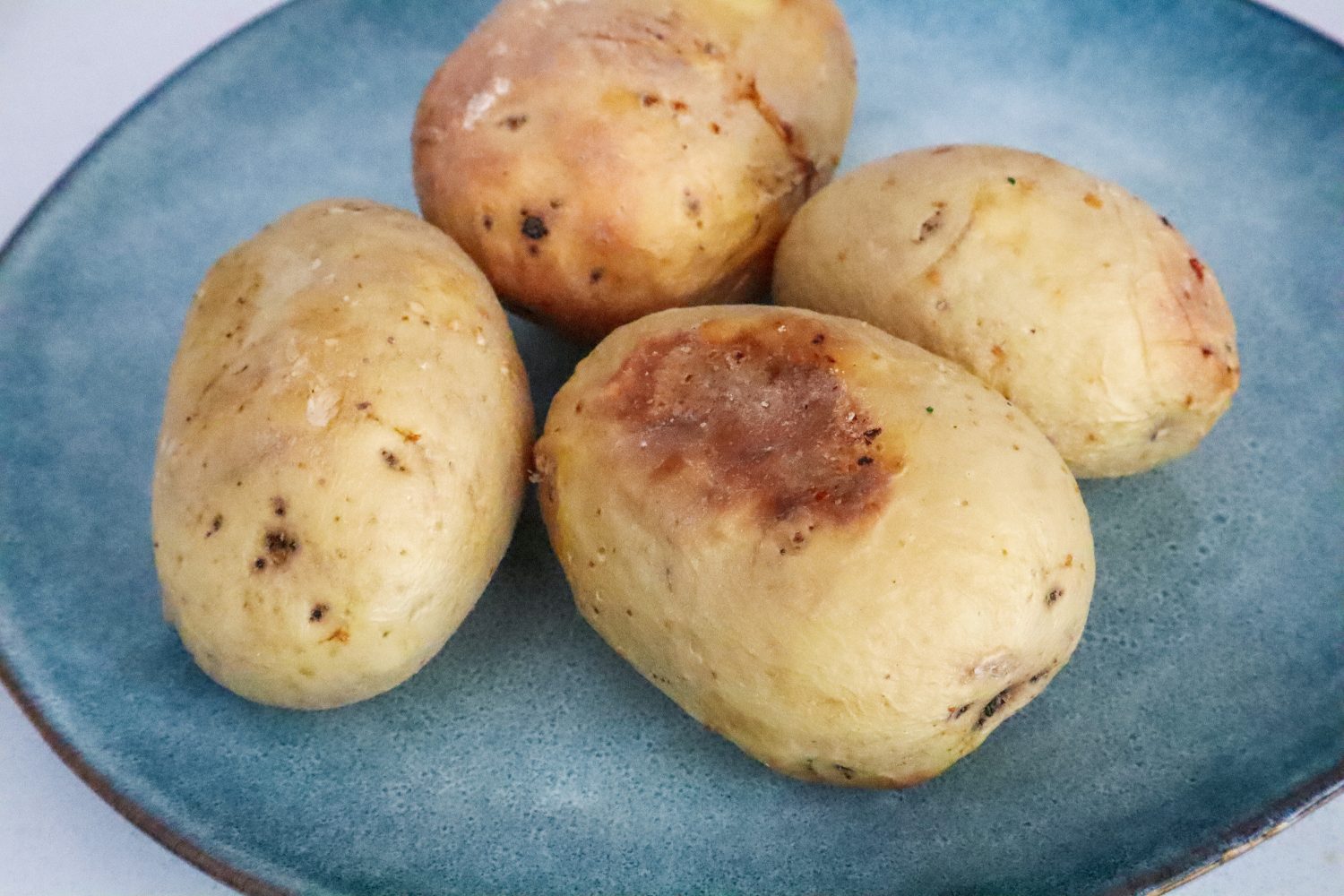
Preheat oven to 180 degrees. Wash your potatoes and stab holes all over with a fork. Sprinkle with 1/2 tsp of salt and bake for 45-1hour or until a fork easily goes right through. If some are larger than others keep them in a little longer. You don't want any hard potato bits for this.
While the potatoes cook blanch your greens. Remove hard stems and cook them in simmering water until vibrant green (40 seconds – 1 minute) then plunge into a bowl of iced water. Strain and blitz using a blender or mixer until a puree. Add a splash of water if needed to get blended.
Remove potatoes from the oven and allow them to cool (until you can easily peel them).
Peel the skins off using a knife or just peel them back with your fingers. They are quite easy to peel once the skin is cooked and slightly golden. Don't waste these delicious skins! Put them on a plate and set them aside.
Mash the potatoes into a fine mash. Use a potato ricer or a potato masher and fork to get all the little lumps out.
Add mashed potato to a bowl and mix in 1/2 cup of greens puree and 1 tsp salt. Mix until fully combined.
Add in flour in parts and mix to form a dough. You may need a little less or a little more flour depending on how much moisture was in the potatoes and greens. You want it to still be slightly sticky but easy enough to roll. Similar to cookie dough. The more flour you add the tougher they get so try to keep less is more approach but it needs to be workable.
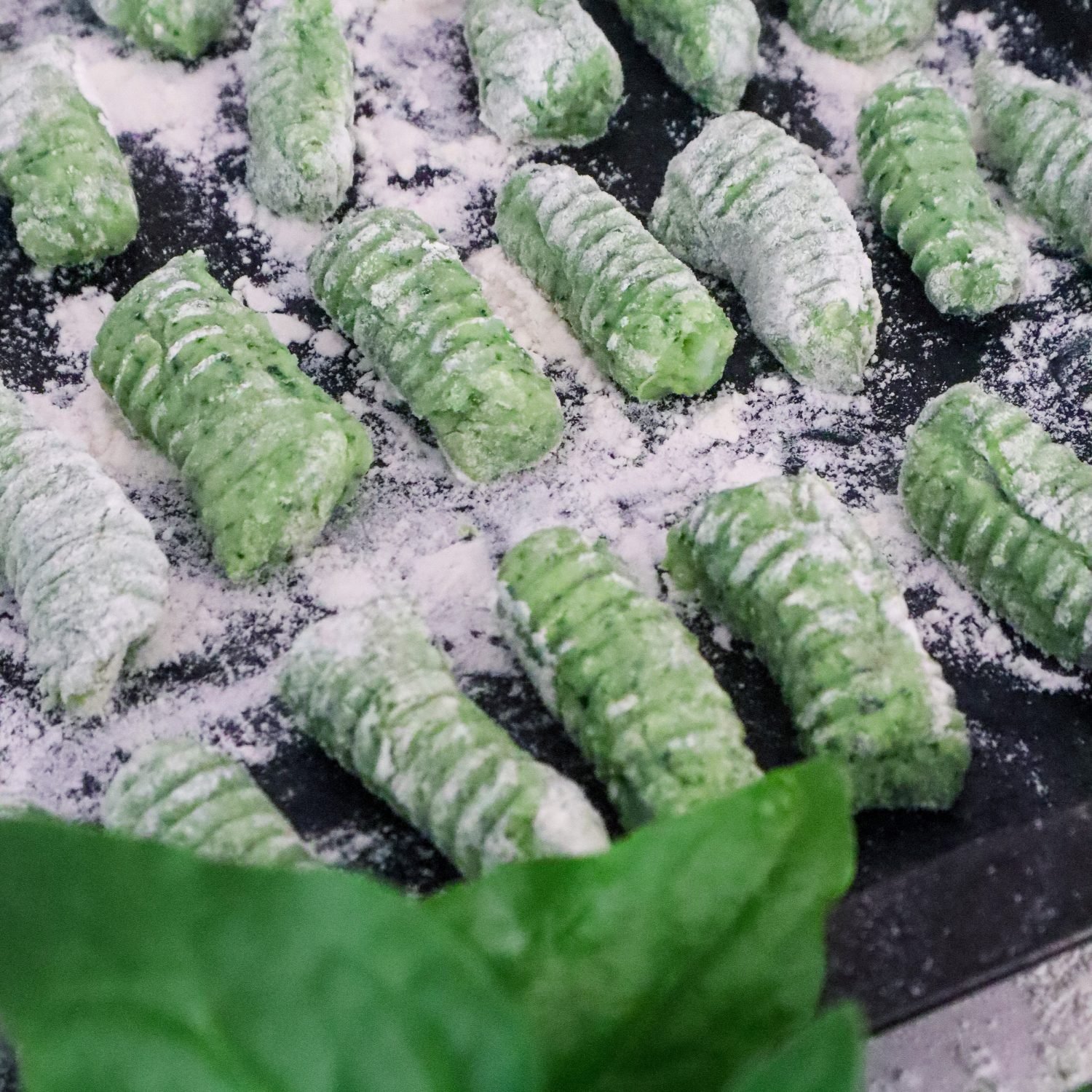
Divide the dough into 1/4s and roll long sausage lengths onto a floured surface. Cut into 1-inch lengths.
Have a floured tray or plate ready to put your finished gnocchi on.
Using your thumb push down and roll each gnocchi piece over the back of a fork or a gnocchi board ($4 at most kitchen stores) to create the lines. This is optional. The lines make them look the part and also allow more space for flavour to cling to.
In a pan add butter and thyme and fry potato skins until crispy. Set aside.
There are two ways to cook gnocchi – boiled or pan-fried, both are delicious. For this recipe, I used the boiling method because I was serving it with crispy potato skins. To boil add your gnocchi to a pot of boiling water seasoned with salt. Cook until they float to the surface (roughly 1 minute). Do this in batches so you don't overcrowd the pot and all the gnocchi have room to float to the surface. Strain and add to a serving bowl. To pan fry – add butter or oil to a pan (chuck in some more thyme and cook the gnocchi until slightly golden on each side)
Pour over hot tomato sauce or herb-infused brown butter and top with crispy potato skins.
Notes
Make the tomato sauce at the same time while you wait for your potatoes to cook. Tomatoes can be roasted in the oven along with the potatoes.Choosing potatoes – Floury potatoes work best (not waxy) such as Desiree, Yukon Gold, and Creme Royle. AVOID – Red Royle, Kipler. Normal "white potatoes" at the supermarkets tend to be quite waxy. This means your gnocchi will have more little lumps in but still possible.Flour – low protein flour is best for Gnocchi but all-purpose flour also works.Made extra? Freeze your uncooked gnocchi pieces on a floured tray and once frozen add them to a freezer bag or container. Next time you want a meal simply pull out and boil from frozen or defrost and panfry.
Simple Roast Tomato Sauce
5 from 1 vote
Simple and delicious tomato sauce. Staple condiment and the backbone of so many garden-to-plate dishes!
Preheat oven to 180 degrees Celcius. Drizzle roughly 1 TSBP oil in a roast dish.
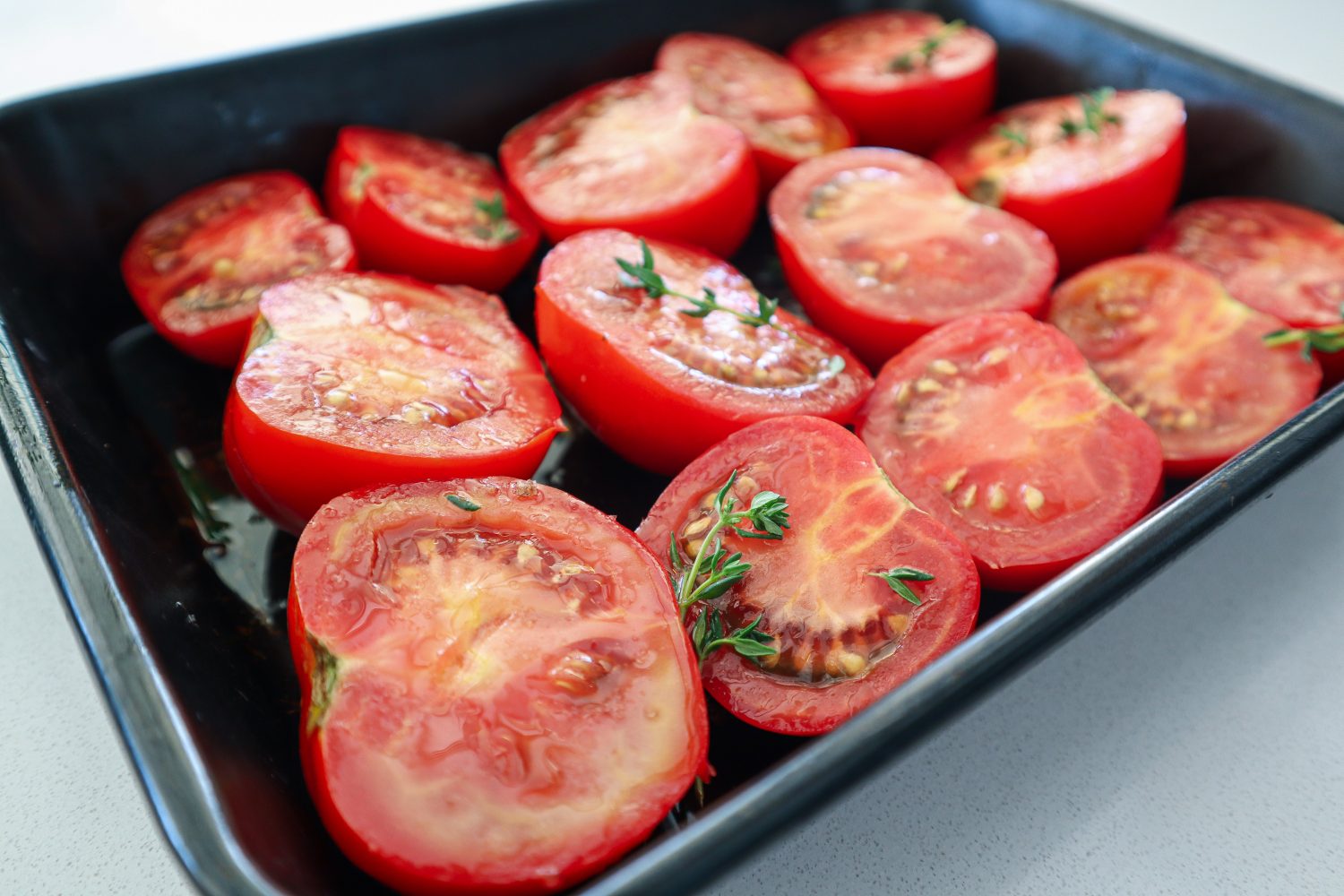
Cut tomatoes in half and add to the roasting dish skin side down. Add Garlic cloves (skin on) and thyme throughout the tomatoes.
Drizzle another TBSP of olive oil on top and season with salt.
Roast for 40-45 minutes until cooked and slightly golden. Time will be significantly less for cherry tomatoes (20 minutes).
While the tomatoes are roasting, dice the onion and add to a pan with 1 TBSP olive oil. Cook until soft and slightly brown. Pour in the balsamic and deglaze the pan (get all the delicious flavour off the bottom). Remove from the heat.
Remove the garlic from the skins and add the roasted ingredients to a blender (or jug and use a stick mixer). Allow the tomatoes to cool slightly before blitzing so the mixture isn't piping hot. Add in the chopped fresh basil, chilli flakes, and cooked onions. Blitz to combine. Smooth or chunky however you prefer.
Taste and season with extra salt or chilli to your liking.
Notes
Tomatoes will have varying amounts of liquid. If you get a lot of liquid in the bottom of the roasting dish, pour some to the side and blitz then add if you want a runnier sauce.Add excess to a jar and keep in the fridge for 2-3 days or freeze for longer storage.
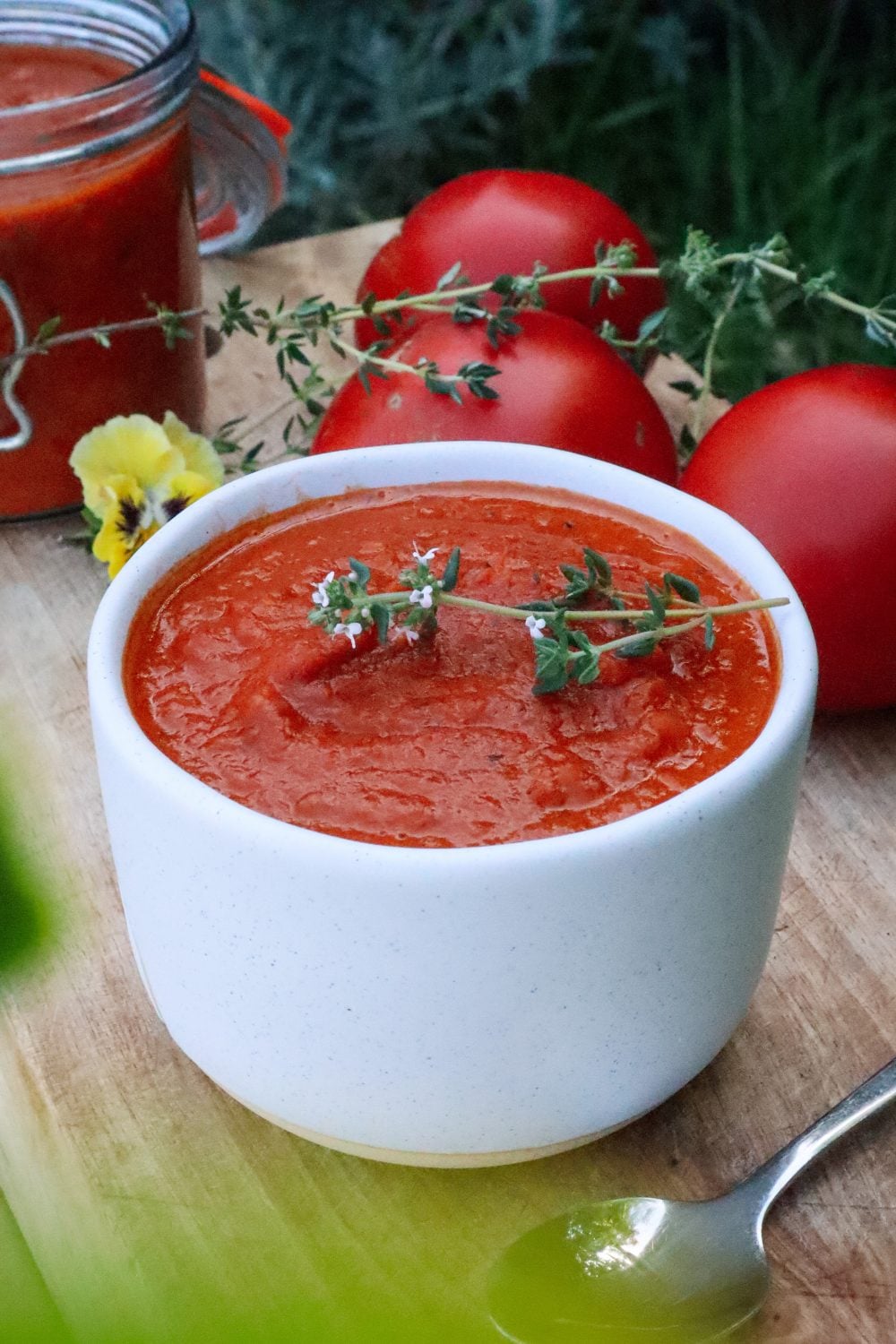
There is nothing quite like homemade tomato sauce... especially when it’s made from fresh tomatoes straight from the garden. This recipe is one of those easy, throw-it-all-in-the-oven kind of meals ( the best kind!). The roasting brings out the deep, rich sweetness in the tomatoes, and once you blitz everything together, you’re left with the most incredible sauce – I could just drink this straight!!
I love using this over pasta, pizza bases, gnocchi, or even just as a dip for crispy roasted potatoes. It’s also amazing with fresh herbs from the garden — basil, thyme, whatever you’ve got growing. Simple, rustic, and full of flavour!
Why This Roasted Tomato Sauce Works So Well
This homemade roasted tomato sauce is all about building flavour the simple way – I love recipes that I can add herbs and whack straight in the oven. Roasting the tomatoes, garlic, and onion brings out a deep sweetness that you just don’t get from a quick stovetop sauce.
It’s an easy oven-roasted tomato sauce made from fresh tomatoes, which means you can use it when your garden is overflowing or when tomatoes are cheap and in season. Because everything is roasted first, the flavour becomes richer and more concentrated, making this a really versatile base sauce for pasta, pizza, gnocchi, and more.
If you’re looking for an easy tomato sauce recipe from scratch that actually tastes like real tomatoes, this is it, my friends!
One of my favourite combos is pouring it over pasta or spinach gnocchi for a quick garden-to-plate dinner that feels way more effort than it actually is.
Storage Tips
Store in the fridge for up to 5 days, or freeze in portions for easy future meals. It’s one of those recipes that’s perfect to make in bulk when tomatoes are in season.
Simple Roast Tomato Sauce
5 from 1 vote
Simple and delicious tomato sauce. Staple condiment and the backbone of so many garden-to-plate dishes!
Preheat oven to 180 degrees Celcius. Drizzle roughly 1 TSBP oil in a roast dish.
Cut tomatoes in half and add to the roasting dish skin side down. Add Garlic cloves (skin on) and thyme throughout the tomatoes.
Drizzle another TBSP of olive oil on top and season with salt.
Roast for 40-45 minutes until cooked and slightly golden. Time will be significantly less for cherry tomatoes (20 minutes).
While the tomatoes are roasting, dice the onion and add to a pan with 1 TBSP olive oil. Cook until soft and slightly brown. Pour in the balsamic and deglaze the pan (get all the delicious flavour off the bottom). Remove from the heat.
Remove the garlic from the skins and add the roasted ingredients to a blender (or jug and use a stick mixer). Allow the tomatoes to cool slightly before blitzing so the mixture isn't piping hot. Add in the chopped fresh basil, chilli flakes, and cooked onions. Blitz to combine. Smooth or chunky however you prefer.
Taste and season with extra salt or chilli to your liking.
Notes
Tomatoes will have varying amounts of liquid. If you get a lot of liquid in the bottom of the roasting dish, pour some to the side and blitz then add if you want a runnier sauce.Add excess to a jar and keep in the fridge for 2-3 days or freeze for longer storage.
Frequently Asked Questions
Do I need to peel tomatoes for roasted tomato sauce?
Nope! That’s one of the best parts of this recipe. Once everything is roasted and blended, the skins disappear into the sauce. If you prefer an extra smooth texture, you can strain it after blending, but it’s completely optional.
Can I use cherry tomatoes instead of regular tomatoes?
Yes, absolutely. Cherry tomatoes actually work really well because they’re naturally sweet and roast quickly. Just reduce the roasting time to around 20 minutes.
Can I freeze homemade roasted tomato sauce?
Yes! This sauce freezes really well. Let it cool completely, then store it in freezer-safe containers. It’s perfect for batch cooking and having a ready-made sauce on hand.
How long does homemade tomato sauce last?
Stored in the fridge, it will keep for about 4–5 days in an airtight container. For longer storage, freezing is the best option.
Is roasted tomato sauce better than regular tomato sauce?
Roasting brings out a deeper, sweeter, more concentrated flavour compared to a quick stovetop sauce. It’s richer, more rustic, and tastes like slow cooking without the extra effort.
A Simple Garden-to-Plate Favourite
This is the kind of recipe I come back to again and again because it makes the most of simple ingredients and turns them into something really special. Of course… I slightly tweak it each time with different tomato varieties and whatever herbs are in season in the garden. When tomatoes are abundant, there’s nothing better than roasting them down like this!! It’s an easy way to preserve flavour, reduce waste, and bring a bit of the garden straight into the kitchen.
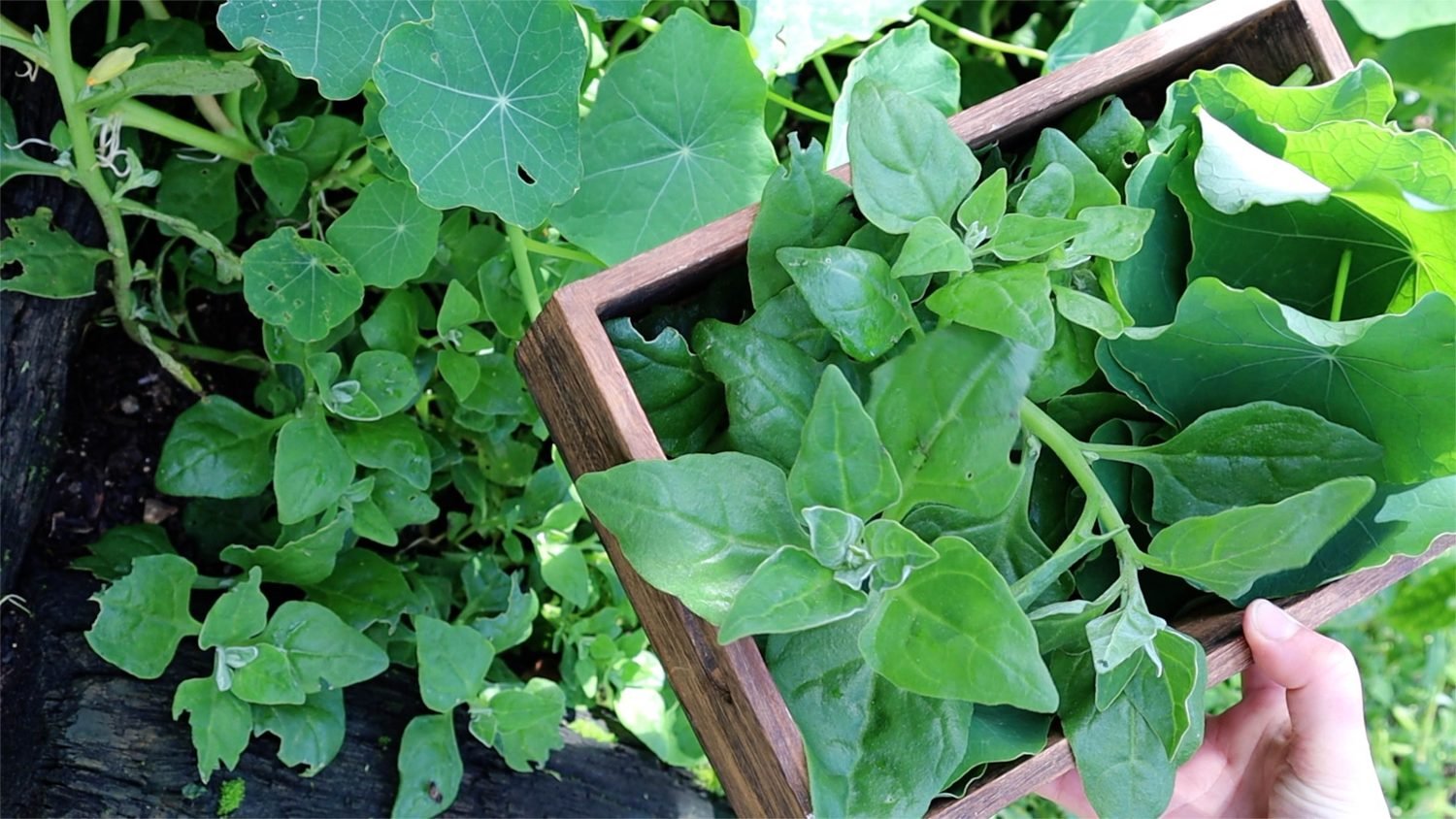
NZ Spinach (Tetragonia tetragonioides) also known in Australia as Warrigal greens is a perennial green with beautiful lush leaves. Although not part of the Spinach family, NZ Spinach is used as a spinach substitute. The great thing about this edible plant is that, unlike many spinach varieties, it thrives in warm weather! It has thicker more succulent style leaves perfect for warm climates or coastal sea spray.
NZ spinach grows as a thick edible ground cover and will cover and protect the soil in just a few short weeks. Thus, providing an abundance of leafy greens to eat!
Springafter the last frost.Can be grown all year round in many climates.
SOIL
Fertile, moist, well-drained soil. Plenty of compost.pH 6.8-7
LOCATION
Full sun – Dappled or shaded position.
CARE
Regular watering.
FERTILISE
Compost teas or liquid fertilisers.
PESTS
Slug and snail.
HARVEST
Harvest regularly to keep contained.
REPRODUCE
Grows easily from cuttings
Why Grow NZ Spinach?
There are many reasons to grow NZ spinach and it is so easy to grow!
Here are some of the many reasons to grow NZ Spinach
Easy to grow
Abundant producer!
Handles hot climates
Low maintenance
Edible ground cover
Antioxidants
High in vitamins A, C,B1,B2
Protects soil
Cut and come again harvest
Suppress weeds
Pest resistant
Handles coastal environments
When to Plant NZ Spinach
NZ Spinach is a hardy perennial but thrives in warm weather. It does not tolerate frosts so it may be grown as an annual in climates that receive cold frosty winters. Sow in Spring after your last frost. It is a vigorous grower so make sure you have space for it or it will overtake small plants. Great for a food forest-style garden or low-maintenance corners.
How to Grow NZ Spinach
Choose a sunny spot with dappled or part shade in the heat of summer.
Prepare the soil with rich compost
Direct sow seeds or plant in seed trays first. Can benefit from soaking the seeds in water overnight first.
1-2 plants per person is plenty!
Plant seedlings on small mounds to keep them well drained.
Care/ Maintenance
Protection from the harsh summer sun can help the flavour of NZ Spinach and reduce bitterness. Keep well watered in warm temperatures.
Once the plant is well established with approx 1m sprawl you can start harvesting stems at 3-4 inch pieces. This will help contain the plant and also promote new fresh growth which tastes the best!
Use clean, sharp kitchen scissors to cut your harvest.
At the end of summer, it can be a good idea to back old growth and use as mulch.
Cut and come again crop that will regrow quickly. I often harvest and use in meals every other day.
Reproducing
Take cuttings and allow to root in a jar of water. Refresh the water every few days. Seeds can also be saved and will flower with tiny yellow flowers on the stem. Once the seeds form and turn brown, collect them and dry them further. Keep in a dark, cool and dry environment.
Cooking and Using NZ Spinach
NZ Spinach like many leafy greens contains high oxalates so it is best to blanch greens first. Blanch greens in simmering hot water for 2mins and then plunge them into ice-cold water to keep them vibrant and fresh. Or simply cook or stir-fry. Young leaves can be eaten raw in small amounts. NZ Spinach is great to cook/blanch and freezes for future use. Or try fermented greens.
If you’re looking for a low-maintenance garden that produces food year-round, attracts wildlife, improves soil health, and creates a more natural ecosystem in your backyard, you’ve probably come across the term food forest.
But what is a food forest, really?
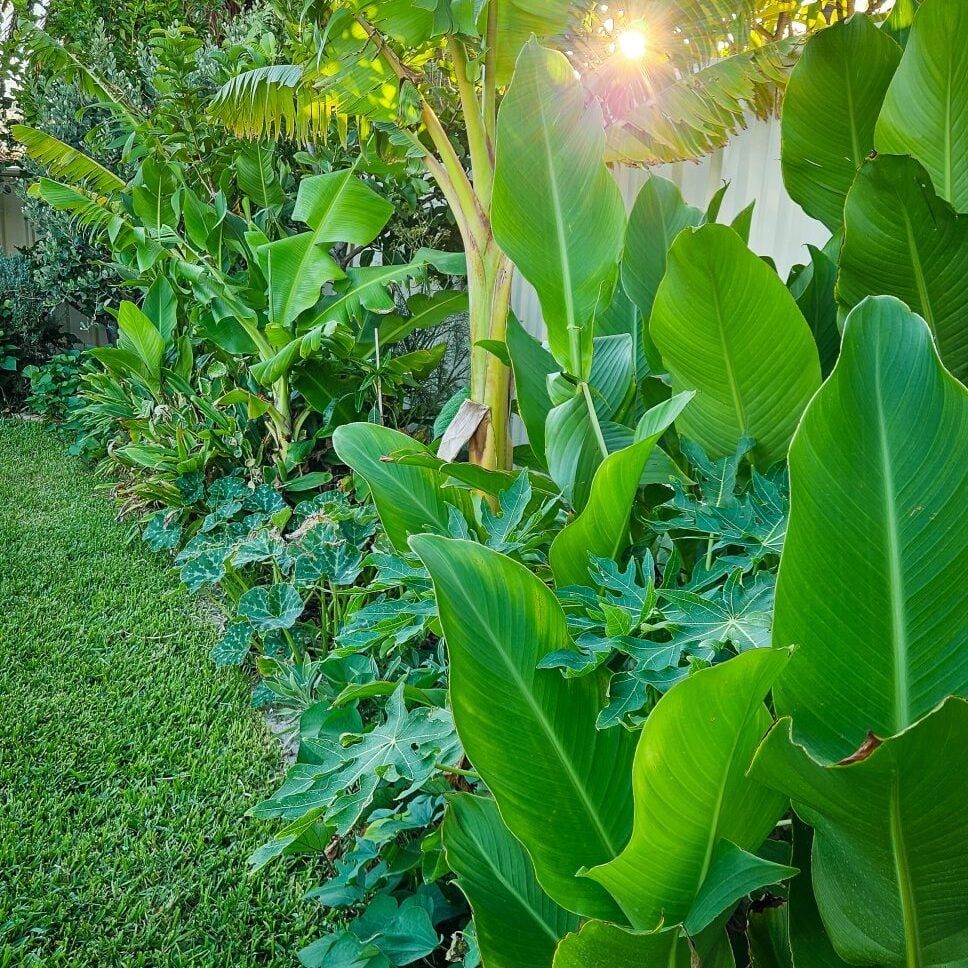
At its core, a food forest is a way of designing a garden that mimics nature, where plants grow in layers, support each other, and gradually build a self-sustaining system over time. Instead of rows of vegetables that need constant replanting, a food forest is built around perennials, diversity, and natural relationships between plants. Growing food in a harsh climate like Perth, I have found this system of growing LIFE CHANGING.
And while it doesn’t look “perfect” in the traditional gardening sense, it becomes something far more powerful: a living ecosystem that produces food, builds soil, and supports biodiversity.
What is a Food Forest?
A food forest is a low-maintenance gardening system that mimics natural forest ecosystems by growing edible plants in layered structures that support each other, improve soil health, and produce food year-round.
It combines:
fruit and nut trees
shrubs and herbs
ground covers and root crops
vines and climbers
All working together as one interconnected system. Unlike traditional gardening, a food forest is not about single crops in isolation. It’s about plant relationships, stacking functions, and long-term productivity.
Instead of having to replant and input more energy every season, food forests develop over time to produce more and more food with less effort!
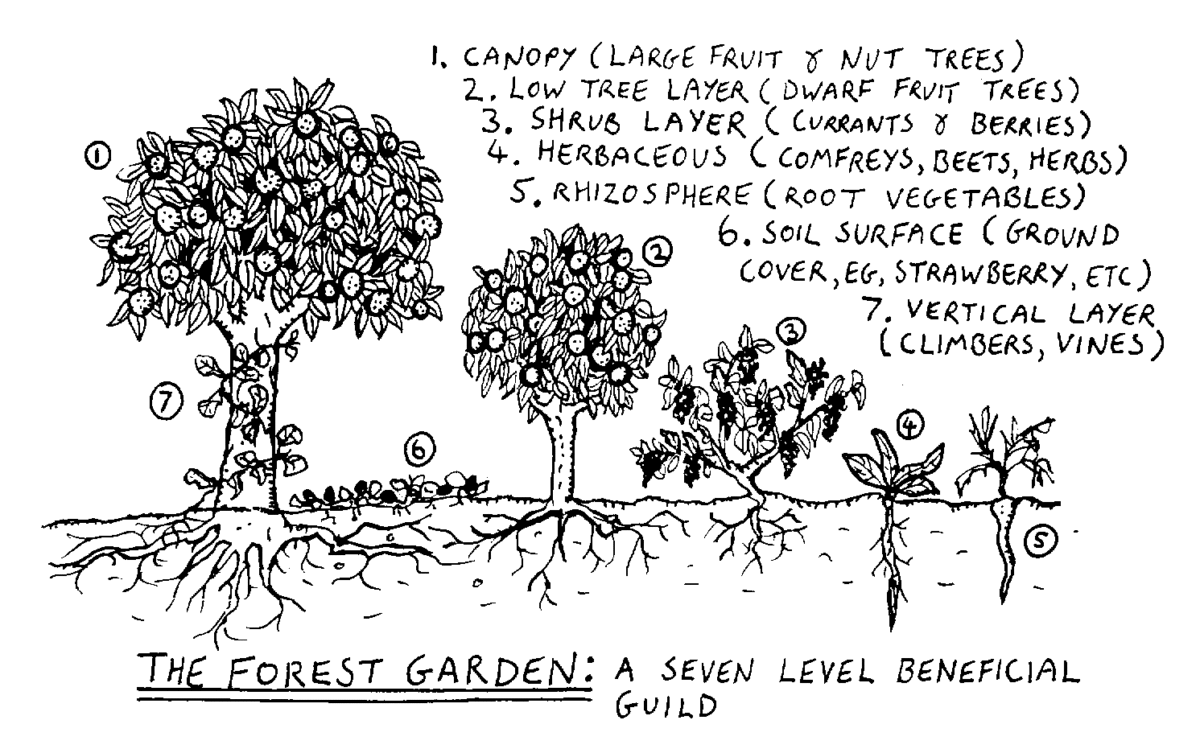
image credit: Graham Burnett
Why Food Forests Work Especially Well in Perth
Perth’s climate actually makes food forests a smart long-term strategy! The more established the trees become, the more the system supports each other through the harsh summers.
Hot, dry summers
Food forests reduce evaporation by shading soil and keeping it covered.
Winter rainfall
Instead of losing water quickly, layered systems help soil absorb and hold moisture longer.
Sandy soils
Organic matter from mulch and leaf litter slowly transforms poor soil into a sponge-like system.
Wind and heat stress
Multiple layers create natural wind protection and microclimates.
In my own garden, one of the biggest shifts I noticed was how much less I needed to water once ground covers and tree layers were established. The soil stopped drying out as quickly, and everything became more stable through the summer. I can go away and know my food forest garden will still be alive and well, whereas my veggie patch…can up and die in a single hot day!
Why Create a Food Forest Garden?
If you are looking to create a low-maintenance garden that produces food all year round, is lush, tranquil, and attracts birds, bees, and other local wildlife, then a food forest may be the garden for you! Food forests are a great way to grow a huge variety of plants in a single area. The ground covers will smother weeds, so there is one less job for you to do! The plants are mainly perennials so this means we don’t need to dig up the soil and replace plants each season. The less we dig up our soil, the better, as this promotes healthy microorganisms and soil life.
There are certain characteristics of a food forest that allow it to renew and support itself with little external input
Planting Density
It’s important to cover and protect the soil from the harsh sunlight
Planting densely creates a habitat for wildlife
More leaf matter to fall and nourish the soil
More roots to hold the soil together and reduce erosion
More flowers for the bees = more pollination and more food production
Dense planting will reduce the number of unwanted weeds
Having flowers and fruit trees planted close together can increase pollination as the bees and pollinators will be nearby
Growing a wide variety of plants
Planting a wide variety of plants will mean you have fruit, vegetables and flowers ready at all different times of the year
Diversity in plants not only provides you with a wide range of nutrients but also benefits your garden and wildlife
Different root structures will provide the soil microbes with different secretions and reduce the severe depletion of nutrients in the soil. If you have all one crop planted in a single area they use up the same nutrients, and the soil can become depleted. Having a wide variety can help keep it balanced.
Plants have different flowers that will attract different pollinators to your garden. Each pollinator will achieve different results for each plant. It’s important not only to have flowers available all year round but also a variety of different kinds.
Self Fertilising
With a variety of layers and heights in your food forest, the plants will drop their leaves and fruit, which will act as a mulch and built-in fertiliser.
Some plants may get overgrown or die off (survival of the fittest!), which will also return nutrients to the soil.
From time to time you may need to trim your trees to reduce their height or width. This trimming can be put through a mulcher or cut up and returned to the garden to feed the plants.
Self Seeding
By letting some plants go to flower and seed, you will have new plants popping up each year. This can be an extremely easy way to grow more food for free.
At times, fruit trees may grow beneath the canopy from the seeds of rotting fruit. It can be a good idea to move these as they won’t have adequate space to grow. Either relocate them or pot them up to swap or trade.
Why Plant Density Matters (Especially in Perth)
One of the biggest shifts when moving from a traditional garden to a food forest is planting density.
Dense planting helps:
protect soil from harsh sun
reduce evaporation (critical in Perth summers)
build habitat for wildlife
improve pollination rates
reduce weed pressure naturally
Bare soil in Perth dries out extremely fast…so coverage is not optional, it’s essential!
7 Layers of a Food Forest
1. Canopy layer
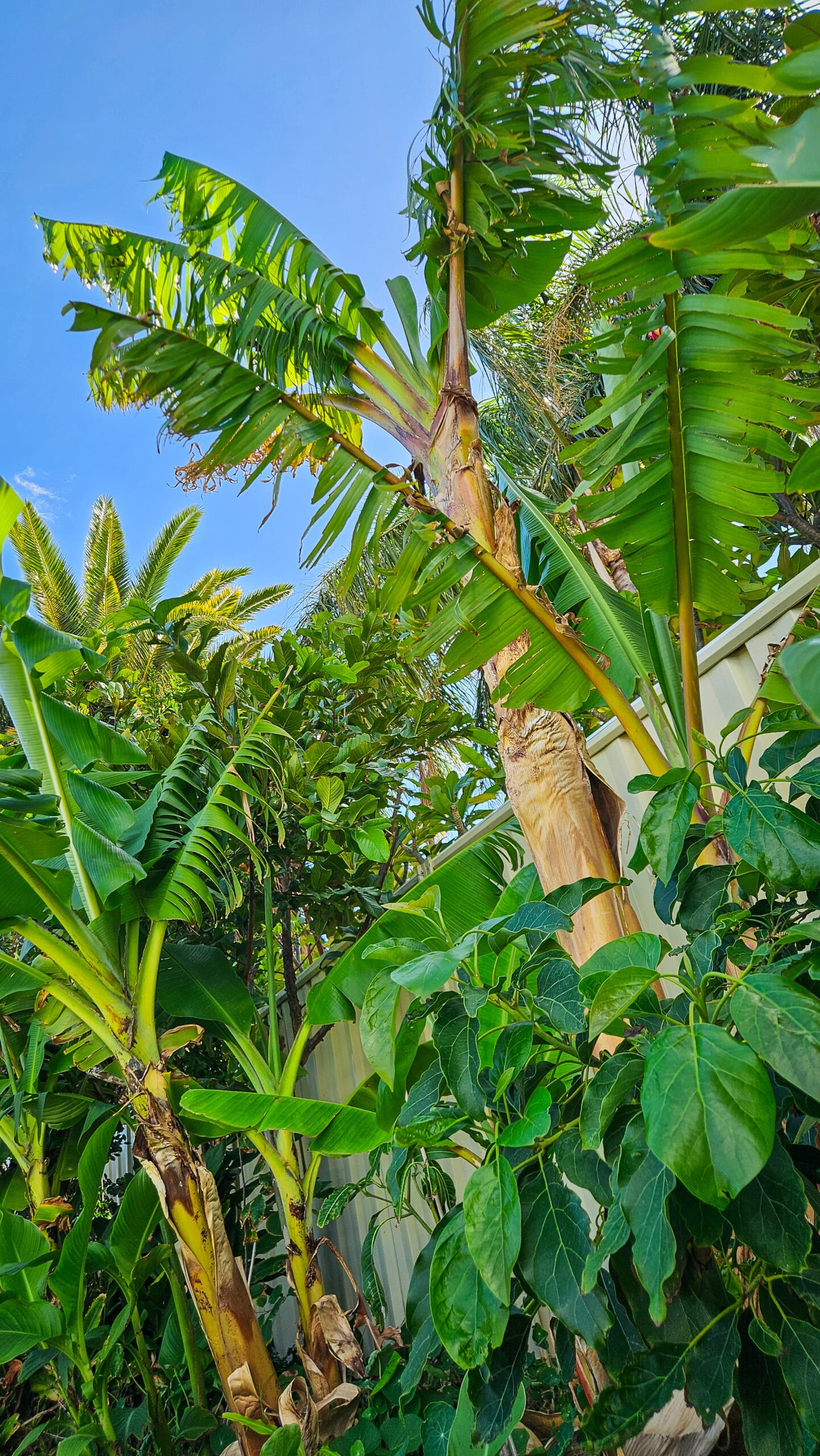
Large fruit and nut trees (e.g. avocado, mango, citrus in Perth climates)
2. Understorey layer
Smaller fruit trees (e.g. citrus, papaya in protected spots)
3. Shrub layer
Berries and perennial shrubs
4. Herbaceous layer
Herbs and medicinal plants (e.g. basil, lemongrass, aloe vera)
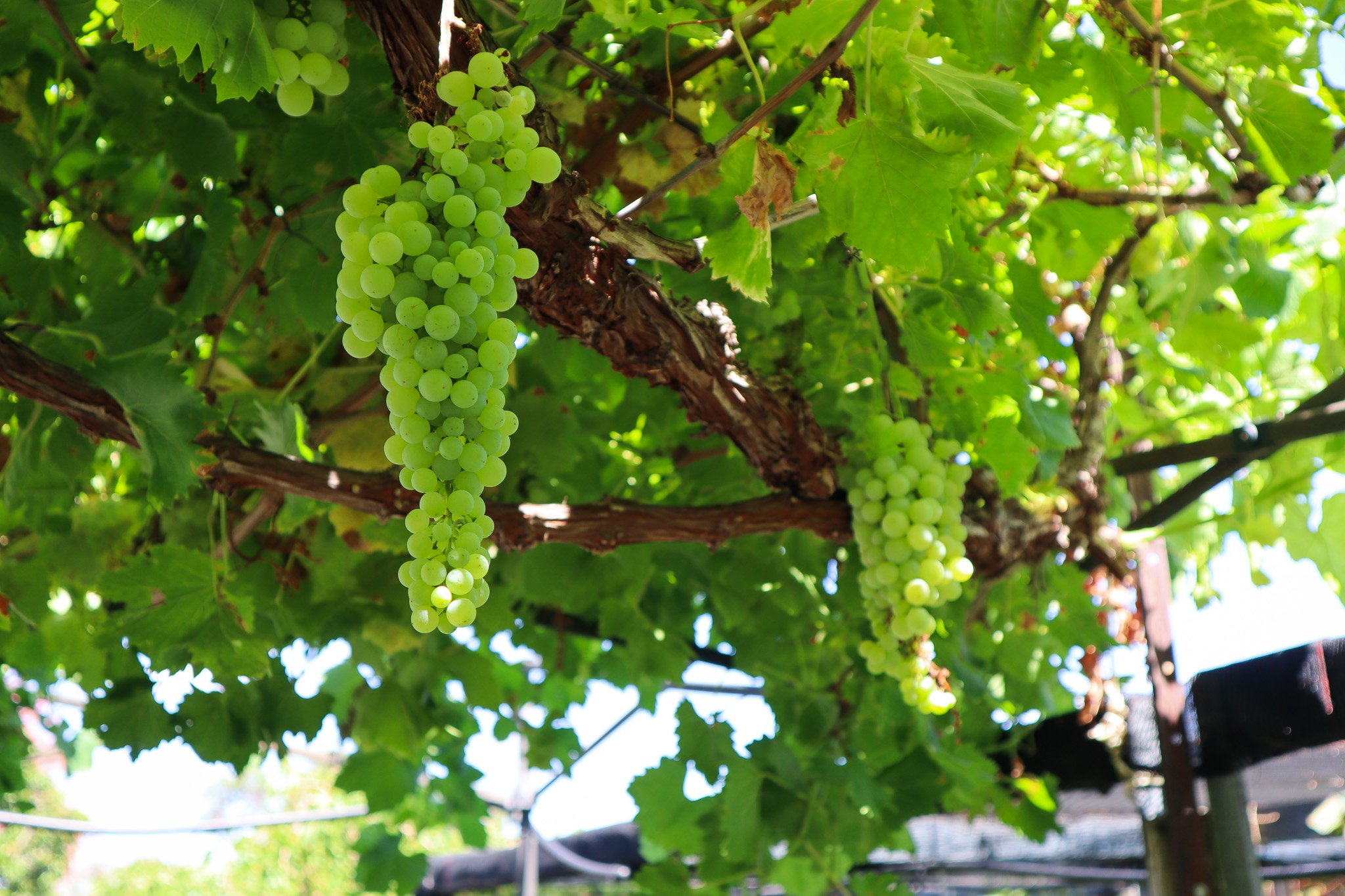
Climbers and vines (e.g. passionfruit, grape, pumpkin)
In Perth gardens, this layering is especially useful because shade and soil protection directly reduce heat stress and water loss.
How to Start a Food Forest Garden
Step 1: Choose a location and prep the soil
First up, we must decide on an area to start converting into a food forest system. This could be an old veggie patch, the front lawn, along the back fence line, or a large open field. The preparation needed will depend on the condition of the area selected. But in general, you will want to:
Clear any debris or unwanted structures
Remove or smother the grass. This can be done by laying down an old carpet for a few months to kill off all the grass. If the grass is still alive and present, it can be hard to maintain. Another way is to use sheets of cardboard, as these will eventually breakdown once the grass has died.
If your location has never been used to grow before, the soil quality may be extremely poor or sandy. It could be a good idea to add a layer of compost or organic manure.
Cover your area in a thick layer of mulch. This will protect the soil and help keep any grasses or unwanted weeds away.
Give the area a good watering and feed with a liquid seaweed solution.
Step 2: Selecting a plant list
We want to select plants that:
A: We want to eat and
B: Provide benefits to other aspects of our garden (animal feed, mulch, birds, shade, etc).
Below are the 7 layers of the food forest. Write down a wish list of plants for each layer, and then you can start mapping out which plants will go where depending on their size, what “layer” they are, and how much light they will need to grow.
Step 3: Designing
Mapping out a design can be as detailed or as rough as you like. It is important to come up with some kind of plan so that you can decide where to plant your larger trees so that they get enough sunlight. You don’t want to be digging up and moving things around. This should be your master plan, not what you are starting with. So go big, add in all things you want so that you can plan for the future and ensure you can room.
How to map out your food forest design
1 Draw the outline of your location or property to scale
2 Add in any permanent structure (sheds, veggie patch, established trees, fences)
3 Map where the sun and shade come from. Mark areas as full sun, part sun, or full shade.
4 Add in your large Canopy trees and allow space for them to grow.
5 Add in your pathways or future large structures (pond, shed, chicken coop)
5 Add in your sub-canopy trees
6 Add in your scrubs, herbaceous layer, root crops, ground cover, and vertical layers.
7 Add seating, a table, or a place for you to view and enjoy your food forest.
Step 4: Planting
To start with you will want to select your large canopy trees and ensure there is enough space for them to grow. The height and width will be noted on the labels. Then you can start adding in your sub-canopy/dwarf trees. Large trees may take years to fully establish so your food forest may not look very ‘foresty’, to begin with. This is a great time to interplant with more annual crops (lettuce, tomatoes, broccoli, etc).
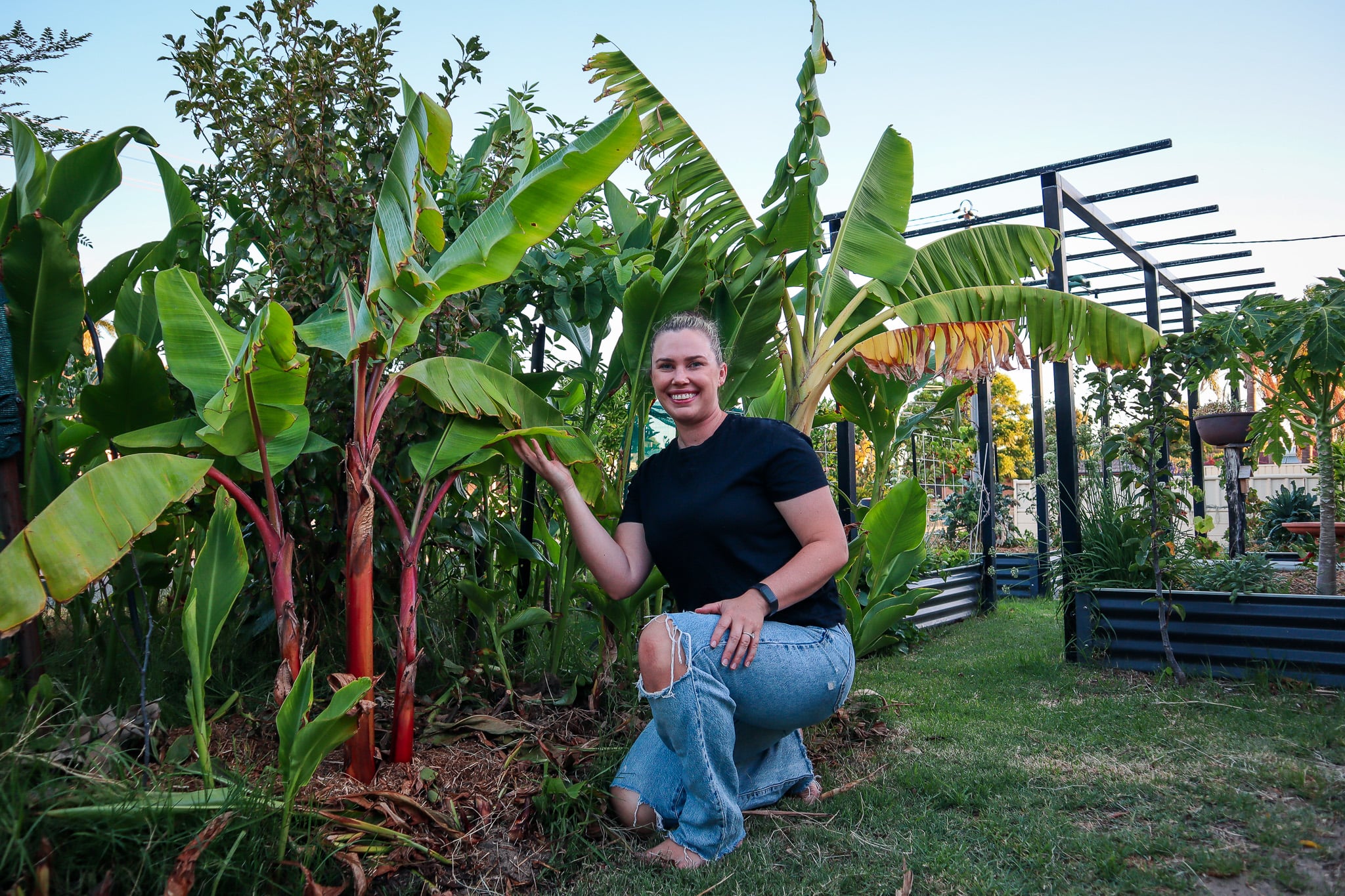
When I first started my back fence line in a food forest system, there were large gaps between the trees. This meant there was a lot more light and space available but I knew that eventually my canopy and sub-canopy trees would grow to fill the space. I used this time to grow seasonal veggies and edible flowers. As well as accumulating and establishing new shrub layers and ground covers.
Self-Fertilising Systems
A food forest slowly builds its own fertility through:
In Perth, where soils are often low in organic matter, this long-term accumulation is what transforms the system.
How to Source Plants for Your Food Forest?
Creating a food forest can involve a lot of new plants, and the costs will quickly add up. This is where learning how to make cuttings can be extremely valuable. Not only can you reproduce your plants to grow in other areas of the garden, but you can also swap, trade, and sell your plants to acquire new ones. Keep an eye out on local pages as you can pick up established trees for cheap or even free! I have managed to get established fruit trees that are already fruiting for less than $20. This can really speed up your food forest production.
Maintaining your Food Forest
The idea of creating your food forest is that it will require less care and attention. This can mean it will look a little wild from time to time (in a good way)
Pruning or trimming back excess trees to chop and drop can be a great way to propagate more or mulch to feed the garden. This can be done once the tree has finished fruiting.
Some trees will need to be staked and secured while they are young so that they don’t snap off.
Propagating plants to establish in other areas – it can take a while for some plants to establish, so once they have, you can start to reproduce them in other areas.
Harvesting fruit – this is important so that you can reduce the number of unwanted critters (such as rats). Rotting fruit on the ground can also promote fruit fly infestations, which you do not want! So ensure all fruit is picked and preserved or composted.
Feeding – It can be beneficial, especially in a young food forest, to add in extra fertilisers. Try using natural products such as seaweed solution or creating your own from leftover plants and weeds.
Netting or bagging fruit – Depending on your location, you may need to net or place net bags on your fruit. Fruit fly, bats, and birds can decimate crops in just a few hours.
Learn how to maximise your edible gardens and grow more food. I don’t follow the rules when it comes to spacing and companion planting. Working with nature to create long-term sustainable gardens.
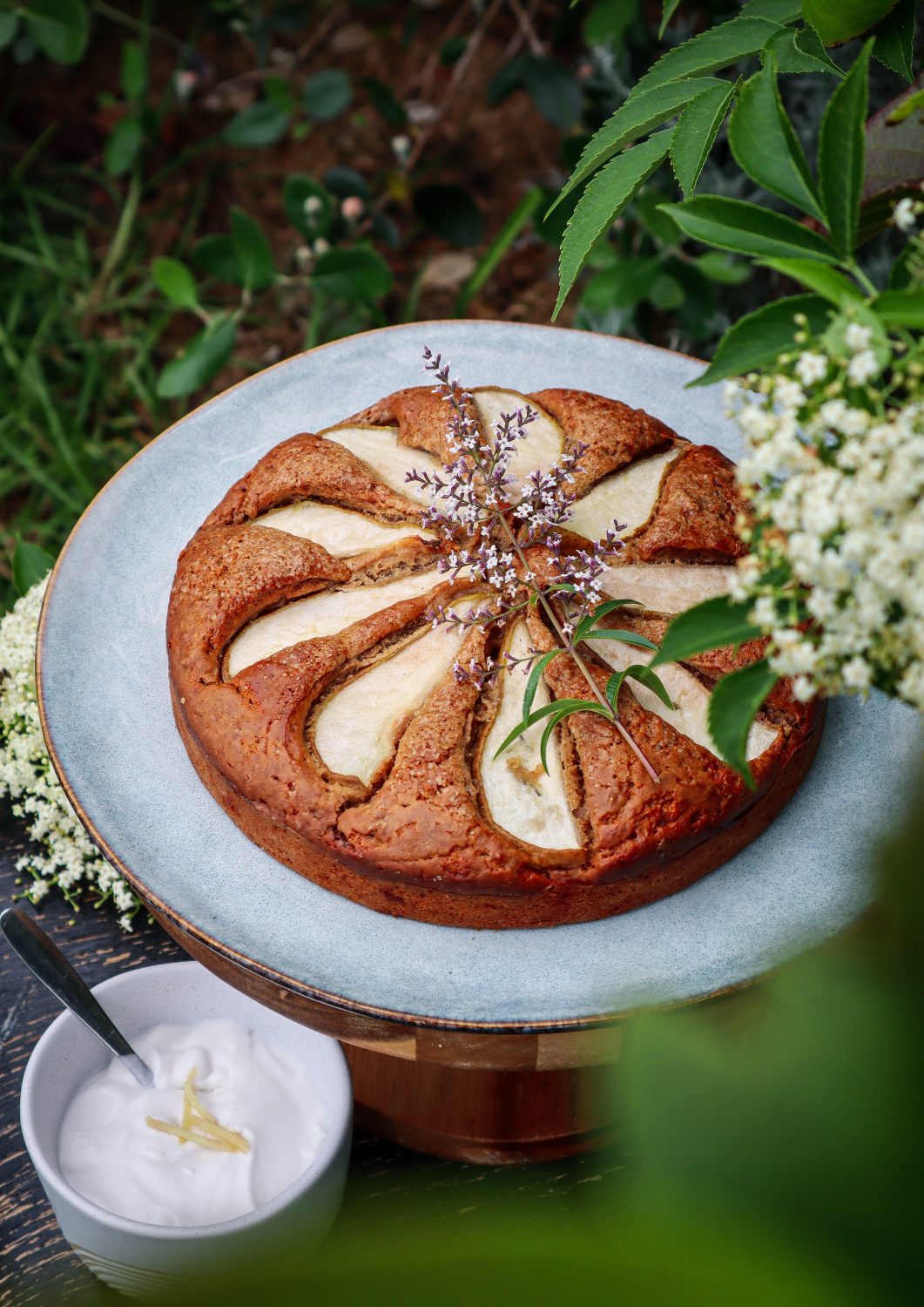
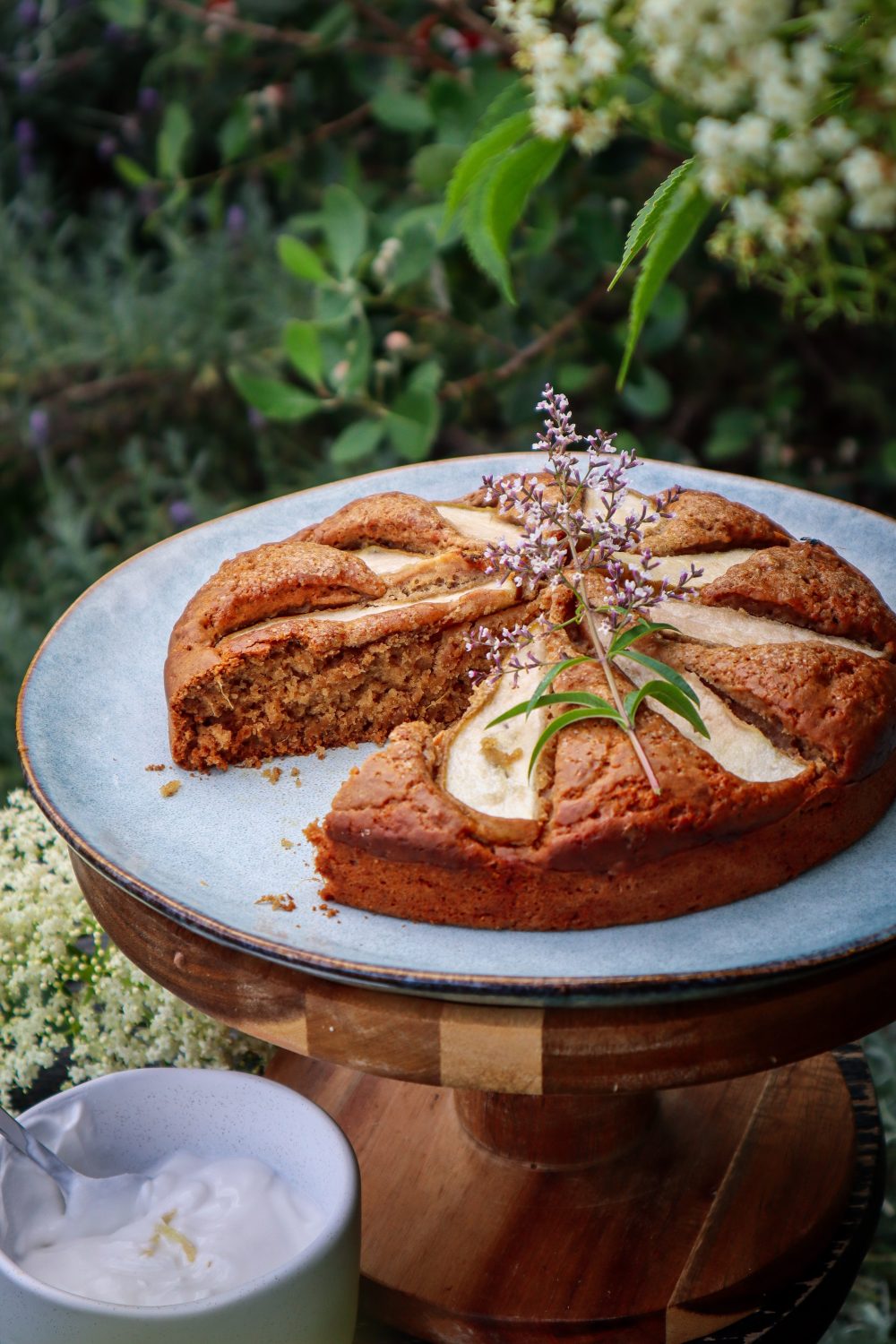
Ginger and Pear is a match made in heaven. This spiced ginger and pear tea cake is the perfect way to refuel after knocking out some tasks in the garden. Enjoy whilst sitting out in the garden with a cup of tea or coffee. If you love the warm, comforting flavors of ginger and pear, this Spiced Ginger and Pear Tea Cake is the perfect bake for you. This moist and fragrant cake combines fresh, juicy pears with the bold spice of ginger, making it a delightful treat for afternoon tea, cozy gatherings, or as a simple homemade dessert. Whether you’re an experienced baker or just starting out, this easy-to-follow recipe will quickly become a favorite in your kitchen.
Delicious Garden to Plate
Bursting with Flavor – The combination of fresh pears, fresh ginger, cinnamon, and honey creates a perfectly spiced cake that’s both aromatic and delicious.
Moist and Tender Texture – Thanks to the natural juiciness of the pears and creamy yoghurt, this cake stays wonderfully soft and moist.
Simple Ingredients – You probably already have most of these pantry staples at home, making it an easy go-to bake.
Perfect for Any Occasion – Enjoy a slice with a cup of tea, serve it as a weekend brunch treat, or bring it to your next gathering.
Tips for the Best Spiced Ginger and Pear Tea Cake
Use ripe but firm pears for the best texture and flavor.
Grate 1/4 tsp fresh ginger into yogurt or cream to serve for an extra kick
This cake is naturally sweet, lightly spiced, and absolutely delicious. If you’re looking for a cozy, homemade treat that highlights seasonal produce, give this Spiced Ginger and Pear Tea Cake a try!
Spiced Ginger and Pear Tea Cake
5 from 1 vote
Sugar and spice this tea cake is so nice! The perfect morning or afternoon tea treat to be enjoyed with a tea or coffee in the garden.
Mix wet ingredients including grated ginger in a separate bowl.
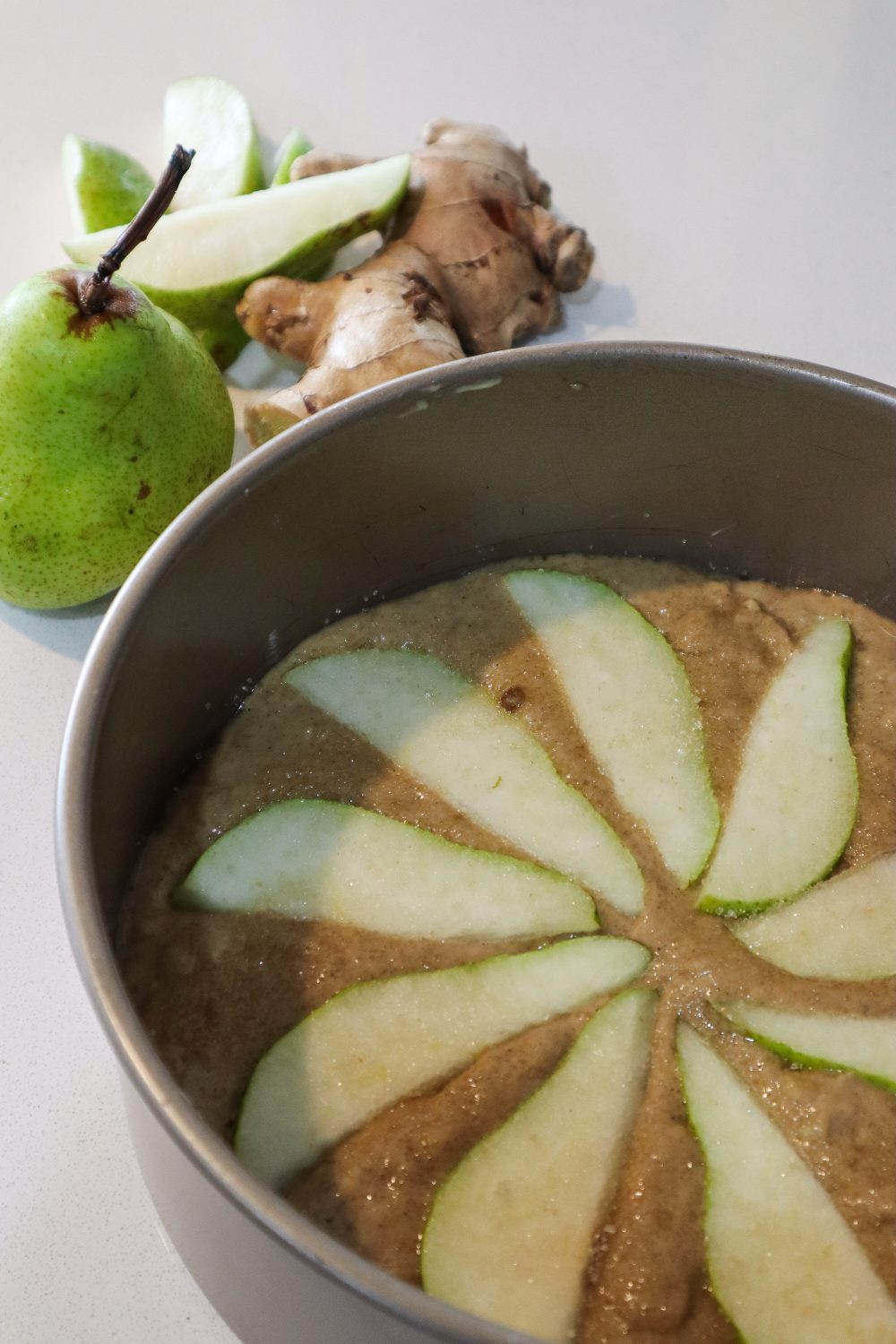
Wash and slice pears into slices lengthways. About 0.5cm – 1cm thick. (Thinner if you want them soft, thicker if you like them to still have some bite). Peel if you like but I don't bother.
Grease a 15-20cm cake tin.
Make a well in the center of the dry ingredients and gently mix the wet ingredients in until just combined. Don't over-mix.
Pour cake batter into the cake tin and level out to form a flat top. Place the pear slices in and gently push into the mixture. Sprinkle the TBSP of sugar on top.
Bake for 30- 45mins or until the cake skewer comes out clean.
Allow to cool and serve with extra yogurt or cream.
Notes
Mixed spice can be replaced with extra cinnamon.Use your favourite plain yoghurt
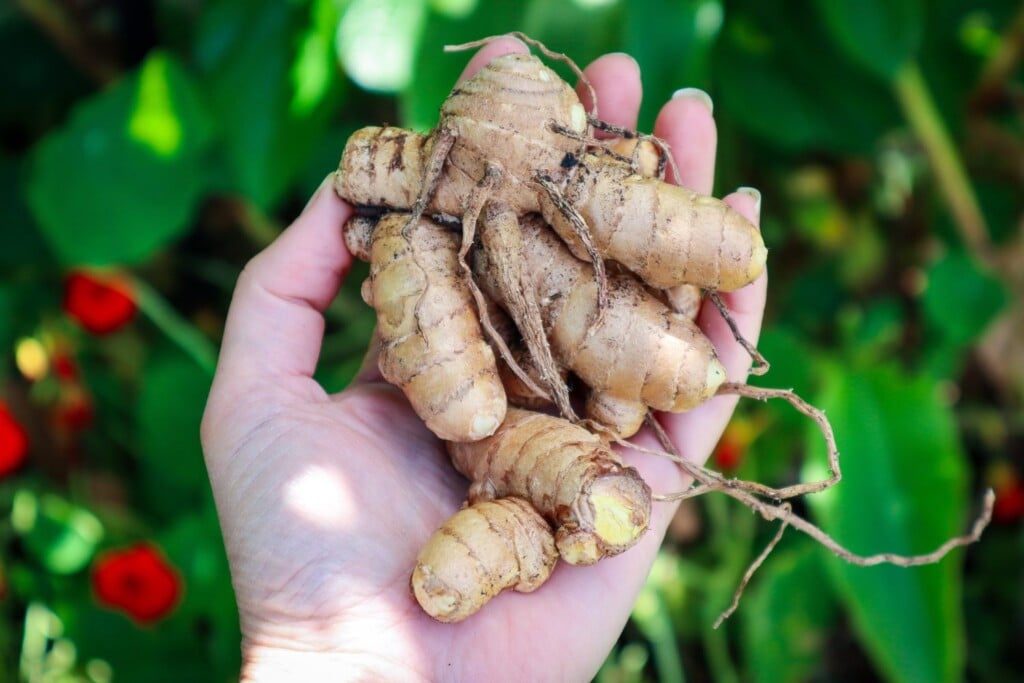
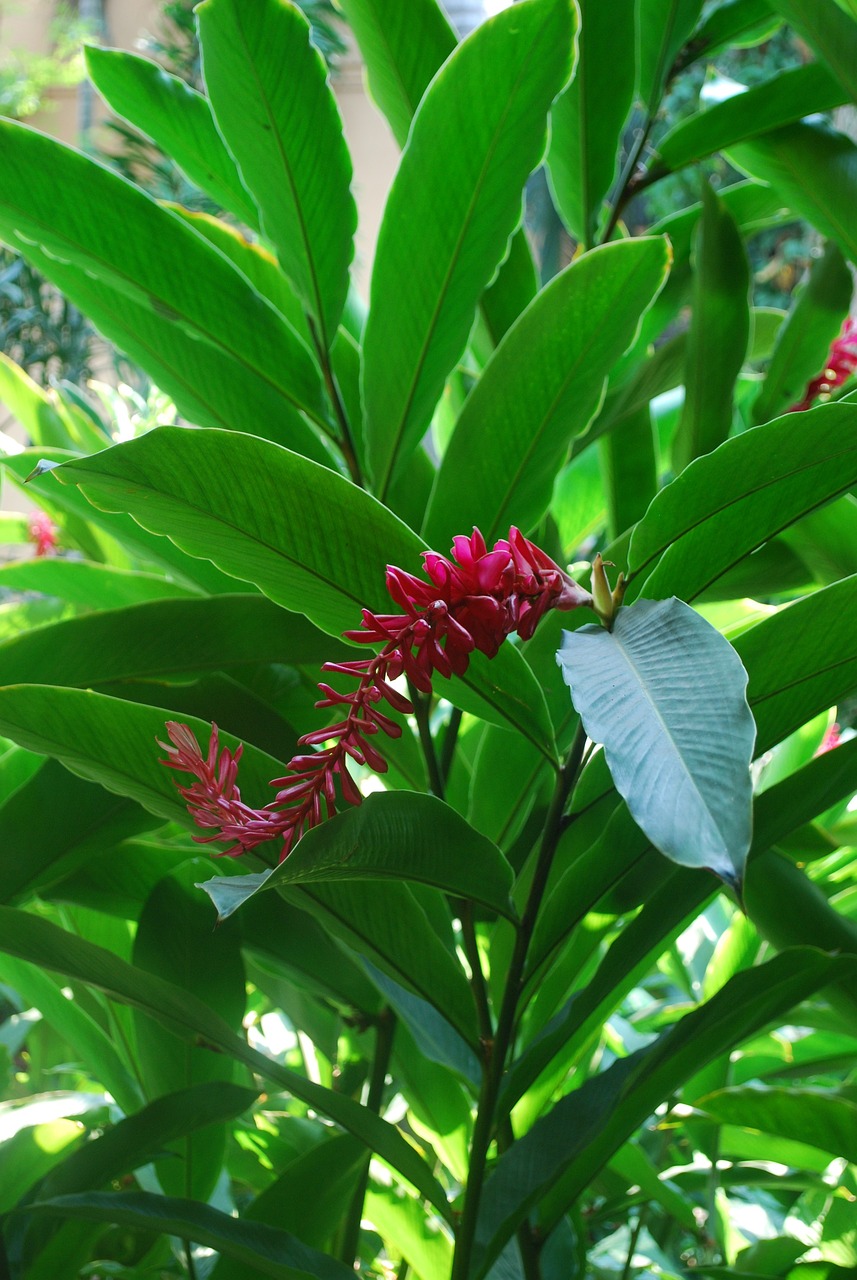
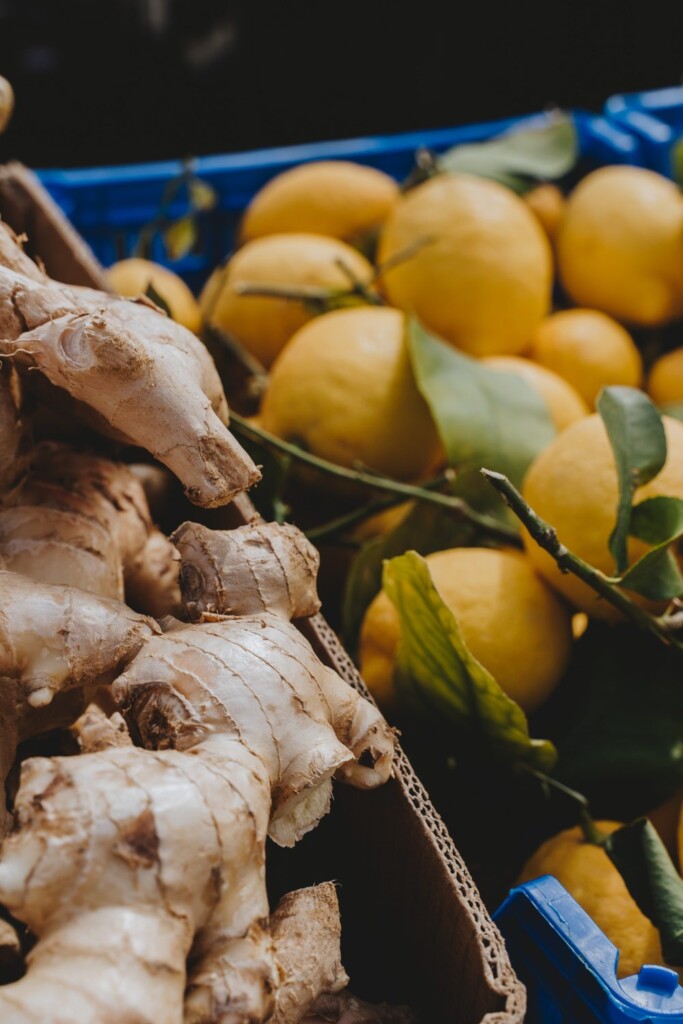
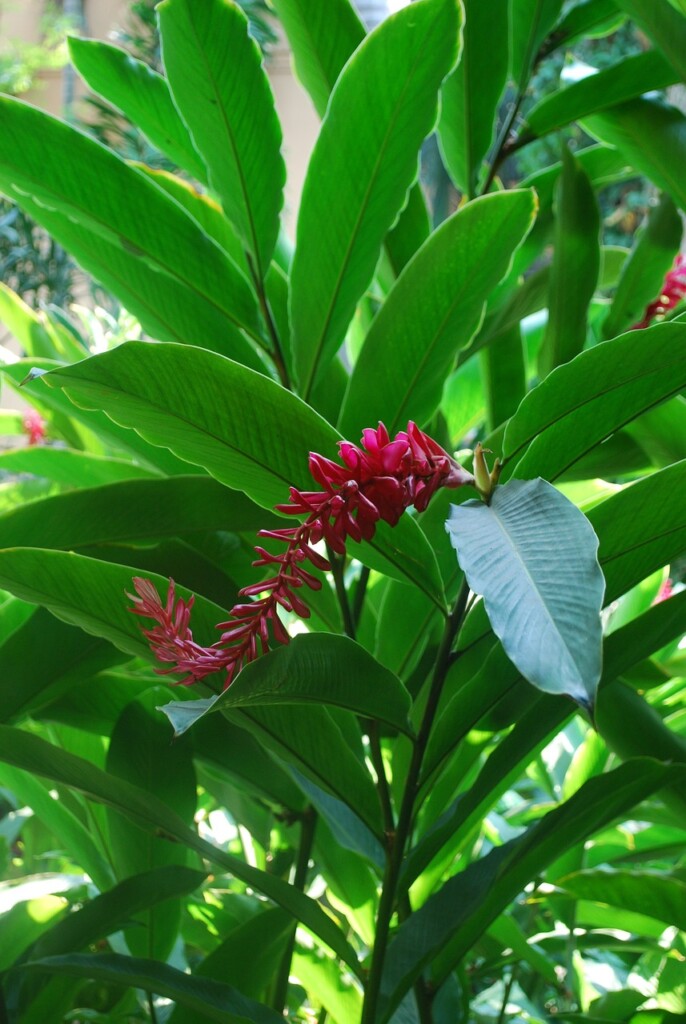
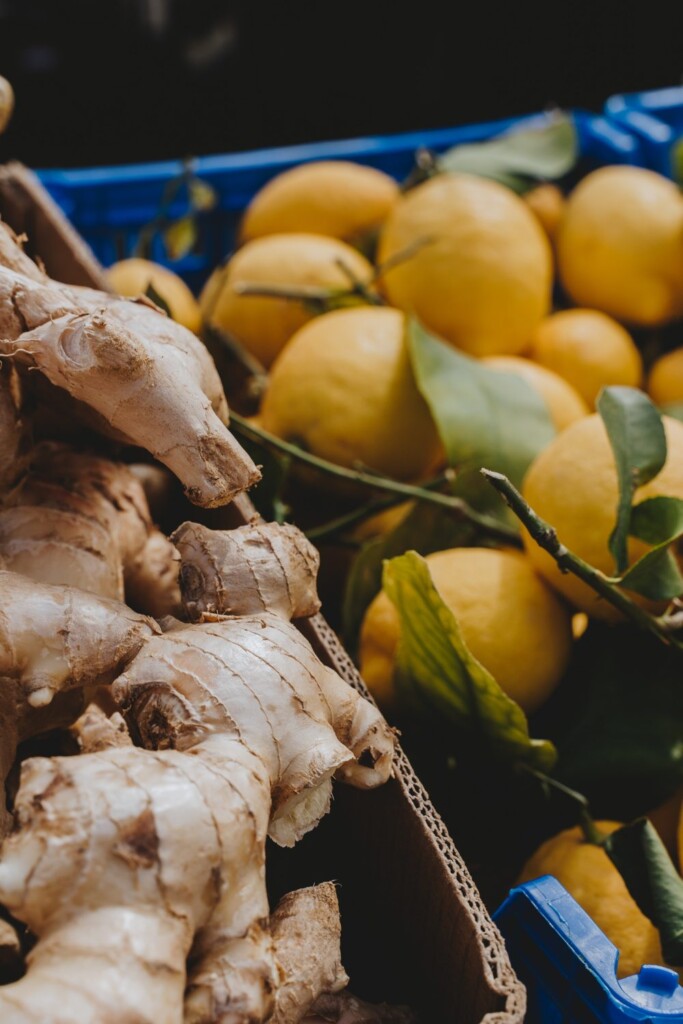
Ginger (Zingerber officinale) is a perennial herb with beautiful lush leaves and produces edible rhizomes that are both flavour-enhancing and medicinal. Ginger is a great addition to your edible garden as it can be grown in pots or as an understory part of your food forest. Ginger easily self propagates and you can divide the rhizomes up to regrow more and more ginger each year. Ginger is a staple for your medicinal garden.
Fertile, moist, well-drained soil. Plenty of compost.
LOCATION
Dappled or part shade position. Sheltered and warm.
CARE
Regular watering.
FERTILISE
Compost teas or liquid fertilisers.
PESTS
HARVEST
Harvest in autumn or 8-10 months after planting. When leaves die off. Harvest all at once or leave some to regrow.
REPRODUCE
Cut the rhizomes into pieces with at least 2 “eyes”. Allow cuts to dry off before planting.
Why Grow Ginger?
Ginger is a slower grower but low maintenance and produces an abundance of rhizomes beneath the surface.
Here are some of the many reasons to grow Ginger
Easy to grow
Versatile produce
Low maintenance
Aids in nausea
Antioxidants
Flavour enhancer
Visual Aesthetics
Supports Immune health
Rich in Vitamin A,B,C
Can be eaten raw, cooked, or pickled
Anti-inflammatory properties
Popular Ginger Varieties
Ensure you have edible ginger plants before planting as there are many types of ornamental gingers that can be invasive. Selecting organic locally grown ginger rhizomes from the shops can be a good way to regrow ginger plants.
When to Plant Ginger
Ginger is a warm loving tropical plant. It thrives in humid conditions but can still be grown in a range of different climates. Plant ginger late winter-spring depending on how cold your climate is. Plant after the last frost when temperatures are warming up. Ginger likes temperatures between 20-30 degrees and needs at least 5-8 months to grow. If you live in a cooler climate you may need to start or finish your ginger of indoors or in a greenhouse to keep it warm.
How to Grow Ginger
Choose a sheltered, sunny spot with dappled or part shade.
Prepare the soil with rich compost or a pot at least 300mm wide.
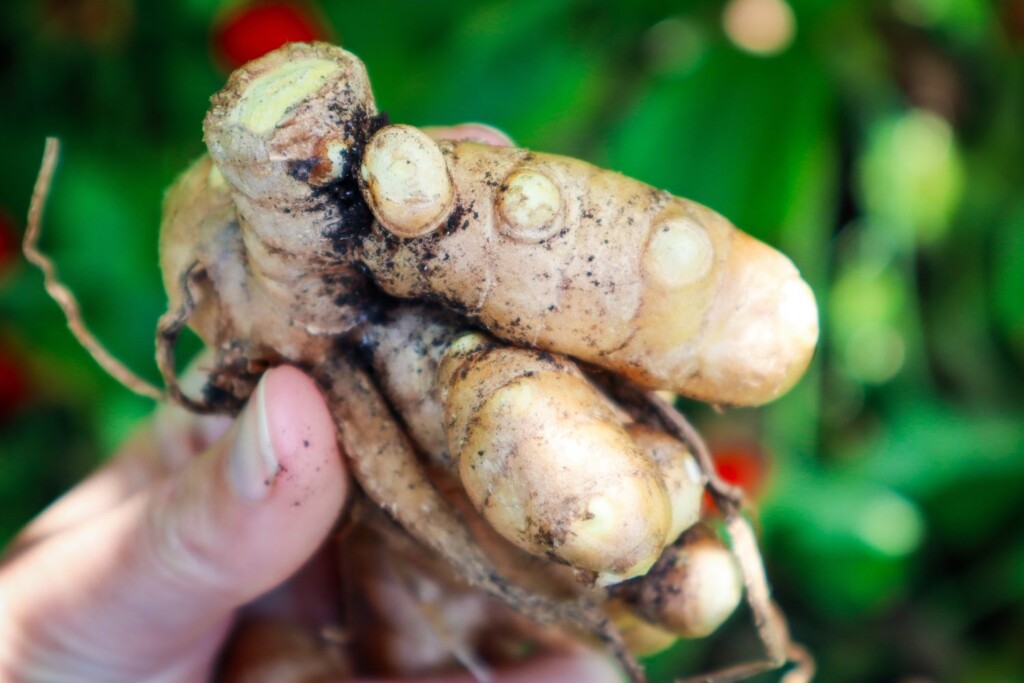
Cut Rhyzomes into pieces with at least 2 “eyes each. The eyes are on the end of the knobs and have a little circle. Wait a few days until the cuts have dried off to prevent rot.
Plant 15cm apart.
You can also plant the whole piece in the ground without cutting it first.
Ginger can be a little slow to get growing and show through the soil so don’t stress. Keep them moist but not soggy.
Care/ Maintenance
Keep Ginger well-watered but not soggy. Ginger doesn’t like strong winds so protection using larger trees or plant in sheltered locations.
Once the leaves start to die off in Autumn reduce the watering and let the plants start to die down to put energy into the rhizomes.
You can harvest ginger throughout the growing period the young ginger or “green ginger” has a more mild flavour and can be used raw. Just ensure you don’t disturb the patch too much.
Once the leaves are all brown dig up the patch.
You can select some to regrow and plant straight back in the soil.
Rinse off the soil and remove the roots. These are the skinny smooth parts below the rhizomes.
Reproducing
Ginger is best reproduced by cutting up the rhizomes to produce more plants or left to repopulate on its own. Leaving ginger in the ground without harvesting can help produce an established patch. Then each year in Autumn harvest what you need and leave the rest to regrow.
Cooking and Using Ginger
Ginger can be eaten raw, cooked, pickled or fermented.